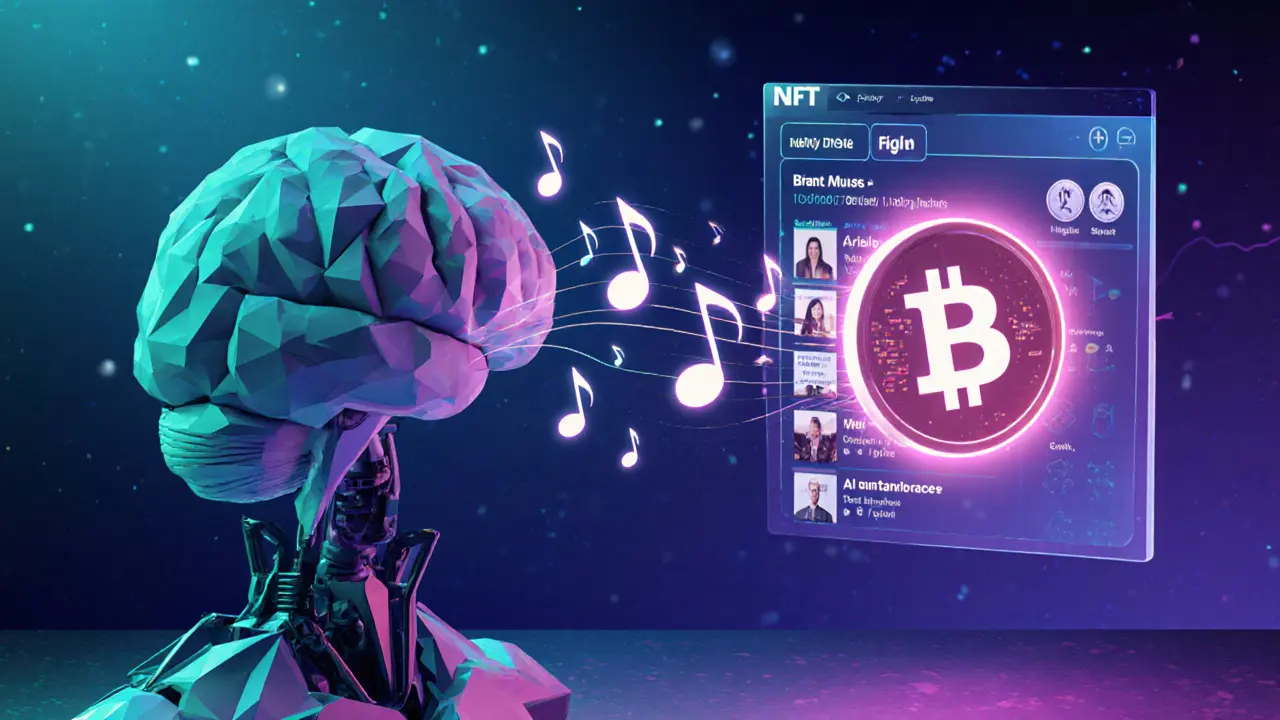

When you hear about AI Music Blockchain, the convergence of artificial‑intelligence‑generated audio and blockchain technology that records, verifies and monetizes music tracks on a distributed ledger. Also known as AI‑powered music chain, it brings together AI‑generated music, audio created by algorithms that compose, arrange or synthesize sound without human input, smart contracts, self‑executing code that enforces royalty splits and usage rights automatically and NFTs, unique tokens that represent ownership of a specific music file or rights bundle. This triple—AI‑generated music, smart contracts, NFTs—forms the core of the ecosystem, enabling creators to tokenise a track, embed payment rules in code and let fans verify authenticity on chain.
The real power of an AI music blockchain lies in how it reshapes the value chain. By tokenising a song as an NFT, an artist can set up a royalty schedule that smart contracts enforce every time the track streams, gets sampled or is sold. This eliminates middlemen and gives fans a direct stake: some projects issue creator tokens, fungible assets that grant holders a share of future revenue. Meanwhile, decentralized music platforms, apps built on blockchain that let users upload, discover and stream music without a central server provide the marketplace where those NFTs and tokens trade. The consensus layer—whether proof‑of‑stake or proof‑of‑authority—ensures the ledger stays tamper‑proof while keeping transaction costs low enough for micro‑royalties. In practice, this means an AI‑composed beat can be minted as an NFT, sold to a fan for $50, and automatically split 70 % to the composer, 20 % to the platform and 10 % to a community DAO that supports future AI research.
Because the technology is still maturing, there are practical challenges to watch. Artists need to understand token economics, such as supply limits and price volatility, while fans should verify contract code to avoid scams. Emerging standards—like ERC‑721 for music NFTs and ERC‑20 for creator tokens—help with interoperability across wallets and exchanges. Community‑run DAOs, decentralised autonomous organisations that govern the rules and funding of a music project are already experimenting with crowd‑funded AI training models, giving token holders a say in the next composition style. Below you’ll find deep‑dive guides, token reviews and real‑world case studies that cover everything from airdrop alerts for music‑related projects to step‑by‑step tutorials on minting your first AI‑generated track on the blockchain.
Discover what HAiO (HAIO) crypto coin is, its tech, tokenomics, ecosystem features, and how it stands out in the AI‑music blockchain space.