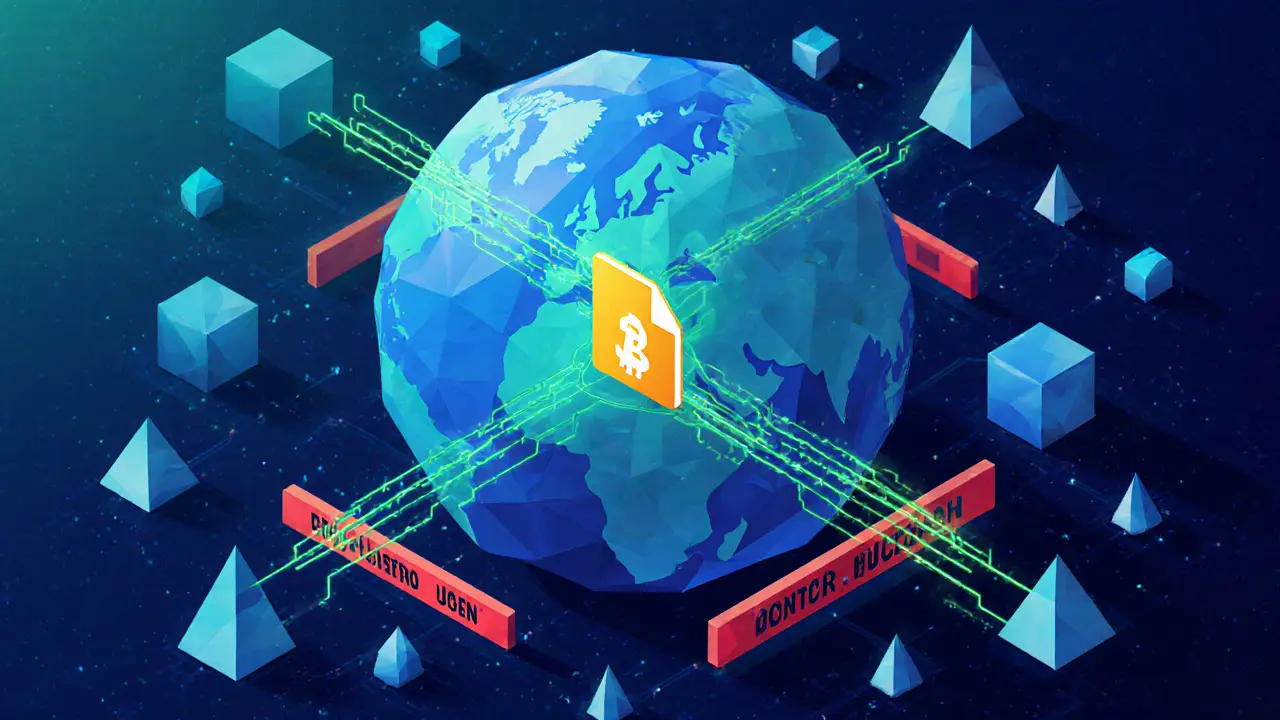

When working with censorship resistance, the ability of a system to stay online and unaltered despite external pressure. Also known as anti‑censorship, it lets users share, store, and transact without a gatekeeper deciding what stays or goes. This idea censorship resistance is the backbone of many modern crypto projects. It encompasses public blockchains, which are open ledgers anyone can read or write to, and it requires decentralized networks that spread data across many nodes. In simple terms, if one node gets shut down, the rest keep the system alive, so digital censorship struggles to win.
Governments and corporations often try to limit the flow of information, a practice we call digital censorship. When that happens, services built on public blockchains can step in because they don’t rely on a single server or authority. This is why many airdrop projects – like the SHO, APIS, or VOW drops listed below – advertise themselves as “censorship‑resistant”, promising that participants can claim tokens even if local regulators clamp down on crypto. At the same time, crypto regulation shapes the battlefield: clear rules can protect users, while vague bans can push them toward more private, resistant tools. The tension between regulation and resistance fuels a lot of the discussion you’ll see in our articles about mining bans in Iran, Sweden’s tax changes, and the legal tender experiment in El Salvador.
All these pieces – public blockchains, decentralized networks, digital censorship, and evolving regulation – link together in a web of cause and effect. When a country tightens crypto rules, developers often double‑down on censorship resistance, launching new tokens or platforms that hide behind stronger anonymity or layer‑2 solutions. Conversely, when a protocol proves truly resistant, it can influence policy debates, showing lawmakers that outright bans might backfire. Understanding these dynamics helps you see why a seemingly simple airdrop guide or exchange review is really part of a bigger fight for open, uncensored digital finance.
Below you’ll find a hand‑picked collection of articles that dive deeper into each of these angles – from step‑by‑step airdrop claims to in‑depth looks at mining bans and blockchain fundamentals. Use them to sharpen your grasp of how censorship resistance shapes the crypto world today.
Explore how decentralized storage provides censorship resistance, compare top platforms, and learn step‑by‑step setup for secure, uncensorable data.