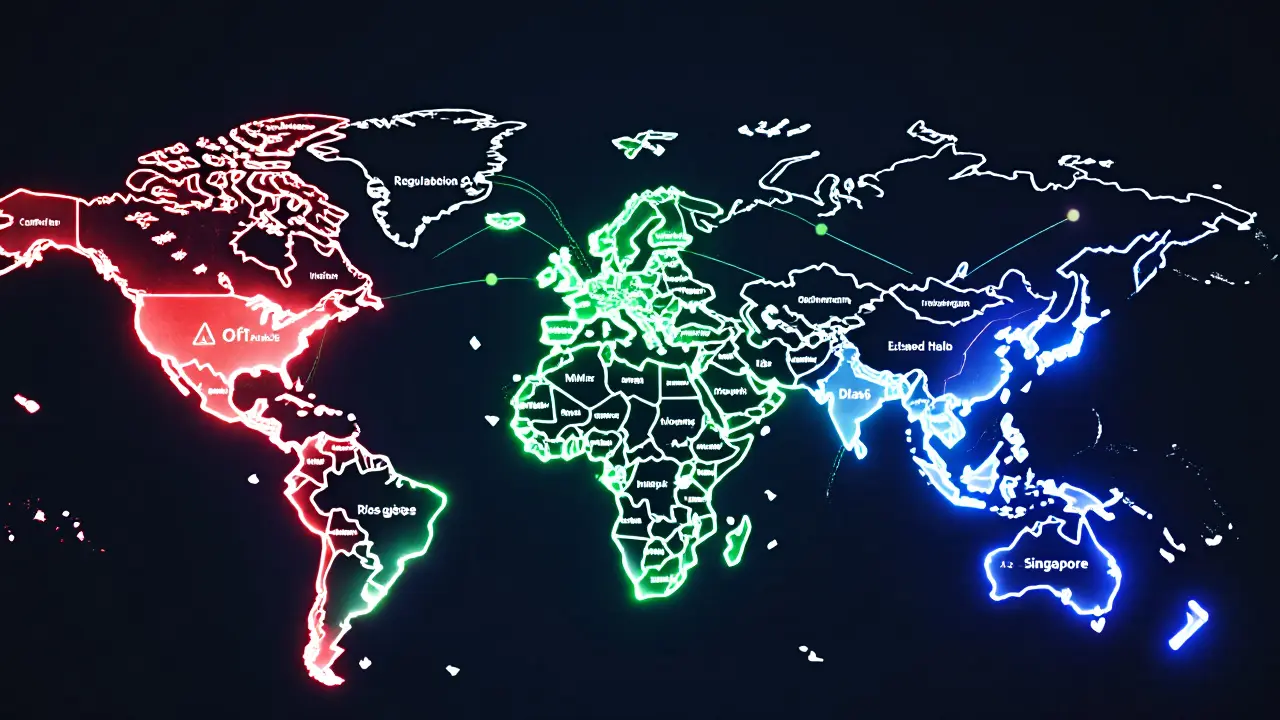

When you hear crypto legal updates, official changes in how governments regulate digital assets, including trading rules, licensing, and enforcement actions. Also known as cryptocurrency regulations, these updates aren’t just paperwork—they directly impact whether you can trade, hold, or earn from crypto in your country. In 2025, this isn’t about future predictions. It’s about what’s already happened—and what you need to do right now.
Take the EU MiCA compliance, the Markets in Crypto-Assets Regulation that now enforces strict rules on stablecoins, exchanges, and transaction reporting across all 27 member states. Also known as crypto AML EU, it means any platform serving EU users must verify identities, track fund flows, and shut down unlicensed services. This isn’t theoretical. In 2025, five major foreign P2P platforms were banned in Thailand because they didn’t meet local licensing standards. Users lost access to funds overnight. Meanwhile, Bolivia went from banning crypto entirely in 2021 to legalizing it in 2024—with $294 million in transactions in just six months. That’s not a fluke. It’s policy changing fast because people needed an alternative to a broken banking system.
And it’s not just big economies. The Bank of Namibia crypto policy, a framework requiring businesses to get licenses before accepting crypto payments. Also known as VASP licensing Namibia, it’s a model for how smaller nations are stepping in to control risk without crushing innovation. You can still use crypto there—but only if you’re registered. Same in the EU: if you run a service that touches crypto, you need to be licensed. If you’re just holding Bitcoin? You’re mostly fine. But if you’re trading on an unregulated exchange like Bitocto—which has no transparency on fees or security—you’re playing with fire. The law doesn’t care if you didn’t know. It only cares if you did it.
These aren’t isolated stories. They’re connected. Crypto legal updates are forcing exchanges to choose: comply or vanish. They’re pushing countries to decide: ban, regulate, or embrace. And they’re making it harder for scams like Web3Shot or Galaxy Adventure Chest NFTs to trick people—because now, authorities are watching. The ones still standing? They’re the ones that followed the rules.
Below, you’ll find real cases—some from Namibia, some from Thailand, some from the EU—showing exactly how these rules are playing out on the ground. No theory. No fluff. Just what happened, who got hit, and how to stay clear of the next crackdown.
Crypto regulations are changing fast worldwide in 2025. From U.S. policy shifts to EU licensing rules and Asian compliance standards, staying updated isn't optional-it's essential to protect your assets and avoid legal trouble.