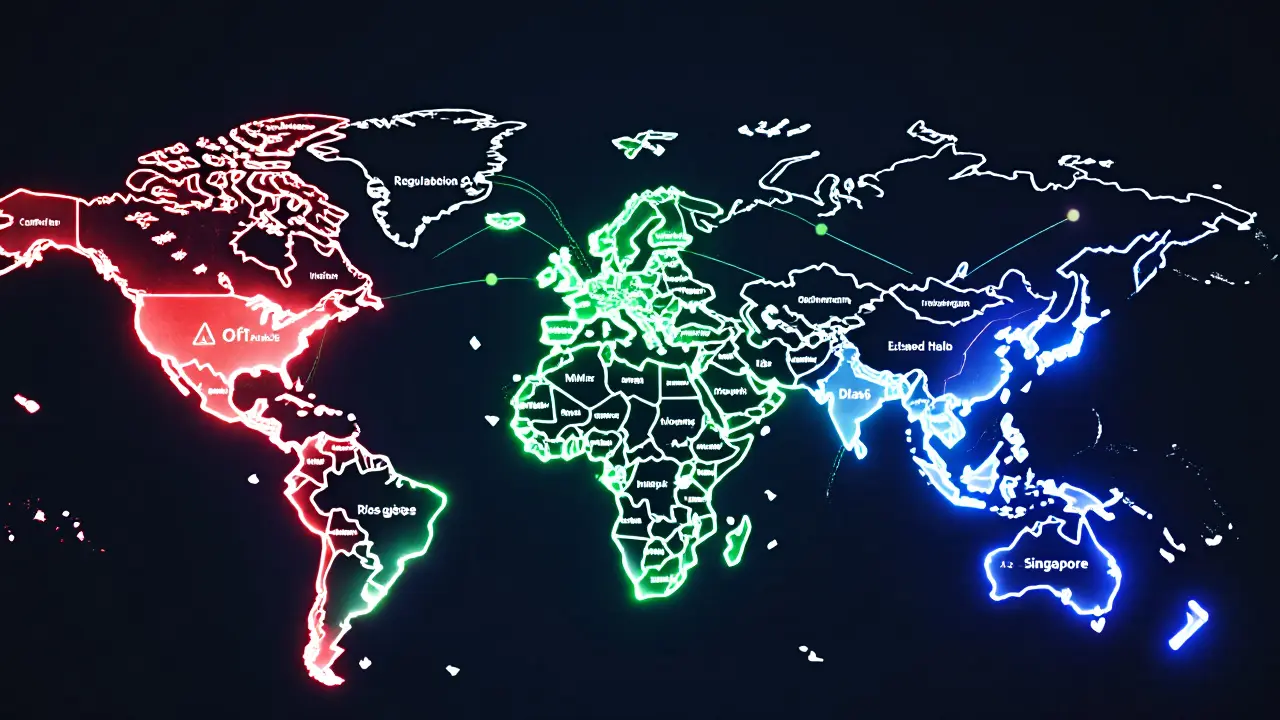

When we talk about crypto regulations, government rules that define how cryptocurrencies can be used, traded, or taxed. Also known as cryptocurrency laws, these rules are no longer optional background noise—they’re the framework that decides whether you can hold, trade, or earn from crypto at all. In 2025, it’s not about whether crypto is good or bad. It’s about where you live, who’s watching, and what paperwork you’ve filed.
Take the European Union, a bloc that now enforces strict crypto rules under MiCA and TFR. Also known as MiCA compliance, this framework forces exchanges, stablecoin issuers, and even wallet providers to register, track transactions, and prove they’re not laundering money. If you’re trading in the EU, you’re under a microscope. But if you’re a business, this clarity is a gift—no more guessing if tomorrow’s rule will shut you down.
Then there’s Thailand, a country that banned five foreign P2P platforms in 2025 to stop fraud. Also known as crypto exchange ban, this move didn’t kill crypto—it just moved it indoors. Now, only local exchanges licensed by the SEC can operate, and users must verify their identity before trading. It’s not freedom, but it’s order. And in places like Namibia, where the Bank of Namibia, requires businesses to get a VASP license to accept crypto payments. Also known as VASP licensing Namibia, this isn’t a crackdown—it’s a roadmap. You can use crypto there, but only if you play by the rules.
And then there’s the flip side: places that flipped the script. Bolivia once banned crypto entirely. Now, it’s one of the fastest-growing crypto markets in Latin America, with $294 million in transactions in just six months. Why? Because the government realized blocking crypto didn’t stop people—it just pushed them into riskier corners. So they legalized it, regulated it, and started collecting taxes.
These aren’t just headlines. They’re life-changing. If you’re holding crypto in a country with no clear rules, you’re gambling—not investing. If you’re in a place like the EU or Namibia, you’ve got structure. You know what’s allowed. You know what paperwork you need. You know who to report to. That’s not boring—it’s protection.
And it’s not just about governments. It’s about who gets left behind. In Argentina, people use stablecoins to save their paychecks from inflation. In Nigeria, traders bypass broken banks with P2P deals. But even those freedoms are under pressure as regulators crack down on unlicensed platforms. The same tools that empower the unbanked can also be used by scammers—and regulators are catching on.
What you’ll find below isn’t a list of headlines. It’s a map. You’ll see how a fake airdrop in Indonesia ties into a crypto ban in Thailand. How a regulation in the EU kills off shady stablecoins. How Bolivia’s reversal shows that bans don’t work—but clear rules do. These posts don’t just tell you what happened. They show you how to read the signs before you lose money, get blocked, or get flagged.
Crypto regulations are changing fast worldwide in 2025. From U.S. policy shifts to EU licensing rules and Asian compliance standards, staying updated isn't optional-it's essential to protect your assets and avoid legal trouble.