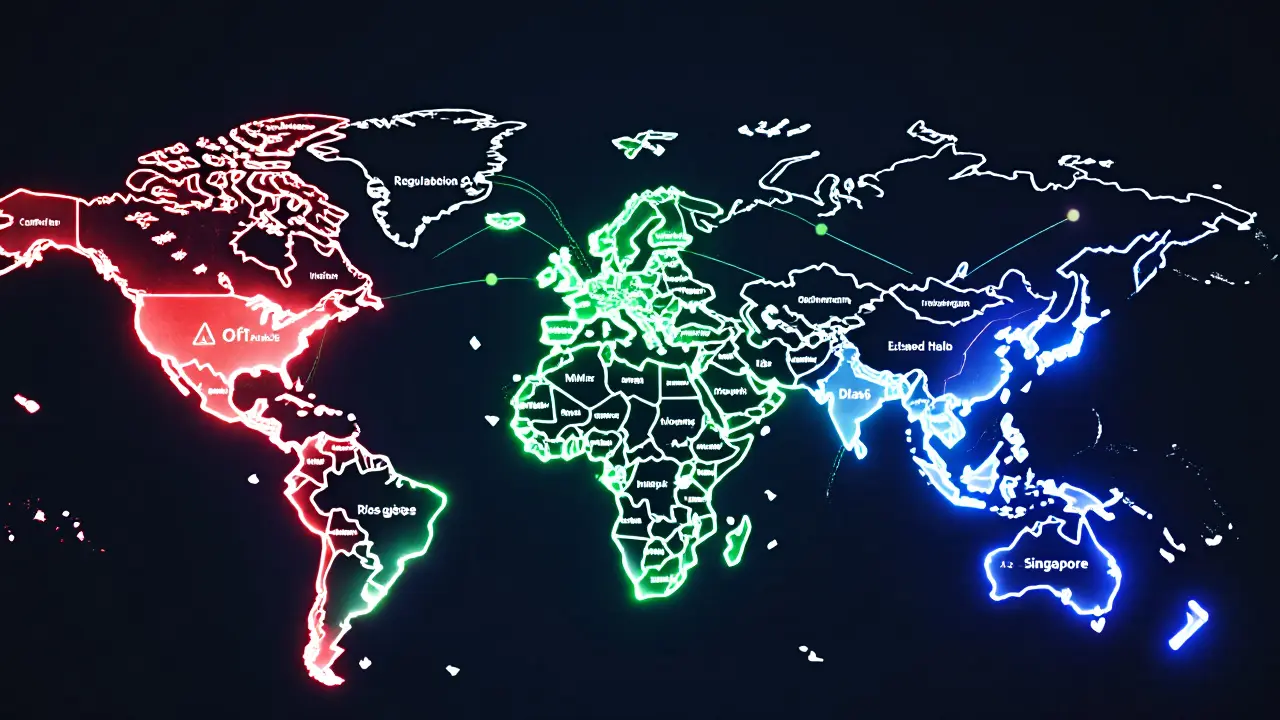

When you hear crypto regulatory changes, government rules that control how digital assets are issued, traded, or taxed. Also known as cryptocurrency regulations, these rules now determine whether you can use crypto in your daily life—or if your wallet gets frozen. This isn’t about future predictions. It’s about what’s already in force across the U.S., EU, Thailand, Namibia, and Bolivia—and how it’s already changing your options.
Take the EU MiCA, the first full regulatory framework for crypto across all 27 member states. Also known as Markets in Crypto-Assets Regulation, it forces exchanges to prove they’re secure, stablecoins to back every coin with real assets, and projects to publish clear whitepapers. If you’re trading on Bitocto or Coincall, MiCA means they can’t hide fee structures or ignore AML checks anymore. Meanwhile, Thailand’s crypto ban, a 2025 crackdown on foreign P2P platforms. Also known as SEC Thailand enforcement, it wiped out access for thousands of users overnight—leaving only licensed local exchanges like CoinDCX legal. And in Namibia, the 2023 Virtual Assets Act. Also known as VASP licensing, it lets businesses use crypto but only if they get government approval. No license? No crypto payments. Simple as that.
Some countries flipped the script entirely. Bolivia used to ban crypto. Now, it’s one of the fastest-growing markets in Latin America—with $294 million in transactions in six months. Why? Because regulation gave people trust. Meanwhile, the FEAR token airdrop and XSUTER rumors? They’re dead because regulators now demand proof. No team. No whitepaper. No license. No airdrop. Scammers can’t hide behind anonymity anymore.
You don’t need to be a lawyer to understand this. If you’re holding a token with $11 in daily volume like Inery, or a meme coin with zero utility like RFC, regulatory scrutiny is coming. Exchanges that don’t comply get shut down. Tokens without clear issuers get delisted. Even stablecoins like USDT in Argentina are now part of a survival strategy—not speculation—because governments can’t stop people from protecting their money.
What’s below isn’t just a list of articles. It’s a map of real-world outcomes. You’ll see how crypto exchange reviews now include compliance checks. How airdrops are no longer free giveaways but legal events tied to KYC. How blockchain oracles and rollup tech are being built to meet new rules—not bypass them. This isn’t theory. It’s what’s already shaping your wallet. Read on—what you find here might save you from losing money, or worse, getting flagged by regulators.
Crypto regulations are changing fast worldwide in 2025. From U.S. policy shifts to EU licensing rules and Asian compliance standards, staying updated isn't optional-it's essential to protect your assets and avoid legal trouble.