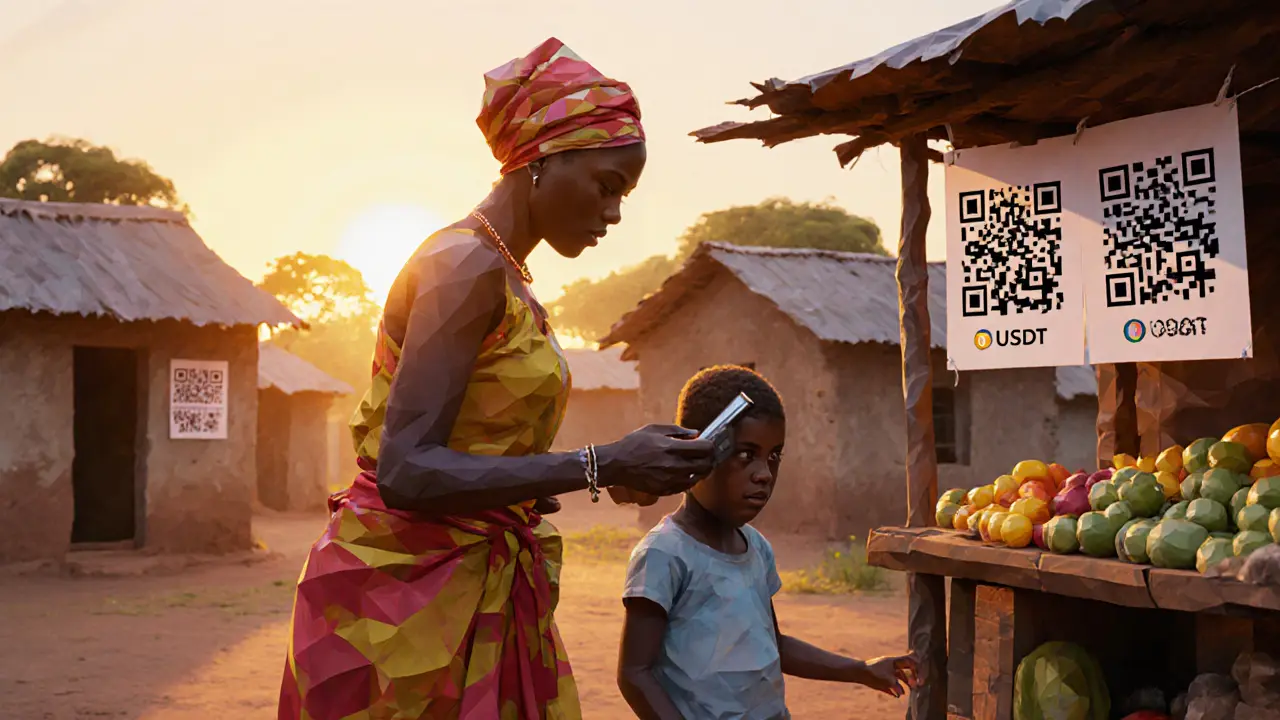

For millions in developing countries, nations with limited access to traditional banking, unstable currencies, or restrictive financial policies. Also known as emerging markets, these regions are turning to blockchain not for speculation, but for survival. When inflation hits 100% a year, like in Argentina or Nigeria, saving in local currency means losing value every day. That’s why people are buying stablecoins, digital tokens pegged to the U.S. dollar to preserve value like USDT and USDC—no bank account needed, no government approval required.
Crypto isn’t just a backup plan—it’s becoming the main system. In Iran, unlicensed mining operations funded by the IRGC are turning cheap electricity into hard currency, bypassing global sanctions. In India, platforms like CoinDCX are helping users navigate strict capital controls with local payment methods. Even in countries where banks shut down withdrawals, like Lebanon or Venezuela, crypto wallets are the only way to send money to family abroad or pay for essentials. This isn’t about getting rich overnight. It’s about keeping food on the table. And it’s happening at scale—millions of people, not just tech elites.
The tools are simple: a smartphone, a wallet app, and a connection to the internet. No credit check. No minimum balance. No waiting weeks for a wire transfer. That’s why DeFi, decentralized finance systems that let people lend, borrow, and earn without banks is growing faster in Kenya and the Philippines than in New York or London. People aren’t waiting for reform—they’re building their own financial layer on top of blockchain. Meanwhile, regulators in the EU are tightening rules with MiCA and TFR, trying to control what’s already flowing freely in the Global South. But when your savings vanish overnight, you don’t wait for permission to protect yourself.
What you’ll find below aren’t theoretical essays or hype-filled guides. These are real stories and hard data: how Argentines use crypto to survive hyperinflation, how Iranian miners evade sanctions, why Indian traders choose CoinDCX over global exchanges, and what happens when a token like MoneySwap disappears overnight. This is crypto as it’s actually used—by people who have no other choice.
Cryptocurrency is helping millions in developing countries access banking services without needing a traditional bank account. From cutting remittance fees to fighting inflation, crypto is filling gaps where banks won’t go.