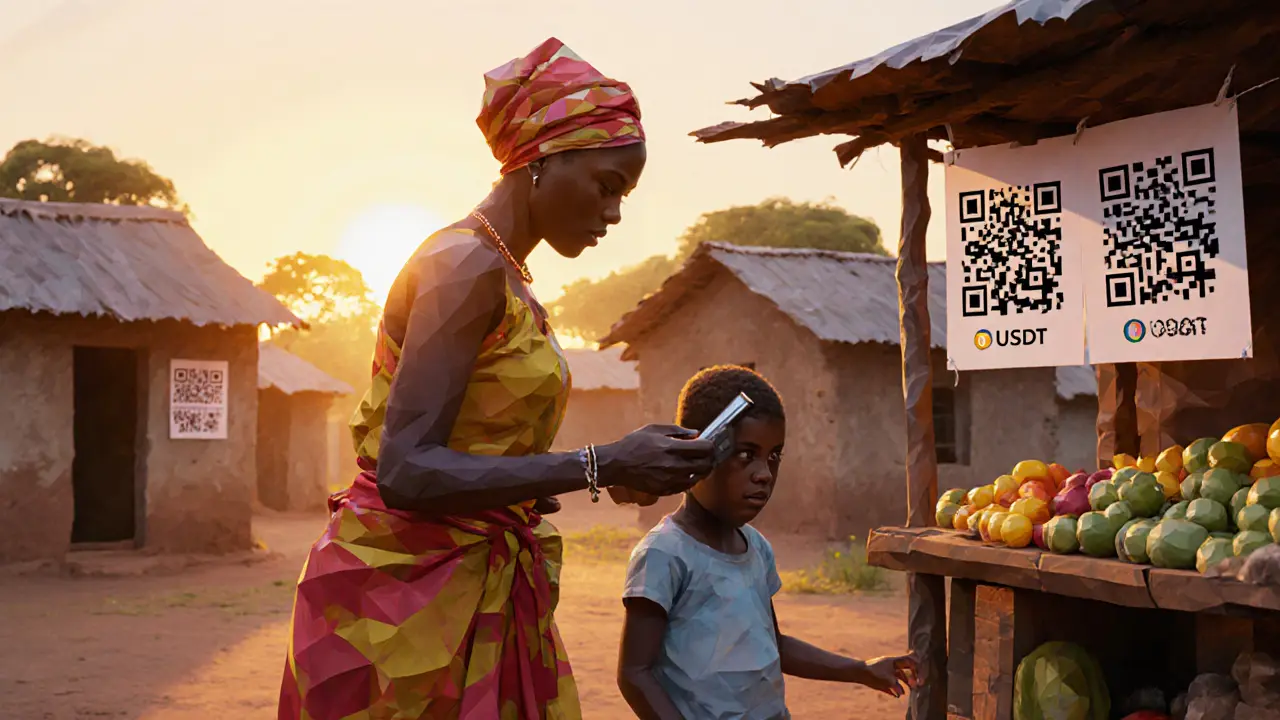

When we talk about financial inclusion, the process of giving people access to affordable financial services like savings, credit, and payments. Also known as economic empowerment, it’s no longer just about opening a bank account—it’s about bypassing broken systems entirely. For billions of people, traditional banks are out of reach: no ID, no address, no credit history. But crypto doesn’t ask for any of that.
Stablecoins, digital tokens pegged to real money like the US dollar. Also known as digital cash, they let people in Argentina, Nigeria, or Lebanon protect their savings from hyperinflation without needing a bank. In Argentina, people use USDT to buy groceries when the peso loses 20% of its value in a month. In Nigeria, traders send money across borders in minutes using USDC instead of waiting days through Western Union. This isn’t speculation—it’s survival. And it’s not just individuals. DeFi, a system of open financial protocols built on blockchain. Also known as decentralized finance, it lets anyone lend, borrow, or earn interest without a middleman. No credit check. No branch visit. Just a smartphone and an internet connection. That’s financial inclusion built from the ground up, not handed down by regulators or banks.
It’s not perfect. Some platforms are scams. Others have high fees or confusing interfaces. But the shift is real. In Iran, unlicensed miners use crypto to turn cheap electricity into real value, bypassing sanctions that freeze their bank accounts. In India, CoinDCX lets millions trade crypto with tax-compliant tools their banks never offered. Sweden’s crackdown on mining didn’t stop crypto—it just pushed it underground, where people still use it to move value when the system fails them.
You’ll find stories here about how real people use crypto—not as investments, but as tools. How Argentines keep their life savings safe. How stablecoins replace broken currencies. How DeFi gives farmers in Kenya access to loans without collateral. How blockchain identity lets refugees prove who they are without papers. These aren’t future ideas. They’re happening now.
Cryptocurrency is helping millions in developing countries access banking services without needing a traditional bank account. From cutting remittance fees to fighting inflation, crypto is filling gaps where banks won’t go.