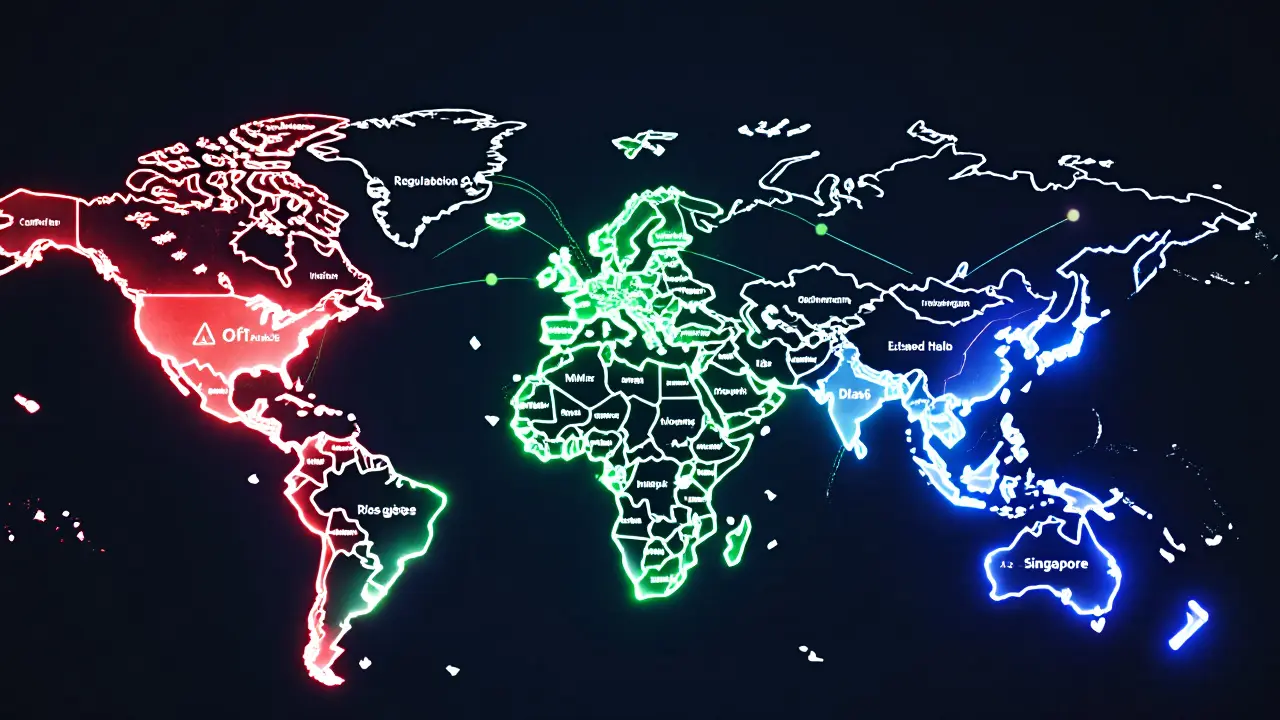

When we talk about global crypto laws, the patchwork of rules that govern how countries treat digital currencies. Also known as cryptocurrency regulation, it's not about one global rulebook—it's about 195 different answers to the same question: Is crypto legal here? Some places treat it like cash. Others treat it like gambling. A few still treat it like a crime.
Take Bolivia, a country that flipped its stance completely in 2024 after years of banning crypto. Also known as virtual assets Bolivia, it now sees crypto as a tool for economic survival, not a threat. Meanwhile, Thailand, cracked down in 2025 by banning five foreign P2P platforms to stop fraud. Also known as SEC Thailand, it didn’t ban crypto—it just said you can only trade through licensed local exchanges. And in the European Union, MiCA and TFR turned crypto rules into enforceable law, forcing stablecoins to prove they’re safe and transactions to be traceable. Also known as MiCA compliance, it’s the closest thing the world has to a unified crypto rulebook. These aren’t just headlines—they’re the rules that decide if you can send crypto to a friend, cash out profits, or get fined for using an unlicensed exchange.
It’s not just about big economies. Namibia, lets you pay with crypto if merchants agree, but forces businesses to get a license to handle it. Also known as VASP licensing Namibia, it’s a middle ground: crypto is allowed, but not wild west. In India, CoinDCX handles millions of users under strict tax reporting rules. In Argentina, people use USDT to keep their savings from evaporating due to inflation. In Indonesia, Bitocto exists in a gray zone—with no clear security standards or user reviews. These aren’t random cases. They show how global crypto laws are shaped by local needs: inflation, banking access, fraud control, and political power.
What you’ll find below isn’t a list of headlines. It’s a real-world map of where crypto stands today. You’ll see how a token’s value can die overnight because of a country’s ban. How a so-called "airdrop" is just a scam when the local government doesn’t recognize it. How a blockchain project survives only if it follows licensing rules. These posts don’t guess—they report what’s happened, where, and why it matters to your wallet.
Crypto regulations are changing fast worldwide in 2025. From U.S. policy shifts to EU licensing rules and Asian compliance standards, staying updated isn't optional-it's essential to protect your assets and avoid legal trouble.