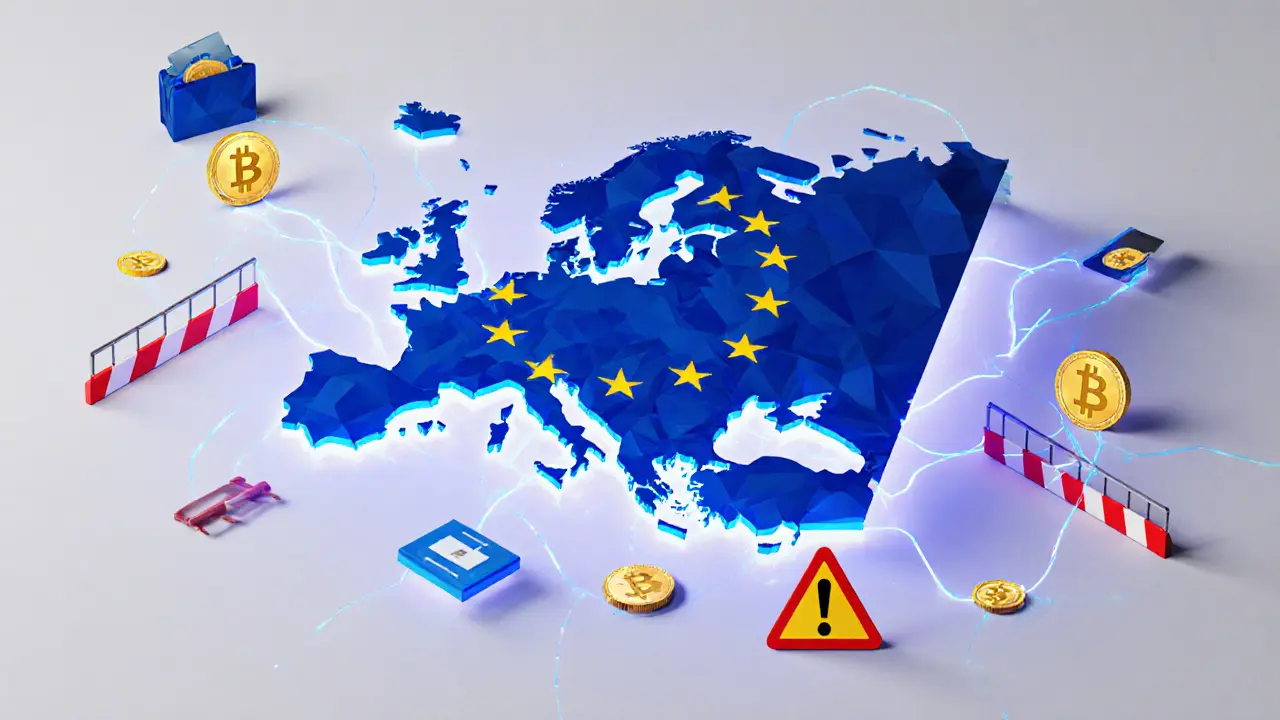

When you hear MiCA compliance, the Markets in Crypto-Assets Regulation, a sweeping EU law that sets rules for crypto businesses operating in Europe. Also known as Crypto-Asset Market Regulation, it’s not just paperwork—it’s the new baseline for legitimacy in crypto. If a crypto exchange, wallet, or token issuer claims to be MiCA compliant, it means they’ve jumped through legal hoops to operate openly in the EU. That includes clear disclosures, user fund protection, and anti-money laundering checks. No more hidden teams, anonymous founders, or unregulated staking pools.
It’s not just about exchanges. DeFi protocols, decentralized finance platforms that let users lend, borrow, or trade without intermediaries. Also known as permissionless finance, they’re now under pressure to adapt or disappear in Europe. Projects that used to operate like underground clubs—no KYC, no licenses, no accountability—now need to register, report, and prove they’re not running scams. This doesn’t kill innovation. It kills fraud. And it gives real projects a fighting chance.
Crypto exchange, a platform where users buy, sell, or trade digital assets. Also known as cryptocurrency trading platform, they’re the frontline of MiCA enforcement. Look at CoinDCX or HTX—both operate globally, but only those that meet MiCA’s strict rules can legally serve EU customers. That means better security, clearer fees, and real customer support. It also means some platforms will drop EU users entirely because the cost of compliance is too high. That’s not a bug—it’s a feature. The crypto wild west is ending, and the survivors are the ones who play by the rules.
You might wonder: does this affect me if I’m not in Europe? Yes. MiCA is becoming the global standard. Crypto projects that want to scale don’t just need US or Asian users—they need EU access. So even if you’re in the US or India, you’ll see more tokens and exchanges adopting MiCA-style rules simply because it’s now the path to credibility. Tokens that don’t comply risk being delisted from major platforms. Exchanges that ignore it risk fines, shutdowns, or criminal charges.
The posts below show exactly how this plays out in the real world. You’ll find reviews of exchanges that made the cut, deep dives into tokens that got pulled for non-compliance, and breakdowns of how regulatory shifts impact everyday traders. There’s no hype here—just what’s working, what’s failing, and who’s getting left behind as crypto grows up.
EU crypto businesses must comply with strict AML rules under MiCA and AMLR, including the Travel Rule, KYC tiers, and licensing. Learn what’s required in 2026 and how regulators are cracking down on non-compliance.
EU cryptocurrency sanctions are now enforceable under MiCA and TFR. Learn how stablecoin rules, transaction tracing, and licensing requirements affect businesses and users in 2025.