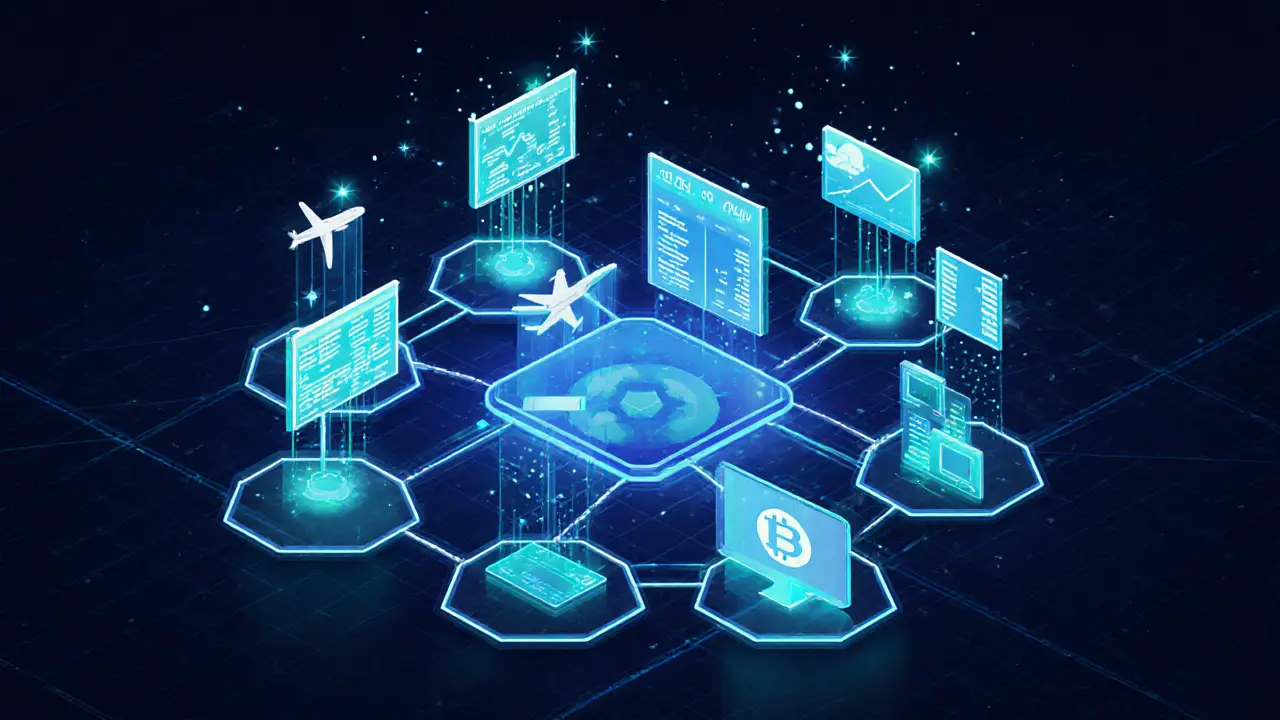

When a oracle problem, the challenge of connecting smart contracts to real-world data without trusting a single source shows up, crypto doesn't just slow down—it collapses. Smart contracts run on code, but they can't see the outside world. They need prices, weather, election results, stock prices—all the stuff that happens off-chain. That’s where blockchain oracles, third-party services that feed external data into smart contracts come in. But here’s the catch: if the oracle is wrong, hacked, or manipulated, the whole contract goes off the rails. And you lose money. Not because the code is broken. Because the data feeding it is garbage.
Think of it like a vending machine that only works if someone tells it the price of coffee. If that person lies and says coffee costs $0.50 when it’s really $5, the machine gives out free coffee until it runs out. That’s what happened in DeFi protocols like bZx and Cream Finance. They relied on single data sources for asset prices. Hackers manipulated those feeds. Millions vanished. The data feeds, the streams of real-time information used by oracles to update blockchain contracts weren’t just unreliable—they were weaponized. And it’s not just about price. Oracles are used for insurance payouts, sports bets, even loan collateral values. If the feed says your house burned down when it didn’t, you get paid. If it says you’re bankrupt when you’re not, your loan gets liquidated. This isn’t theory. It’s daily risk in DeFi.
The smart contracts, self-executing agreements coded on blockchain that trigger actions when conditions are met themselves are flawless. The problem isn’t the code. It’s the silence between the code and reality. That’s why the best projects now use decentralized oracles—like Chainlink—that pull data from multiple sources, cross-check it, and only act when there’s consensus. But even then, it’s not foolproof. Some oracles still rely on centralized APIs. Others are slow. Others get gamed by large traders. The DeFi, decentralized finance ecosystem built on blockchain that replaces traditional financial intermediaries world is full of projects that promise high yields but ignore the oracle problem entirely. They’re not innovating. They’re gambling.
What you’ll find in the posts below isn’t hype. It’s proof. You’ll see how fake tokens like Web3Shot and Inery rely on manipulated price data—another form of oracle fraud. You’ll see how airdrops like FEAR and Shambala are built on empty promises because no one’s verifying what they claim. You’ll see how exchanges like Coincall and HTX handle data integrity differently, and why that matters when your position gets liquidated. This isn’t about blockchain being broken. It’s about the weakest link: the data. And until you understand the oracle problem, you’re just betting on someone else’s lie.
Blockchain oracles connect smart contracts to real-world data like prices, weather, and flight status. They solve the oracle problem by securely fetching, verifying, and delivering off-chain information to blockchains. Chainlink is the dominant network, used by over 1,400 projects.