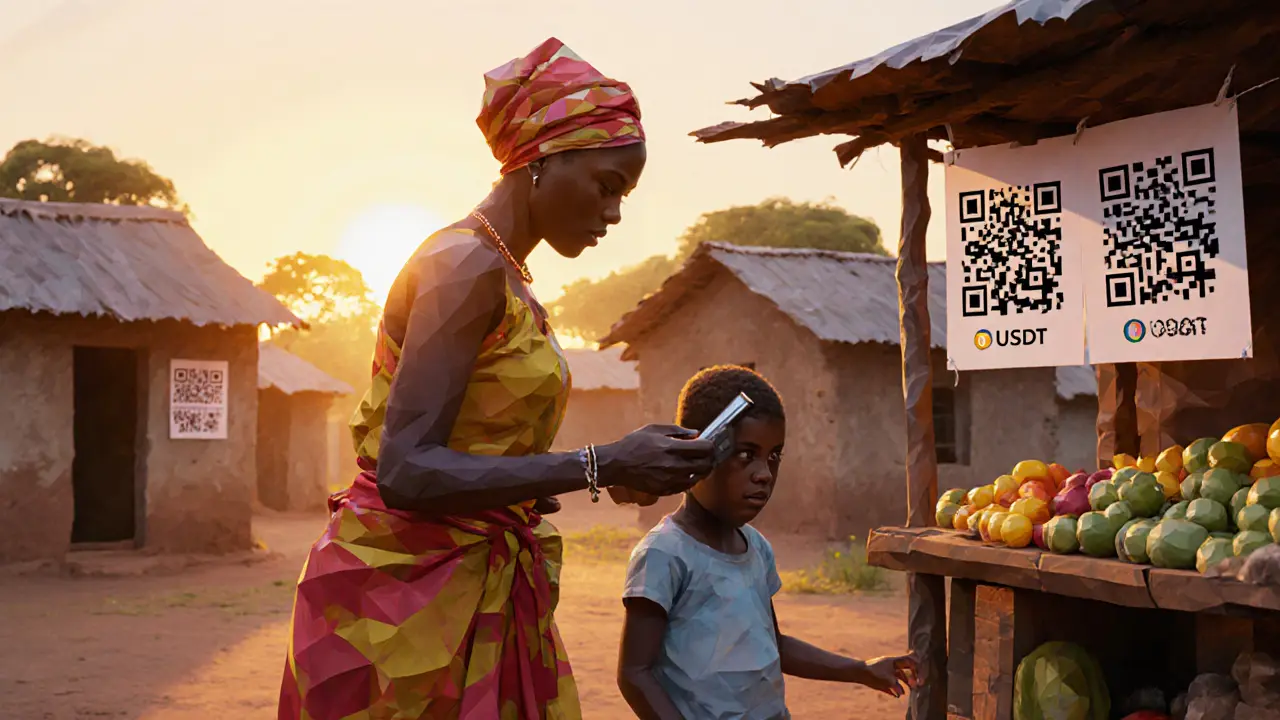

For over unbanked, people without access to traditional banking services like savings accounts, loans, or payment systems. Also known as financially excluded, they number over 1.4 billion globally—many living in places where banks are distant, expensive, or outright hostile to their needs. This isn’t just about lacking a bank account. It’s about being locked out of basic economic survival: sending money to family, saving for emergencies, or even buying groceries without carrying cash that can be stolen or lost.
Crypto doesn’t ask for ID, credit scores, or proof of income. It just needs a phone and a network. That’s why in countries like Argentina, where inflation hits 200% a year, people are using stablecoins, digital currencies pegged to the US dollar to avoid currency collapse like USDT and USDC to protect their life savings. In Iran, where Western banks cut off access, citizens turn to mining and peer-to-peer trading to buy food and medicine. In Nigeria, where bank transfers take days and fees eat half your paycheck, crypto remittances arrive in minutes for pennies. These aren’t speculative bets—they’re lifelines.
The tools are simple: a wallet app, a few clicks, and a connection. No branch visits. No paperwork. No waiting. blockchain access, the ability to use decentralized networks without intermediaries turns smartphones into banks. And it’s not just for the poor. It’s for anyone ignored by the system—refugees, gig workers, women in conservative societies, rural farmers. The unbanked aren’t waiting for permission. They’re building their own financial infrastructure, one transaction at a time.
What you’ll find here aren’t theoretical essays. These are real cases: how Argentines use crypto to survive hyperinflation, how Iran’s state-backed miners exploit the system, how people in India and Nigeria bypass broken payment rails. You’ll see the platforms they use, the risks they face, and the quiet revolution happening outside the view of Wall Street and the IMF. This isn’t about getting rich. It’s about getting by—and finally, getting control.
Cryptocurrency is helping millions in developing countries access banking services without needing a traditional bank account. From cutting remittance fees to fighting inflation, crypto is filling gaps where banks won’t go.