

Bancor Network V3 Review: Single-Sided Staking and Impermanent Loss Protection Explained
 Jun, 17 2026
Decentralized exchanges (DEXs) have long forced users to choose between liquidity depth and capital efficiency. You either provided balanced pairs of assets and risked impermanent loss, or you traded with high slippage on thin books. Bancor Network V3 is a decentralized exchange protocol that allows traders to swap tokens against a unified liquidity pool using a single smart contract. Also known as Bancor V3, it launched in beta in April 2022 to solve these exact friction points. By introducing the Omnipool architecture, Bancor changed how liquidity providers interact with the market, removing the need for paired deposits and offering immediate protection against value erosion.
If you are looking to provide liquidity without managing complex ratios, or if you want to trade across multiple tokens in one transaction, Bancor V3 offers a distinct approach compared to giants like Uniswap. But does this new model hold up under scrutiny? Let’s look at how it works, where it shines, and what risks remain.
How the Omnipool Architecture Works
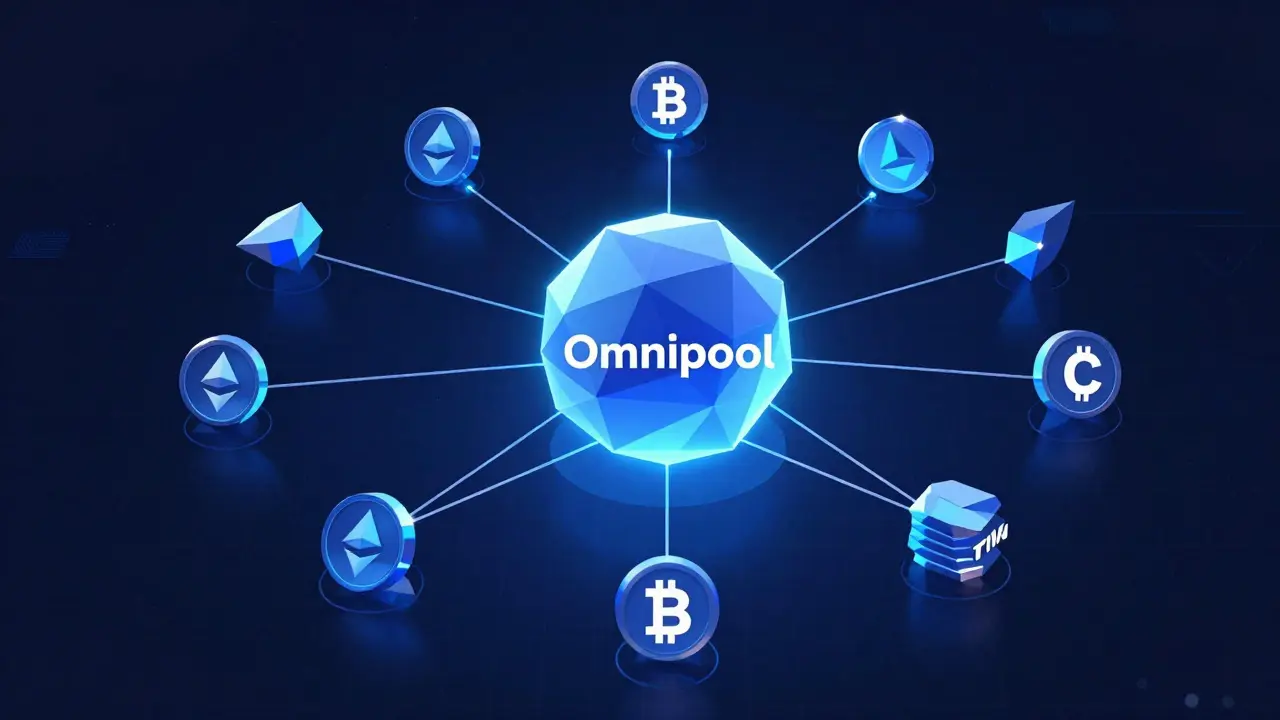
The core innovation of Bancor V3 is the Omnipool. In traditional AMM models, every trading pair requires its own liquidity pool. If you wanted to trade ETH for LINK, you needed an ETH/LINK pool. If none existed, you had to route through multiple pools, paying gas fees at each step. This fragmentation increased costs and reduced efficiency.
Bancor V3 consolidates all supported tokens into a single smart contract. When you execute a trade, the protocol calculates the price impact based on the holdings within this unified pool. This means every trade happens in a single transaction. For users, this translates to lower gas fees because you are not interacting with multiple contracts. It also simplifies the user experience; you don’t need to hunt for specific pairs.
As of mid-2026, the network supports around 89 tokens, though active trading volume concentrates heavily on major assets. The top trading pairs include ETH/BNT, WBTC/BNT, and LINK/BNT. These pairs account for the majority of the daily volume, which hovers around $107,000. While this number is modest compared to centralized exchanges, it reflects a niche focus on efficient, low-slippage swaps rather than high-frequency trading.
Single-Sided Liquidity Staking
One of the most significant barriers to entry for liquidity providers has been the requirement to deposit two assets in equal value. If you wanted to provide liquidity for an ETH/USDC pool, you had to buy USDC, wait for the transaction to clear, and then deposit both. This process exposed you to price volatility during the setup phase and required constant rebalancing.
Bancor V3 eliminates this hurdle with single-sided staking. You can deposit only one token-say, ETH-and the protocol automatically pairs it with the necessary counter-assets from its internal reserves. This feature, combined with Infinity Pools, allows for limitless deposits without the hassle of asset pairing. It democratizes liquidity provision by allowing anyone with a single asset to participate.
This approach changes the risk profile for providers. Instead of worrying about maintaining a 50/50 balance, you focus on the performance of your chosen asset. However, it shifts some complexity to the protocol itself, which must manage the reserve ratios to ensure fair pricing and sufficient liquidity for trades.

Impermanent Loss Protection Mechanism
Impermanent loss occurs when the price of deposited assets changes relative to each other, resulting in less value than simply holding the assets. It has been the primary deterrent for many investors considering DEX liquidity provision. Bancor V3 addresses this directly with 100% impermanent loss protection available immediately upon staking.
In previous versions, achieving full protection took 100 days of continuous liquidity provision. V3 removes this waiting period entirely. If you withdraw your funds after a seven-day cooldown period, the protocol compensates you for any impermanent loss incurred. There is a 0.25% exit fee, which is adjustable by the DAO, but the protection itself is robust.
The mechanism behind this protection relies on the protocol’s treasury and its ability to mint new BNT tokens. When a user claims compensation, the system uses existing liquidity or mints BNT to cover the difference. This raises important questions about sustainability. During extended bear markets, excessive minting could dilute the value of the BNT token, potentially undermining the very security the protection promises. Investors need to monitor the total value locked (TVL) and fee generation to assess whether the protocol can sustain these payouts without devaluing its native asset.
User Interface and Smart Portfolio Features
Navigating DeFi platforms often feels like deciphering code. Bancor V3 aims to simplify this with a redesigned interface that prioritizes clarity. The Smart Portfolio feature provides real-time transparency into your earnings. It compares your actual net returns from providing liquidity against a simple 'hold' strategy. This LP vs. HOLD comparison tool helps you understand whether your efforts are generating alpha or merely exposing you to unnecessary risk.
The platform includes an 'Earn' section where you can view approved tokens and their respective interest rates. Live market analysis insights are integrated directly into the dashboard, helping traders make informed decisions without switching tabs. Whether you are a novice investor or a seasoned trader, the interface balances ease of use with advanced functionalities like auto-compounding rewards. Earned fees are automatically reinvested, increasing your stake over time and creating a compound interest effect.

Risks and Competitive Landscape
While Bancor V3 offers compelling features, it operates in a highly competitive environment. Established DEXs like Uniswap and Curve dominate market share due to their deep liquidity and extensive token support. Bancor’s TVL remains relatively small, which can lead to higher slippage on large trades outside the major pairs.
The sustainability of the impermanent loss protection model is another critical factor. As mentioned, the reliance on BNT minting creates a potential conflict between user protection and token value preservation. If the protocol cannot generate sufficient fees from trading activity, it may struggle to maintain its guarantees during volatile market conditions.
Additionally, execution risks exist regarding future upgrades. The success of Bancor V3 depends on continuous development and effective governance by the DAO. Any delays or bugs in protocol updates could impact user confidence and liquidity levels. Traders should weigh these risks against the benefits of single-sided staking and immediate IL protection.
| Feature | Bancor V3 | Traditional AMM (e.g., Uniswap V2) |
|---|---|---|
| Liquidity Deposit | Single-sided (one token) | Paired (two tokens, 50/50) |
| Impermanent Loss Protection | 100% immediate (after 7 days) | None (user bears full risk) |
| Transaction Complexity | Single transaction via Omnipool | Multiple transactions for cross-pair swaps |
| Gas Efficiency | Higher (consolidated logic) | Lower (multiple contract calls) |
| Native Token Role | BNT used for IL protection & fees | UNI primarily for governance |
Conclusion on Bancor V3 Viability
Bancor Network V3 represents a significant evolution in decentralized exchange design. By addressing the pain points of paired liquidity and impermanent loss, it opens up DeFi participation to a broader audience. The Omnipool architecture streamlines trading, while single-sided staking simplifies liquidity provision. For users who prioritize capital efficiency and risk mitigation, Bancor V3 offers a unique value proposition.
However, the platform’s smaller scale compared to industry leaders means it is best suited for specific use cases rather than general-purpose trading. Monitor the health of the BNT token and the growth of TVL to gauge long-term viability. If you are willing to accept the trade-offs of a newer, niche protocol, Bancor V3 provides tools that can enhance your DeFi strategy.
What is Bancor Network V3?
Bancor Network V3 is a decentralized exchange protocol that uses an Omnipool architecture to allow single-transaction swaps and single-sided liquidity staking. It was designed to reduce gas fees and eliminate impermanent loss for liquidity providers.
Does Bancor V3 really protect against impermanent loss?
Yes, Bancor V3 offers 100% impermanent loss protection immediately upon staking. After a 7-day cooldown period, you can withdraw your funds and receive compensation for any losses incurred, subject to a 0.25% exit fee.
How does single-sided staking work?
Single-sided staking allows you to deposit only one token into the liquidity pool. Bancor V3 automatically pairs your deposit with the necessary counter-assets from its internal reserves, eliminating the need to buy and manage two different tokens.
What are the risks of using Bancor V3?
Key risks include the sustainability of the impermanent loss protection model, which relies on BNT minting and could dilute token value. Additionally, Bancor has lower liquidity than larger DEXs like Uniswap, which may result in higher slippage for large trades.
Is Bancor V3 suitable for beginners?
Yes, the simplified interface and removal of paired deposit requirements make it more accessible. However, users should still understand basic DeFi concepts like gas fees and smart contract risks before participating.