

Blockchain Identity Standards: A Guide to Decentralized ID Frameworks
 Apr, 17 2026
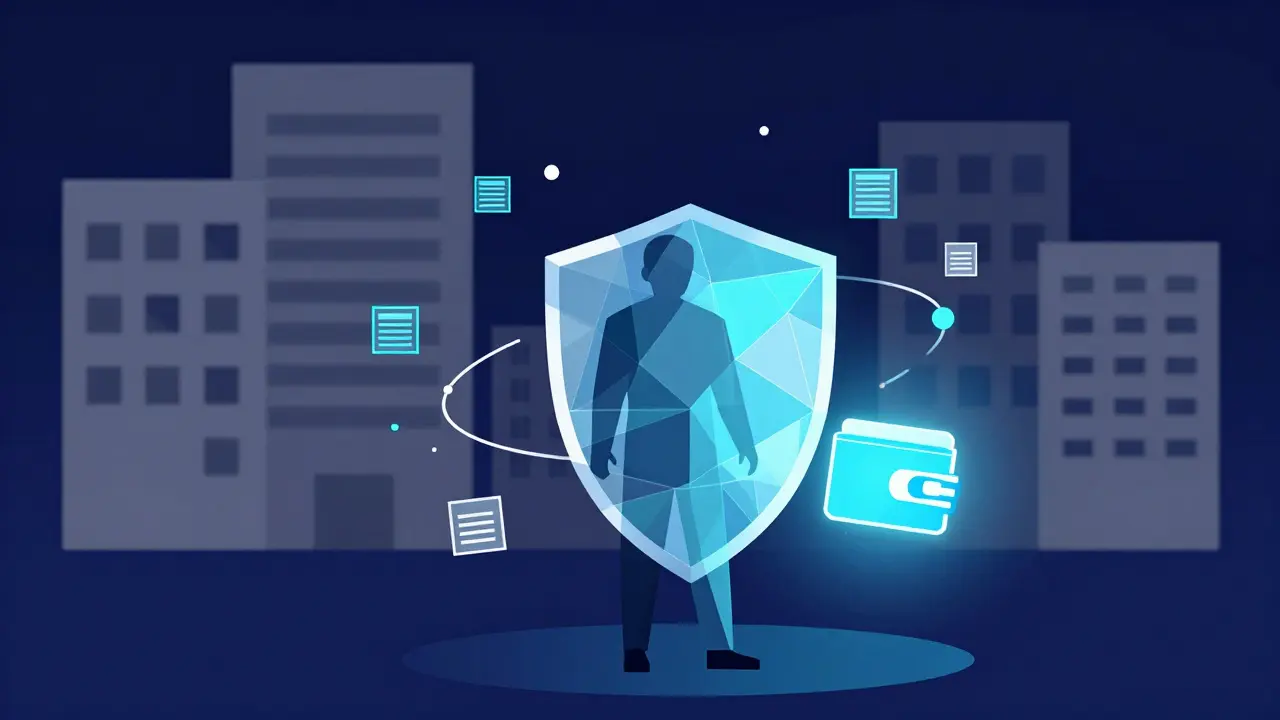
If you're wondering why this matters now, it's because the world is moving toward a model where you hold your own "keys" to your digital life. Instead of a company owning your data in a silo, you carry your credentials in a digital wallet and share only what is necessary. This isn't just a theoretical dream; with the upcoming eIDAS 2.0 regulations in Europe, blockchain-based identities are becoming a legal reality.
The Core Building Blocks of Decentralized Identity
To understand how this works, we have to look at the three main components that make the system tick. You can't have a decentralized system without a way to identify a user, a way to prove something about them, and a way to verify that proof without a middleman.
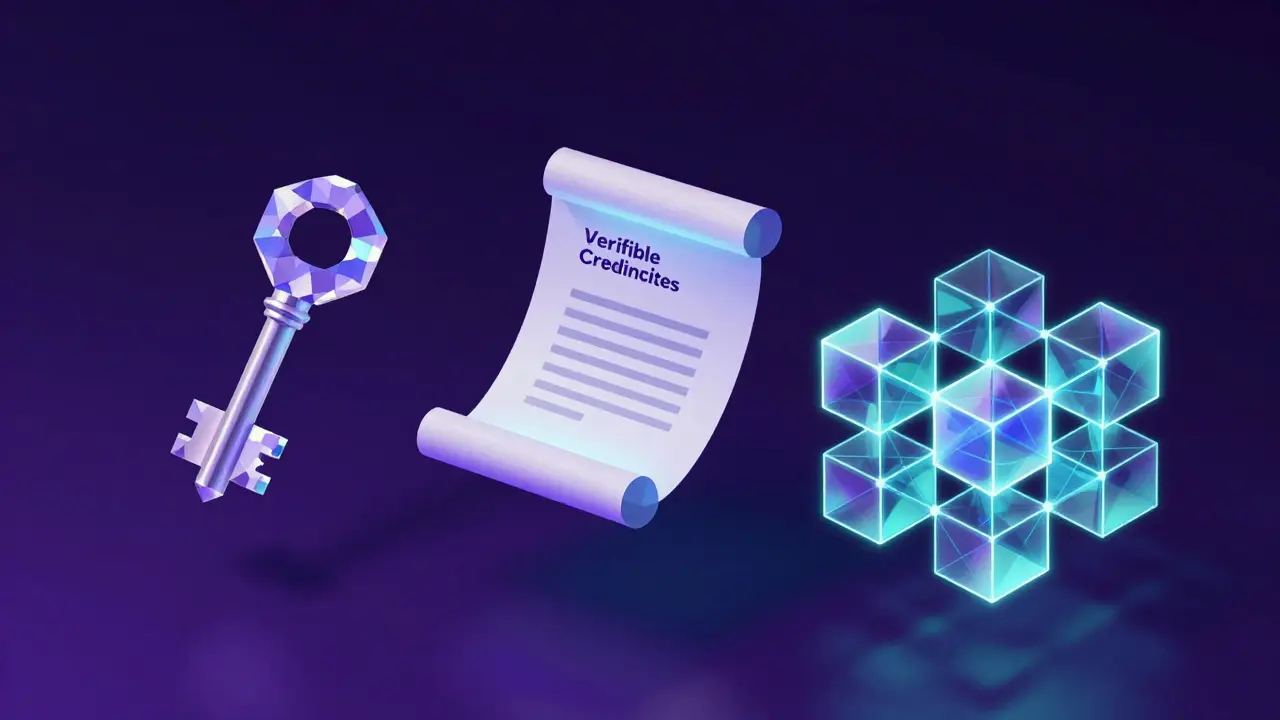
First, we have Decentralized Identifiers (or DIDs). DIDs are unique, permanent URIs that follow a specific format-did:method:identifier-allowing anyone to prove ownership of a DID without needing a central registry. Think of it as a digital address that you own, rather than one rented from Google or Facebook. As of late 2024, there are 37 different methods for creating these, such as 'did:ion' for the ION network or 'did:key' for simple public key setups.
Second are Verifiable Credentials (VCs). VCs are digital versions of physical documents, like diplomas or passports, that are cryptographically signed by an issuer. The magic here is selective disclosure. Using zero-knowledge proofs, you can prove a specific attribute is true-like "I am a licensed doctor"-without revealing your license number or the date you graduated. This eliminates the "over-sharing" problem common in traditional KYC (Know Your Customer) processes.
Finally, the blockchain itself acts as the Verifiable Data Registry. It doesn't actually store your personal data (which would be a privacy nightmare); instead, it stores the public keys and the revocation status of the credentials. This ensures that when a company checks your ID, they can verify it's authentic and hasn't been cancelled, all without ever contacting the original issuer.
Comparing the Major Identity Frameworks
Not all blockchain identity systems are built the same. Depending on whether you're a government agency or a DeFi developer, you'll choose between permissioned and public networks. Permissioned networks are essentially "invite-only" clubs, while public networks are open to everyone.
| Feature | Permissioned (e.g., Sovrin, Hyperledger Indy) | Public (e.g., Ethereum / ENS) |
|---|---|---|
| Transaction Speed | High (1,000+ TPS) | Low (~15 TPS) |
| Decentralization | Moderate (Vetted nodes) | High (Permissionless) |
| Regulatory Fit | High (Easier compliance) | Moderate (Complex governance) |
| Typical Use Case | Government ID, Bank KYC | Web3 Profiles, Social IDs |
For instance, the Sovrin Network is a powerhouse for enterprise use, processing millions of identities because its permissioned structure allows for the speed and stability that banks require. On the flip side, the Ethereum Name Service (ENS) is great for the open web, but it can't match the sheer volume of identity registrations handled by permissioned systems due to network congestion and gas fees.
Real-World Wins and Pain Points
Is this actually working in the real world? Yes, but it's not without some growing pains. In the Philippines, the Department of Social Welfare and Development used a system based on Hyperledger Indy to cut identity fraud by 94% in their cash assistance programs. That's a concrete example of how removing the middleman stops the "ghost's" from stealing funds.
In the corporate world, banks using R3 Corda have seen KYC onboarding times drop from 72 hours to just 20 hours. Imagine the relief of not having to upload the same PDF of your passport ten times to different departments. However, these wins come with a price tag. Implementing these systems is expensive, and many companies still struggle with the "skills gap," often needing to hire specialized cryptography experts commanding six-figure salaries.
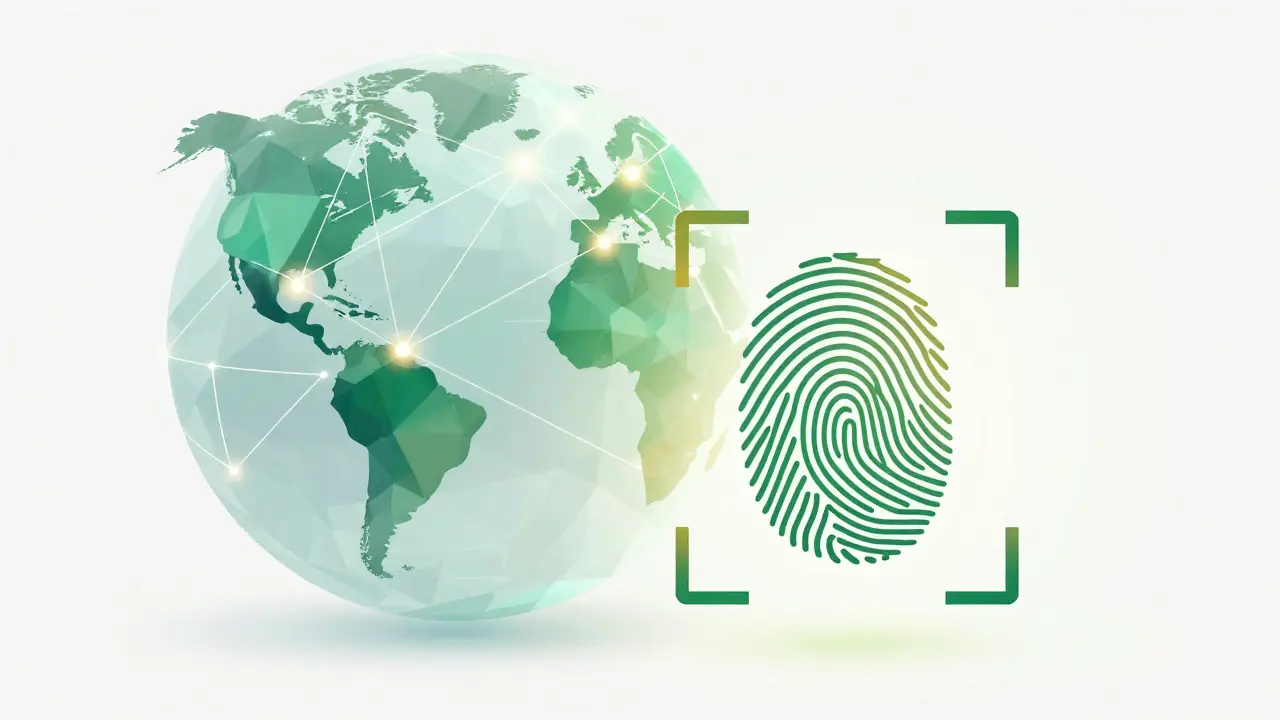
But here is the catch: the user experience is still a bit clunky. A huge point of friction is key recovery. In a traditional system, if you lose your password, you click "forgot password." In a purely self-sovereign identity (SSI) world, if you lose your recovery phrase, you could lose your entire identity forever. This has led to a surge in biometric-bound credentials, where your face or fingerprint unlocks your wallet, making the process much more human-friendly.
The Road to Mainstream Adoption
For these standards to go truly viral, we need more than just a few successful pilots; we need interoperability. Right now, a digital ID from one country might not work in another. The Decentralized Identity Foundation (DIF) is fighting this with the Universal Resolver, a tool that allows different blockchain networks to "talk" to each other so your ID works everywhere.
We're also seeing a merge between identity and AI. By 2026, most platforms will likely use AI to detect fraud in real-time within these identity networks. The goal is to create a "Trust Layer" for the internet. Instead of trusting a platform because it's a big brand, you trust the cryptographic proof that the person you're dealing with is who they say they are.
The biggest hurdle remains governance. Who decides what a "valid" credential is? If a government issues a digital ID, they still have the power to revoke it. This creates a tension between the technical promise of "self-sovereignty" and the practical reality of legal requirements. True user control requires an economic model where the user-not the wallet provider-holds the power.
What is the difference between a DID and a traditional username?
A traditional username is owned by the service provider (like Gmail or X). If they ban you, you lose that identity. A Decentralized Identifier (DID) is owned by you. It is a unique string of characters stored on a blockchain that proves you control the associated private key, making it independent of any single company.
Does the blockchain store my personal information?
No. Storing personal data on a public blockchain would be a security risk and a violation of laws like GDPR. Instead, your personal data is stored in a private digital wallet or a secure off-chain storage system like IPFS. The blockchain only stores the "fingerprint" (hash) of the data and the public keys needed to verify it.
What happens if I lose my private key or recovery phrase?
In early SSI systems, losing your key meant losing your identity. However, newer standards are introducing "social recovery" and biometric-bound credentials. This allows you to recover access through a trusted group of friends or a secure biometric check, reducing the risk of total account loss.
Are blockchain identities legal for official use?
It depends on the region, but it's becoming more common. The EU's eIDAS 2.0 framework is a major milestone, mandating that member states recognize qualified electronic identities. Many countries are already piloting blockchain IDs for professional certifications and social welfare programs.
What is a Verifiable Credential (VC)?
A VC is a digital, cryptographically signed attestation. For example, a university might issue a VC stating you have a degree. You store this in your wallet and can present it to an employer. The employer can verify the signature on the blockchain to know it's authentic without needing to call the university.

Next Steps for Implementation
If you're a developer or a business owner looking to move toward decentralized identity, don't try to build the infrastructure from scratch. That's a recipe for security holes and massive budget overruns. Start by exploring SDKs like Truvera, which can cut your deployment time from months to weeks.
For those in the financial sector, focus on mapping your solution to the NIST 800-63B guidelines to ensure you don't run into compliance issues later. If you're in healthcare, be extra cautious with HIPAA requirements-blockchain's transparency can be a liability if not paired with a robust off-chain storage strategy.
The transition won't happen overnight, but the shift is inevitable. As we move toward a more fragmented and private digital world, these standards will be the glue that keeps our digital lives secure and manageable.
Nishant Goyal
April 18, 2026 AT 01:06Solid breakdown. Really hopeful to see this tech actually making a difference in daily life.
Ian Chait
April 18, 2026 AT 22:18Typical globalist push for "digital IDs" to track us all... just a way for the deep state to lock down our movements with these so called VCs. The whole thing is a psyop to move us into a programmable social credit system while they tell us we "own" the keys. Wake up, they want the backdoars in the protocol. Absolute madness if u think the gov actually wants us to have privacy. They'll just launder the data through some shell company in the Caymans. Its all a scam to replace physical cash and sovereignty with a cloud based prison. Total nonsense.
Abhinav Chaubey
April 18, 2026 AT 23:44The mention of the Philippines is great, but let's be real-India is where the actual scale happens. Our Aadhaar system already paved the way for digital identity at a volume the West can't even imagine. Adding blockchain to the mix is just the logical evolution to fix the centralization issues we've faced. We are practically leading the charge in this transition while others are still debating the theory.
Gaurav Undirwade
April 19, 2026 AT 14:12It is profoundly disappointing that the discourse focuses on efficiency rather than the moral implications of such a system. One must consider whether the pursuit of a "seamless" identity is merely a mask for the erosion of human dignity. The technical specifications provided here are irrelevant if the underlying philosophy is devoid of ethical constraints. We are witnessing a descent into a technocratic dystopia where the soul is reduced to a hash on a ledger.
siddharth narula
April 21, 2026 AT 00:49Indeed, the dichotomy between the physical self and the digital ghost is a tragedy of our era. ॐ One must ponder if a cryptographic key can ever truly represent the essence of a human being. It is a sterile replacement for the organic trust we once shared in small communities. We are trading our spiritual autonomy for a fancy digital wallet. 😔
Sandeep Bhoir
April 22, 2026 AT 17:23Oh sure, because giving the government a high-tech way to revoke your identity instantly sounds like a total win for "sovereignty." I love how we just pretend the governance part isn't the entire problem here. Great plan, really.
Sean Mitchell
April 22, 2026 AT 23:57This is just an absolute nightmare. The idea that I have to manage a recovery phrase just to prove I exist is honestly offensive. I can't believe we're actually considering this as a viable future when it's so clearly designed to be a user experience disaster. I'm literally exhausted just thinking about the potential for total data loss.
Karen Mogollon Gutierrez
April 24, 2026 AT 22:10The sheer audacity of proposing a system where one's entire existence is contingent upon a biometric scan is simply appalling. It is an affront to personal privacy and a grotesque overreach of technological implementation. I find the lack of emphasis on the catastrophic failures of these pilots to be utterly negligent. The implications for marginalized populations who cannot provide a standard biometric sample are profoundly disturbing. This is not progress; it is a calculated erasure of individuality in favor of systemic efficiency. We are being ushered into a world where the machine decides who is valid and who is an outlier. I am absolutely horrified by the casual tone with which this transition is being discussed. Truly a travesty of justice.
nathan jones
April 26, 2026 AT 01:18Kinda cool to see how different countries are handling it. Keeps things interesting.
Robert Preston
April 26, 2026 AT 01:33If you're worried about the key recovery part, social recovery is the real answer. It's basically like having a group of trusted friends who can help you get back into your account without any one of them having full access. It bridges that gap between the risk of total loss and the risk of centralized control. It's the most balanced way to handle SSI right now.
Alex Long
April 27, 2026 AT 14:35Too many words. Just another overhyped crypto thing that won't actually work for normal people.
Evan Iacoboni
April 28, 2026 AT 11:08We need to be talking more about the actual hardware security modules here. Using a phone as a wallet is a joke if the OS is compromised. The only way this actually works is with dedicated secure elements that are air-gapped from the main processor.
Trudy Morse
April 29, 2026 AT 18:22It's just basic logic. If you control the key, you control the data. Simple as that.
Chintu Parikh
April 30, 2026 AT 13:01I am genuinely thrilled by the potential for global interoperability! The work being done by the Decentralized Identity Foundation is truly commendable and could open so many doors for international collaboration. Let's all lean into this transition and support the developers making this a reality. It's a fantastic time to be entering the Web3 space!