

ByteNext (BNU) Airdrop: Details, Rules, and Current Status
 Sep, 9 2026
Have you ever claimed a crypto airdrop only to find the token is worth less than a stick of gum? That’s the harsh reality for many participants in the ByteNext airdrop campaign. If you’re digging into the history of the BNU token distribution, you’re likely trying to figure out if it was a scam, a success, or just another ghost project. The short answer? It was a legitimate community engagement effort that has since faded into obscurity.
This article breaks down exactly what happened with the ByteNext airdrop, how the distribution worked, and where the project stands today in September 2026. We’ll look at the specific rules, the token utility, and the cold hard numbers on its current market performance. Whether you were one of the lucky winners or you’re researching past airdrops to spot patterns, this guide covers the essentials without the fluff.
What Was the ByteNext Project?
Before we talk about the free tokens, you need to understand what they were supposed to buy. ByteNext was a decentralized NFT marketplace platform built on the Binance Smart Chain (BSC). Their flagship product, AvatarArt NFT Marketplace, aimed to let artists trade, exhibit, and convert their work into non-fungible tokens.
The pitch was solid for its time. They wanted to empower artists globally by removing gatekeepers. But unlike some massive platforms like OpenSea, ByteNext focused heavily on integrating 3D virtual reality exhibitions. Artists could buy ad placements in these VR spaces using the native token. This created a closed-loop economy where the token wasn’t just speculative; it had actual utility within the platform’s ecosystem.
Airdrop Mechanics: How the Distribution Worked
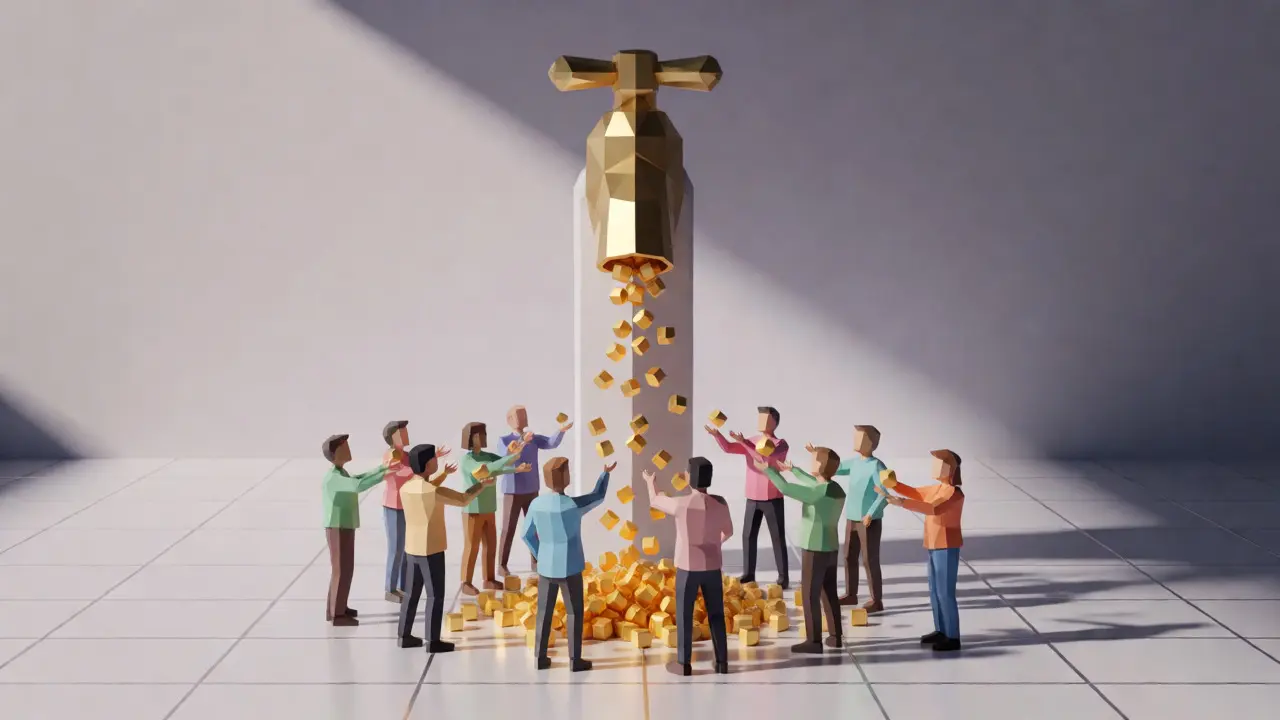
The specific airdrop campaign you’re asking about ran from July 3 to July 8. It wasn’t a massive, million-token giveaway. Instead, it was a targeted distribution of 25,000 BNU tokens. Here is the breakdown of who got what:
- Total Tokens Distributed: 25,000 BNU
- Number of Winners: 1,000 people
- Reward Per Winner: 25 BNU
- Platform Used: CoinMarketCap
To qualify, users couldn’t just click a button. You had to jump through several hoops designed to boost their social media presence. First, you needed to add BNU to your CoinMarketCap watchlist. Then, you had to follow two Twitter accounts: @Bytenextio and @zeusc_ventures. Next came the Telegram requirement-joining both the main group and the announcement channel. Finally, you had to retweet a specific campaign post and tag five friends.
Winners weren’t announced immediately. There was a waiting period until July 15, with actual token distribution happening on July 30. All rewards were sent directly to Binance Smart Chain wallet addresses. If you didn’t have a compatible BSC wallet ready, you missed out, regardless of how many tweets you posted.
Token Utility: What Could You Do With BNU?
Why did people want these tokens? In theory, holding BNU gave you more than just bragging rights. The token served as the fuel for the AvatarArt ecosystem. Here are the key functions outlined in their whitepaper:
| Function | Description |
|---|---|
| Transaction Fees | Primary payment method for buying/selling NFTs on the platform. |
| Advertising | Purchasing placement spots in 3D VR exhibitions. |
| Author Rights | Payments to authors when secondary sales occur. |
| Staking & Farming | Liquidity provider pools allowing users to earn yield. |
| Governance | Voting rights on platform changes and feature updates. |
The total circulating supply was capped at 200 million tokens. The airdrop itself represented a tiny fraction of that-just 0.0125%. This suggests the team was cautious about flooding the market too early, preferring to build a core community first.
Current Market Status: The Reality Check
Fast forward to today, September 9, 2026. If you’re still holding those 25 BNU tokens, here is the sobering news. The project has largely gone quiet. According to recent data from CoinGecko and Coinbase, trading activity for BNU has nearly halted.
The price sits around $0.000603 per token. While that sounds cheap, remember you only received 25 of them. Your total claim value is roughly $0.015. Yes, fifteen cents. The 24-hour trading volume is abysmal, hovering around $4.84 to $6.36 depending on the exchange. On major platforms like Binance, the volume is effectively zero.
Here is a quick snapshot of the token’s performance relative to its highs:
- All-Time High: ~$0.000741
- Current Price: ~$0.000603
- Decline from ATH: Approximately 18-20% (though other metrics suggest deeper stagnation)
- Market Cap: ~$120,584
The lack of liquidity is the biggest red flag. When a token stops trading on major exchanges, it becomes incredibly difficult to sell. You can hold it forever, but cashing out requires finding a buyer willing to take on such a low-volume asset.

Why Did the Project Stall?
Several factors contributed to ByteNext’s decline. The NFT hype cycle peaked in 2021-2022 and cooled significantly afterward. Many niche NFT marketplaces struggled to compete with giants like OpenSea and Rarible, which had better liquidity and network effects.
Additionally, the technical infrastructure relied entirely on Binance Smart Chain. While BSC offers low fees, it lacks the developer mindshare and institutional adoption that Ethereum commands. As capital flowed back to Bitcoin and major Layer 1 blockchains, smaller altcoin projects like ByteNext saw their communities fragment. There is no evidence of active development on their GitHub repository recently, and social media engagement has dropped off sharply.
Lessons for Future Airdrop Hunters
If you’re looking at new airdrops, what does the ByteNext story teach us? First, check the team’s activity before you spend ten minutes completing tasks. Look at their GitHub commits and Twitter engagement. Are they building, or just marketing?
Second, consider the tokenomics. A 200 million supply with low initial circulation can be good, but only if there’s demand. Without active users on the platform, the token has no intrinsic value. Third, always use a dedicated wallet for airdrops. Sending tokens to your main hardware wallet can clutter your portfolio and make tracking gains harder.
Finally, manage expectations. Most small-cap airdrops won’t make you rich. They are lottery tickets. Sometimes you get $50, sometimes you get $0.01. Treat them as bonuses, not investments.
Is the ByteNext airdrop still active?
No, the specific CoinMarketCap airdrop campaign ended in July 2022. There are currently no active public airdrop campaigns running for BNU tokens.
Where can I trade BNU tokens now?
Liquidity is extremely low. Some decentralized exchanges on Binance Smart Chain may still have small pools, but centralized exchange listings have largely been delisted or show zero volume. Check DEX aggregators like PancakeSwap for any remaining pairs.
How much is 25 BNU worth today?
At the current price of approximately $0.000603, 25 BNU is worth roughly $0.015 USD. Due to low liquidity, selling this amount might incur slippage or fail entirely if no buyers are present.
Was the ByteNext airdrop a scam?
It was not a traditional scam. Tokens were distributed to winners as promised. However, the project failed to maintain momentum, leading to low token value. It falls under the category of "failed startup" rather than fraudulent scheme.
Do I need a Binance account to hold BNU?
No, you do not need a Binance account. BNU is an BEP-20 token on the Binance Smart Chain. You can store it in any Web3 wallet that supports BSC, such as MetaMask, Trust Wallet, or Binance Wallet.