

CoinDCX vs WazirX: How India’s New Crypto Regulations Changed Everything
 Jul, 15 2026
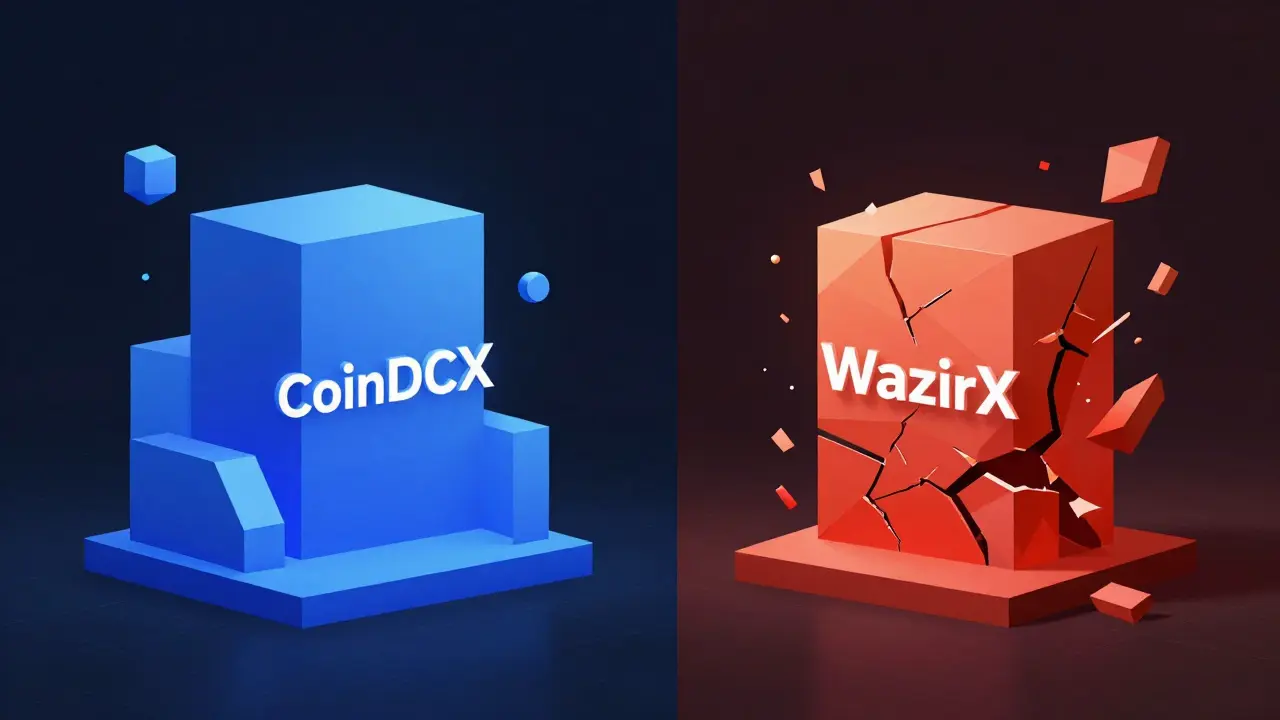
It used to be simple. You downloaded an app, bought some Bitcoin or Ethereum, and hoped the platform didn’t vanish with your money. But in India, that era is over. The landscape for CoinDCX and WazirX, two of the country's most prominent cryptocurrency exchanges, has shifted dramatically under a new wave of strict government oversight.
If you are holding digital assets in India today, you need to understand why these platforms are behaving differently than they did just two years ago. It isn't just about market volatility anymore; it is about survival in a regulatory environment that treats crypto exchanges almost like banks. With major hacks hitting both platforms recently, the question on every trader's mind is simple: Is my money safe, and will I still be able to trade?
The Regulatory Shift: From Wild West to Banking Rules
To understand where CoinDCX and WazirX stand, you first have to look at the rules they play by. Until March 2023, the regulatory framework for Virtual Digital Assets (VDAs) in India was loose. Exchanges operated with minimal oversight, which led to a boom in adoption but also created massive risks for users.
That changed when the Financial Intelligence Unit of India (FIU-IND) brought crypto exchanges under the Prevention of Money Laundering Act (PMLA). This wasn't a minor tweak. It meant that any platform facilitating crypto trades had to register as a reporting entity. They now face banking-level Know Your Customer (KYC) and Anti-Money Laundering (AML) requirements. If an exchange doesn't comply, it gets cut off from the banking system entirely, making deposits and withdrawals impossible.
This shift forced a consolidation of the market. Major international players like Coinbase registered with FIU-IND to stay in business. Binance paid a $2.2 million penalty to clear its name and register. KuCoin followed suit after a smaller fine. But for domestic giants like CoinDCX and WazirX, the pressure was even higher because their entire user base resides within this jurisdiction.
WazirX: The $230 Million Wake-Up Call
WazirX, founded in 2018 as a joint venture between Unocoin and Binance, was once the undisputed king of Indian crypto trading. It had the brand recognition and the liquidity. However, 2024 proved to be a catastrophic year for the platform.
In June 2024, WazirX suffered a devastating security breach. Hackers exploited a vulnerability in the exchange's hot wallet infrastructure, stealing approximately $230 million worth of cryptocurrencies. This wasn't just a technical glitch; it exposed deep flaws in how one of India's largest platforms managed its security protocols. The incident shook investor confidence to its core. Users watched helplessly as their funds were drained, and the recovery process was painfully slow compared to international standards.
For context, when global exchange BingX faced a similar breach around the same time, it resumed operations within 24 hours. WazirX took months to stabilize. This disparity highlighted a critical issue: while WazirX had scale, it lacked the robust, enterprise-grade cybersecurity resilience that newer, compliant firms were beginning to prioritize. The hack became the catalyst for regulators to tighten noose further, proving that size alone does not equal safety.
CoinDCX: Unicorn Status Meets Security Reality
On the other side of the aisle is CoinDCX. Often cited as India's first digital asset unicorn, CoinDCX positioned itself as the more institutional, secure alternative to its peers. For years, it marketed heavily on trust and compliance, attracting high-net-worth individuals and corporate clients who wanted a safer harbor for their investments.
However, the illusion of invincibility was shattered in July 2025. CoinDCX experienced its own major security breach. While the exact financial loss details were closely guarded initially, the incident sent shockwaves through the community. It demonstrated that even well-funded, "compliant-first" platforms are vulnerable if their cybersecurity measures aren't continuously updated against evolving threats.
This event reinforced a harsh reality for Indian traders: no domestic exchange is immune to attacks. The difference now lies in how these platforms respond and what safeguards they have in place post-breach. CoinDCX has since accelerated its investment in third-party security audits, aligning itself with the new regulatory mandates that emerged shortly after the hack.

The September 2025 Cybersecurity Mandate
If the 2024 and 2025 hacks taught regulators anything, it was that self-reported security measures were insufficient. In response, the FIU-IND introduced a seismic change in September 2025: mandatory cybersecurity audits.
Under this new rule, all Virtual Asset Service Providers (VASPs) operating in India must undergo regular security assessments conducted by firms approved by CERT-In (the Computer Emergency Response Team of India). This is not optional. It positions cybersecurity as a strategic investment requirement rather than a checkbox exercise.
This mandate has several immediate effects:
- Higher Operational Costs: Smaller exchanges struggle to afford frequent audits by top-tier firms, leading to potential market exit or acquisition.
- Standardized Safety: Users can expect a baseline level of security across all registered platforms, reducing the risk of catastrophic losses like the WazirX hack.
- New Business Opportunities: Cybersecurity firms like Pi42 and educational platforms like Mudrex have seen a surge in demand as exchanges scramble to comply.
For CoinDCX and WazirX, this means increased spending on security infrastructure. But it also means greater transparency. When you trade on these platforms now, you are dealing with entities that have been vetted by government-approved auditors. This is a significant upgrade from the pre-2023 era.
The FATF Travel Rule: No More Anonymous Transfers
Beyond internal security, the way you move money has changed drastically. India implemented the Financial Action Task Force (FATF) Travel Rule with zero minimum thresholds. What does this mean for you?
Previously, you could send small amounts of crypto without revealing much information. Now, for every single transaction, regardless of size, the sending and receiving exchanges must share detailed sender-receiver information. This includes names, account numbers, and physical addresses. It represents one of the strictest compliance regimes globally.
This rule effectively kills anonymity for retail traders. If you are using CoinDCX or WazirX to send funds to another exchange, expect delays as the platforms verify and transmit this data. It is designed to stop money laundering and terrorist financing, but for the average user, it adds friction to the trading experience. Privacy advocates argue this is excessive, but regulators view it as essential for integrating crypto into the formal financial system.

Offshore Exchanges Under Siege
While domestic players adapt, offshore exchanges are facing a different kind of crisis. Indian authorities have issued notices to 25 offshore platforms, including Huione, CEX.IO, and BingX, alleging non-compliance with domestic registration requirements and posing money laundering risks.
These platforms have 45 days to provide adequate explanations or face potential bans. For millions of Indian users who prefer offshore platforms due to lower fees or access to exotic tokens, this is a nightmare scenario. A ban means sudden liquidation risks and frozen assets.
This crackdown pushes users back toward compliant domestic options like CoinDCX and WazirX. However, the memory of recent hacks makes this transition uneasy. Traders are caught in a dilemma: stick with offshore platforms for better features and risk being banned, or move to domestic platforms for legal safety and risk security breaches.
| Feature | CoinDCX | WazirX |
|---|---|---|
| Market Position | First Digital Asset Unicorn | Former Market Leader |
| Recent Security Incident | July 2025 Breach | June 2024 ($230M Hack) |
| Regulatory Compliance | FIU-IND Registered | FIU-IND Registered |
| Cybersecurity Audits | Mandatory (CERT-In Approved) | Mandatory (CERT-In Approved) |
| User Perception | Institutional Trust | Recovering Reputation |
What This Means for Your Portfolio
The convergence of strict regulations and high-profile hacks has created a new normal for Indian crypto investors. Here is how you should adjust your strategy:
- Diversify Across Compliant Platforms: Do not keep all your eggs in one basket. Split your holdings between CoinDCX, WazirX, and other FIU-registered entities. This mitigates the risk of a single platform failure.
- Use Cold Storage: The best security measure is not relying on the exchange at all. Move long-term holdings to hardware wallets or self-custody solutions. Use exchanges only for active trading.
- Monitor Regulatory News: The 45-day window for offshore exchanges is closing. If you use platforms like BingX or Huione, prepare to migrate your assets before potential bans disrupt your access.
- Expect Friction: The FATF Travel Rule means slower transfers. Plan your trades accordingly and avoid last-minute large movements during peak times.
Finance Minister Nirmala Sitharaman warned in 2022 against rushed regulations that might hinder progress. Yet, the current approach prioritizes compliance over convenience. The government has made it clear: platforms ignoring regulations will not operate with impunity. This stance protects the broader financial system but places the burden of adaptation squarely on exchanges and users.
Future Outlook: Consolidation and Innovation
Looking ahead, the Indian crypto market will likely see further consolidation. Smaller exchanges unable to bear the cost of mandatory cybersecurity audits and FATF compliance will either shut down or merge with larger players. This benefits established firms like CoinDCX and WazirX, which have the resources to absorb these costs.
At the same time, innovation will shift toward security technology. Firms providing compliant custody services, such as Singapore-based Liminal Custody, are finding new avenues in India. Educational platforms will grow as users seek to understand complex regulatory changes. The sector is maturing, moving from a speculative frenzy to a regulated financial instrument.
For you, the trader, this means a safer but less anonymous environment. The days of wild growth fueled by lax oversight are gone. In their place is a structured, monitored ecosystem where your identity is known, your transactions are tracked, and your security is audited. Whether this is good or bad depends on your priorities, but it is undoubtedly the reality of trading crypto in India in 2026.
Is WazirX still safe to use after the 2024 hack?
WazirX has taken significant steps to improve security, including undergoing mandatory cybersecurity audits by CERT-In-approved firms as required by the September 2025 regulations. While no platform is 100% immune to attacks, WazirX is now subject to stricter oversight than before. However, users should consider diversifying their holdings and using cold storage for long-term assets to mitigate risk.
What happened to CoinDCX in July 2025?
In July 2025, CoinDCX experienced a major security breach. Although specific financial loss figures were not fully disclosed, the incident highlighted vulnerabilities even in well-regarded platforms. Following the breach, CoinDCX accelerated its compliance with new cybersecurity audit mandates to restore user trust and meet regulatory requirements.
Why are offshore exchanges like BingX facing bans in India?
Indian authorities have issued notices to 25 offshore exchanges for failing to register with the FIU-IND and complying with local AML/KYC laws. These platforms face potential bans if they do not resolve compliance issues within a 45-day notice period. This is part of a broader effort to bring all crypto service providers under domestic regulatory oversight.
How does the FATF Travel Rule affect my crypto transactions?
The FATF Travel Rule requires exchanges to share detailed sender and receiver information for every cryptocurrency transfer, regardless of amount. This means reduced anonymity and potentially slower transaction processing times as platforms verify and transmit data. It is designed to prevent money laundering but adds friction to user experience.
Do I need to pay more to use crypto exchanges now?
While direct trading fees may not have skyrocketed, the operational costs for exchanges have increased due to mandatory cybersecurity audits and compliance reporting. Some platforms may pass these costs onto users through slightly higher fees or reduced bonuses. However, the trade-off is a more secure and legally protected trading environment.