

Crypto Enforcement in Bangladesh: AML Rules & Risks
 Aug, 26 2026
Imagine holding a digital asset worth thousands of dollars, only to find out that possessing it might be a legal gray area in your own country. That is the reality for many residents of Bangladesh, a nation with one of the strictest cryptocurrency enforcement regimes in Asia. The country does not have a specific law saying "crypto is illegal," but the effect is nearly the same. Authorities treat most crypto activities as violations of existing financial rules, primarily driven by fears of money laundering and terrorist financing.
This creates a confusing landscape. You might see news about blockchain technology being used for government land records, yet face potential jail time for mining Bitcoin at home. This article breaks down how anti-money laundering laws are applied to crypto in Bangladesh, who is enforcing them, and what risks you face if you step into this space in 2026.
The Regulatory Landscape: Who Is Watching?
In Bangladesh, the Bangladesh Bank is the central banking authority responsible for overseeing all financial activities. Since 2014, it has issued multiple warnings against using cryptocurrencies. Unlike countries that passed explicit bans, Bangladesh relies on an implicit prohibition. This means there is no single "Crypto Law" to point to, but rather a web of older statutes that authorities use to crack down on digital assets.
The primary tools for enforcement include:
- Foreign Exchange Regulations Act of 1947: Used to penalize transactions that bypass official currency channels.
- Anti-Money Laundering Act of 2012: The core legislation targeting illicit fund flows, which now covers crypto.
- Information and Communication Technology (ICT) Act: Provides legal grounds for regulating digital currencies and online financial activities.
Working alongside the central bank is the Financial Intelligence Unit (FIU), which monitors money laundering risks associated with cryptocurrency transactions. The Ministry of Finance also plays a role in shaping policy, though as of 2026, no dedicated crypto legislation has been enacted. This lack of specific laws creates uncertainty, but the enforcement stance remains firm: if it looks like money laundering or foreign exchange violation, it will be prosecuted.
How Enforcement Actually Works
You might wonder how authorities catch people trading anonymous digital tokens. The answer lies in the intersection of traditional finance and digital footprints. While decentralized networks make tracing difficult, the entry and exit points often involve local banks or mobile financial services. If you move Taka to buy crypto, or convert crypto back to Taka, you leave a trail.
Recent actions highlight the seriousness of this approach. In 2024, several individuals in Dhaka were arrested for operating clandestine crypto mining operations. Authorities deemed these setups violations of anti-money laundering laws. This isn't just about big exchanges; it targets individual miners and traders. The Criminal Investigation Department (CID) has been instructed to prosecute those engaging in money laundering or foreign currency violations using cryptocurrency, even if simple ownership remains legally ambiguous.
The challenge for regulators is the nature of crypto itself. Anonymous wallets, particularly TRC20 addresses, make it hard to trace funds without cooperation from global exchanges. However, the risk for the average user is high. Legal proceedings can result in significant fines or jail time under the 2014 amendments to anti-money laundering legislation. It is a high-stakes environment where ignorance of the law is rarely a defense.

Contradictions: Blockchain vs. Crypto
Here is where things get tricky. While private crypto usage is discouraged, the government embraces blockchain technology. In 2020, the National Blockchain Strategy was released under the guidance of the Bangladesh Computer Council. This initiative recognized the value of blockchain for government sectors like land records, identity systems, and e-governance.
So, why ban the token but keep the tech? The distinction is control. Government-led blockchain projects are centralized, auditable, and serve public administration goals. Private cryptocurrencies, on the other hand, offer decentralization and anonymity, which threaten the state's ability to monitor capital flows. This dual approach highlights a regulatory inconsistency that may need resolution as technology adoption accelerates globally.
Regional Comparison: Standing Alone in South Asia
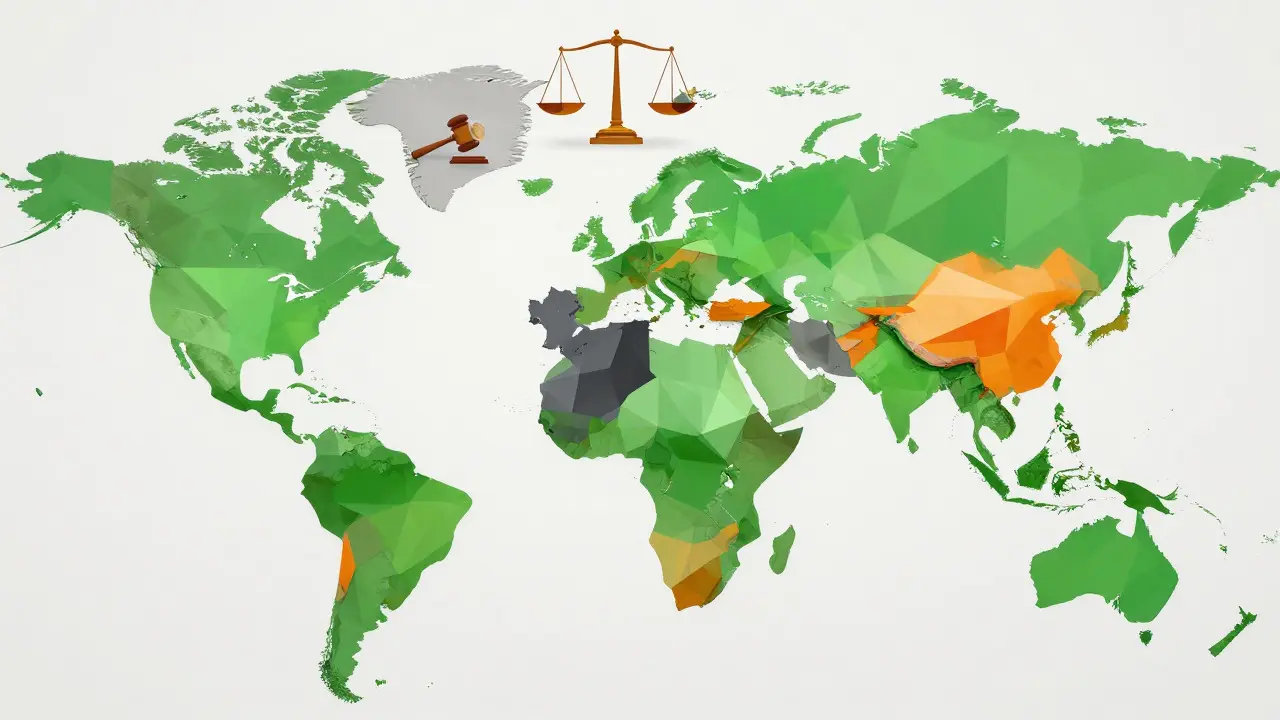
To understand Bangladesh's position, look at its neighbors. The region is shifting rapidly toward regulation and acceptance, leaving Bangladesh increasingly isolated.
| Country | Regulatory Status | Key Actions | Mining Policy |
|---|---|---|---|
| Bangladesh | Implicit Ban / Strict Enforcement | AML prosecutions, FIU monitoring | Illegal |
| Pakistan | Progressive Regulation | Established Pakistan Digital Assets Authority (PDAA) in May 2025 | Legal, with 2,000 MW allocated for Bitcoin mining |
| India | Taxed & Regulated | 30% tax on gains, compliance requirements for exchanges | Legal |
Pakistan, for instance, established the Pakistan Digital Assets Authority (PDAA) in May 2025 to regulate exchanges and wallets. They even formed a National Crypto Committee and created a Bitcoin Strategic Reserve. By contrast, Bangladesh continues to rely on old financial acts to suppress new digital assets. This divergence matters because it affects cross-border trade and investment opportunities for businesses operating in the region.
Risks for Investors and Users
If you are considering entering the Bangladeshi crypto market, the risks go beyond just price volatility. Here are the key pitfalls to avoid:
- Legal Prosecution: Using crypto to move funds can trigger charges under the Foreign Exchange Regulations Act. Penalties include heavy fines and imprisonment.
- Scams and Ponzi Schemes: The lack of regulation means fewer protections for investors. Historical examples, like the MTFE scam, saw thousands lose their funds when operators disappeared. Without a regulatory body to sue, recovery is nearly impossible.
- Tax Uncertainty: There is no specific crypto tax regime. The National Board of Revenue applies the general Income Tax Ordinance of 1984 to all transactions. This means you could be taxed on every sale, and reporting requirements are unclear, leading to audit risks.
- Bank Account Freezes: Banks may freeze accounts if they detect unusual patterns consistent with crypto purchases, citing AML concerns.
The underground market persists, of course. Informal channels allow users to trade via peer-to-peer methods, but this increases the risk of fraud and makes you more vulnerable to enforcement actions if caught.
Future Outlook: FATF Pressure and Reform
Will this change? Probably. International pressure is mounting. The Financial Action Task Force (FATF) sets global standards for combating money laundering. Their Recommendation 15 specifically addresses virtual assets. Currently, Bangladesh’s framework does not fully comply with these standards, which complicates international banking relationships.
As neighboring countries develop comprehensive frameworks, the cost of isolation grows. Experts suggest that the Ministry of Finance may eventually lead future legislation to align with FATF guidelines. Until then, the status quo remains: strict enforcement, limited innovation, and high risk for participants. For now, caution is the best strategy. Stay informed, keep records clean, and be aware that the legal ground is shifting beneath your feet.
Is cryptocurrency completely illegal in Bangladesh?
It is not explicitly banned by a specific crypto law, but it is effectively prohibited. Usage, trading, and mining are treated as violations of the Foreign Exchange Regulations Act and Anti-Money Laundering laws. Possession alone is a gray area, but active use carries significant legal risk.
Can I mine Bitcoin in Bangladesh?
Mining is considered illegal as of 2025. Authorities have arrested individuals for operating mining rigs, deeming them violations of anti-money laundering regulations. The energy costs and legal risks make it a poor venture compared to countries like Pakistan or Canada.
How do taxes work for crypto in Bangladesh?
There is no specific crypto tax law. The National Board of Revenue applies the general Income Tax Ordinance of 1984. This means profits from crypto sales are likely taxable as income, but reporting mechanisms are undefined, creating compliance uncertainty.
Why does Bangladesh ban crypto but support blockchain?
The government supports blockchain for centralized, government-controlled applications like land records and ID systems. Cryptocurrencies are viewed with suspicion due to their decentralized, anonymous nature, which hinders money laundering detection and capital control.
What happens if I get caught trading crypto?
You could face prosecution under the Anti-Money Laundering Act or Foreign Exchange Regulations Act. Penalties can include substantial fines and imprisonment. The Criminal Investigation Department actively investigates such cases, especially if large sums are involved.