

Cryptocurrency Restrictions in Ecuador: Rules, Risks, and Workarounds for 2026
 Aug, 9 2026
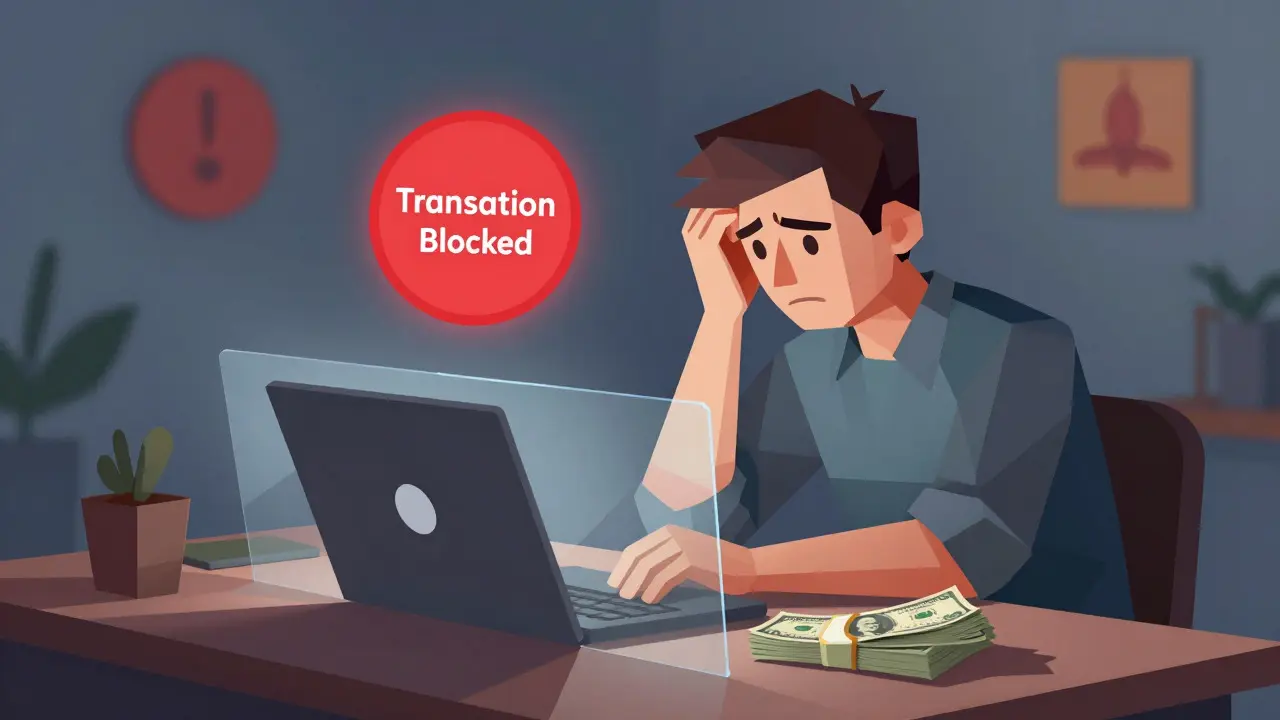
Imagine trying to send money home or invest in digital assets, only to find your bank account frozen because the transaction was flagged as "high risk." For many people living in Ecuador, this isn't a hypothetical nightmare-it's daily reality. While the rest of Latin America is racing to regulate and embrace digital finance, Ecuador remains stuck in a regulatory gray area that makes using cryptocurrency difficult, risky, and often expensive.
If you are looking to buy, sell, or simply hold crypto in Ecuador right now, you need to understand exactly where the lines are drawn. The short answer? You aren't banned from owning it, but the system is designed to make it hard to move money in and out. This guide breaks down the current rules, the hidden costs, and the practical workarounds locals are using to navigate this restrictive landscape in 2026.
The Legal Reality: Not Banned, But Blocked
There is a common misconception that cryptocurrency is illegal in Ecuador. It’s not. However, it is also not recognized as legal tender. On August 12, 2024, the Central Bank of Ecuador (BCE) issued a clear statement reinforcing Article 94 of the Organic Monetary and Financial Code. This law explicitly bars any alternative currency to the US dollar, which has been Ecuador's official currency since 2000.
So, what does this mean for you? You can legally buy, hold, and trade cryptocurrencies like Bitcoin or Ethereum. No one will arrest you for having them in a wallet. But here is the catch: banks, insurers, and payment processors are legally mandated to refuse transactions related to crypto unless a future law grants explicit licensing. As of 2026, that license doesn't exist.
This creates a frustrating paradox. Your private transactions are protected by law, but your access to the banking system is blocked by regulation. The BCE argues this protects monetary sovereignty in a dollarized economy. Critics, including the UN Economic Commission for Latin America and the Caribbean (ECLAC), argue it pushes activity underground, increasing risks for consumers who have no formal consumer protection when things go wrong.
Why Adoption Is So Low
You might wonder why so few people use crypto if it offers an escape from traditional banking fees. The numbers tell a stark story. According to a 2023 study by OWNR Wallet, only 2.73% of Ecuador's population-roughly 500,000 people-own cryptocurrency. Compare that to the Latin American average of 10.9%, and the gap is obvious.
Several factors drive this low adoption rate:
- Banking Blockades: Local banks routinely flag transfers to exchanges like Binance or OKX as high-risk. Many users report having accounts frozen within 24 hours of attempting a transfer.
- Low Financial Literacy: With only 50% of adults having bank accounts (World Bank, 2023), the concept of digital assets is still foreign to many. The government’s own electronic money system, "Dinero Electronico," failed to gain traction with just 0.5% adoption.
- Fear of Capital Flight: Government officials cite concerns over capital flight. In Q4 2023 alone, Ecuador recorded $1.2 billion in unexplained capital outflows, fueling skepticism toward decentralized finance.
Despite these hurdles, interest is growing among the unbanked and those seeking alternatives to traditional remittance channels. The demand is there; the infrastructure just isn't.
How People Actually Buy Crypto in Ecuador
Since direct bank transfers to international exchanges are often blocked, Ecuadorians have developed creative, albeit risky, workarounds. If you are new to this, expect a steep learning curve. Setting up reliable purchasing methods can take 14 hours or more, according to user studies.
Here are the most common methods used in 2026:
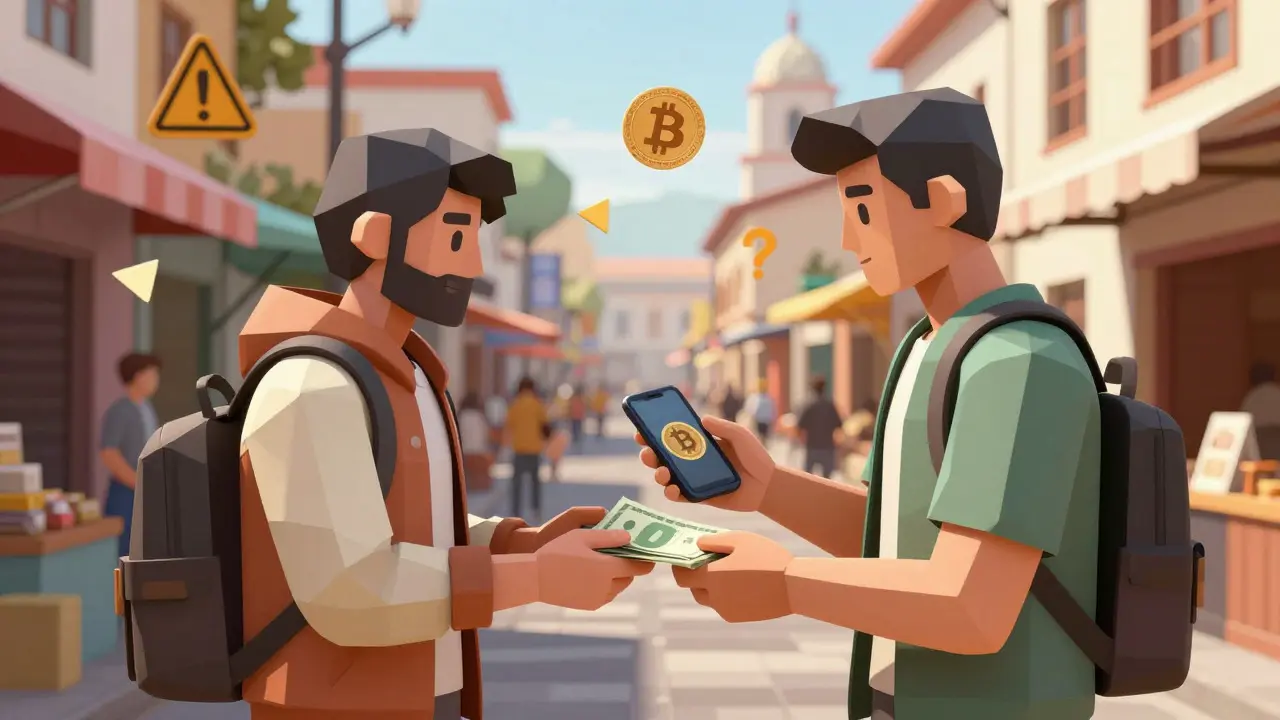
- Peer-to-Peer (P2P) Trading: Platforms like Binance P2P or Mercado Bitcoin allow users to trade directly with each other. In cities like Guayaquil and Quito, cash trades are common. However, liquidity is limited, and premiums can be high. Users often pay 8-12% above global prices for cash transactions due to the scarcity of sellers willing to accept USD bills.
- Offshore APIs and OTC Desks: Some entrepreneurs route order flow through offshore APIs or Telegram-based Over-The-Counter (OTC) desks. These settlements usually happen in USD cash or stablecoins like USDT. The risk here is trust. Only 12% of advertised OTC services are considered trustworthy by local crypto communities.
- Credit Card Hacks: While domestic cards are often blocked, some users manage to purchase small amounts using international credit cards or prepaid travel cards that haven't been flagged yet. This is unreliable and subject to change without notice.
A word of caution: Security is a major concern. A March 2024 survey found that 23% of Ecuadorian crypto users reported fraud attempts. Always meet in safe, public places for cash trades, and never release funds on P2P platforms until you see the money in your hand or confirmed in your account.
Tax Implications: Don’t Forget the SRI
One area where the government is very active is taxation. The Internal Revenue Service (SRI) treats realized cryptocurrency gains as Ecuador-source income. This means if you sell your Bitcoin for a profit, you owe taxes on that gain.
| Entity Type | Tax Rate | Note |
|---|---|---|
| Individuals | Up to 35% | Progressive rates based on total income |
| Firms/Companies | 25% | Flat corporate tax rate on gains |
Keep detailed records of every transaction. The SRI may not monitor blockchain activity directly, but audits do happen. Failure to declare gains can lead to significant penalties, especially given the strict enforcement environment.
Mining in Ecuador: A Tough Road
What about mining? Technically, it’s not prohibited. Practically, it’s nearly impossible at scale. High electricity tariffs-averaging $0.145/kWh in 2024, which is 23% above the Latin American average-eat into profits. Add frequent grid outages (averaging 14.7 hours per month in Andean regions) and 35% import duties on computing equipment, and you get a perfect storm against large-scale operations.
Most mining activity consists of small-scale residential setups in Quito's suburbs. The total estimated hash rate is negligible-less than 0.0001% of global capacity. Unless you have access to cheap, renewable energy, mining in Ecuador is likely a money-losing venture.

Comparison with Neighbors
Ecuador stands out as one of the most restrictive countries in the region. Let’s look at how it compares:
- Paraguay: Allows crypto payments and mining under a 2022 law requiring registration and Anti-Money Laundering (AML) compliance.
- Mexico: Classifies crypto as virtual assets under its 2018 Fintech Law, requiring licenses for crypto services.
- Peru: Implemented a June 2025 requirement for all Virtual Asset Service Providers (VASPs) to register with the Financial Intelligence Unit (UIF).
- Ecuador: No formal licensing framework. Banks block transactions. No legal tender status.
This contrast highlights the opportunity cost for Ecuador. While neighbors build regulated ecosystems, Ecuador pushes users into informal channels, increasing vulnerability to scams and fraud.
Future Outlook: Will Things Change?
There are signs of potential shifts. In early 2025, new requirements were formalized for FinTech service providers, mandating local incorporation and minimum capital of USD 200,000. This suggests the government is thinking about regulating technology-based financial services, even if crypto isn't explicitly included yet.
The Central Bank has also explored developing a retail Central Bank Digital Currency (CBDC) pegged 1:1 to the US dollar. While no launch date has been confirmed, discussions began in 2022. A CBDC could modernize payments without diluting dollarization, potentially creating infrastructure that eventually accommodates regulated cryptocurrency services.
However, don't hold your breath. The BCE reaffirmed in August 2024 that cryptocurrencies are not authorized means of payment. Internal projections suggest maintaining current restrictions through at least 2027 to protect dollarization stability. Industry analysts predict the market could grow to $300 million annually by 2026 if barriers drop, but without policy changes, stagnation is likely.
Is Bitcoin legal in Ecuador?
Yes, owning and trading Bitcoin is legal for private individuals. However, it is not recognized as legal tender, and banks are prohibited from processing crypto-related transactions. This creates a legal ownership status but operational difficulty.
Can I use my Ecuadorian bank card to buy crypto?
Generally, no. Most local banks flag transactions to exchanges like Binance or Coinbase as high-risk and will block them or freeze your account. Peer-to-peer (P2P) cash trades are the most common workaround.
Do I have to pay taxes on crypto profits in Ecuador?
Yes. The Internal Revenue Service (SRI) taxes realized crypto gains as income. Individuals face progressive rates up to 35%, while firms pay a flat 25%. Keep detailed records of all transactions to avoid penalties.
Why is crypto adoption so low in Ecuador compared to other Latin American countries?
Adoption is low (2.73%) due to strict banking blocks, lack of regulatory clarity, high transaction premiums, and limited financial literacy. The government's focus on protecting dollarization has led to a restrictive environment that discourages formal participation.
Are there any local crypto exchanges in Ecuador?
No. There are no domestically licensed cryptocurrency exchanges operating within Ecuador's formal financial system. Users rely on international platforms via P2P markets or informal OTC desks.