

Hong Kong Virtual Assets Ordinance 2025: Stablecoins, Licensing & Restrictions Explained
 Jul, 7 2026
There is no single law called the "Virtual Assets Ordinance 2025" in Hong Kong. If you are searching for that specific title, you might be hitting a dead end. The reality is more complex and significantly more impactful for anyone dealing with cryptocurrency in the region. Instead of one standalone act, Hong Kong has rolled out a comprehensive regulatory framework throughout 2025. This framework combines the new Stablecoins Ordinance, which took effect on August 1, 2025, with proposed licensing regimes for virtual asset (VA) dealing and custody services.
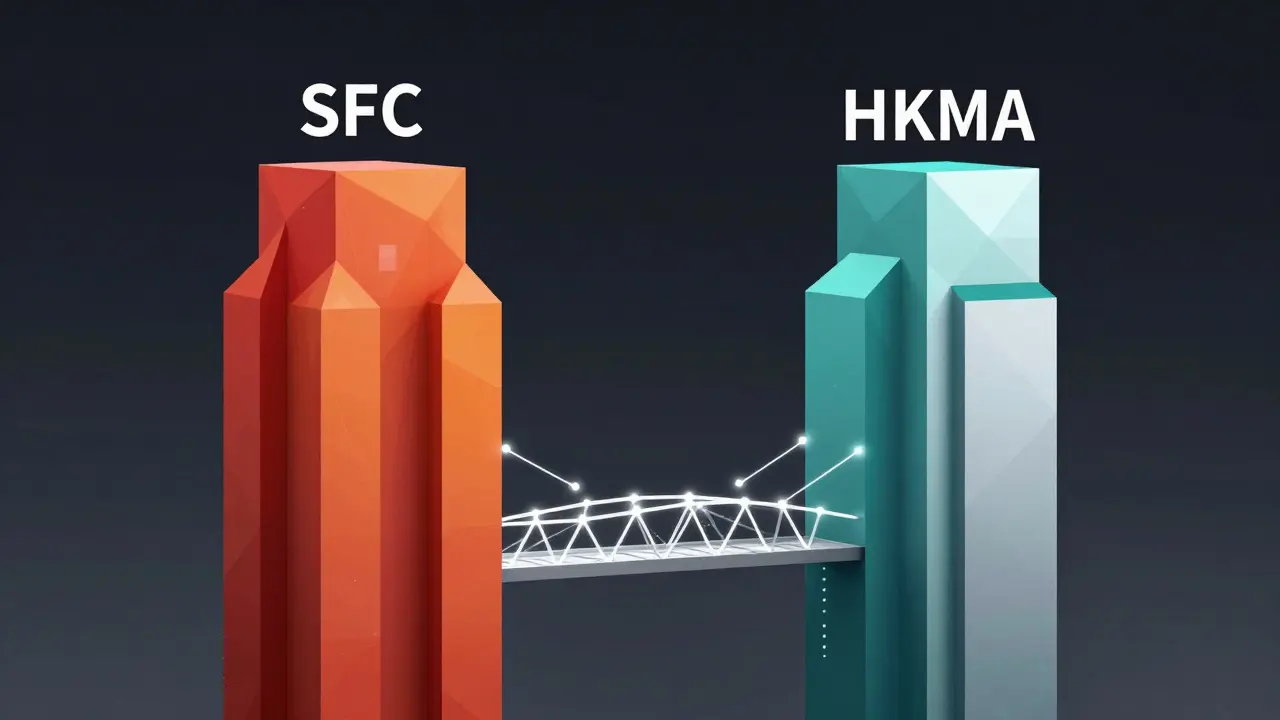
This shift marks a decisive move by the Hong Kong government to establish itself as a global digital asset hub while strictly controlling risks. For businesses and investors, this means navigating a dual-regulator system involving the Securities and Futures Commission (SFC) and the Hong Kong Monetary Authority (HKMA). The rules are strict, the timelines are tight, and the penalties for non-compliance are severe. Let’s break down what these changes actually mean for your operations or investments.
The Core Pillars of the 2025 Framework
The regulatory landscape in Hong Kong is built on two main legislative pillars introduced in mid-2025. Understanding the distinction between them is crucial because they govern different activities and have different effective dates.
1. The Stablecoins Ordinance (Effective August 1, 2025)
This is the first concrete piece of legislation. It specifically targets fiat-referenced stablecoins (FRS). Under this ordinance, a stablecoin is defined as a cryptographically secured digital representation of value that operates on a distributed ledger and purports to maintain a stable value relative to assets like fiat currency. If you issue or manage such tokens, you now need a license. The ordinance explicitly excludes limited-purpose digital tokens, securities tokens, and central bank digital currencies (CBDCs) to avoid overlapping with other financial regulations.
2. Proposed Licensing Regimes for VA Dealing and Custody (Implementation Expected 2026)
While the Stablecoins Ordinance is already law, the broader rules for trading platforms and custodians are still in the final stages of consultation, which closed on August 29, 2025. These regimes will require licenses for any entity making agreements to buy or sell virtual assets or providing custody services. The implementation is expected in 2026, giving firms a window to prepare, but the requirements are already shaping business strategies.
Who Regulates What? The Dual-Regulator Model
One of the most confusing aspects for newcomers is who to talk to. Hong Kong uses a split approach that differs from the US or EU models. You don’t just deal with one agency; you often have to satisfy two.
| Regulator | Primary Role | Entities Regulated | Key Focus |
|---|---|---|---|
| Securities and Futures Commission (SFC) | Standard-setter and frontline regulator for VAs | Virtual Asset Trading Platforms (VATPs), Asset Managers, Dealers | Investor protection, market integrity, licensing criteria |
| Hong Kong Monetary Authority (HKMA) | Frontline regulator for traditional financial institutions | Banks, Stored Value Facility (SVF) Licensees | Systemic risk, anti-money laundering (AML), stability |
If you are a bank offering crypto custody, you report to the HKMA. If you are a standalone crypto exchange or dealer, you report to the SFC. However, if a bank wants to offer VA dealing services, it must register with both. This dual approval system is designed to ensure that traditional financial safety nets extend into the crypto space, but it also creates operational friction. Industry surveys indicate that 43% of firms report increased transaction processing times due to these layered compliance checks.
Key Restrictions and Compliance Hurdles
You asked about restrictions. They are real, and they are stringent. Hong Kong is not trying to ban crypto; it is trying to professionalize it. Here are the specific barriers you will face:
- Minimum Capital Requirements: To obtain a license for VA dealing, you need a minimum capital of HK$129,730 (approximately $16,500 USD). While this seems low compared to banking standards, it benchmarks against Type 3 SFO licenses. However, when you factor in operational costs, cybersecurity, and staffing, the total entry cost is much higher. Smaller startups often cite this as a significant hurdle.
- Extraterritorial Application: You cannot simply host your server overseas and ignore Hong Kong laws. The regulations apply extraterritorially. If your service targets Hong Kong investors, you need a license. This closes the loophole used by many offshore exchanges previously.
- Strict Counterparty Rules: Licensed funds can only trade through regulated exchanges in approved jurisdictions. Currently, these include Hong Kong, the U.S., U.K., Dubai, and Japan. You cannot trade on unregulated offshore platforms. This restriction ensures liquidity comes from trusted sources but limits flexibility.
- Personnel Qualifications: Every licensed entity must have at least one responsible officer with three years of experience in virtual asset portfolio management. Additionally, portfolios must be under 24-hour active supervision. This requirement has caused delays for some firms, with reports indicating that at least 12 cryptocurrency firms delayed their Hong Kong entry in 2025 to find qualified staff.
- Penalties: Violations are taken seriously. Fines can reach up to HK$5 million, and individuals can face up to seven years in prison. This is not a warning shot; it is a criminal offense.
How Hong Kong Compares to Global Standards
To understand why Hong Kong’s approach matters, you need to see how it stacks up against its neighbors. The goal is to be more progressive than mainland China but safer than the Wild West of early crypto.
Versus Singapore: Singapore regulates stablecoins under its Payment Services Act, which is broader but less specialized. Hong Kong’s dedicated Stablecoins Ordinance provides clearer, more specific rules for issuers. However, Singapore has a head start in institutional custody, holding 28.3% of Asia’s market compared to Hong Kong’s 18.7%. Despite this, Hong Kong is growing faster, with a 32% year-over-year increase in custody market share versus Singapore’s 19%. Many firms prefer Hong Kong’s phased timeline over Singapore’s abrupt implementation.
Versus the European Union: The EU’s Markets in Crypto-Assets (MiCA) regulation shares Hong Kong’s risk-based approach. Both aim for investor protection and clarity. However, MiCA applies simultaneously across all member states, whereas Hong Kong is rolling out its rules in phases. This allows Hong Kong firms to adapt gradually, though it creates uncertainty during the transition period.
Versus the United States: The US suffers from fragmented oversight between the SEC, CFTC, and state regulators. Hong Kong offers a clear boundary: SFC for trading/assets, HKMA for banks/stability. This clarity is a major selling point for international firms tired of legal ambiguity.
Impact on Retail vs. Institutional Investors
It is important to note that this framework is heavily skewed toward institutional players. As of mid-2025, 83% of virtual asset activity in Hong Kong is institutional, while retail makes up only 17%. The SFC requires intermediaries to assess clients’ knowledge of virtual assets before onboarding them. This effectively limits access for inexperienced retail users.
For retail investors, this means fewer scams but also fewer opportunities. You cannot easily buy obscure tokens on unregulated platforms. You must go through licensed intermediaries who vet your understanding of the risks. Some critics argue this stifles innovation and limits financial inclusion. However, proponents like Simon Hawkins of Reed Smith argue it is "essential for investor protection" in a volatile market.
Institutional investors, on the other hand, are thriving. There are now 42 asset managers licensed by the SFC to manage virtual asset funds, up from 27 in late 2024. The launch of tokenized real-world assets (RWAs) is accelerating, with 11 RWA funds launched in Q3 2025 alone, managing $2.3 billion in assets. Morgan Stanley predicts Hong Kong could capture 25-30% of Asia’s institutional custody market by 2027 if current trends continue.
Practical Steps for Compliance in 2026
If you are planning to operate in Hong Kong, here is what you need to do right now. The clock is ticking toward the 2026 implementation of the dealing and custody licenses.
- Assess Your Token Classification: Determine if your asset falls under the Stablecoins Ordinance (if it’s a fiat-referenced stablecoin) or the broader VA definition. Check the exclusion list carefully. If you are issuing security tokens, you fall under existing securities laws, not this new framework.
- Prepare for Dual Registration: If you are a bank or SVF licensee, start engaging with both the HKMA and SFC. Establish internal processes for dual reporting. Expect longer approval times due to the coordination required between the two bodies.
- Hire Qualified Staff: Recruit a responsible officer with three years of VA experience. This is a hard requirement. Consider training programs or hiring from established markets like Singapore or Australia to meet this criterion.
- Upgrade Cybersecurity: Implement multi-signature wallet systems (used by 82% of compliant custodians) and blockchain analytics tools like Chainalysis (used by 68% of firms). The SFC demands institutional-grade security. Do not cut corners here.
- Review Counterparty Relationships: Ensure all your trading partners are on regulated exchanges in approved jurisdictions. Cut ties with unregulated offshore venues if you want to remain compliant.
- Monitor Guidance Updates: The SFC will publish detailed guidance on stablecoin reserve requirements by December 15, 2025. Keep an eye on this document as it will dictate how you must structure your reserves.
Future Outlook: What Comes After 2025?
The current framework is just the beginning. Hong Kong is positioning itself for the next wave of innovation. In Q1 2026, the Financial Services and Treasury Bureau (FSTB) plans to review tokenization laws, focusing initially on bonds. This aims to facilitate the adoption of tokenized real-world assets (RWAs).
Additionally, the HKMA will launch a regulatory sandbox for cross-border stablecoin transactions in Q2 2026. Major banks like Standard Chartered and HSBC are expected to participate. This could unlock seamless international payments using stablecoins, provided they comply with the new ordinance.
Looking further ahead, non-fungible tokens (NFTs) are likely to be brought under regulation by 2027. The FSTB has indicated it will review NFT regulations after the current framework stabilizes. This suggests that no corner of the crypto market will remain untouched indefinitely.
Despite the complexity, confidence is high. A survey by Morgan Stanley found that 87% of financial institutions have "high confidence" in Hong Kong’s regulatory approach, compared to 72% for Singapore. The key challenge remains balancing efficiency with protection. The government aims to process 100% of license applications within 120 days by Q3 2026. If they achieve this, Hong Kong could become the most efficient jurisdiction for compliant crypto business in Asia.
Is there a single "Virtual Assets Ordinance 2025" in Hong Kong?
No. There is no single law with that exact name. The term refers to a collective framework consisting primarily of the Stablecoins Ordinance (effective August 1, 2025) and the proposed licensing regimes for virtual asset dealing and custody services, which are expected to be implemented in 2026.
Who regulates cryptocurrency exchanges in Hong Kong?
The Securities and Futures Commission (SFC) is the primary regulator for virtual asset trading platforms (VATPs) and dealers. The Hong Kong Monetary Authority (HKMA) regulates banks and stored value facility licensees that offer virtual asset services. Most entities will interact with the SFC, while banks deal with both.
What are the penalties for violating Hong Kong's crypto regulations?
Violations can result in fines of up to HK$5 million and imprisonment for up to seven years. The regulations apply extraterritorially, meaning targeting Hong Kong investors from outside the territory does not exempt you from these penalties.
Can I still trade crypto on offshore exchanges in Hong Kong?
Licensed funds and dealers are restricted to trading on regulated exchanges in approved jurisdictions, including Hong Kong, the U.S., U.K., Dubai, and Japan. Using unregulated offshore platforms is prohibited for licensed entities, effectively cutting off access for compliant businesses.
When will the licensing regime for VA dealing and custody take effect?
The consultation period closed on August 29, 2025. Based on typical regulatory timelines, the implementation of these licensing regimes is expected in 2026. Firms should prepare for compliance well in advance of the official launch date.
How does Hong Kong's crypto regulation compare to Singapore's?
Hong Kong has a more specialized approach with a dedicated Stablecoins Ordinance, whereas Singapore regulates under its broader Payment Services Act. Hong Kong is growing faster in institutional custody (32% YoY vs. Singapore's 19%) and offers a phased implementation timeline, which many firms find easier to navigate than Singapore's abrupt rollout.
What are the capital requirements for a VA dealing license?
The minimum capital requirement is HK$129,730. However, this is just the baseline. Operational costs, cybersecurity measures, and staffing requirements (including a responsible officer with 3 years of experience) significantly increase the total cost of entry.