

How Bitcoin Halving Affects Miners: Revenue, Risks, and Survival Strategies
 Jul, 21 2026
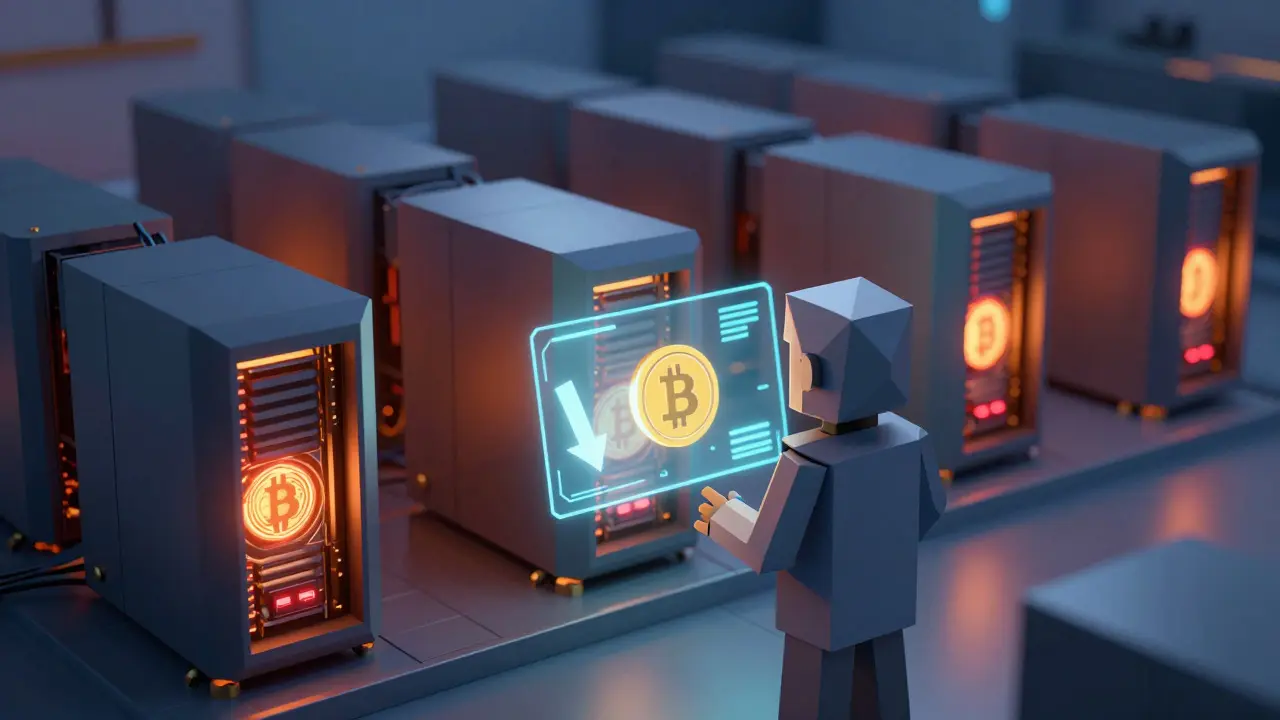
Imagine waking up one morning to find your paycheck cut in half. No warning, no negotiation-just a hard-coded rule that says you now earn 50% less for the exact same work. That is exactly what happened to Bitcoin miners on April 20, 2024. The event was not a market crash or a regulatory crackdown; it was the Bitcoin halving, a programmed mechanism designed by Satoshi Nakamoto in 2008 to control the supply of new coins.
For those outside the mining industry, the halving often feels like abstract financial news. For miners, it is an existential stress test. When the block reward dropped from 6.25 BTC to 3.125 BTC per block, the immediate result was a revenue shock that forced thousands of operators to rethink their entire business model. This article breaks down how the halving reshapes miner economics, who survives, who exits, and what the future looks like for the network’s security backbone.
The Math Behind the Money: Block Rewards vs. Transaction Fees
To understand why the halving hits so hard, you have to look at where miner income actually comes from. Before the 2024 halving, roughly 98% of miner revenue came from the block reward-the newly minted Bitcoin given to whoever solves the cryptographic puzzle first. The remaining 2% came from transaction fees paid by users wanting their transactions confirmed quickly.
When the reward was cut in half, that 98% figure didn’t just shrink; it collapsed. Suddenly, miners were relying on half the subsidy while transaction fees remained relatively flat. According to analysis from LSEG (London Stock Exchange Group), this shift exposed a fragile dependency. If the price of Bitcoin doesn’t rise immediately to compensate for the lower volume of new coins, miners operate at a loss. It is a simple equation: if your costs stay the same but your income drops by 50%, you either cut costs drastically or go bankrupt.
This dynamic creates a temporary "revenue gap." Fidelity Digital Assets noted that the months following a halving are historically the most difficult period for miners. They must bridge the time between the reward cut and any potential price appreciation using cash reserves or cheaper operations. Those without savings burn through capital fast.
The Great Sort: Hash Rate Declines and Miner Exits
The Bitcoin network has a self-correcting mechanism built into its difficulty adjustment algorithm. When miners lose money, they turn off their machines. This causes the total computational power of the network, known as the hash rate, to drop. As the hash rate falls, it becomes easier to solve blocks, which helps the remaining miners recover some profitability.
After the April 2024 halving, we saw this play out in real-time. Major public mining companies reported significant production declines. Bitdeer saw a 31% month-over-month drop in Bitcoin production, while Marathon Digital fell by 28%. These aren’t just numbers on a spreadsheet; they represent thousands of rigs being powered down. WisdomTree’s mid-2024 analysis highlighted that these reductions reflect the immediate mathematical impact of receiving half the reward for the same work.
This process acts as a sorting mechanism. Inefficient miners-those with old hardware or expensive electricity-are forced out. Efficient miners survive. Historically, previous halvings resulted in a 15-30% decline in hash rate before recovery began within 6 to 12 months. The key question is always: who can afford to wait?
Electricity Costs: The Ultimate Decider
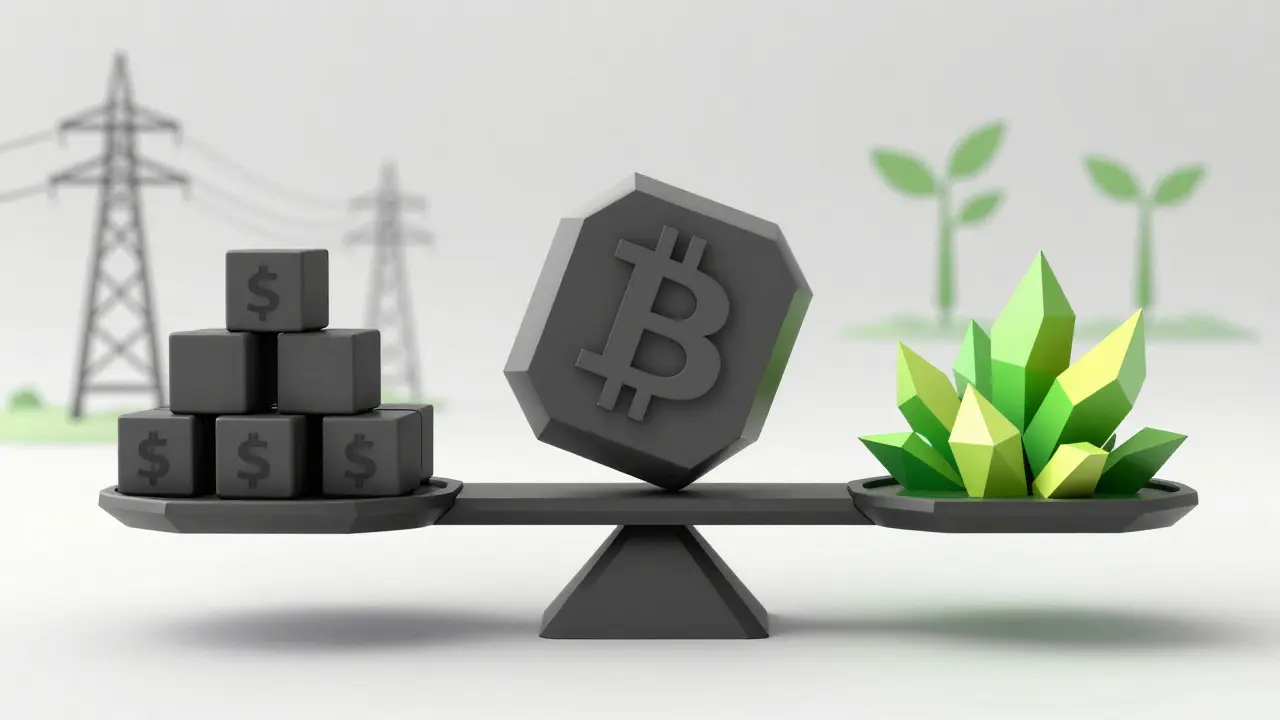
If there is one metric that determines survival post-halving, it is electricity cost. Mining is essentially an energy arbitrage business: you buy electricity, convert it into computing power, and sell the resulting Bitcoin. If the cost of that electricity is too high, the math stops working.
| Electricity Cost (per kWh) | Required Bitcoin Price to Break Even | Survival Status |
|---|---|---|
| $0.02 - $0.03 | < $30,000 | Highly Profitable |
| $0.04 | ~$35,000 | Profitable |
| $0.07 - $0.08 | $49,000 - $50,000 | At Risk |
| > $0.10 | > $65,000 | Unprofitable |
Data from EY Switzerland (2024) shows that miners paying below $0.04 per kWh can remain profitable even if Bitcoin trades around $35,000. However, those paying $0.08 per kWh need the price to exceed $50,000 just to cover their costs. This disparity explains why we see consolidation. Miners with access to stranded energy sources-like hydroelectric dams in remote areas or flared natural gas in Texas-gain a massive advantage. One Reddit user, 'HashRateHero', described moving operations to a natural gas site in Texas where costs dropped to $0.015 per kWh, allowing them to stay online while competitors shut down.
In contrast, miners reliant on standard grid electricity in regions with prices above $0.10 per kWh face existential threats. Unless Bitcoin’s price skyrockets, their operation is mathematically doomed. This forces a geographic and strategic shift in the industry toward renewable and low-cost energy hubs.
Hardware Refresh Cycles and Operational Efficiency
Surviving the halving isn’t just about cheap power; it’s also about efficient hardware. The lifespan of mining rigs has shrunk dramatically. Pre-halving, a rig might last 24 months before becoming uneconomical. Post-halving, that window compressed to roughly 14 months, according to Hashrate Index data from June 2024.
Why? Because newer machines, like the Antminer S21 series, offer significantly more hashes per watt than older models like the S19j Pro. If you are running older hardware, you are burning more electricity for fewer coins. After the reward cut, that inefficiency becomes fatal. Miners are now spending 35% more engineering resources on optimizing thermal management and power delivery. Techniques like immersion cooling, adopted by firms like Iris Energy, have increased operational efficiency by up to 18%, allowing them to profit at lower Bitcoin prices.
This rapid obsolescence means miners must constantly reinvest. It is no longer a "set it and forget it" business. You need capital reserves-experts recommend holding at least six months of operational expenses in stablecoins or fiat-to weather the storm and fund upgrades.
Industry Consolidation and New Revenue Streams
The pain of the halving drives consolidation. Following the 2024 event, 12 major mining companies completed mergers and acquisitions worth $1.2 billion in just six months. Smaller players are being bought out or forced to exit. By June 2024, the top 10 mining pools controlled 65% of the global hash rate, up from 58% earlier in the year. This centralization raises concerns about network decentralization, but it also reflects the reality that scale brings efficiency.
However, miners are also looking beyond pure Bitcoin mining. With block rewards shrinking over time, the industry is diversifying. About 22% of major mining firms are exploring AI compute and cloud services. Iris Energy, for example, signed a $200 million contract with an AI startup to utilize excess computing capacity. Additionally, the rise of BRC-20 tokens has boosted transaction fees. In May 2024, inscription activity drove a 37% month-over-month increase in fees, contributing nearly 7% to total miner revenue. While still small compared to block rewards, fees are becoming a more critical part of the mix.

Security Implications for the Network
A common fear is that if miners quit, the Bitcoin network becomes vulnerable to attacks. LSEG warns that if the miner count drops too sharply, the network could theoretically become susceptible to a 51% attack, where a single entity controls the majority of the hash rate.
However, history suggests otherwise. The network is remarkably resilient. By July 2024, the hash rate had recovered to 92% of its pre-halving peak. The difficulty adjustment ensures that as miners leave, the remaining ones capture a larger share of the rewards, stabilizing the ecosystem. The real risk isn’t a sudden collapse, but a slow erosion of security if Bitcoin’s price fails to appreciate alongside the reduced supply. For now, the network remains secure, supported by increasingly efficient and well-capitalized operators.
Looking Ahead: The Road to 2028
The next halving is projected for August 2028, when the block reward will drop to 1.5625 BTC. At that point, transaction fees will need to constitute at least 35% of miner revenue to maintain current security levels, according to Blockstream’s economic modeling. This long-term trajectory forces miners to adapt continuously. The era of easy money is over. Success now depends on operational excellence, energy innovation, and financial discipline.
For investors and enthusiasts, watching the miner sector provides a clear signal of market health. When miners start selling their Bitcoin holdings to pay bills, it often indicates a bottom. When they hold onto their coins because they are profitable, it signals confidence. The halving is not just an event; it is a filter that separates the committed from the casual, strengthening the foundation of the entire cryptocurrency ecosystem.
What happens to miners immediately after a Bitcoin halving?
Immediately after a halving, miners receive half the Bitcoin reward for each block they mine. This causes a sudden drop in revenue. Less efficient miners with high electricity costs often shut down their rigs, leading to a temporary decrease in the network's total hash rate. More efficient miners may see their profitability stabilize as competition decreases.
Does the halving make Bitcoin mining unprofitable?
Not necessarily. While the reward is cut in half, profitability depends on the price of Bitcoin and the cost of electricity. If Bitcoin's price rises to compensate for the lower reward, or if miners have very low energy costs (e.g., under $0.04/kWh), they can remain profitable. However, miners with high costs may become unprofitable until the price adjusts.
How does the halving affect the Bitcoin network's security?
The halving can temporarily reduce the number of active miners, which lowers the total hash rate. This could theoretically make the network more vulnerable to attacks if the price of Bitcoin doesn't rise to keep miners incentivized. However, the difficulty adjustment algorithm helps stabilize the network by making blocks easier to mine when hash rate drops, maintaining security over time.
Why do some miners shut down after the halving?
Miners shut down when their operational costs, primarily electricity, exceed their revenue. After the halving, revenue drops by 50%. If a miner pays $0.08 per kWh for electricity, they might need Bitcoin to be priced above $50,000 to break even. If the price is lower, continuing to mine results in a net loss, forcing them to turn off their equipment.
Will transaction fees replace block rewards in the future?
Eventually, yes. As block rewards approach zero (expected around 2140), transaction fees will become the primary source of miner income. Currently, fees make up a small percentage of revenue, but as scarcity increases and demand grows, fees are expected to rise. Some analysts predict fees will need to cover at least 35% of revenue by the 2028 halving to ensure network security.
Heather Austin
July 24, 2026 AT 21:02i mean if u have cheap power like under 4 cents it doesnt matter much really. most people dont realize how efficient the new rigs are getting though so maybe itll be fine for the big players
Ran Tao
July 25, 2026 AT 22:14Oh look at us playing with our little digital rocks 🙄 The environmental impact is literally destroying the planet and here we are arguing about electricity costs. Typical capitalist greed on full display 😡📉
Andrew Schneider
July 27, 2026 AT 07:55You guys are missing the forest for the trees! The drama of the halving is just flavor text for the real story: consolidation. The big boys are eating the small fries alive and nobody cares because they're too busy watching the chart go up or down 🎢💸
Eric Braddock
July 27, 2026 AT 10:24Let's talk about the hidden agenda here. The difficulty adjustment isn't just math; it's a control mechanism. When hash rate drops, it's not 'efficiency', it's suppression. The narrative that 'efficient miners survive' is a lie told by the elites to justify their monopoly on compute resources. We are being herded.
Nick G
July 28, 2026 AT 06:06I find it quite fascinating how different perspectives emerge from this economic shift. While some see a crisis, others see an opportunity for innovation in energy usage. It is important to consider the broader cultural implications of decentralized finance versus traditional banking systems, which often lack transparency. Perhaps we should focus on understanding the human element behind these technological changes rather than just the numbers.
Nick Wengel
July 28, 2026 AT 12:08It seems like a lot of people are worried but the data shows the network is still secure. The top pools control more now but that might just be how business works. I guess time will tell if this hurts decentralization or not.
Johan Otto
July 29, 2026 AT 15:27Ugh. Another day another halving panic. You all act like the sky is falling every time something happens. It’s boring honestly. Just mine or don’t. Stop making it such a big deal.
Anuj Kashyap
July 30, 2026 AT 18:07The irony is palpable here. We chase digital gold while burning fossil fuels at an alarming rate. Is it truly freedom we seek, or just a new form of servitude to the algorithm? 🤔 One must question the essence of value itself when it is derived solely from computational effort and collective belief.
Tracy Marshall
July 31, 2026 AT 00:43This whole system is rigged against the common man. They cut the rewards and expect us to just accept it. Its a moral failure of the highest order. The elites get richer while the little guy burns his money on electricity. :-(
Guy Davis
July 31, 2026 AT 05:22typical bs article. they always say its temporary pain but then the prices never go back up for the miners. its a scam.
Jackie D
August 1, 2026 AT 03:15i feel like we need to talk about the women in mining too. everyone focuses on the tech bros but there are plenty of us running operations. its hard work and the halving makes it even harder to keep the lights on. we need more support not just stats.
Ruth Williams
August 1, 2026 AT 23:21One would assume that basic economic principles are understood by the general populace, yet here we are witnessing a collective amnesia regarding supply and demand. The inefficiencies highlighted in this post are merely symptoms of a larger structural ignorance. Only those with the requisite capital and intellect will endure this period of purification.
Sophie Nakasako
August 3, 2026 AT 04:34Who else is looking into AI compute as a backup plan? It feels like the future is hybrid. I’m curious how many miners will pivot successfully. Let’s share our thoughts on diversification!
Kristy Morrow
August 3, 2026 AT 20:58you think fees will save you? naive. the block reward is the only thing keeping this charade going. once that goes to zero the whole house of cards collapses. stop pretending otherwise.
John Harman
August 4, 2026 AT 04:57Look, if you can't afford the S21s you shouldn't be mining. It's that simple. The market doesn't care about your feelings. Get better hardware or get out. No excuses.
Antony Lopez
August 5, 2026 AT 06:13Foreign miners are flooding the market with cheap energy subsidies. Meanwhile US miners are paying fair prices. This is why we need stricter regulations on who gets to operate here. Protect American jobs first.
Kat Barr
August 6, 2026 AT 21:29I’m so excited to see how this plays out!! Even though it’s scary for miners, I think it’ll lead to amazing innovations in green energy 🌱✨ Let’s stay positive and support each other through this transition!!!
Logan Edmison
August 8, 2026 AT 06:52the universe conspires against the miner. entropy increases and profits decrease. it is the natural order of things. we are but specks in the grand design of blockchain destiny.
Michelle Walker
August 10, 2026 AT 02:16Your analysis is superficial. You ignore the geopolitical ramifications of hash rate distribution. China’s influence persists despite bans. This is a shallow take on a complex web of global power dynamics.
Shay Thomson
August 11, 2026 AT 17:45What a rollercoaster of emotions! To see the passion and fear in this thread is truly moving. We are all connected in this digital tapestry, weaving our hopes and fears into the fabric of Bitcoin’s history. Let us embrace the uncertainty together!
DJ Maleko
August 13, 2026 AT 16:32So you’re saying your margins are thin? That’s cute. Let me break it down for you: if you’re not optimizing every single watt, you’re already dead. The data doesn’t lie, and neither do I. Face the facts or face bankruptcy 📊🔥