

How Iran Uses Bitcoin for Imports: Navigating Sanctions and Crypto Trade
 May, 25 2026
Imagine trying to buy raw materials for your factory, but every bank in the world refuses to process your payment. That is the daily reality for many businesses operating under international sanctions. For years, traditional banking channels have been blocked, leaving economies isolated from global supply chains. But a new workaround has emerged, one that doesn't rely on dollars or SWIFT codes. It relies on code.
In Iran, Bitcoin has evolved from a speculative asset into a critical tool for survival and trade. By leveraging cryptocurrency, Iranian entities are finding ways to settle import payments despite heavy financial restrictions. This isn't just about tech enthusiasts buying coins; it's a state-level strategy involving massive mining operations, complex regulatory frameworks, and high-stakes geopolitical maneuvering. Here is how this system works, who controls it, and what it means for the future of sanctioned trade.
The Dual Regulatory Framework: Mining Allowed, Spending Restricted
To understand how crypto enables trade in Iran, you first need to grasp its unique legal structure. The government hasn't simply legalized everything. Instead, they created a split system. On one hand, domestic payments using cryptocurrency are strictly prohibited. You cannot walk into a shop in Tehran and pay for groceries with Bitcoin. The Central Bank of Iran (CBI) prohibits the use of cryptocurrencies as a means of payment within the country maintains tight control over the national currency, the rial.
On the other hand, mining is not only allowed-it is encouraged, provided it happens at an industrial scale. In 2018, Iran legalized cryptocurrency mining under industrial electricity tariffs. This was a strategic move. By allowing licensed miners to produce Bitcoin and then sell those coins on international markets, the state generates foreign currency without needing access to traditional Western banks. These mined coins become the liquidity needed to pay for imports. The Ministry of Industry approves equipment imports, while the Iran Power Generation Company allocates electricity quotas. It’s a centralized pipeline: mine locally, sell globally, use proceeds for sanctioned trade.
State Control and the Role of the IRGC
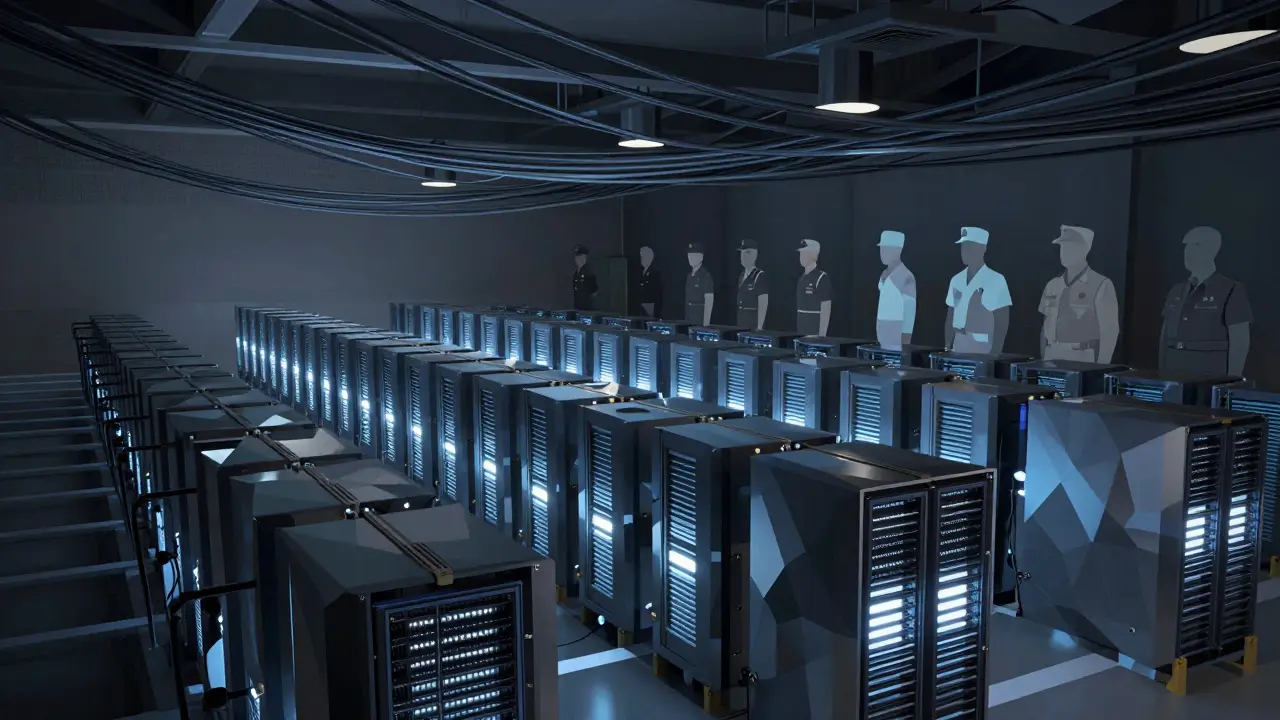
This isn't a free-for-all market. The Islamic Revolutionary Guard Corps (IRGC) plays a dominant role in this ecosystem. Reports indicate that by 2019-2020, powerful state actors, including the IRGC and entities linked to Supreme Leader Ali Khamenei, moved aggressively into crypto mining. They partnered with Chinese companies to establish massive mining farms, such as the 175-megawatt facility in Rafsanjan, Kerman province. These aren't small garage setups; they are industrial complexes consuming vast amounts of electricity.
Why does the state care so much? Because these operations generate hard assets-Bitcoin-that can be exchanged for goods abroad. The IRGC-linked enterprises benefit from rock-bottom electricity tariffs and dedicated power feeds. Some investigators describe this network as a "crypto cartel" that diverts national electricity for profit. While public trading remains restricted, these state-backed entities have processed billions in transactions through exchanges like Binance since 2018, effectively bypassing U.S. sanctions to fund their activities.
From Paper to Practice: How Import Payments Work
So, how does a business actually use this to import goods? The process is far from simple. It typically involves several steps designed to maintain compliance with local laws while achieving international settlement. First, the importing entity needs access to cryptocurrency. This often comes from selling mined Bitcoin or through authorized channels controlled by the CBI. Second, the transaction must be documented. Anti-money laundering (AML) and know-your-your-customer (KYC) rules require licensed miners to track all coin movements.
The first documented instance of this happening occurred on August 9, when Iran made its first import order worth $10 million using an unspecified cryptocurrency. This milestone proved the concept: digital assets could settle cross-border debts outside the U.S. dollar system. Since then, the volume has grown. By 2024, $4.18 billion worth of cryptocurrencies left Iran, a 70% increase from the previous year. These funds flow out to pay suppliers in countries like Russia, China, and others willing to engage in bilateral trade using digital settlements.
| Entity | Role | Regulatory Status |
|---|---|---|
| Central Bank of Iran (CBI) | Controls authorized crypto transactions and bans domestic payments | Strict enforcement |
| Islamic Revolutionary Guard Corps (IRGC) | Operates large-scale mining farms and manages state-backed crypto assets | Privileged access, minimal scrutiny |
| Ministry of Energy | Allocates electricity quotas for industrial mining | Quota-based approval |
| Iran Cyber Police (FATA) | Monitors online activity and enforces cyber laws | Surveillance and enforcement |

The Energy Crisis: A Hidden Cost
There is a significant downside to this model: energy consumption. Bitcoin mining requires immense amounts of electricity. Iran’s grid is already strained, and the rise of industrial mining has exacerbated the problem. During summer months, cities experience debilitating power outages. Homes go dark, and factories shut down. Investigations point to large mining operations, particularly those run by state-affiliated groups, as a major contributor to this crisis.
These miners often enjoy effectively free energy or ignore bills entirely due to political connections. Meanwhile, regular citizens and small businesses suffer. The government has tried to balance this by arresting illegal miners who use subsidized household electricity, but the large, state-linked farms continue to operate with impunity. This tension between generating foreign revenue through crypto and maintaining domestic stability is a central challenge for Iran’s leadership.
International Partnerships and Future Outlook
Iran isn't acting alone. It has actively sought international cooperation to build a crypto-based trade network. In November 2018, Iran signed a bilateral agreement on cryptocurrency cooperation with Russia. Shortly after, negotiations began with seven other countries, including Austria, Germany, and South Africa, to explore using crypto for financial transactions. The goal is clear: create a parallel financial system that operates independently of Western sanctions.
As we move through 2026, the sector continues to grow. Analysts forecast revenue of $1.5 billion by 2025, potentially reaching $1.9 billion shortly thereafter. However, challenges remain. Price volatility makes budgeting difficult for importers. Regulatory changes can happen overnight, creating uncertainty. And the technical complexity of managing crypto wallets, security, and compliance adds friction. Despite these hurdles, the strategic value of Bitcoin as a tool for circumventing sanctions ensures that Iran will likely continue to expand its crypto infrastructure, even if it strains the national power grid.
Can individuals in Iran legally use Bitcoin for everyday purchases?
No. The Central Bank of Iran prohibits the use of cryptocurrencies as a means of payment for domestic transactions. Individuals cannot use Bitcoin to buy goods or services within the country. Its use is primarily restricted to industrial mining and authorized cross-border trade settlements.
Who controls the majority of Bitcoin mining in Iran?
The Islamic Revolutionary Guard Corps (IRGC) and other state-affiliated entities control a significant portion of Iran's mining capacity. They operate large-scale industrial farms, often in partnership with foreign companies, benefiting from low electricity costs and political protection.
How does Iran avoid sanctions when using crypto for imports?
By using decentralized digital assets like Bitcoin, Iran bypasses the traditional SWIFT banking system and U.S. dollar dominance. Transactions are settled directly between parties or through approved exchanges, making it harder for Western authorities to block or freeze funds compared to traditional bank transfers.
What is the impact of crypto mining on Iran's electricity grid?
Crypto mining consumes vast amounts of electricity, contributing to severe power outages during peak demand periods. State-linked mines often receive priority access to power, leaving residential areas and smaller industries with limited supply, leading to public discontent and economic strain.
Is it safe for foreign businesses to trade with Iran using cryptocurrency?
Trading with Iran carries significant legal and reputational risks due to ongoing international sanctions. Even if crypto facilitates the payment, foreign entities may still face penalties from their home governments for engaging with sanctioned jurisdictions. Due diligence and legal counsel are essential.