

How Venezuelans Use Crypto to Survive Hyperinflation in 2026
 Aug, 6 2026
Imagine walking into a grocery store in Caracas with a wallet full of Venezuelan bolívares. By the time you reach the checkout counter, that money might buy half of what it could ten minutes ago. This isn't a dystopian novel; it is the daily reality for millions of people living through one of the most severe economic collapses in modern history. With annual inflation hitting 229% as of May 2025, traditional currency has ceased to function as a reliable store of value. Instead, a new financial infrastructure has emerged from the chaos: cryptocurrency.
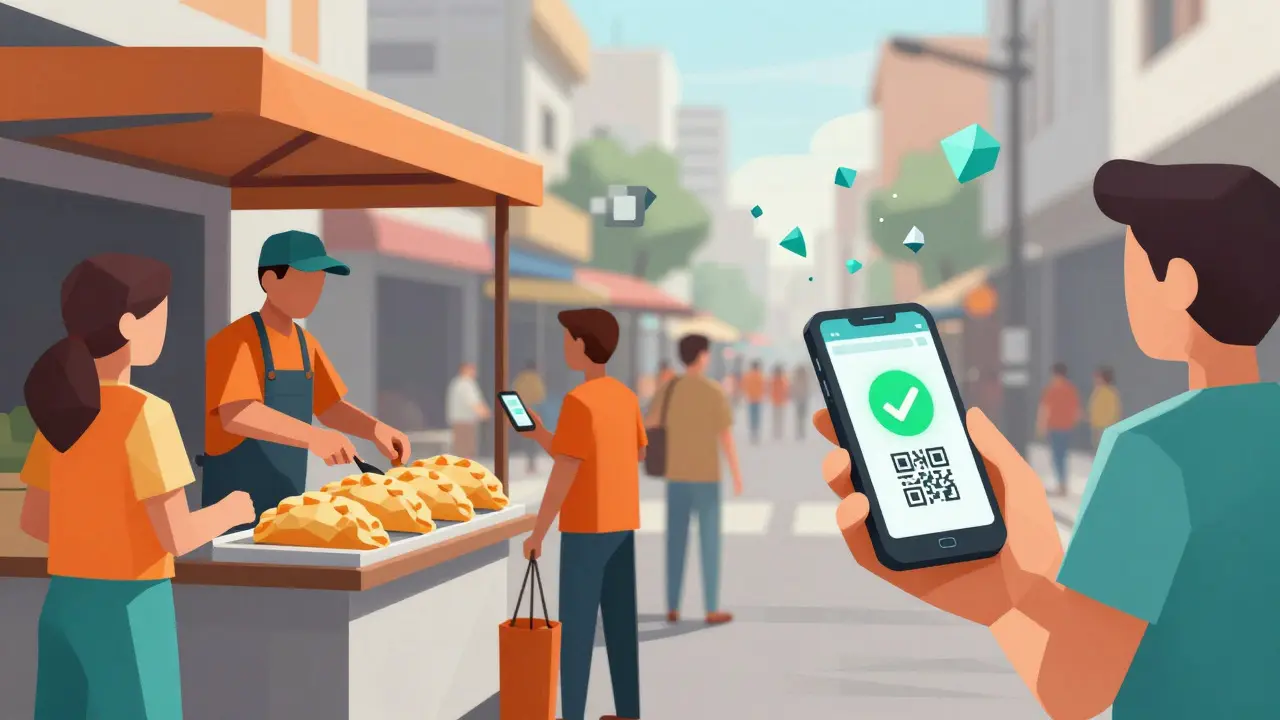
In Venezuela, digital assets are not speculative toys or investment vehicles for tech enthusiasts. They are essential survival tools. From street vendors selling empanadas to university tuition payments, the economy has quietly migrated onto blockchain networks. This shift represents a fundamental change in how society operates under extreme economic pressure and government restrictions.
The Rise of "Binance Dollars" and Stablecoin Dominance
When the local currency loses its grip on purchasing power, people look for stability. In Venezuela, that stability comes in the form of Tether (USDT), a stablecoin pegged to the US dollar. But here, it goes by a different name: "Binance Dollars." This nickname reflects the platform's absolute dominance in the region. Most Venezuelans do not hold their crypto on cold storage hardware wallets; they keep it in mobile apps, primarily Binance, because it offers the fastest and cheapest way to move value.
Why USDT? Because Bitcoin’s price swings are too volatile for buying bread or paying rent. If your salary fluctuates by 10% in an hour, you cannot budget for groceries. USDT provides a static value relative to the USD, allowing merchants and workers to plan. The private sector recorded $119 million in cryptocurrency transactions during July 2025 alone, proving this is not just individual behavior but systemic commercial adoption.
Most of these transfers happen on the TRC-20 network (Tron) rather than Ethereum. Why? Fees. Sending USDT via Ethereum can cost several dollars in gas fees, which eats into small transactions. TRC-20 fees are often less than a cent. For a country where the average income is low, saving even $0.50 per transaction matters. This technical choice highlights how users optimize for efficiency when every penny counts.
| Method | Speed | Cost | Reliability | Primary Use Case |
|---|---|---|---|---|
| Venezuelan Bolívar | Instant | Low | Very Low (Inflation) | Taxes, minimal daily purchases |
| USDT (TRC-20) | Minutes | ~$0.01 | High | Rent, salaries, large purchases |
| Bitcoin (BTC) | 10-60 mins | Variable | Medium (Volatility) | Savings, cross-border remittances |
| Cash (USD) | Instant | Physical risk | High | Small informal market trades |
Navigating Three Exchange Rates Simultaneously
If you try to understand Venezuelan economics by looking at a single exchange rate, you will be misled. There are three distinct rates operating simultaneously, and knowing which one applies is critical for survival:
- The Official Rate: Set by the Central Bank of Venezuela (BCV). This rate is often artificially suppressed and rarely accessible to the average citizen for daily needs.
- The Parallel Market Rate: Known locally as dólar negro. This is the black market cash rate, determined by supply and demand in physical exchanges.
- The P2P Crypto Rate: The rate used on platforms like Binance. This is increasingly becoming the benchmark for pricing goods and services.
Muchers in Caracas now display prices in "Binance Dollars." A receipt might show a total in USDT, reflecting the real-time peer-to-peer trading rate. This migration from bolívar-based pricing to blockchain-based pricing signals a deeper structural shift. The state has lost its monopoly on monetary definition. When a merchant accepts USDT, they are bypassing the banking system entirely, avoiding both inflation and capital controls.
Peer-to-Peer Trading as Critical Infrastructure
Without access to international bank accounts or reliable credit cards, how do Venezuelans get crypto? The answer is Peer-to-Peer (P2P) trading. Platforms like Binance P2P and formerly LocalBitcoins have become the de facto central banks for the population. These platforms allow users to trade fiat currency (bolívares or physical USD) directly for crypto with other individuals.
This system relies on trust mechanisms built into the app. One user holds the crypto in escrow while the other sends bank transfer details. Once the payment is confirmed, the crypto is released. It sounds simple, but it requires navigating a complex web of local banking restrictions. Many Venezuelan banks limit daily transfer amounts or flag frequent transactions as suspicious. Users have developed sophisticated workarounds, such as using prepaid cards, splitting transactions across multiple accounts, or coordinating cash meetups in public places.
Remittances play a huge role here. In 2023, remittances totaled $5.4 billion, with 9% processed through cryptocurrency channels. Families abroad send USDT directly to their relatives' Binance wallets. This bypasses Western Union fees, long processing times, and banking blocks. For many households, this digital lifeline is the difference between eating well and going hungry.

Daily Life: How Crypto Fits Into the Routine
Let’s look at a typical day for Carlos, a resident of Caracas. He wakes up and checks his phone not for news, but for the current USDT/BTC rate. His job pays him partially in bolívares and partially in USDT. He immediately converts the bolívar portion to USDT via a P2P trade before the value drops further. Later, he buys groceries. The shop owner has a QR code on the wall. Carlos scans it, authorizes a USDT payment from his Tron wallet, and walks out. No card swiping, no chip readers, just a smartphone and internet connection.
This level of integration extends beyond food. Universities accept tuition in crypto. Tech startups pay developers in Bitcoin or USDT. Even informal markets, where trust is usually based on personal reputation, now use digital ledgers to record debts and payments. The learning curve was steep initially-most users needed 2-3 weeks to feel comfortable with basic transactions-but community knowledge sharing filled the gap. WhatsApp groups became classrooms, teaching neighbors how to secure private keys and avoid scams.
Challenges: Power, Internet, and Security
Crypto adoption in Venezuela is not without significant hurdles. The very infrastructure required to run digital wallets-electricity and internet-is unreliable. Frequent blackouts mean users must charge phones aggressively and perform transactions quickly when power is available. Slow internet connections can cause transaction timeouts, leading to frustration and potential losses if prices move against them during delays.
Security is another major concern. Unlike traditional banks, there is no customer service hotline to call if you lose your password. Private key management is a skill that takes time to master. Scammers target newcomers with fake support messages or phishing links. Despite these risks, the alternative-holding bolívares that lose value every hour-is seen as greater danger. Users prioritize accessibility over institutional security features, relying on social verification within P2P communities to vet trading partners.

Government Stance: Crackdowns vs. Tolerance
The Venezuelan government’s relationship with cryptocurrency is contradictory. On one hand, they launched their own state-backed token, the Petro, in 2018. It failed due to lack of trust and liquidity, eventually being discontinued in 2024. On the other hand, the regime tolerates the use of dollar-backed stablecoins because it helps stabilize the informal economy without requiring formal deregulation.
However, this tolerance is fragile. Periodic crackdowns on mining operations occur, often framed as energy conservation measures. Exchanges face regulatory ambiguity. The government has not officially legalized dollarization but allows it to exist in the shadows. This creates a precarious environment where users must stay alert to sudden policy shifts. Political instability, including the contested 2024 presidential election, adds another layer of uncertainty. Yet, analysts predict that crypto usage will persist regardless of political outcomes because the economic fundamentals driving adoption remain unchanged.
Regional Context: Survival vs. Innovation
Venezuela’s story stands in stark contrast to its neighbors. Brazil, for instance, is seeing institutional adoption, with companies like OranjeBTC acquiring hundreds of millions in Bitcoin for stock exchange listings. Their approach is top-down, regulated, and investment-focused. Venezuela’s adoption is bottom-up, decentralized, and survival-driven. While Brazil integrates crypto into the formal financial system, Venezuela uses it to escape the broken formal system entirely.
This distinction matters for future development. As infrastructure improves and user education increases, Venezuela could transition from pure survival mode to more advanced financial applications. But for now, the focus remains on basic functionality: preserving wealth and facilitating trade. The trend toward blockchain-based dollarization appears irreversible, given the complete breakdown of confidence in traditional monetary systems.
Is it legal to use cryptocurrency in Venezuela?
The legal status is ambiguous. While the government does not explicitly ban citizens from holding or using cryptocurrencies like Bitcoin or USDT, it has cracked down on mining operations and certain exchange activities. The state previously promoted its own coin, the Petro, but abandoned it. Currently, the government tolerates stablecoin usage as it helps mitigate some economic pressures, but regulations can change suddenly. Users operate largely in a gray area, relying on peer-to-peer networks that exist outside strict state oversight.
Why do Venezuelans prefer USDT over Bitcoin?
Stability is the primary reason. Bitcoin’s price volatility makes it unsuitable for daily transactions like buying food or paying rent. If the price drops 5% while you are shopping, you effectively lose money. USDT is pegged to the US dollar, providing a stable value that allows for accurate pricing and budgeting. Additionally, USDT transactions on networks like TRC-20 are faster and cheaper than Bitcoin transactions, making them more practical for small-scale commerce.
How do people convert Bolívares to Crypto?
Most conversions happen through Peer-to-Peer (P2P) platforms like Binance. Users list their bolívares for sale in exchange for USDT or BTC. Buyers transfer funds via local bank transfers or cash meetups. The platform holds the crypto in escrow until the payment is confirmed. Due to banking restrictions, users often employ strategies like splitting transactions, using prepaid cards, or leveraging informal networks to move funds efficiently.
What are the biggest risks of using crypto in Venezuela?
Key risks include infrastructure failures (power outages and slow internet), security threats (phishing scams and lost private keys), and regulatory uncertainty. Since there is no central authority to recover lost funds, user error can lead to permanent loss of assets. Additionally, the reliance on centralized exchanges for P2P trading exposes users to platform-specific risks, such as account freezes or changes in terms of service.
Does the government control the crypto market?
No, the government has limited control over the decentralized nature of cryptocurrency. While they attempted to introduce the Petro, it failed to gain traction. Today, the market is driven by user demand and global platforms like Binance. The government occasionally intervenes by restricting electricity for miners or imposing vague regulations, but the core ecosystem operates independently of state control, functioning as a parallel financial system.