

Nigeria Crypto Legal Status 2026: ISA 2025, SEC Rules & Tax Guide
 Jun, 30 2026
For years, living in the shadow of banking bans made trading crypto in Nigeria feel like a high-stakes gamble. You knew the money was there, but you also knew one wrong move could get your bank account frozen. That era of uncertainty officially ended in 2025. With the signing of the Investments and Securities Act (ISA) 2025, the government stopped treating digital assets as a nuisance and started treating them as legitimate securities. If you are holding Bitcoin or trading on local exchanges today, the rules have changed completely.
It is no longer illegal to own cryptocurrency in Nigeria. However, it is still not legal tender. You cannot walk into a shop in Lagos and pay for groceries with Ethereum. The naira remains the only official currency for payments. But for investment, savings, and peer-to-peer transfers, the regulatory fog has lifted. This guide breaks down exactly what the new laws mean for your wallet, your taxes, and your ability to trade freely without fear of sudden bans.
The End of the Ban: How ISA 2025 Changed Everything
To understand where we stand in 2026, you have to look at how far we have come from the panic of 2021. Back then, the Central Bank of Nigeria (CBN) issued a directive that effectively cut off all banks from processing cryptocurrency transactions. It was a blunt instrument. Startups scrambled to find offshore partners, and everyday users were forced into risky peer-to-peer (P2P) markets just to move their funds. The message from regulators was clear: stay away.
That narrative shifted dramatically on March 25, 2025, when President Bola Ahmed Tinubu signed the Investments and Securities Act (ISA) 2025 into law. This 226-page document replaced the outdated 2007 version and did something historic: it explicitly recognized digital assets as securities under Nigerian law. For the first time, crypto had a home within the formal financial system rather than existing in a gray zone outside of it.
The ISA 2025 defines a crypto asset as "a digital representation of value that can be transferred, digitally traded and used for payment or investment purposes." Crucially, it excludes digital versions of fiat money from this classification, keeping stablecoins and central bank digital currencies (CBDCs) in a separate regulatory bucket. This distinction matters because it means tokens like Bitcoin and Ethereum are now treated similarly to stocks or bonds, subject to the same rigorous oversight standards.
Who Is in Charge? The Rise of the SEC
If you thought the CBN was the boss of crypto, think again. Under the new framework, the Securities and Exchange Commission (SEC) has taken the lead. The SEC now holds comprehensive authority over the issuance, trading, and promotion of digital assets. They monitor exchanges, conduct audits, and have the power to impose penalties or even remove executives from their positions if things go wrong.
This shift creates a clearer chain of command. While the CBN still oversees monetary policy and ensures that crypto activities do not destabilize the national banking system, the SEC handles the day-to-day regulation of the market. This includes managing brokers, dealers, investment advisors, and mutual funds that deal in digital assets. For traders, this means the platforms you use must now register with the SEC. Early approvals were granted to prominent platforms like Quidax and Busha, signaling which players meet the new compliance standards.
The licensing process is not instant. Regulators are conducting thorough vetting procedures, which has caused some delays. But the goal is clear: to ensure that every Virtual Asset Service Provider (VASP) operating in Nigeria is transparent, solvent, and accountable. If an exchange is not registered with the SEC, you should be extremely cautious about using it. The protection nets are stronger now, but only if you play on regulated fields.

Taxes and Penalties: The NTAA 2025 Impact
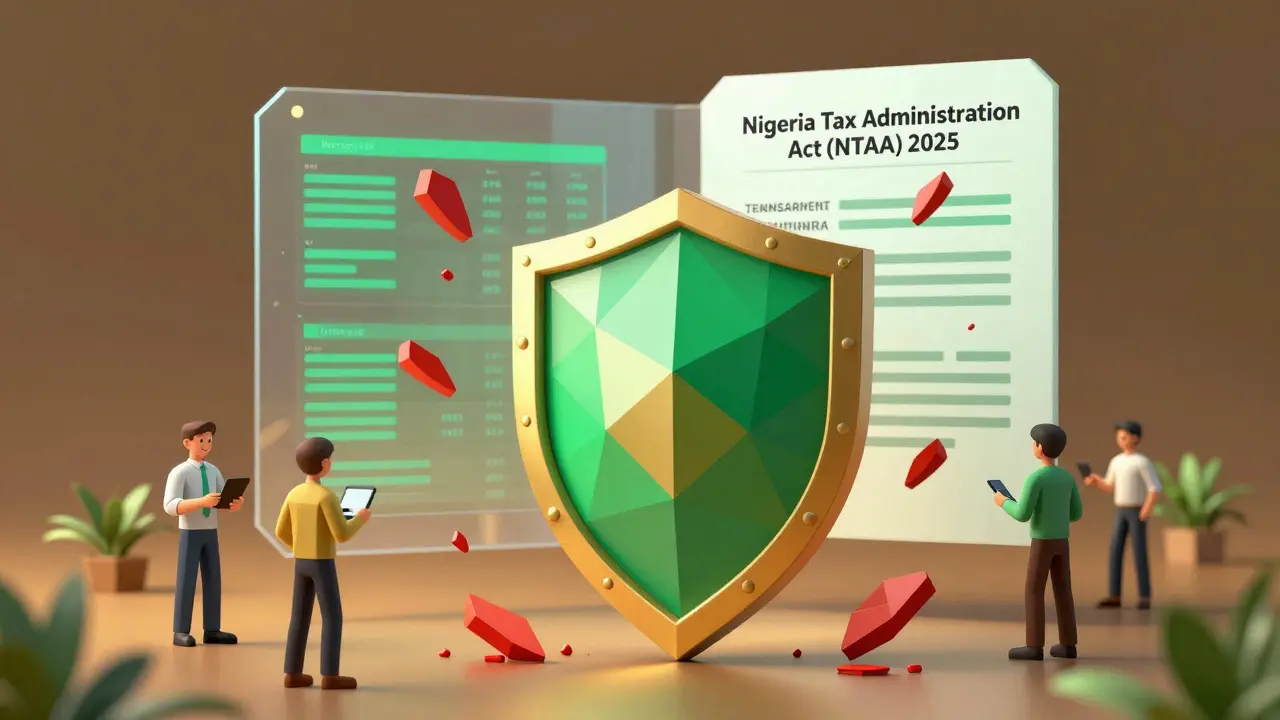
With legalization comes taxation. You cannot expect the government to regulate an industry generating billions in volume without collecting its share. The Nigeria Tax Administration Act (NTAA) 2025, signed into law in June 2025, lays out the fiscal responsibilities for crypto participants. Scheduled to take full effect in 2026, this legislation places the burden of compliance squarely on Virtual Asset Service Providers (VASPs).
Here is how it works for you as a user. The exchanges and platforms you use are responsible for tracking transactions and ensuring tax compliance. If they fail to do so, the penalties are severe. Defaulting VASPs face an initial penalty of ₦10 million (approximately $6,693) in the first month of non-compliance, plus ₦1 million ($669) for each additional month of delay. The SEC can also suspend or revoke their licenses. This pressure on providers ensures that the infrastructure supporting your trades remains compliant.
Why does this matter to you? Because it legitimizes your earnings. In the past, reporting crypto gains was ambiguous. Now, with a structured tax framework, your profits from trading or staking are recognized income. The sheer scale of activity makes this necessary. Between July 2024 and June 2025 alone, Nigeria received an estimated $92.1 billion in crypto value. That is nearly double the activity levels seen in South Africa. The government is acknowledging that this sector is too big to ignore and too valuable to leave unregulated.
| Period | Key Regulation | Status of Crypto | Banking Access |
|---|---|---|---|
| 2021-2023 | CBN Circulars | Restricted/Gray Zone | Banned for most users |
| 2023-2024 | Updated CBN Guidelines | Softened Restrictions | Allowed for licensed VASPs |
| 2025-Present | ISA 2025 & NTAA 2025 | Legal Security | Fully Integrated |
Consumer Protection and Fraud Prevention
One of the biggest risks in the Nigerian crypto space has always been fraud. Ponzi schemes disguised as investment platforms have wiped out countless portfolios. The ISA 2025 directly addresses this by strengthening consumer protections. The law explicitly bans Ponzi schemes and gives regulators enhanced tools to combat fraud.
The SEC now works closely with the Economic and Financial Crimes Commission (EFCC) and the Nigerian Financial Intelligence Unit (NFIU). This multi-agency coordination is a game-changer. Regulators can access telecom records for investigative purposes, making it much harder for scammers to hide behind anonymity. If you are approached by a platform promising guaranteed high returns with zero risk, remember that legitimate investments carry risk. The new laws empower authorities to shut these operations down quickly.
Additionally, the framework distinguishes between different types of digital assets. Investment-focused NFTs are now under SEC scrutiny because they are marketed as financial products. However, artistic NFTs-those created purely for creative expression and not sold as investment vehicles-remain largely unaffected. This nuance shows that regulators are trying to protect investors without stifling creativity.
Practical Steps for Traders in 2026
So, what should you do right now? First, verify the status of your exchange. Check if your preferred platform is registered with the SEC. If it is not, consider moving your assets to a compliant provider. Platforms like Quidax and Busha have already navigated this process, but others are still in the vetting phase. Do not assume that just because an app is popular, it is safe. Compliance is the new standard for safety.
Second, keep records of your transactions. With the NTAA 2025 taking effect, accurate record-keeping is essential for tax purposes. Even though VASPs handle much of the compliance, you are ultimately responsible for your personal tax filings. Save your trade histories, withdrawal receipts, and any documentation related to staking rewards or yield farming. These documents will be crucial if you need to prove the source of your funds or calculate your capital gains.
Third, be wary of unofficial payment methods. While crypto is legal for investment, it is not legal tender. Using it for direct payments in businesses may still expose you to regulatory friction or lack of consumer protection. Stick to using the naira for daily purchases and reserve crypto for saving, investing, or cross-border transfers where it shines.
Future Outlook: A Model for Africa?
Nigeria’s approach to regulating cryptocurrency is being watched closely by other African nations. By balancing innovation with strict oversight, the country is attempting to create a sustainable ecosystem. The ISA 2025 extends beyond just Bitcoin and Ethereum. It covers fintech companies offering new services, such as PiggyVest and Cowrywise, which offer higher returns through government debt instruments. It also provides guidelines for Nigerians investing in international financial markets via platforms like Bamboo.
The framework aims to foster growth while preventing systemic risk. Municipal and federal authorities raising funds through bonds must now comply with stricter regulations, including caps on borrowing relative to expected revenue. This holistic approach suggests that Nigeria views digital assets not as a threat, but as a component of modern finance. As the market matures, expect more clarity on specific token classifications and further integration with traditional banking systems.
Is cryptocurrency illegal in Nigeria in 2026?
No, cryptocurrency is not illegal in Nigeria in 2026. The Investments and Securities Act (ISA) 2025 explicitly recognizes digital assets as securities, providing a clear legal framework for ownership, trading, and investment. However, it is not legal tender and cannot be used for official payments instead of the naira.
Which agency regulates crypto in Nigeria?
The Securities and Exchange Commission (SEC) is the primary regulator for cryptocurrencies and digital assets in Nigeria. It oversees issuance, trading, and promotion, working in coordination with the Central Bank of Nigeria (CBN), EFCC, and NFIU for broader financial stability and anti-money laundering compliance.
Do I need to pay taxes on my crypto profits?
Yes. Under the Nigeria Tax Administration Act (NTAA) 2025, cryptocurrency transactions are subject to taxation. Virtual Asset Service Providers (VASPs) are responsible for compliance, but individuals must keep accurate records of their trades to report capital gains and other income derived from digital assets.
Can I use crypto to buy goods and services?
Technically, no. Cryptocurrency is not recognized as legal tender in Nigeria. The naira is the only official currency for payments. While peer-to-peer trading is allowed, using crypto directly for commercial transactions may lack consumer protection and regulatory backing.
What happens if I use an unregistered exchange?
Using an unregistered exchange carries significant risk. The SEC has the power to suspend or revoke licenses of non-compliant entities. If you trade on an unlicensed platform, you may lose access to your funds, face difficulties withdrawing assets, and receive no recourse in case of fraud or insolvency. Always verify SEC registration before depositing funds.