

Virtuse Exchange Review: Is This European Crypto Platform Safe for 2026?
 Jul, 31 2026
You’ve probably heard that not all crypto exchanges are created equal. Some are massive giants with thousands of coins, while others are niche players focusing on specific regions or asset classes. Virtuse Exchange is one of those niche players. If you’re looking for a place to buy Bitcoin or Ethereum in Europe, you might have stumbled across their name. But here’s the real question: is it actually safe and useful for you in 2026?
I’ve spent time digging into their platform, their regulatory standing, and what they offer compared to the big names like Binance or Coinbase. The short answer? It depends entirely on who you are as an investor. If you’re a high-net-worth individual looking for institutional-grade security in Europe, Virtuse has some serious strengths. If you’re a day trader wanting to flip obscure altcoins from your phone, you’ll likely be frustrated.
Who Is Virtuse Exchange Really For?
To understand if this platform fits your needs, we first need to look at its core identity. Founded in May 2019, Virtuse positions itself not just as a trading spot, but as "the largest Bitcoin wealth management platform in Europe." That’s a bold claim, and it shapes everything about how the service works.
The company operates with offices in Singapore and holds official registration in the European Union as a licensed virtual currency exchange and wallet service. This dual presence is significant. It means they are navigating both Asian market dynamics and strict European financial regulations. For many users, especially those worried about unregulated offshore exchanges, this EU licensing is a major green flag.
However, don’t expect them to compete with the sheer volume of listings found on decentralized exchanges. Their focus is narrower. They specialize in bridging traditional finance with digital assets. This makes them particularly appealing to:
- European residents seeking a compliant, local-friendly interface.
- High-net-worth individuals (HNWIs) who need more than just a basic buy/sell button.
- Institutional investors looking for secure custody solutions rather than speculative trading tools.
If you fall into these categories, keep reading. If you’re looking for meme coins or the latest trending token, you might want to look elsewhere.
Trading Interfaces: Basic vs. Pro
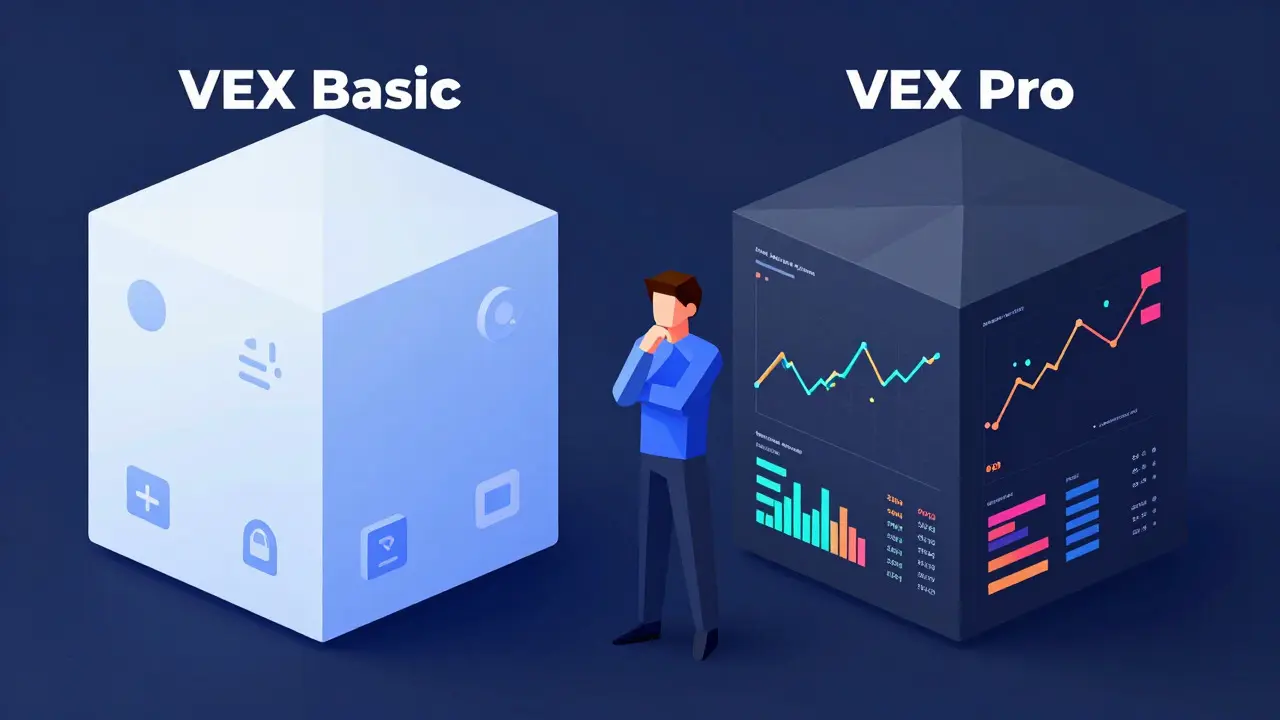
One thing I appreciate about Virtuse is that they don’t force everyone into the same box. They offer two distinct trading environments, which helps reduce the intimidation factor for beginners while still providing depth for veterans.
VEX Basic is designed for the novice trader. It’s clean, intuitive, and stripped of the clutter that often overwhelms new users. You can easily buy major cryptocurrencies without needing to understand order books or leverage ratios. It’s essentially a streamlined gateway for getting started with Bitcoin or Ethereum.
On the other hand, VEX Pro is where the seasoned traders live. This advanced platform includes comprehensive charting tools, stop-loss orders, and take-profit functionality. These features are non-negotiable for anyone managing larger portfolios or executing specific trading strategies. The ability to set automatic exit points helps mitigate risk, which is crucial when dealing with volatile assets like cryptocurrency.
| Feature | VEX Basic | VEX Pro |
|---|---|---|
| Target User | Beginners / Casual Investors | Advanced Traders / Institutions |
| Interface Complexity | Low (Simple Buy/Sell) | High (Charts, Order Types) |
| Stop-Loss/Take-Profit | No | Yes |
| Charting Tools | Basic | Comprehensive |
| Learning Curve | Minimal | Steep |
Supported Assets and What’s Missing
Let’s talk about what you can actually trade. Virtuse supports the major players: Bitcoin (BTC), Ethereum (ETH), Ripple (XRP), Litecoin (LTC), and Monero (XMR). They also support stablecoins like Tether (USDT), Gemini Dollar (GUSD), and Paxos Standard (PAX), along with PAX Gold (PAXG).
There’s also their native token, VIRTU. Holding this token provides benefits like reduced trading fees and staking rewards, which is a common model in the industry to incentivize loyalty.
Here’s where things get interesting. In the past, Virtuse offered tokenized commodities and real-world assets, such as equities and indices. However, due to evolving compliance requirements, they discontinued these offerings. This was a smart move for long-term viability, even if it disappointed some users who liked the diversification options. By sticking to core cryptocurrencies, they maintain tighter regulatory control.
The downside? The selection is limited compared to giants like Binance or Kraken. If you’re hunting for the next 100x altcoin, you won’t find it here. Virtuse is focused on quality over quantity, prioritizing established assets with clear regulatory paths.
Security and Regulatory Compliance
This is arguably the most important section for any exchange review. In crypto, trust is earned through transparency and robust security measures. Virtuse takes this seriously.
First, let’s look at storage. They claim that 99% of user funds are stored in cold wallets. Cold wallets are offline storage devices, meaning they are disconnected from the internet and thus immune to online hacks. These funds are protected by a top-tier licensed custodian using multi-signature technology. Multi-sig requires multiple private keys to authorize a transaction, drastically reducing the risk of internal fraud or single-point failures.
Secondly, there’s the regulatory aspect. Virtuse is officially registered in the European Union. This means they adhere to strict Know Your Customer (KYC) and Anti-Money Laundering (AML) standards. While some crypto purists hate KYC because it reduces anonymity, it offers a layer of protection for your account. If something goes wrong, there’s a legal framework and oversight body involved. This is a huge advantage over unregulated platforms that can vanish overnight.
They partner with leading online verification providers to ensure adherence to global standards. For European users, this aligns well with the broader push for regulated crypto markets under frameworks like MiCA (Markets in Crypto-Assets). As regulations tighten globally, being ahead of the curve is a competitive advantage.
User Experience and Accessibility
Getting started on Virtuse involves completing the KYC verification process. This is mandatory for compliance. Once verified, you can fund your account using their fiat gateway system. They support over 20 local currencies, allowing purchases via credit card transactions and SEPA bank transfers. SEPA integration is particularly smooth for European users, offering fast and low-cost euro transfers.
One feature I really like is the recurring trade functionality. You can set up automatic purchases on daily, weekly, or monthly schedules. This supports dollar-cost averaging (DCA), a strategy where you invest a fixed amount regularly regardless of price. It’s an excellent way to remove emotional decision-making from investing. The minimum recurring investment starts at just $50 per month, making it accessible for regular savers.
However, there’s a glaring omission: no mobile application. Yes, you read that right. No iOS app, no Android app. In 2026, this is a significant drawback. Most people manage their finances on their phones. While their web interface is responsive and works on mobile browsers, it doesn’t offer the convenience, notifications, or biometric login security of a dedicated app. For active traders, this could be a dealbreaker.
Fees and Costs
Fee structures can make or break your returns, especially if you’re trading frequently. Virtuse uses the standard maker-taker model, though specific percentages aren’t always prominently displayed in general marketing materials. Generally, fees are competitive within the European market.
Holders of the VIRTU token benefit from reduced trading fees. This is a common incentive structure. If you plan to hold a significant balance, buying and holding VIRTU might save you money in the long run. Additionally, staking VIRTU yields rewards, adding another layer of potential passive income. Always check the current fee schedule on their website before depositing, as rates can change based on market conditions and network congestion.
Pros and Cons Summary
To help you decide quickly, here’s a breakdown of the key advantages and disadvantages based on my analysis.
| Pros | Cons |
|---|---|
| EU-regulated and licensed | No mobile app (iOS/Android) |
| Strong security (99% cold storage) | Limited cryptocurrency selection |
| Dedicated wealth management for HNWIs | Smaller user base/community |
| Easy DCA with recurring buys ($50 min) | Discontinued tokenized assets |
| SEPA bank transfer support | Less suitable for altcoin speculators |
Final Verdict: Should You Use Virtuse?
Virtuse Exchange isn’t trying to be everything to everyone. And honestly, that’s okay. It’s a specialized tool. If you are a European investor who values regulatory safety, wants to focus primarily on Bitcoin and major altcoins, and prefers a clean, secure environment over a flashy, feature-bloated interface, Virtuse is a strong contender.
Their focus on wealth management and institutional-grade security sets them apart from the wild west of unregulated exchanges. The recurring buy feature makes it easy to build a position over time without stress.
But, if you need a mobile app to trade on the go, or if you love experimenting with hundreds of small-cap tokens, you’ll feel constrained. In that case, stick with larger global exchanges that offer broader liquidity and mobile-first experiences.
For me, the lack of a mobile app is the biggest hurdle. But for desktop-based, long-term holders in Europe, the security and compliance benefits might outweigh that inconvenience. Do your own research, start small, and see if their workflow matches your investment style.
Is Virtuse Exchange safe and regulated?
Yes, Virtuse Exchange is officially registered in the European Union as a licensed virtual currency exchange. It adheres to strict KYC (Know Your Customer) and AML (Anti-Money Laundering) standards. Furthermore, 99% of user funds are stored in cold wallets secured by multi-signature technology, providing a high level of security against online hacks.
Does Virtuse Exchange have a mobile app?
As of 2026, Virtuse Exchange does not have a dedicated mobile application for iOS or Android. Users must access the platform through a web browser on their mobile devices or desktop computers. This is considered a limitation compared to competitors like Binance or Coinbase.
What cryptocurrencies can I trade on Virtuse?
Virtuse focuses on major cryptocurrencies including Bitcoin (BTC), Ethereum (ETH), Ripple (XRP), Litecoin (LTC), Monero (XMR), and stablecoins like Tether (USDT) and Paxos Standard (PAX). They also support their native VIRTU token. They do not currently offer a wide variety of small-cap altcoins or tokenized commodities.
How much does it cost to use Virtuse Exchange?
Virtuse uses a standard trading fee structure. Fees can be reduced by holding the native VIRTU token. Specific fee percentages vary based on your trading volume and whether you are a maker or taker. Recurring investments have a minimum threshold of $50 per month. Always check the latest fee schedule on their official site for precise numbers.
Can I use SEPA transfers to deposit euros?
Yes, Virtuse Exchange supports SEPA (Single Euro Payments Area) bank transfers, making it convenient for European users to deposit euros. They also support credit card transactions and over 20 other local currencies through their fiat gateway system.
What is the difference between VEX Basic and VEX Pro?
VEX Basic is a simplified interface designed for beginners, offering easy buy/sell functions. VEX Pro is an advanced platform for experienced traders, featuring professional charting tools, stop-loss orders, take-profit functionality, and deeper market data analysis.
Joy Kwant
August 1, 2026 AT 18:49The lack of a mobile app is simply unacceptable in this day and age. It shows a complete disregard for the modern user experience and convenience. They are clinging to outdated methods while ignoring what people actually need.
amy miranda
August 2, 2026 AT 15:30Oh please, another exchange promising security while hiding behind vague claims about 'institutional-grade' services. It’s all smoke and mirrors until they inevitably get hacked or freeze withdrawals. I’ve seen it a thousand times and I’m tired of the same old sales pitch dressed up as innovation.
They say 99% is in cold storage, but who audits that? Who verifies the multi-sig setup? It’s just words on a page designed to make you feel safe so you deposit your life savings. Typical corporate gaslighting at its finest.
Pernelia Wahkan
August 3, 2026 AT 12:42I’d argue that the absence of a mobile application might actually be a feature for those wary of phishing attacks via compromised apps. While it certainly hampers convenience, forcing users to interact through a browser can sometimes add a layer of scrutiny that native apps bypass. However, the trade-off is steep for daily traders who rely on push notifications for price alerts. It’s a classic case of security versus usability, and Virtuse seems to have chosen the former almost exclusively.
Subhash Kashyap Dm
August 3, 2026 AT 22:19they are part of the deep state crypto control grid. watch them disappear when MiCA fully kicks in. no real power here just puppet strings pulled from Brussels and Singapore. stay away unless you want your assets frozen for questioning.
Billy Cunningham
August 4, 2026 AT 20:36Just tried signing up and the KYC process was a nightmare 😩. Why do they need my utility bill? Just let me buy Bitcoin already 📉.
Ed Wallace
August 5, 2026 AT 12:49There is a certain poetic justice in a platform that refuses to cater to the whims of the altcoin gamblers. By stripping away the noise and focusing on the bedrock assets like Bitcoin and Ethereum, Virtuse invites us to reconsider what wealth management truly means in the digital age. It is not about chasing the next hundred-bagger; it is about preserving value in a chaotic world. The recurring buy feature is particularly elegant, allowing one to practice patience and discipline, virtues often lost in the frenetic energy of crypto trading.
Joshua Hofford
August 6, 2026 AT 07:22Hey everyone! As someone who has been following the European crypto scene closely, I think Virtuse is hitting a sweet spot for long-term holders. The SEPA integration is a game-changer for us locals who are tired of high wire transfer fees. Plus, knowing that my funds are mostly in cold storage gives me peace of mind. It’s not flashy, but it’s solid. If you’re looking to DCA into BTC without the stress, give it a shot!
Marcia Albert
August 6, 2026 AT 11:24I’m just vibing with the idea of a clean interface. No clutter, no ads, just simple buying and selling. It’s refreshing to see a platform that doesn’t try to sell you everything under the sun. The VEX Basic mode looks pretty chill for someone who just wants to set it and forget it.
Emma Smith
August 7, 2026 AT 11:37look at the tokenomics though. holding VIRTU reduces fees. sounds like a pyramid scheme to me. they want you locked in their ecosystem forever. typical web2 play disguised as web3 freedom. don't fall for it
Ed Mitchell
August 9, 2026 AT 01:37The audacity to claim safety while operating without a mobile presence is laughable. One must question the motives behind such deliberate obfuscation of accessibility. Are they hiding something in the backend? The silence is deafening. I demand transparency before entrusting any digital asset to these so-called guardians of wealth.
Erica Johnson
August 9, 2026 AT 07:23Well, if you read the fine print, the fee reduction for VIRTU holders is standard industry practice. It’s not a scam, it’s an incentive model. But sure, keep complaining about things you don’t understand :/
Ken G
August 10, 2026 AT 12:35its all controlled by the elites. they want to track every penny you spend. no anonymity left. just join the system and lose your freedom.
Lorraine Surringer
August 11, 2026 AT 07:03Honestly, the whole thing feels a bit pretentious. Acting like they are saving us from ourselves by limiting our choices. But hey, if it makes you feel warm and fuzzy inside, go ahead. Just don’t come crying to me when the fees eat your profits. 😉