

What is Joystream (JOY) Crypto Coin? A Deep Dive into the Decentralized Video Protocol
 Apr, 11 2026
Imagine a world where the platform you upload your videos to can't suddenly demonetize you because of a vague policy change or delete your channel without a fair hearing. For most of us, YouTube and TikTok are the only games in town, but they hold all the power. Joystream is a blockchain-based video platform protocol designed to strip that power away from central corporations and give it back to the creators. Also known as the JOY ecosystem, it isn't just a single app, but a foundational layer that allows multiple streaming applications to run on a decentralized network.
Key Takeaways: Joystream at a Glance
- Core Purpose: Combats censorship and unfair monetization in the video industry.
- The Token: JOY is the native currency used for governance, payments, and channel staking.
- Governance: Uses a "Pioneer" system where token holders influence the platform's direction.
- Market Position: A niche, high-risk project with significant upside potential but currently struggling with low liquidity and adoption.
How Joystream Actually Works
Unlike a traditional website that stores your videos on a private server, Joystream operates as a protocol. This means it provides the rules and the infrastructure for others to build video apps. The whole system is governed by a Decentralized Autonomous Organization (DAO), meaning there is no CEO making decisions behind closed doors. Instead, the community votes on changes.
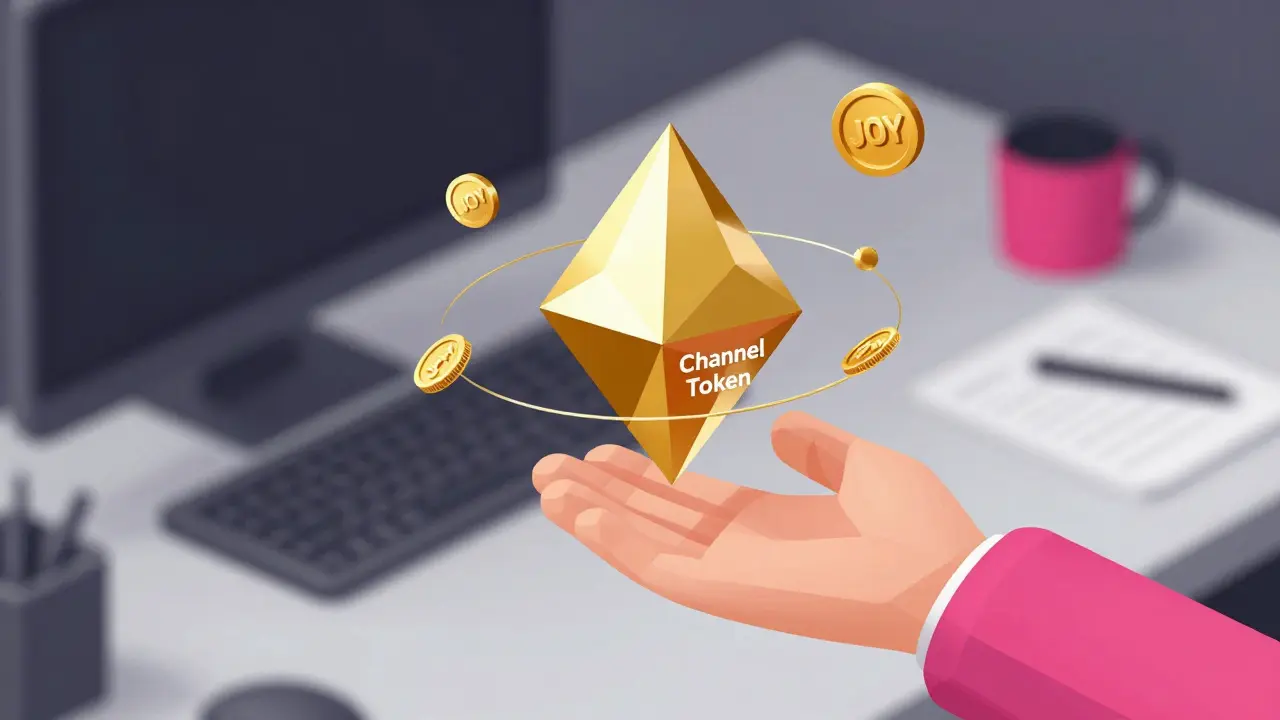
The magic happens through the JOY tokenomics. The platform introduces a unique concept called "channel tokens." In a normal world, you might subscribe to a channel for free. In the Joystream world, viewers can purchase tokens specifically tied to their favorite creators. This effectively turns viewers into stakeholders; if the creator grows in popularity, the value of those channel tokens could potentially rise.
To keep the ecosystem healthy, Joystream uses an Automated Market Maker (AMM) a decentralized exchange protocol that allows assets to be traded automatically using liquidity pools . This ensures that JOY tokens can be traded and managed without needing a traditional middleman exchange for every single micro-transaction.
The Role of the JOY Token
The JOY coin isn't just a speculative asset; it has several functional roles within the network. If you hold JOY, you aren't just a trader-you're a part of the infrastructure. One of the most interesting features is the "Pioneer" mechanism. This allows you to submit proposals for platform improvements and even take on paid roles to help the network grow, earning more tokens as a reward.
Creators also benefit from a "Patronage" system. This is a regular supply of tokens given to creators to ensure they have a baseline of support, regardless of whether they have a viral hit this week. For a small creator, this can actually be more lucrative than traditional ad-revenue shares. For example, some early users have reported earning more through JOY patronage than they did through the YouTube Partner Program for the same number of views.
| Attribute | Value |
|---|---|
| Total Supply | 1.11 Billion JOY |
| Circulating Supply | 1.09 Billion JOY |
| All-Time High | $0.06033 |
| Primary Exchanges | MEXC, Gate.io, CoinEx |
Comparing Joystream to the Big Players
When you look at the broader market, Joystream is a David fighting several Goliaths. It's not just fighting YouTube, but also other decentralized projects. The Theta Network a blockchain-based video delivery network that uses edge computing to reduce buffering is a massive competitor with a market cap in the hundreds of millions. Then there are platforms like Odysee (powered by LBRY), which has a more established user base.
The main struggle for Joystream is "the friction of the small." Because the token price has stayed quite low, some users find it annoying to handle thousands of tokens just to pay for a small service. It's like trying to buy a coffee using only pennies-it works, but it's a hassle. However, its channel-specific token model is something that even the larger decentralized competitors haven't fully mastered, giving Joystream a unique edge if they can attract enough creators.
Is It a Good Investment or a Risky Bet?
If you're looking at JOY crypto price trends, the numbers are a bit of a rollercoaster. After hitting a peak in late 2023, the price saw a massive drop. This is common in "under-the-radar" gems, but it highlights the risk. For a project to truly succeed, it needs a critical mass of users. Right now, Joystream has a dedicated but small community. With only a few hundred known token holders, the project is highly volatile.
The long-term viability depends on two things: adoption and utility. If the project can successfully integrate with Polygon a Layer 2 scaling solution for Ethereum that reduces gas fees and increases transaction speed , it could solve some of the transaction cost issues that currently plague users. If they can make the onboarding process easier-since current data shows it takes creators over 8 hours just to set up-they might see a surge in growth.
Practical Guide: How to Get Started with JOY
- Set up a Wallet: You'll need a compatible blockchain wallet to hold your JOY tokens.
- Choose an Exchange: Since JOY isn't on the massive exchanges like Binance yet, you'll likely need an account on MEXC or Gate.io.
- Create a Channel: If you're a creator, head to the official Joystream platform to set up your profile and configure your channel tokens.
- Engage with the DAO: Don't just hold the coins. Join the Discord and look into the Pioneer roles to start earning governance rewards.
The Road Ahead: What to Watch For
The project isn't standing still. The rollout of "Pioneer Phase 2" has already started reducing gas fees, which is a huge win for the average user. Moving forward, keep an eye on their mobile app release. In a world where 90% of video consumption happens on smartphones, a decentralized protocol without a slick app is just a hobby. If they can bridge the gap between "complex blockchain tech" and "simple user experience," they might actually carve out a piece of the global video market.
What is the main difference between Joystream and YouTube?
The biggest difference is ownership and control. YouTube is a centralized company that decides who gets paid and what content is allowed. Joystream is a decentralized protocol governed by a DAO, meaning creators have more control over their monetization and the community decides the rules through JOY token voting.
How do I earn JOY tokens as a creator?
Creators can earn JOY through several streams: the Patronage system (regular token allocations), selling their own channel tokens to viewers, and participating in the Pioneer governance roles by submitting useful proposals for the platform.
Is JOY a safe investment?
Like most small-cap cryptocurrencies, JOY is considered high-risk. It has a low market capitalization and limited liquidity compared to giants like Theta. While it has innovative tech, its success depends entirely on whether it can attract a larger user base and increase the token's value to a practical level.
What is a "Channel Token" in Joystream?
A channel token is a specific asset tied to an individual creator's channel. Viewers can buy these tokens to support the creator and potentially benefit if the channel's popularity and value increase over time, acting like a mini-investment in that specific creator.
Where can I buy JOY coins?
JOY is primarily traded on decentralized-friendly exchanges. The highest trading volumes are typically found on MEXC, followed by Gate.io and CoinEx, usually paired against the USD.
Lela Singh
April 12, 2026 AT 22:25Total game-changer for creators! This kind of spark is exactly what the digital art scene needs right now!
7stargee Emmanuel Obani
April 13, 2026 AT 15:47Just another rug pull waiting to happen lol 🤡 low liquidity means you can't even sell when it crashes.
aletheia wittman
April 14, 2026 AT 14:06omg i cant even deal with youtube anymore!!! they literalyl just delete stuff for no reason and its so unfair 🙄😭
Emily H
April 15, 2026 AT 13:16The integration of a Decentralized Autonomous Organization provides a sophisticated framework for creator autonomy. It is heartening to see a project prioritizing the removal of corporate intermediaries to foster a more equitable environment for digital content producers.
Swati Sharma
April 17, 2026 AT 08:03I totally agree with the vision. Leveraging an AMM for micro-transactions definitely optimizes the liquidity layer and reduces slippage for the JOY pair. The channel token model creates a great incentive alignment between the stakeholder and the content creator.
Akshay Gorad
April 19, 2026 AT 05:25The concept is interesting, but we should be careful about the risks associated with low-cap coins.
jennelle williams
April 19, 2026 AT 12:19giving power back to people is a good way to live
Chidinma Sandra okafor
April 20, 2026 AT 07:26Oh sure, because we all know decentralized things always work perfectly and never fail. I'm just so thrilled to see another "revolutionary" coin that will probably be worth zero in a month. Pure genius.
Lauren Abrams
April 21, 2026 AT 10:50The mention of the 8-hour setup time is concerning. That seems like a huge barrier for the average person.
Alan Seiden
April 23, 2026 AT 02:40Absolute rubbish. Why should anyone care about some obscure protocol when the existing systems work perfectly for those of us who actually produce quality content? This is a waste of time for anyone with a brain.
Samson Selleck
April 24, 2026 AT 11:41The systemic inefficiency of this tokenomic structure is blatantly obvious to anyone with a basic understanding of market capitalization and liquidity depths. We are seeing a textbook example of an asymptotic descent toward zero, accelerated by an unsustainable patronage emission rate. The utility of a "channel token" is a mere facade for a speculative bubble that lacks any real-world hedged value. Furthermore, the latency issues inherent in their current protocol implementation render the user experience completely unacceptable for a modern streaming audience. It is a quaint attempt at disruption, but it lacks the institutional rigor required to scale beyond a handful of idealistic enthusiasts. The sheer hubris of thinking a DAO can manage content moderation without descending into chaotic tribalism is laughable. One must analyze the order flow to realize that the volume is likely wash-traded to simulate interest. The gas fee reductions in Phase 2 are a band-aid on a severed artery. Truly, the intellectual bankruptcy of these small-cap projects is a fascinating study in psychological manipulation. They offer "governance" as a carrot to distract from the lack of a viable product. The infrastructure is brittle and the adoption curve is flat. I find the entire premise to be an exercise in futility and an insult to actual financial engineering. It is merely a playground for those who enjoy losing money in the most complex way possible. Only a fool would ignore the volatility indices here.
Rob Mitchell
April 26, 2026 AT 09:53Polygon integration will definitely help. Lower gas fees make it viable for everyone.
william manes
April 26, 2026 AT 12:17Toss your money in the trash! 🗑️ American tech is better anyway! 🇺🇸
Tyler Webb
April 27, 2026 AT 03:42It's a bit scary to see how volatile these things are, but the idea of helping creators is really sweet :)
James Bone
April 27, 2026 AT 19:23Everyone talks about "decentralization" as if it's some holy grail. Newsflash: humans are the problem, not the servers. Putting a DAO in charge just means the loudest idiots get to vote on the rules.
Adam Auksel
April 28, 2026 AT 03:17Great breakdown! For anyone new to this, just remember to only invest what you can afford to lose. 🚀
Aaliyah BROTHERS
April 28, 2026 AT 11:00THEY ARE TRACKING US!!! 👁️ The corporate overlords will NEVER let this happen because it exposes the TRUTH!!! They will try to kill JOY with their fake regulations and shadow-bans!!!! WAKE UP PEOPLE!!!! 💥🚨