

What is Marscoin (MARS)? A Guide to the Space-Themed Cryptocurrency
 Jul, 9 2026
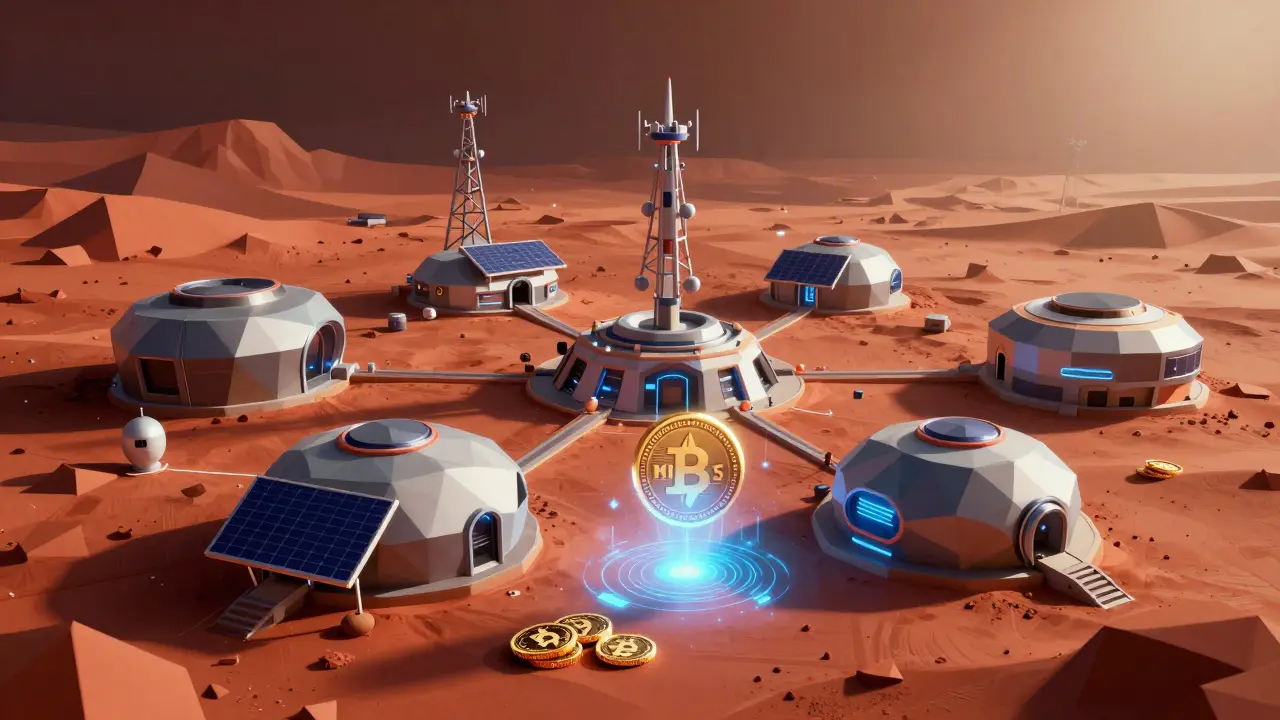
Imagine a currency designed not for your local coffee shop, but for a colony on another planet. That is the core promise of Marscoin, also known as MARS. It is a niche, open-source, proof-of-work cryptocurrency created to fund and facilitate human settlement of Mars. While Bitcoin aims to be digital gold and Ethereum powers smart contracts, Marscoin has a much more specific, sci-fi-inspired mission: building the economic infrastructure for an interplanetary civilization.
If you have stumbled upon this coin while scrolling through market data or reading about space exploration, you might be wondering if it is just another meme token or if there is real substance behind the red planet theme. The short answer is that it sits somewhere in between. It is a legitimate blockchain project with over a decade of history, yet it remains a micro-cap asset with very low liquidity. Understanding what Marscoin actually does-and where it doesn't-requires looking past the marketing hype at its technical specs, its origins, and its current market reality.
The Origin Story: More Than Just a Theme
Marscoin isn't a new trend; it is one of the older players in the space-themed crypto niche. The genesis block was mined on January 1, 2014, making it contemporaneous with many early altcoins like Litecoin and Dogecoin. Unlike projects launched during the 2021 bull run by anonymous teams promising moon missions, Marscoin started as a community-driven initiative by enthusiasts, researchers, and volunteers.
The project positions itself as a "planetary cryptocurrency." Its stated goal is to provide a decentralized financial system that operates independently of Earth-based banking authorities. This independence is framed as necessary for future Martian settlements, which would face communication delays of 4 to 24 minutes with Earth. In such a scenario, relying on traditional banks or even centralized crypto exchanges for instant consensus would be impractical. Marscoin aims to solve this by offering a local, peer-to-peer ledger that can function autonomously.
While no single founder is publicly named as the "creator," the project is associated with non-governmental organizations and cooperates closely with groups like The Mars Society, a prominent advocacy group for Mars exploration. This connection gives Marscoin a layer of legitimacy within the space enthusiast community, distinguishing it from pure speculative tokens.
How Marscoin Works: Technical Specifications
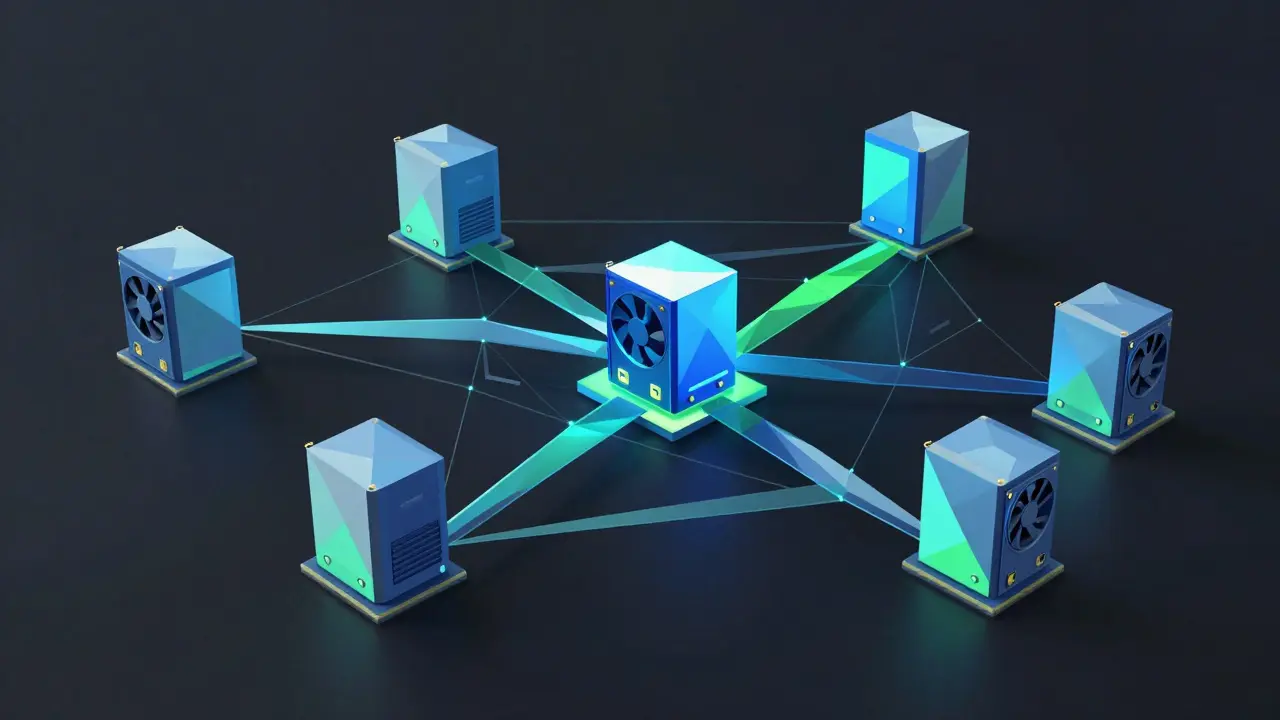
Under the hood, Marscoin is technically similar to other early Proof-of-Work coins. It runs on its own independent blockchain, derived from the Litecoin fork of Bitcoin. Here are the key technical attributes that define how the network operates:
- Consensus Algorithm: Marscoin uses the Scrypt algorithm. This is the same hashing algorithm used by Litecoin. Scrypt is memory-intensive, which historically made it more resistant to ASIC (Application-Specific Integrated Circuit) dominance than Bitcoin's SHA-256, though specialized hardware exists for it today.
- Block Time: Blocks are generated every 2 minutes. This is significantly faster than Bitcoin's 10-minute blocks, allowing for quicker transaction confirmations-a feature highlighted by the project as useful for both Earth-based payments and potential off-world use cases.
- Supply Cap: There is a hard cap on the total supply of approximately 39.57 million MARS. This fixed supply model mirrors Bitcoin’s deflationary design, preventing inflation once all coins are mined.
- Transaction Fees: The network supports near-zero fees, aiming to facilitate micro-transactions and everyday payments without the cost barriers seen in congested networks like Ethereum.
Because it uses Scrypt, miners can participate using GPUs or specialized Scrypt ASICs. If you are interested in earning MARS rather than buying it, you will need mining hardware compatible with the Scrypt algorithm and a wallet that supports the MARS protocol.
| Feature | Marscoin (MARS) | Litecoin (LTC) | Bitcoin (BTC) |
|---|---|---|---|
| Algorithm | Scrypt | Scrypt | SHA-256 |
| Block Time | 2 minutes | 2.5 minutes | 10 minutes |
| Max Supply | ~39.57 Million | 84 Million | 21 Million |
| Primary Use Case | Mars Settlement / Niche Payments | General Payments | Digital Gold / Store of Value |
| Market Status (Mid-2026) | Micro-Cap / Low Liquidity | Top 20 Asset | Largest Crypto Asset |
Tokenomics and Market Reality in 2026
When evaluating any cryptocurrency, you must look beyond the narrative to the numbers. As of mid-2026, Marscoin occupies a very small corner of the crypto market. It is classified as a micro-cap asset, meaning its total market value is measured in millions, not billions.
Data from major aggregators like CoinGecko and CoinMarketCap shows a circulating supply of roughly 39.3 million MARS, which is nearly the entire maximum supply. This means most coins have already been mined and released into circulation. The price has fluctuated significantly over the years. It reached an all-time high of $3.33 per coin in February 2021, during the peak of the altcoin mania. However, as of July 2026, the price hovers between $0.04 and $0.07 USD.
This drop represents a decline of over 95% from its peak. For investors, this highlights the extreme volatility and speculative nature of niche altcoins. The daily trading volume is also quite low, often ranging between $7,000 and $14,000 USD across all exchanges. This thin liquidity means that large buy or sell orders can cause significant price swings, and exiting a large position quickly without slippage can be difficult.
Where to Buy and Trade Marscoin
Unlike Bitcoin or Ethereum, which are available on hundreds of exchanges, Marscoin has limited accessibility. Your primary option for trading MARS is the LBank exchange. LBank lists the MARS/USDC trading pair, meaning you typically need to deposit US dollars, convert them to USDC (a stablecoin), and then swap for MARS.
Other major platforms like Binance do not list Marscoin for trading. Some data providers may show prices or zero market caps due to synchronization errors, but active trading is concentrated on LBank. For larger transactions, the Marscoin community occasionally facilitates Over-the-Counter (OTC) trades directly between users, bypassing exchanges entirely. This peer-to-peer approach aligns with the project's ethos of decentralization but requires higher trust and technical knowledge from the participants.

Use Cases: Beyond Speculation
Why would someone hold or use Marscoin besides hoping for a price increase? The project promotes several functional use cases, though their adoption varies:
- Funding Space Research: Marscoin serves as a donation vehicle for Mars-related advocacy and research. Supporters can send MARS to wallets associated with The Mars Society or other affiliated projects to support educational initiatives and habitat simulations.
- Gaming and Metaverse Integration: Experimental applications, such as the "Martian Republic" toolkit and partnerships with gaming projects like J&A Marsian, aim to use MARS as an in-game currency. This creates a virtual economy where users can trade assets and fund space-themed content.
- Decentralized Governance: The project explores on-chain governance models that could theoretically allow future Martian settlers to vote on resource allocation and community rules without Earth-based interference.
- Peer-to-Peer Payments: On Earth, it functions as a standard low-fee payment method for those who wish to support the mission or transact within the niche community.
It is important to manage expectations here. These use cases are largely experimental or confined to small communities. You will not find Marscoin accepted at mainstream retailers or integrated into major DeFi protocols like Uniswap or Aave.
Risks and Considerations for Investors
Before allocating funds to Marscoin, you should weigh the specific risks associated with micro-cap, thematic cryptocurrencies:
- Liquidity Risk: With daily volumes under $15,000, selling large amounts of MARS can be challenging. You might struggle to find a buyer at your desired price, especially during market downturns.
- Exchange Dependency: Relying on a single exchange (LBank) for liquidity is risky. If LBank were to delist MARS or face operational issues, access to your assets could become severely restricted.
- Speculative Nature: The value of MARS is heavily tied to the broader sentiment around space exploration and Elon Musk’s SpaceX progress. Positive news from NASA or SpaceX might temporarily boost interest, but this does not guarantee long-term value retention.
- Development Pace: While the project has maintained "unbroken development" since 2014, updates are infrequent compared to agile startups. Progress is steady but slow, driven by volunteers rather than a well-funded corporate team.
Marscoin is not an investment for those seeking quick profits or stability. It is a bet on a specific vision of the future-one where humanity establishes a permanent presence on Mars and needs its own economic infrastructure. If that vision appeals to you, and you understand the high risk of losing your capital, MARS offers a unique way to participate in that narrative.
Is Marscoin (MARS) a good investment?
Marscoin is considered a high-risk, speculative asset. It has a very low market capitalization and limited liquidity, meaning its price can be highly volatile. It is not suitable for conservative investors. You should only invest money you can afford to lose, treating it as a contribution to the space exploration mission rather than a reliable financial growth tool.
Can I mine Marscoin with my computer?
Yes, Marscoin uses the Scrypt algorithm, which allows for mining. However, CPU mining is likely unprofitable due to competition from GPU and ASIC miners. You would need appropriate hardware and a compatible wallet to start mining MARS effectively.
Where can I buy Marscoin?
The primary exchange for trading Marscoin is LBank. You can trade the MARS/USDC pair there. Other major exchanges like Binance do not currently list MARS. Community OTC trades are also an option for larger amounts.
What is the maximum supply of Marscoin?
The maximum supply of Marscoin is capped at approximately 39.57 million coins. Nearly all of these coins are already in circulation, meaning there is no significant inflation pressure from new issuance.
Is Marscoin related to Elon Musk or SpaceX?
No, Marscoin is not officially affiliated with Elon Musk, SpaceX, or Tesla. It is an independent community project. While it shares the Mars colonization theme, any association with Musk’s companies is purely thematic and speculative among fans.