

What is Spin It (SPIN) Crypto? Tokenomics, Risks & Sonic Blockchain Facts
 Jul, 30 2026
Imagine buying a coin that costs less than a penny, hoping it will skyrocket because it powers an online casino. That is the reality for Spin It (SPIN), a cryptocurrency designed exclusively for gambling. If you have stumbled upon this token on a chart or heard about it in a niche Discord group, you are likely wondering if it is a hidden gem or a financial trap. The short answer is: it is high-risk, low-liquidity, and tied to a very specific ecosystem.
SPIN is not a general-purpose currency like Bitcoin or Ethereum. You cannot buy coffee with it. It exists solely to facilitate bets on slots, live casinos, and sports within its proprietary platform. Before you commit any funds, you need to understand exactly what you are holding, where it lives on the blockchain, and why major exchanges largely ignore it.
The Core Purpose: A Casino Utility Token
To understand SPIN, you first have to look at what it does. Unlike tokens that aim to decentralize finance or store value, SPIN is a utility token for a gambling ecosystem. According to data from tracking platforms like CoinGecko, the project operates as a full-service crypto casino and sportsbook. This means the token’s value is directly linked to how many people are betting on their platform.
The platform offers typical casino fare: slot machines with feature-buying options, live dealer games, game shows, and sports betting. The developer behind this infrastructure is known as Owl Games. In this model, SPIN acts as the fuel. You deposit SPIN, you place bets, and you win or lose SPIN. There is no complex DeFi yield farming here; the utility is straightforward but narrow. If the casino loses users, the demand for the token drops. If regulators crack down on crypto gambling, the token’s utility vanishes overnight.
Blockchain Confusion: Is It On Solana, BSC, or Sonic?
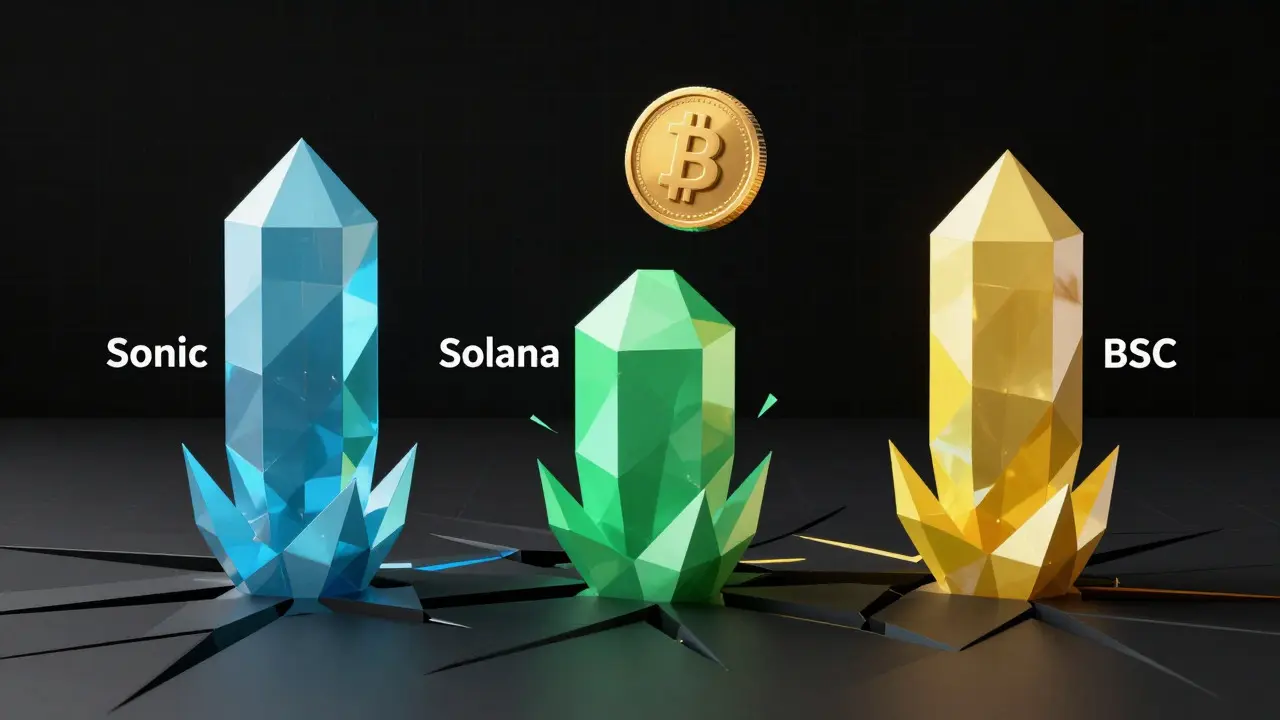
One of the most confusing aspects of researching SPIN is figuring out which blockchain it actually uses. In the world of crypto, "forks" and similar names often lead to messy data. Here is the breakdown based on current market intelligence:
- Sonic Blockchain: Recent technical reports from CoinCarp state that SPIN operates exclusively on the Sonic blockchain. This suggests a move toward a newer, potentially faster network to handle transaction throughput for gaming.
- Solana: Some aggregators like CoinSwitch still list it as a Web3 coin built on Solana. This could be legacy data or a multi-chain bridge setup.
- Binance Smart Chain (BSC): LiveCoinWatch lists a contract address on BSC (
0x2797C0505C69E9E714d1C0d8f3742ADCb88e0839).
This discrepancy is a red flag for investors. When a token appears on multiple chains without clear documentation, it increases the risk of interacting with a fake or deprecated contract. Always verify the official contract address from the project’s verified social channels before swapping. The shift to Sonic indicates the team is trying to modernize, but the lingering data on other chains creates noise.
Tokenomics: Supply, Circulation, and Dilution
Let’s look at the numbers, because they tell a story of massive potential dilution. The total supply of SPIN is capped at 1,000,000,000 (1 billion) tokens. However, the circulating supply-the amount actually available for trading-is significantly lower. Data indicates approximately 180 million SPIN tokens are currently tradable on the market.
| Metric | Value |
|---|---|
| Total Supply | 996,500,000 SPIN |
| Max Supply | 1,000,000,000 SPIN |
| Circulating Supply | ~180,000,000 SPIN |
| Fully Diluted Valuation (FDV) | High relative to Market Cap |
Here is the catch: if only 18% of the tokens are circulating, that means 82% are locked up, held by the team, or reserved for future unlocks. As more tokens enter circulation, the price can drop even if demand stays the same. This is known as inflationary pressure. For a small-cap token, large unlock events can crash the price instantly. Always check the vesting schedule if available, though detailed docs are scarce for SPIN.
Market Reality: Low Liquidity and High Volatility
If you expect SPIN to trade like Bitcoin or even a mid-tier altcoin, you will be disappointed. The market data paints a picture of extreme illiquidity. At various points in recent history, the 24-hour trading volume has been reported as low as $47 USD. Yes, forty-seven dollars. Other sources show slightly higher volumes around $250-$300, but these figures are negligible in the broader crypto market.
Why does this matter? Because liquidity determines how easily you can exit your position. If you buy $1,000 worth of SPIN and try to sell it, you might slip the price significantly because there aren’t enough buyers waiting on the order book. This makes SPIN vulnerable to manipulation. A single whale selling a modest amount could crash the price by 50% or more in minutes.
The market capitalization reflects this obscurity. Rankings vary wildly between trackers-ranging from #4,800 to #38,000-depending on how they calculate the cap. Generally, it sits in the bottom 90% of all cryptocurrencies. The Fully Diluted Valuation (FDV) is estimated between $800,000 and $900,000, which sounds small until you realize the actual traded market cap is often under $200,000. This gap highlights the speculative nature of the asset.
Risks Every Investor Must Consider
Investing in SPIN is not just about chart patterns; it is about regulatory survival. Crypto gambling exists in a legal gray area in many countries. Unlike traditional casinos that hold licenses in Malta or Curacao, many crypto gambling projects operate without clear jurisdictional backing.
- Regulatory Crackdowns: Governments are increasingly targeting unlicensed gambling platforms. If SPIN’s platform is blocked in major regions, user base and token demand could plummet.
- Lack of Institutional Interest: There is no venture capital backing or institutional adoption visible. This is a retail-only play, meaning support comes only from individual gamblers.
- Technical Opacity: There is limited public technical documentation. Without open-source audits or clear smart contract details, you are trusting the developers’ word on security.
- Price Prediction Void: Analysts like those at CoinCodex explicitly state there is insufficient data to generate meaningful price predictions. You are flying blind.

How to Buy and Trade SPIN Safely
Since SPIN is not listed on major centralized exchanges like Binance or Coinbase (where it often shows a $0 price due to lack of pairs), you will likely need to use a decentralized exchange (DEX). Here is the step-by-step process:
- Set Up a Wallet: Depending on the active chain (Sonic, Solana, or BSC), install the appropriate wallet (e.g., Phantom for Solana, Trust Wallet for BSC).
- Acquire Base Currency: Buy SOL, BNB, or the native token of the Sonic chain on a major exchange and transfer it to your wallet.
- Find the DEX: Navigate to the decentralized exchange associated with that chain (e.g., Raydium for Solana, PancakeSwap for BSC).
- Paste the Contract Address: Use the verified contract address from the official SPIN Twitter or Discord. Double-check every character. Scammers create fake tokens with similar names.
- Adjust Slippage: Due to low liquidity, you may need to set slippage tolerance higher (e.g., 5-10%) to ensure the transaction goes through, but beware of front-running bots.
Is SPIN Worth It in 2026?
In 2026, the crypto market is maturing. Regulators are tighter, and users are more educated. SPIN remains a niche product with a tiny footprint. It appeals to one type of investor: the high-risk gambler who believes the casino platform will go viral. For everyone else, the risks outweigh the rewards.
There is no fundamental value driver outside of gambling revenue. No staking yields, no governance power, and no real-world partnerships. If you enjoy using the casino, holding some SPIN makes sense for convenience. If you are looking for an investment, SPIN lacks the liquidity, transparency, and regulatory safety to be considered a serious contender. Treat it like a lottery ticket, not a savings account.
What is the current price of Spin It (SPIN)?
The price of SPIN is extremely volatile and often hovers near zero, typically ranging between $0.0003 and $0.001 depending on the exchange and liquidity conditions. Due to low trading volume, prices can vary significantly between different decentralized exchanges.
Which blockchain does SPIN use?
Recent data indicates SPIN operates primarily on the Sonic blockchain. However, conflicting information exists regarding deployments on Solana and Binance Smart Chain (BSC). Investors should verify the specific contract address for the chain they intend to use to avoid scams.
Can I buy SPIN on Binance or Coinbase?
Currently, SPIN is not widely listed on major centralized exchanges like Binance or Coinbase. It is primarily traded on decentralized exchanges (DEXs) or niche crypto gambling platforms. Listings on major venues would require significant liquidity and regulatory compliance, which SPIN currently lacks.
Is Spin It (SPIN) a safe investment?
SPIN is considered a high-risk asset. It has low liquidity, a small market cap, and operates in the regulated-heavy sector of online gambling. Regulatory changes could impact its viability. It is best suited for speculative traders who understand the risks of micro-cap tokens.
Who developed the SPIN token?
The SPIN token is powered by Owl Games, the developer behind the associated crypto casino and sportsbook platform. Detailed information about the founding team members is limited, which is common for smaller, privacy-focused crypto projects.
What is the total supply of SPIN?
The maximum supply of SPIN is capped at 1,000,000,000 (1 billion) tokens. However, the circulating supply is much lower, estimated at around 180 million tokens, indicating that a large portion of the supply is yet to be released or is held in reserve.