

What is YESorNO (YON) Crypto? Tokenomics, Risks, and How to Buy
 Jun, 3 2026
Imagine placing a bet on a football match with just two choices: Yes or No. That’s the core promise of YESorNO, a cryptocurrency project built around a binary sports betting platform that simplifies wagering into simple yes/no outcomes. The native token powering this ecosystem is YON, a utility token used within the YESorNO betting application for transactions, rewards, and governance. But before you rush to buy, there are some serious red flags and technical details you need to understand.
This isn’t your typical Bitcoin or Ethereum story. YON is a micro-cap token with extremely low liquidity, significant price volatility, and a complex history involving contract migrations. If you’re wondering whether YON is a legitimate investment or a high-risk gamble, this guide breaks down the facts, the risks, and how the project actually works.
The Core Concept: Binary Betting Meets Blockchain
At its heart, YESorNO is a sports betting service. Unlike traditional bookmakers that offer dozens of odds lines for every game, YESorNO strips it down to basics. You pick an event-say, "Will Team A win?"-and you choose either "Yes" or "No." This binary format targets a younger demographic, specifically users aged 18 to 35, who prefer quick, intuitive decisions over complex odds calculations.
The project claims to have obtained a license to operate in fiat currency in France. According to their public statements, they planned to launch a regulated fiat betting platform in September 2024. The YON token was introduced as part of a broader strategy to bridge traditional gambling with blockchain technology. The idea is that while the fiat side handles regulated real-money bets, the crypto side offers a decentralized experience using the YON token.
However, it’s crucial to note that the revenue model described by the project relies on commissions from bets and advertising partnerships, not necessarily on the appreciation of the token itself. This distinction matters because it means the token’s value is tied to adoption and usage within the app, rather than direct profit-sharing from the betting house’s earnings.
Tokenomics: Supply, Deflation, and Contradictions
Understanding the economics of a token is vital. For YON, the numbers tell a story of a deflationary design, but also of data inconsistencies across major tracking platforms.
| Metric | Value | Source/Context |
|---|---|---|
| Total Supply | 9,000,000,000 YON | Fixed maximum cap |
| Circulating Supply | ~1.39B - 2.0B YON | Discrepancy between KuCoin and CoinMarketCap |
| Token Type | Deflationary | Tokens are burned over time |
| Market Cap | ~$9,710 USD | Micro-cap classification |
| Fully Diluted Valuation (FDV) | ~$43,650 USD | Based on max supply |
The total supply is capped at 9 billion tokens. The project describes YON as a deflationary token, meaning tokens are removed from circulation (burned) through various mechanisms. However, the exact burn rate-whether it happens on every transaction, from betting profits, or via scheduled events-is not clearly detailed in public summaries. You’ll need to check the whitepaper on their DEX website for specifics.
A major point of confusion is the circulating supply. As of late 2025, KuCoin reported approximately 1.39 billion YON in circulation, while CoinMarketCap listed a self-reported figure of 2 billion. This discrepancy makes it difficult to calculate accurate market metrics like free float or true market capitalization. For investors, this lack of transparency is a warning sign.

Price History and Volatility: The Micro-Cap Reality
If you look at the price charts for YON, you’ll see extreme volatility. This is characteristic of micro-cap cryptocurrencies. At the time of writing, YON trades at fractions of a cent, hovering around $0.0000048 USD on some trackers and slightly higher on others due to different contract versions.
Here’s the harsh reality: YON has dropped nearly 99.95% from its all-time high (ATH). Its peak price was roughly $0.0035 USD. To put that in perspective, if you bought at the top, you would have lost almost all your money. This level of drawdown is common in speculative tokens that lack deep liquidity and widespread adoption.
Liquidity is another critical issue. Some trackers show zero trading volume in the last 24 hours, while others show modest volumes around $100-$112. This fragmentation means that if you try to sell a large amount of YON, you might struggle to find buyers, leading to significant slippage (getting a much worse price than expected).
Contract Migration: V1 vs. V2
One of the most confusing aspects for new users is the existence of multiple YON contracts. CoinGecko notes that YESorNO migrated from an old smart contract to a new one. LiveCoinWatch labels the current asset as "YESorNO v2."
What does this mean for you?
- Old Holders: If you held the original YON (v1), you likely had to swap them for the new v2 tokens during the migration period.
- New Buyers: You must ensure you are buying the correct contract address. Buying the old, deprecated contract could result in holding worthless tokens.
- Price Discrepancies: Different trackers may index different pools or contracts, leading to varying price feeds. Always verify the contract address on official channels before connecting your wallet.
The reason for the migration isn’t explicitly stated in public summaries-it could be for security upgrades, tokenomics adjustments, or moving to a different blockchain. Without clear communication from the team, this adds another layer of risk.
How to Buy YON: A Step-by-Step Guide
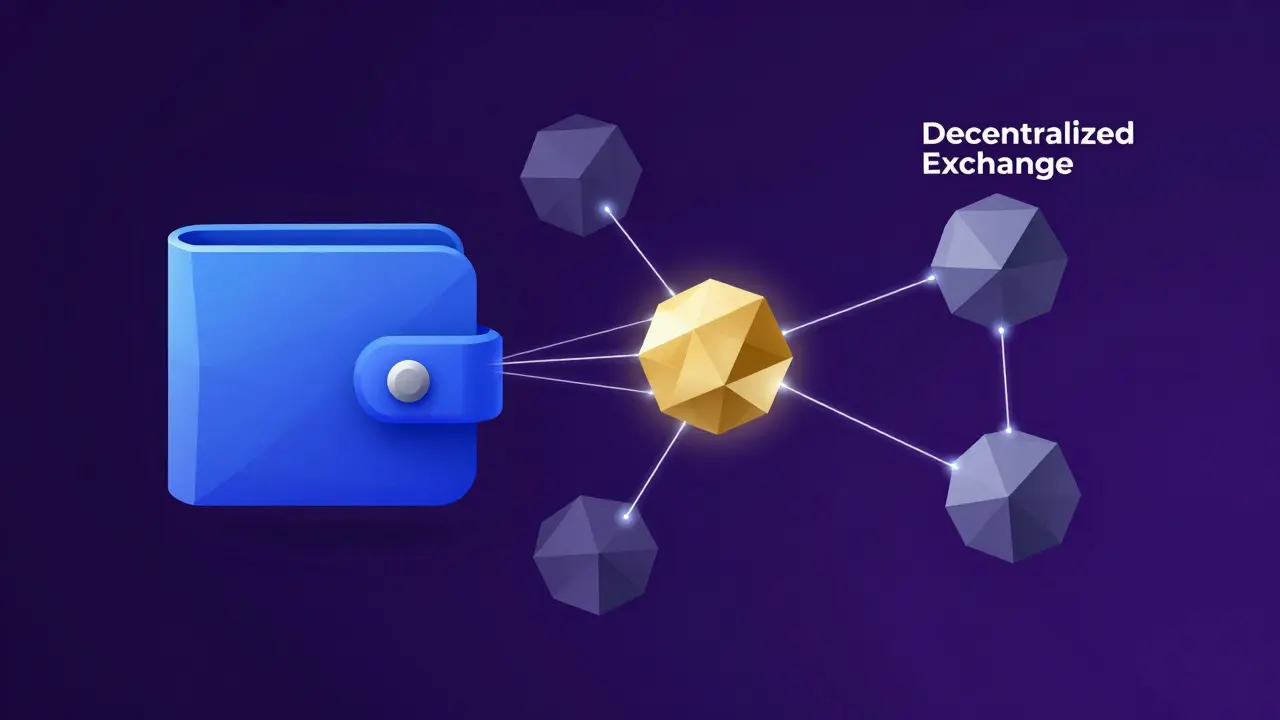
You won’t find YON on major centralized exchanges like Binance Spot, KuCoin, or Crypto.com yet. These platforms track the price but do not support direct trading pairs. Instead, you need to use a Web3 wallet and a Decentralized Exchange (DEX).
- Set Up a Web3 Wallet: Download a compatible wallet like MetaMask or use the Binance Web3 Wallet. Ensure you have enough ETH or BNB (depending on the network YON is deployed on) to pay for gas fees.
- Find the Correct Contract Address: Go to the official YESorNO website or their verified social media channels. Copy the v2 contract address. Do not trust random links from search results.
- Connect to a DEX: Navigate to a decentralized exchange like Uniswap, PancakeSwap, or the specific DEX mentioned in their whitepaper (dex.yon.bet).
- Paste the Address: Paste the YON contract address into the token field. Double-check that the name matches "YESorNO v2."
- Swap: Enter the amount of ETH/BNB you want to spend. Set your slippage tolerance appropriately (often 5-10% for low-liquidity tokens) and confirm the transaction.
Remember, because liquidity is thin, even small trades can move the price. Start with a small amount to test the process.
Risks and Transparency Gaps
Before investing any money, consider these critical risks:
- Anonymity: None of the major trackers list named founders, a development company, or registration details. In the highly regulated industry of sports betting, anonymity is unusual and risky.
- Regulatory Uncertainty: While they claim a French license for fiat operations, the crypto aspect remains largely unregulated. Changes in global crypto laws could impact the project’s viability.
- Lack of Expert Analysis: There are no independent analyst ratings, audit reports, or professional forecasts available for YON. You are relying solely on project-supplied information.
- Community Size: With only about 11,320 holders reported on CoinMarketCap, the community is small. Small communities are more susceptible to manipulation and pump-and-dump schemes.
The combination of a micro-cap valuation, thin liquidity, and opaque team structure places YON in the highest risk category. It is suitable only for those who understand DeFi mechanics and can afford to lose their entire investment.
Is YESorNO (YON) a scam?
There is no definitive proof that YESorNO is a scam, but it exhibits several high-risk characteristics common in fraudulent projects, such as anonymous developers, extreme price volatility, and low liquidity. The project does claim regulatory licenses in France, which adds a layer of legitimacy, but the crypto token itself remains highly speculative. Always conduct your own due diligence.
Where can I buy YON tokens?
You cannot buy YON on major centralized exchanges like Binance or Coinbase. You must use a Web3 wallet (like MetaMask) and trade on a Decentralized Exchange (DEX). Ensure you are using the correct v2 contract address to avoid buying deprecated tokens.
Why is the YON price so low?
YON is a micro-cap token with a large total supply (9 billion) and very low market demand. It has also experienced a drop of nearly 99.9% from its all-time high. Low liquidity and limited adoption contribute to its minimal price per token.
What is the difference between YON v1 and v2?
YON v2 is the current, active smart contract after a migration from the original v1 contract. Holders of v1 were required to swap for v2. Trading v1 tokens now may result in losses as liquidity has moved to the new contract. Always verify the contract address on official sources.
Is YESorNO legal in my country?
The project claims to have a license to operate in fiat currency in France. However, cryptocurrency regulations vary widely by country. You are responsible for checking local laws regarding online sports betting and crypto asset ownership before participating.