

ACMD X CMC Airdrop by Archimedes: How It Worked and What Happened After
 Mar, 6 2026
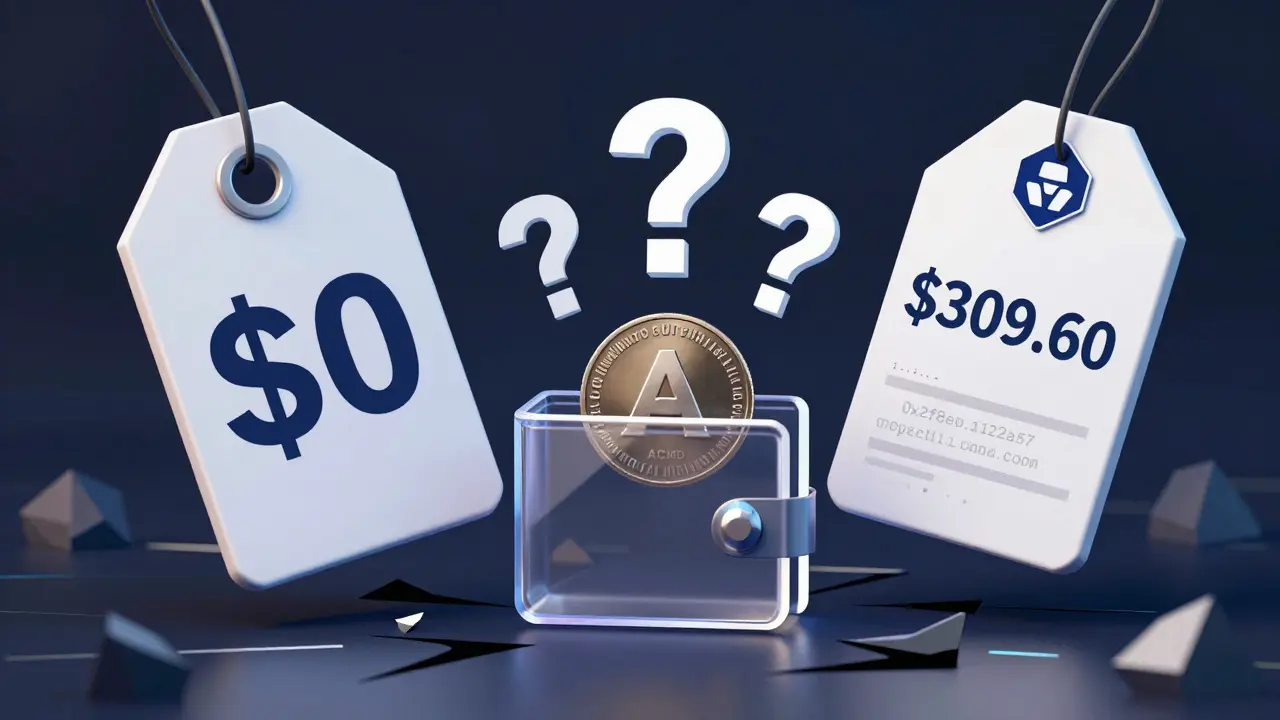
On August 2nd, 2024, Archimedes Protocol launched its ACMD token with a $20,000 airdrop in partnership with CoinMarketCap (CMC). It wasn’t just another giveaway. This was a strategic move to jumpstart adoption in a crowded DeFi space. The goal? Get real users, not just airdrop hunters, to try out their cross-chain leverage platform. But here’s the twist: months later, the token’s price was listed as $0 on CoinMarketCap - while Crypto.com showed it at $309.60. Something was off.
What Was the ACMD X CMC Airdrop?
The ACMD X CMC airdrop was a joint effort between Archimedes Protocol and CoinMarketCap to distribute ACMD tokens to early supporters. Archimedes isn’t another DeFi protocol copying Aave or Compound. It’s built to be a cross-chain leverage aggregator that combines loan mining, leveraged lending, and liquidity mining into one system. The ACMD token is the fuel for this ecosystem. The airdrop pool was worth $20,000 in ACMD tokens. That might sound small compared to big-name launches, but it was targeted. No massive spam campaigns. No bot-driven entries. Instead, they asked participants to do three real things:- Follow @ArchiProtocol on Twitter, retweet the airdrop post, and tag three friends.
- Join the official Archimedes Global Telegram channel.
- Fill out a Google Form with their wallet address.
How the Airdrop Was Distributed
The distribution wasn’t first-come, first-served. It was a lottery. Every person who completed all three steps was entered into a random draw. Winners were selected without bias, and tokens were sent directly to their wallet addresses. There was no minimum amount - some got $5, others $50, depending on how many entries there were and how the pool was split. CoinMarketCap’s involvement gave this a credibility boost. Most airdrops are run by small teams with zero brand recognition. But CMC is one of the most trusted names in crypto. When users saw "Partnered with CoinMarketCap," they took it more seriously. That helped Archimedes attract users who usually avoid new, untested protocols.Tokenomics: Where Did All the ACMD Tokens Go?
The total supply of ACMD is a mess. Some sources say 1 billion. Others say 10 billion. The official site doesn’t clarify. But the distribution breakdown is clear:- 65% - Mining rewards (released over 3 years and 1 month, halving annually after the first month)
- 15% - Team and development (released alongside mining schedules)
- 10% - Early investors
- 5% - Market making
- 5% - Marketing and community growth
The Price Discrepancy: The Price Discrepancy: $0 vs $309.60
vs 9.60
This is where things get weird. CoinMarketCap lists ACMD at $0. No trades. No volume. Zero liquidity. Meanwhile, Crypto.com shows ACMD at $309.60 - a price that would make the entire token supply worth over $3 billion if real.
Why the gap? Three likely reasons:
- Wrong contract address - Crypto.com might be tracking a different ACMD token, maybe from a fork or a scam copy.
- Low liquidity - If only a handful of people are trading ACMD, one large buy or sell can spike the price artificially.
- Data lag - Crypto.com might be pulling from an old, inactive exchange that’s no longer live.
0x2f8e...1b2a57. If you’re holding ACMD, make sure your wallet shows this exact address. Any other version is risky.
What Happened After the Airdrop?
Months after the airdrop, Archimedes Protocol’s Twitter and Telegram channels went quiet. No major updates. No new features. No liquidity pool launches. The Medium blog stopped posting. The website still loads, but it’s static - like a museum exhibit of a project that never moved forward. That’s not unusual. Many DeFi projects launch with hype, airdrops, and flashy whitepapers - then fade when funding runs out or the team moves on. Archimedes might have been one of them. The real test of an airdrop isn’t how many people joined. It’s how many stayed. Did users start using the platform? Did they lock up their tokens? Did they earn yield? There’s no public data showing that. No on-chain analytics, no TVL (Total Value Locked) graphs, no active trading pairs. If you participated in the airdrop and still hold ACMD, you’re sitting on a token with no clear utility. It doesn’t trade on major exchanges. It doesn’t pay staking rewards. It doesn’t grant governance rights. It’s just a digital file in your wallet.
Was It Worth It?
For the people who completed the tasks: yes, they got free tokens. Even if those tokens are now worth nothing, they didn’t spend a dime. The time investment was minimal - five minutes on Twitter, ten minutes on Telegram, five minutes filling out a form. For Archimedes Protocol? Maybe. They got 20,000 people to engage with their brand. They built a Telegram community. They got listed on CoinMarketCap. But without active development, those are just numbers on a spreadsheet. The real lesson here? Airdrops are great for awareness - but they don’t create lasting value. If a protocol doesn’t deliver real functionality after the giveaway, the tokens become digital dust.What Should You Do Now?
If you’re still holding ACMD:- Check your wallet. Is the contract address
0x2f8e...1b2a57? If not, you might have the wrong token. - Don’t send more funds to the Archimedes platform. There’s no evidence it’s still being developed.
- Don’t buy ACMD on any exchange. The price on Crypto.com is almost certainly fake or based on a scam contract.
- If you want to recover value, try selling on decentralized exchanges like Uniswap or PancakeSwap - but expect zero buyers.
Why This Matters for DeFi
The ACMD X CMC airdrop is a case study in how DeFi projects try to grow - and how often they fail. The strategy was smart: use CMC’s credibility, require real engagement, avoid bot spam. But execution after the airdrop? Missing. Successful DeFi protocols don’t stop at the airdrop. They keep building. They add features. They fix bugs. They grow liquidity. Archimedes didn’t. And now, it’s a ghost. The crypto world is full of these stories. A new protocol launches. Airdrop hype explodes. Then silence. That’s why you need to ask: Is this project alive, or just a marketing stunt?Was the ACMD X CMC airdrop legitimate?
Yes, the airdrop itself was legitimate. It was run by Archimedes Protocol in partnership with CoinMarketCap, and winners received tokens to verified wallet addresses. The process was transparent, with clear steps and no payment required. However, the long-term viability of the ACMD token and the Archimedes Protocol remains unconfirmed, with no active development or trading volume since late 2024.
How much ACMD did participants receive?
There was no fixed amount. The $20,000 airdrop pool was distributed randomly via lottery. Winners received varying amounts - some got as little as $5, others up to $50 or more - depending on the total number of participants and how the tokens were split. No official list of winners or individual amounts was published.
Can I still claim ACMD tokens from the airdrop?
No. The airdrop ended in August 2024. The Google Form is no longer active, and no new claims are being accepted. If you didn’t complete the steps before the deadline, you cannot receive tokens now.
Why is ACMD priced at $309.60 on Crypto.com but $0 on CoinMarketCap?
This discrepancy likely means Crypto.com is tracking a different ACMD token - possibly a scam version, a fork, or data from an inactive exchange. The official contract address is 0x2f8e...1b2a57. Any price above $0 on other platforms is not reliable and may be manipulated. CoinMarketCap shows $0 because there’s zero trading volume on any major decentralized exchange.
Is Archimedes Protocol still active?
As of early 2026, there is no evidence Archimedes Protocol is still active. No new updates since late 2024, no GitHub commits, no liquidity pool expansions, and no community engagement. The website and social channels appear abandoned. Treat the project as inactive unless official proof of development reappears.
Should I invest in ACMD now?
No. ACMD has no trading volume, no utility, and no active development. The price on Crypto.com is almost certainly fake or based on a scam contract. Even if you already hold tokens, there’s no realistic path to recovering value. Avoid any new investments in ACMD or related platforms.
Austin King
March 7, 2026 AT 04:50James Burke
March 8, 2026 AT 19:45Cerissa Kimball
March 10, 2026 AT 10:25Josh Moorcroft-Jones
March 12, 2026 AT 03:34Melissa Ritz
March 12, 2026 AT 18:02Basil Bacor
March 13, 2026 AT 11:33Emily Pegg
March 13, 2026 AT 21:20Issack Vaid
March 15, 2026 AT 14:40Ethan Grace
March 16, 2026 AT 07:11Brian T
March 17, 2026 AT 19:58Nash Tree Service
March 19, 2026 AT 15:05Drago Fila
March 21, 2026 AT 15:05Shawn Warren
March 22, 2026 AT 22:38Jackson Dambz
March 23, 2026 AT 04:09Jesse VanDerPol
March 24, 2026 AT 23:42Bryanna Barnett
March 25, 2026 AT 06:42