

Anyswap Crypto Exchange Review: What Happened to the Cross-Chain Swap Platform?
 Mar, 19 2026
Back in 2020, Anyswap was one of the most talked-about names in DeFi. It promised something no other exchange could do at the time: swap Bitcoin for Ethereum, or BNB for SOL, without needing a centralized middleman. No custodians. No lockups. Just direct, trustless swaps across blockchains. It sounded like the future. But today? Anyswap doesn’t exist anymore. Not as you knew it. It rebranded. And what followed was a messy, unstable transition that left many users burned.
What Anyswap Actually Was
Anyswap wasn’t a traditional exchange like Binance or Coinbase. It was a decentralized exchange (DEX) built on Fusion’s DCRM (Distributed Control Rights Management) technology that allowed users to swap tokens across different blockchains without wrapping assets. While most DeFi platforms at the time could only swap tokens within one network-like Uniswap on Ethereum or PancakeSwap on BSC-Anyswap connected them all. Need to turn 5 BTC into 100 ETH? Anyswap made it possible. No bridge. No wrapped tokens. Just a direct swap.
The secret sauce? DCRM a cryptographic system using Shamir’s Secret Sharing and private key sharding that split control of assets across multiple nodes so no single entity ever held the full key. This meant your coins never left your wallet. Anyswap didn’t hold your funds. It didn’t need to. It orchestrated the swap using smart contracts and distributed cryptography. It was elegant in theory.
Launched on July 22, 2020, Anyswap skipped a presale and went straight to the public. Within a day, it hit $7.79 million in daily volume. Liquidity pools exploded. FSN-ETH pools offered over 360% APY. Users flocked in. By September 2020, it had expanded to Binance Smart Chain, Fantom, and Avalanche. It was one of the few platforms truly living up to the promise of cross-chain DeFi.
How Anyswap Worked
Using Anyswap wasn’t plug-and-play. You needed a Web3 wallet-MetaMask a browser extension wallet that connects to Ethereum and compatible networks, Trust Wallet a mobile wallet supporting multiple blockchains and DeFi protocols, or something similar. You’d connect it, select your token (say, USDT on Ethereum), pick the destination (USDT on BSC), and hit swap.
The platform used automated pricing based on real-time liquidity. Fees were 0.40% for takers, 0.30% for makers. Gas fees? That was on you. And they could get brutal during Ethereum congestion. One Reddit user lost $45 in gas fees across three failed transactions in a row.
Liquidity pools were the backbone. Users deposited tokens into pools to earn rewards. Anyswap distributed 5 million ANY tokens to incentivize this. But liquidity was shallow compared to giants. On February 26, 2021, Anyswap’s 24-hour volume was $1 million. Binance? $1.5 billion. That gap meant slippage. It meant failed swaps. It meant delays.
Why Anyswap Struggled
Technical brilliance doesn’t always translate to user experience. Anyswap had three fatal flaws.
- Network congestion killed swaps. If Ethereum was slow, your swap would hang. Sometimes for hours. Sometimes forever. No one knew why. No clear error messages. Just "transaction failed."
- Customer support was non-existent. Users reported waiting 8-12 hours just to get a reply on Telegram or Discord. Many never got one. Trustpilot reviews from 2021 showed 68% of complaints were about failed transactions and 82% about ignored support tickets.
- Documentation was patchy. The GitHub repo had technical specs, but nothing for beginners. Reddit threads from June 2021 showed users confused about slippage settings, gas limits, and which networks were supported. One user said, "I spent 90 minutes trying to swap USDC and ended up losing half my funds to a bad approval."
By September 12, 2021, CoinMarketCap stopped tracking Anyswap’s trading volume. They labeled it "Untracked Listing." That’s a red flag. When a major data provider drops you, it means your platform is either dead or too unstable to measure.

The Rebrand: Anyswap Became Multichain
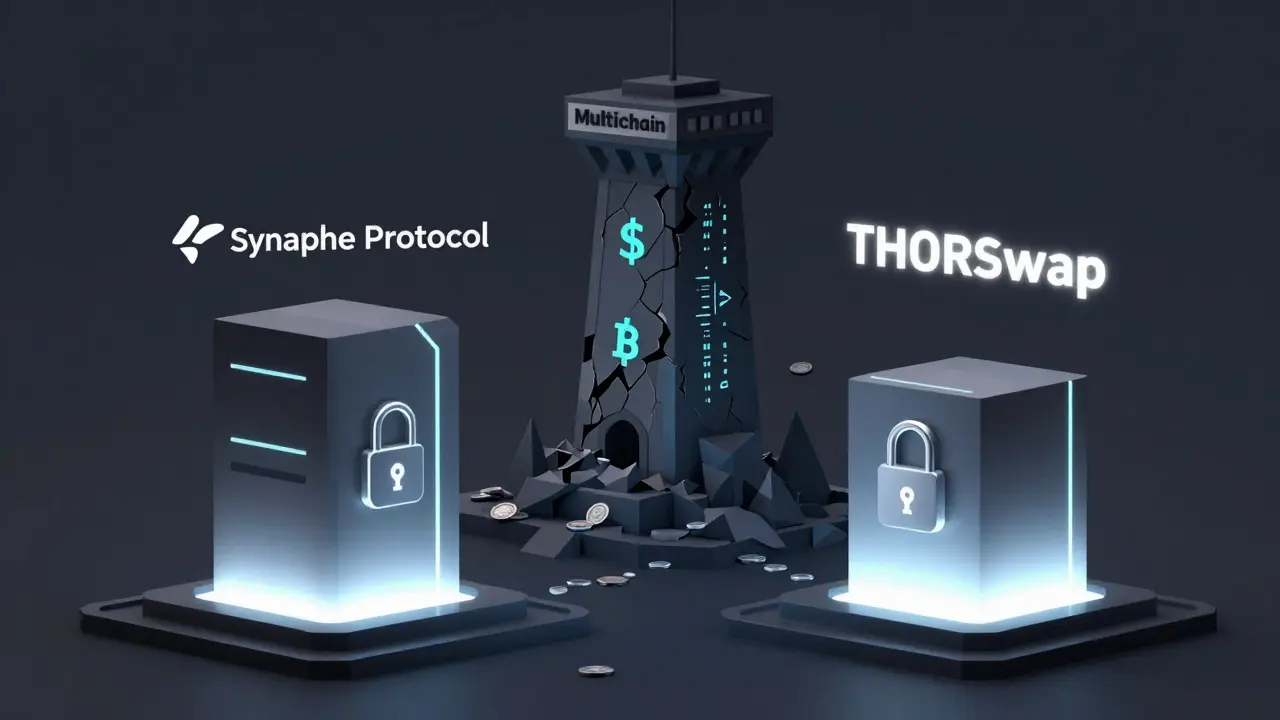
On December 16, 2021, Anyswap quietly rebranded to Multichain a cross-chain interoperability protocol that inherited Anyswap’s infrastructure but introduced a new router system. The team claimed it was an upgrade. But users saw it differently. The ANY token kept trading. The old platform vanished. The website redirected. The app disappeared from app stores.
Then came the blow. In July 2022, the Multichain Router v3 suffered a $120 million exploit. Hackers drained funds by exploiting a flaw in the cross-chain message verification system. The platform froze withdrawals. Users panicked. The ANY token, which hit $7.15 in January 2022, crashed to $0.85 by December 2022.
Today, Multichain still exists. It’s active. But it’s a shadow of what Anyswap once promised. The community is fractured. Liquidity is thin. And the trust is gone.
Who Was Anyswap For?
It wasn’t for beginners. It wasn’t for casual traders. It was for DeFi veterans who understood gas fees, slippage, and blockchain quirks. CoinGecko data from July 2021 showed 73% of experienced DeFi users recommended Anyswap for cross-chain swaps. Only 28% of newcomers would.
If you knew how to set slippage to 5%, manually adjust gas, and monitor network congestion, Anyswap was powerful. You could swap BTC for ETH without going through Binance, paying withdrawal fees, or waiting 24 hours. One user saved $120 in fees by swapping 2.5 BTC for 50 ETH in one go.
But if you were new? You’d likely lose time, gas, and money. The learning curve was steep. First-time users took 45-60 minutes to complete a swap-with a 35% failure rate.
What’s Left of Anyswap Today
Anyswap as a brand is dead. Its website is gone. Its app is unlisted. Its Discord is quiet. The ONLY thing left is the ANY token, still trading on a handful of DEXs. Price predictions are all over the place: WalletInvestor says $3.20 by 2026. PricePrediction.net says $14.55. Neither has solid backing.
Multichain continues to operate, but its security track record is damaged. The $120 million exploit wasn’t an isolated incident. There have been others. The platform still supports cross-chain swaps-but with a heavy warning label.
If you’re looking for a reliable cross-chain swap tool today, look elsewhere. Synapse Protocol a cross-chain bridge and DEX that uses a different architecture than Anyswap’s DCRM and THORSwap a decentralized exchange built on the THORChain network for cross-chain swaps have taken over as the leading alternatives. Both are more stable, better documented, and have stronger liquidity.
Final Verdict
Anyswap was ahead of its time. It had the tech. It had the vision. But it didn’t have the reliability. It didn’t have the support. It didn’t have the resilience.
Its rise was fast. Its fall was faster. And now, it’s a cautionary tale.
If you’re thinking of using Multichain today, ask yourself: Do you trust a platform that lost $120 million to a hack? Do you want to be the one risking your crypto on a protocol with no clear recovery plan?
For most people? The answer is no.
But if you’re a DeFi historian? Then Anyswap’s story is worth remembering-not as a platform to use, but as a lesson in how even the most innovative tech can collapse under poor execution.
Is Anyswap still operational as a crypto exchange?
No. Anyswap officially rebranded to Multichain on December 16, 2021. The original Anyswap platform no longer exists. Its website, app, and services were shut down and redirected. While Multichain continues to operate, it is a separate entity with a different infrastructure and a history of security issues, including a $120 million exploit in 2022.
Can I still trade the ANY token?
Yes, the ANY token still trades on a few decentralized exchanges like SushiSwap and Uniswap, but liquidity is extremely low. Its price has dropped over 90% since its all-time high of $7.15 in January 2022 and currently trades around $0.85. Most major exchanges delisted it after the rebrand, and trading volume is negligible compared to its peak.
Why did Anyswap fail?
Anyswap failed due to three main issues: unreliable transaction completion during network congestion, lack of customer support, and poor user documentation. Its DCRM technology was innovative, but the implementation couldn’t handle real-world demand. Liquidity was too thin, failure rates were high, and users were left without help when things went wrong. CoinMarketCap stopped tracking it in September 2021, signaling its collapse.
Was Anyswap safe to use?
Technically, yes-because it was non-custodial, meaning you kept control of your keys. But operationally, no. The platform had frequent transaction failures, long delays, and no reliable support. After the rebrand to Multichain, a $120 million exploit in 2022 exposed critical vulnerabilities in its cross-chain routing system. While Anyswap itself didn’t get hacked, its successor did, undermining trust in the entire ecosystem.
What are the best alternatives to Anyswap today?
The top alternatives are Synapse Protocol and THORSwap. Synapse offers better liquidity, clearer error messages, and more stable routing across 15+ chains. THORSwap, built on THORChain, uses a native asset model instead of wrapped tokens, making swaps more secure. Both have stronger community support, better documentation, and fewer reported exploits than Multichain.
Bryan Roth
March 19, 2026 AT 16:10Anyswap was one of those projects that made you feel like you were part of something revolutionary - until it wasn’t.
It wasn’t the tech that failed. It was the lack of care behind it.
People poured in because the promise was real, but when things broke, no one answered.
You’d spend hours trying to swap USDT and get zero feedback - not even an error code.
Just silence.
And then the rebrand? That felt like a betrayal.
Like they took the good parts, slapped on a new name, and walked away.
Now Multichain’s just a ghost town with a $120M scar on its soul.
I still hold ANY tokens out of nostalgia, but I’d never trade them again.
It’s a monument to how fast DeFi can burn bright and vanish.
sai nikhil
March 20, 2026 AT 07:07From India, I used Anyswap back in 2021 when Binance fees were insane.
It worked - sometimes.
But every time I tried to swap, I had to pray.
Gas fees ate half my profit.
And no support.
Just me, my MetaMask, and a prayer.
Now I use THORSwap.
Slower, but it doesn’t vanish mid-swap.
Sahithi Reddy
March 20, 2026 AT 12:02Anyone else remember when ANY hit $7 and everyone was buying it like it was gold
Now it’s just a meme in my wallet
George Hutchings
March 22, 2026 AT 07:43Chill observer here.
Anyswap was cool while it lasted.
Not worth the stress though.
I moved to Synapse. Clean. Quiet. Works.
That’s all I need.
Henrique Lyma
March 23, 2026 AT 10:24Let’s be real - Anyswap was never meant for mass adoption. It was a crypto bro’s wet dream built on academic cryptography with zero UX design.
Shamir’s Secret Sharing? Brilliant.
But if your average user can’t figure out how to set slippage without a PhD in blockchain theory, you’re not building a platform - you’re building a lab experiment.
And then they rebranded to Multichain? Classic.
Same code. Same vulnerabilities. Just a new name and a fresh coat of denial.
The $120M exploit wasn’t a bug - it was inevitable.
They never fixed the root problem: arrogance wrapped in whitepaper.
Steph Andrews
March 24, 2026 AT 03:54I still have ANY tokens in my wallet
Not because I think they’ll rebound
But because I believe in the dream
Even if the platform died
The idea was beautiful
And maybe one day someone will build it right
Prakash Patel
March 24, 2026 AT 15:54Everyone says Anyswap failed
But what if it just evolved
What if Multichain is the real future
And we’re just mad because we got used to the old UI
And the token didn’t moon like we wanted
Zachary N
March 26, 2026 AT 02:18For anyone still confused about why Anyswap collapsed - here’s the real breakdown.
First, liquidity. It was thin. Like, paper-thin. When you tried to swap 100 USDT for ETH, you’d get 90 because the pool was empty. That’s not slippage - that’s failure.
Second, the UI didn’t warn you. No progress bar. No timeout. Just spinning and silence. You’d think it was stuck. You’d refresh. And boom - duplicate transaction. Gas wasted twice.
Third, documentation. The GitHub had specs for devs, but zero guides for users. Reddit threads were filled with people asking ‘how do I approve a token?’ like it was 2017.
Fourth, support. Zero. Nada. Not even a bot. I sent 17 messages across Discord and Telegram. One reply. Two weeks later. Said ‘check the docs.’
Fifth, the rebrand. They didn’t upgrade. They ghosted. They took the name, kept the token, buried the old site, and pretended Multichain was a new project. That’s not innovation. That’s erasure.
And now? Multichain’s still up. But the exploit? The lack of transparency? The missing audit reports? They’re all red flags. If you’re using it now, you’re not a pioneer. You’re a gambler.
Use Synapse. Use THORSwap. They’re stable. They’re documented. They respond. Anyswap? It’s a graveyard with a token.
Elizabeth Kurtz
March 27, 2026 AT 05:25I used Anyswap for a while and honestly it felt like a beta test with real money.
Some swaps worked.
Most didn’t.
But I kept trying because the idea was so cool.
Now I just use THORSwap.
It’s slower but I never panic.
Also - ANY token is still trading. Weird.
Like a zombie coin.
john peter
March 27, 2026 AT 06:11The tragedy of Anyswap is not that it failed - it is that it was never meant to succeed.
It was a philosophical exercise in cryptographic decentralization, masquerading as a financial product.
One cannot build a decentralized exchange on distributed key management and then expect retail users - who cannot define ‘gas’ without Googling it - to navigate its labyrinth.
The team were engineers, not entrepreneurs.
They built a cathedral and then asked the peasants to light the candles.
And when the lights went out - they blamed the peasants.
Rebranding to Multichain was not evolution - it was an act of ontological denial.
The token persists not because of value - but because of cognitive dissonance.
Humans cling to ghosts when the alternative is admitting they were duped.
Marc Morgan
March 27, 2026 AT 21:19Anyswap: the crypto equivalent of a Tesla that explodes when you turn left.
Beautiful design. Terrible safety record.
Rebranded to Multichain? More like ‘Multichain: Now With 100% More Exploits!’
Still trading ANY? Cute.
My grandma’s toaster has more reliability.
Anastasia Thyroff
March 28, 2026 AT 21:29I cried when Anyswap died
Not because I lost money
But because I believed
For a second
I thought crypto could be magic
Now it’s just another casino
With worse customer service
And more hackers
Kira Dreamland
March 30, 2026 AT 18:34Just wanted to say I’m still holding ANY
Not because I think it’ll go up
But because I miss the early days
When DeFi felt like a movement
Not a pump
And honestly
It’s kinda beautiful
That something so broken
Still has people holding on
For the memory
shreya gupta
March 31, 2026 AT 05:00How is anyone still using Multichain after the $120M exploit?
Are you people delusional?
Or just desperate?
And why are you defending a platform that ghosted its users?
It’s not ‘innovation’ - it’s negligence wrapped in whitepaper.
Stop romanticizing failure.
Derek Lynch
April 1, 2026 AT 17:28Look - Anyswap was ahead of its time. The tech was genius. The execution? Trash.
But here’s the thing - we don’t get progress without failure.
People say ‘don’t use Multichain’ - but what if the next big cross-chain protocol learns from this?
What if the next team fixes the support, the docs, the UI?
Anyswap didn’t die because the idea was bad.
It died because no one cared enough to make it user-friendly.
So if you’re reading this and you’re a dev - build the next one.
Don’t just say ‘Anyswap was bad.’
Build something better.
That’s how crypto grows.