

CPR CIPHER 2021 Airdrop Details: What Happened and Why It Matters
 Feb, 28 2026
Back in 2021, if you were active in cryptocurrency communities, you might have seen a notice pop up on CoinMarketCap: CPR was running an airdrop. It wasn’t a flashy, viral campaign like some others. No celebrity endorsements. No million-dollar prize pools. Just a quiet distribution of tokens to users who had interacted with the Cipher platform. But for those who got in early, it was a moment that still echoes today - even though the project is now labeled Cipher [Old] on most tracking sites.
What Was the CPR Airdrop?
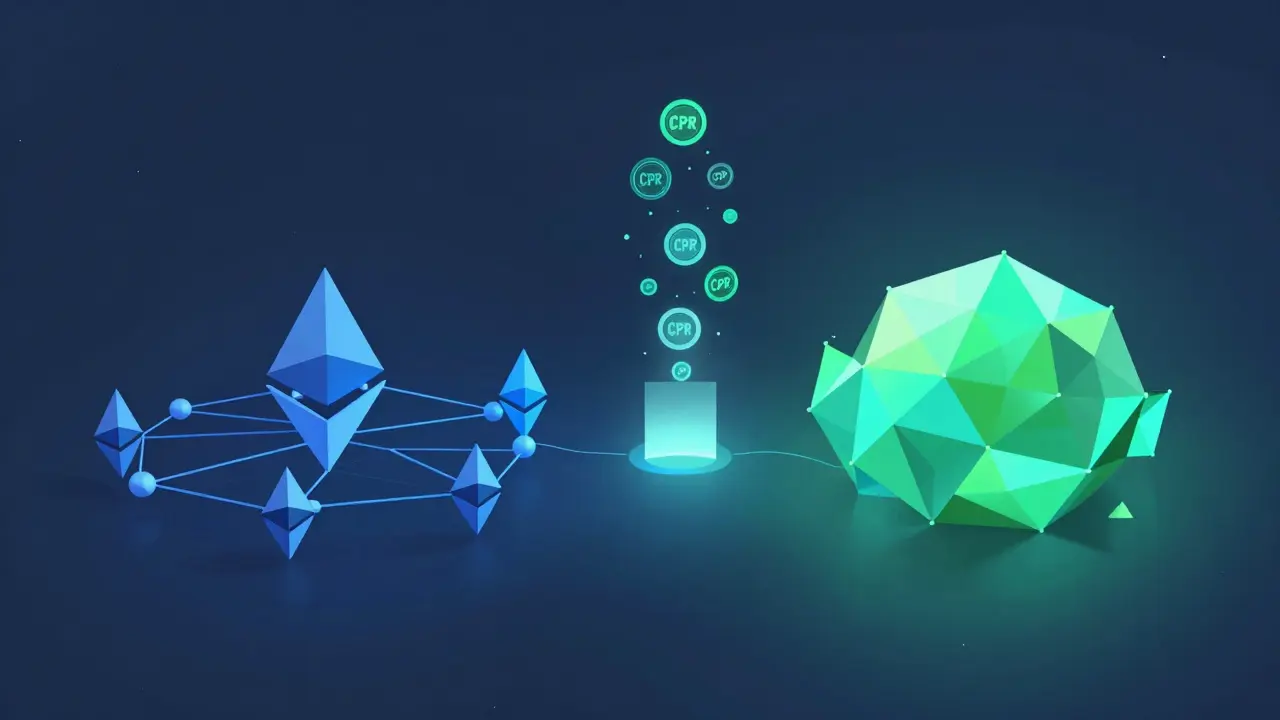
The CPR CIPHER 2021 airdrop wasn’t a fundraising event. It wasn’t an ICO or an IEO. Cipher didn’t sell tokens. Instead, they gave them away - to people who already used their services. The goal? To reward early adopters and push adoption of their token on the Polygon network. Cipher had been around since 2018, built on Ethereum. But by 2021, gas fees were climbing, and transaction speeds were slowing. So they moved. They migrated the CPR token from Ethereum to Polygon PoS. This wasn’t just a technical upgrade - it was a reset. And to make sure users didn’t get left behind, they ran the airdrop. The airdrop was handled directly through CoinMarketCap, which at the time was one of the few platforms offering official, verified token distributions. That gave it a layer of trust. You didn’t need to sign up on some sketchy website. You didn’t need to send ETH to a contract. You just had to have held or used CPR before the cutoff date. If you did, you got more.How Did It Work?
There’s no public record of the exact number of people who received tokens, or how many CPR were distributed. But based on the project’s own statements, here’s what we know for sure:- The airdrop was tied to the migration from Ethereum to Polygon.
- It was only available to users who had interacted with the original CPR contract before the cutoff.
- Eligibility was verified through CoinMarketCap’s user data, not through manual submissions.
- The new contract address on Polygon is
0xaa404804ba583c025fa64c9a276a6127ceb355c6.
Why Did Cipher Do This?
Cipher wasn’t trying to become the next Solana or Ethereum. Their goal was simpler: create real business tools that ran on blockchain. They wanted apps that were fast, secure, and easy to use - not just for crypto fans, but for small businesses, freelancers, and service providers. The CPR token wasn’t meant to be traded. It was meant to be used. Think of it like a loyalty card, but on blockchain. Use their platform? You earn CPR. Pay for services? You spend CPR. Own part of the company? You hold CPR. The 2021 airdrop was their way of moving users from the old system to the new one without losing them. Polygon meant lower fees. Faster transactions. Better scalability. But if no one moved over, the upgrade meant nothing. So they gave people a reason: free tokens. Just for sticking around.
What Happened After the Airdrop?
Here’s the tough part: the airdrop didn’t spark a revolution. The total supply of CPR is 1.08 billion tokens. As of 2026, only about 186 million are in circulation. That means most of the tokens are still locked up - maybe in wallets that were forgotten, maybe in team holdings, maybe in contracts that never got activated. The price tells a clearer story. CPR hit an all-time high of $0.004065 in February 2024. That sounds impressive - until you realize it was up from $0.000001 in mid-2022. Today, it trades between $0.00004791 and $0.00006803. That’s less than half a cent. For comparison, Ripple’s XRP trades around $0.50. Cardano’s ADA is around $0.45. The market didn’t ignore CPR. It just stopped caring. The project’s website hasn’t been updated in years. Their social media channels are quiet. No new apps. No major partnerships. No team announcements. The “best digital applications” they promised? They never arrived. It’s not that the idea was bad. It was solid. A utility token tied to real business tools? That’s a rare model. Most projects chase hype. Cipher tried to build something useful. But without ongoing development, even the best ideas fade.Is CPR Still Worth Anything?
If you held CPR before the 2021 airdrop, you probably got more tokens. Maybe you got 2x, maybe 5x. But unless you sold at the 2024 peak, you’re likely underwater now. There’s no active development. No roadmap updates. No new listings on major exchanges. The only reason anyone still talks about CPR is because of its history - and because CoinMarketCap still lists it as “Cipher [Old].” Some people still hold it. Why? Nostalgia. Hope. Or maybe they just forgot. But if you’re thinking of buying CPR today, you’re not investing in a project. You’re buying a relic.What Can We Learn From This?
The CPR airdrop of 2021 is a case study in how not to build a lasting crypto project. It had potential:- Real utility (not just speculation)
- A clear migration path
- A trusted distribution channel (CoinMarketCap)
- A team with international experience
![A crumbling low-poly tower labeled Cipher [Old] alone in a digital desert at twilight.](/uploads/2026/02/a-crumbling-low-poly-tower-labeled-cipher-old-alone-in-a-digital-desert-at-twilight.-cpr-cipher-2021-airdrop-details-what-happened-and-why-it-matters.webp)
Where Is Cipher Now?
Today, Cipher [Old] is a ghost. The token still trades - mostly on small decentralized exchanges. The Polygon contract is live. The blockchain records are intact. But the project? It’s dormant. No new wallets. No new partnerships. No new announcements. The team vanished. The website went quiet. The apps never launched. It’s a reminder: in crypto, even the smartest ideas die without consistent effort. Airdrops don’t build ecosystems. People do.Should You Still Claim Your CPR Tokens?
If you held CPR before April 2021 and never claimed your airdrop tokens, you might still be able to. But you’ll need to:- Have access to the wallet that held CPR before the migration.
- Connect it to a Polygon-compatible wallet (like MetaMask with Polygon network added).
- Use the official contract address:
0xaa404804ba583c025fa64c9a276a6127ceb355c6. - Check if any tokens are claimable via a block explorer like Polygonscan.
Megan Lavery
March 1, 2026 AT 15:09Honestly, I still have a few CPR tokens sitting in an old wallet. Didn’t sell at the peak, but I don’t regret holding. It wasn’t about the money - it was about believing in something real for once. Crypto needed more projects like this, even if they didn’t go viral.
Still think about how quiet it was. No hype, no influencers, just a team trying to make something useful. Rare.
Maybe we’re all just too used to the noise now.
Mae Young
March 2, 2026 AT 08:12Oh, so now we’re romanticizing a dead project? How quaint.
"They tried." Yes. And they failed. Spectacularly. You don’t get to write a eulogy for a project that vanished without a trace, then call it "honest" because it didn’t scam people - that’s not virtue, that’s basic competence.
Also, CoinMarketCap? The same platform that listed Dogecoin as a "top 10" asset? Trusting them as a "verified" channel is like trusting a used car salesman who says "this one’s got a clean title."
And don’t get me started on "utility." Utility without adoption is just a digital paperweight. And this one’s been collecting dust since 2022.
Trenton White
March 4, 2026 AT 01:51I remember when I first heard about Cipher. I was in grad school, studying decentralized systems. The idea of a token tied to actual business tools - not just speculation - felt like a breath of fresh air.
But you’re right. The silence after the airdrop was deafening.
It’s not just about tech. It’s about culture. In the U.S., we love innovation - but we don’t reward patience. Cipher didn’t need to be the next Bitcoin. It just needed to keep showing up. And it didn’t.
Kinda sad, really. We had a chance to build something grounded. We chose noise instead.
Cheryl Fenner Brown
March 5, 2026 AT 12:17omg i still have my cpr tokens 😭 i forgot about them until i saw this post
checked my metamask yesterday and yep - 12k cpr just chillin’ like a villain
they’re worth like 0.60 cents total but i’m not deleting them. it’s my crypto relic 🥹
also why is the website still up?? it’s like a digital ghost town 😅
Kristi Emens
March 6, 2026 AT 18:27It’s interesting how this project never made headlines, yet it still has a small community holding on. Not because they think it’ll rebound - but because they remember what crypto was supposed to be.
I don’t own any CPR anymore, but I still reference it when I talk to newbies about utility tokens. It’s a cautionary tale - not because it failed, but because it had so much potential and didn’t fight for its own survival.
Projects need more than a good idea. They need a heartbeat.
Shannon Holliday
March 7, 2026 AT 21:01bro i still get notifications from coinmarketcap about cpr like it’s alive 😂
"CPR [Old] price update: +0.00000012"
that’s not a price change - that’s a sneeze.
but hey, at least it’s not dead yet. i’m keeping my 50k tokens like a lucky charm 🤞
maybe one day someone’ll revive it. or maybe it’ll just be crypto’s quietest ghost 🌫️
Ryan Burk
March 9, 2026 AT 20:14Stop pretending this was some noble experiment. It was a poorly executed migration with zero follow-up.
They didn’t "build something real." They built a contract and vanished.
1.08 billion tokens? 186 million circulating? That’s not a utility token - that’s a rug pull with a backstory.
And don’t tell me about "honesty." If you’re not updating your website, not posting on Twitter, not answering questions - you’re not trying. You’re just gone.
Stop glorifying abandonment.
Amanda Markwick
March 10, 2026 AT 15:01I think this is one of the most important stories in crypto history - not because it made money, but because it tried to do something different.
Most projects are built on FOMO. Cipher was built on friction - the friction of real usage.
Imagine a world where every crypto project had to prove its utility before it got listed. No pump-and-dumps. No influencers. Just tools people actually needed.
Cipher didn’t fail because the idea was bad. It failed because we, as a community, stopped valuing substance over spectacle.
We didn’t give it a chance. And now we’re the ones who feel empty.
Don B.
March 12, 2026 AT 09:58oh wow. so cipher was like… a crypto version of a startup that got acquired and then the team just… stopped answering emails?
that’s not deep. that’s just lazy.
you don’t get a medal for not scamming people. you get a participation trophy.
also why is this post so long? i didn’t ask for a thesis.
it’s a dead token. move on.
Arya Dev
March 12, 2026 AT 16:41Why are you even talking about this? India has real crypto projects now - UPI-based chains, CBDC integrations, DeFi for farmers.
Cipher? A ghost on Polygon? That’s not innovation - that’s nostalgia for a dead idea.
We don’t need relics. We need builders. And Cipher? They were never builders. They were just… there.
And now? They’re irrelevant.
Andrew Hadder
March 13, 2026 AT 22:55just wanted to say i claimed my cpr back in 2021. never sold. still have them.
not because i think they’ll rise. but because i like having a piece of something that tried.
also, the contract address is still there. i checked.
weirdly comforting, in a way.
Neeti Sharma
March 15, 2026 AT 04:17you americans always romanticize failure
project died because team lazy
no one cares about your crypto ghost
india is building real systems not fairy tales
stop pretending dead tokens are meaningful
Nadia Shalaby
March 16, 2026 AT 17:08i just scrolled past this post thinking "another crypto ghost story"
then i remembered i still have 8k cpr in my wallet
and i laughed
not because it’s funny
but because it’s so… quietly human
we hold onto things long after they’ve stopped meaning anything
that’s not dumb
that’s just how we are
Molley Spencer
March 17, 2026 AT 20:16The CPR airdrop was a textbook example of a tokenomics failure masked as a philosophical stance.
Utility without liquidity is a paradox. Liquidity without community is a ghost. And community without communication is a myth.
Cipher didn’t "build something real." They built a contract and then committed the gravest sin in crypto: silence.
Their failure wasn’t technical - it was existential.
They didn’t lose to competitors.
They lost to indifference.
And now? They’re a footnote in a Reddit thread.
Not a lesson. A footnote.
John Fuller
March 18, 2026 AT 09:56dead token. move on.