

Cross-border crypto transfers from China: How to move Bitcoin abroad
 Feb, 27 2026
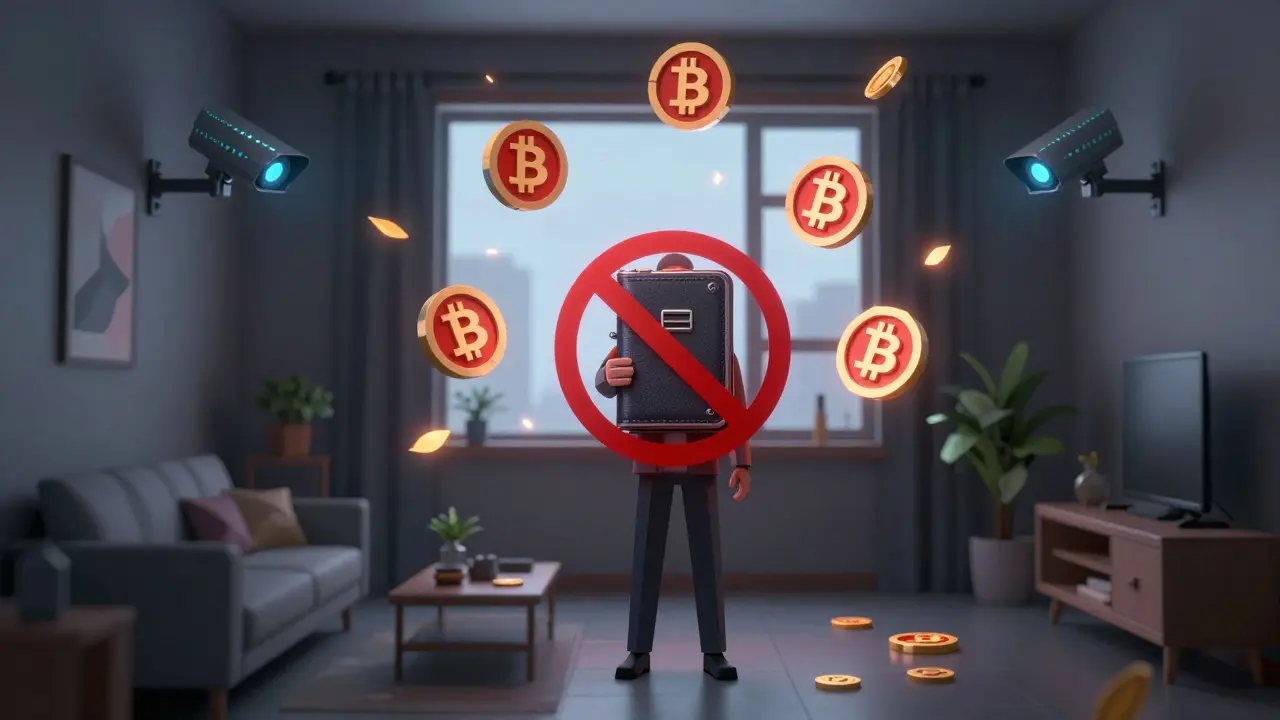
As of June 1, 2025, moving Bitcoin or any other cryptocurrency out of China is not just difficult-it’s illegal. The Chinese government didn’t just tighten rules. It erased the entire legal space for private crypto ownership. If you’re in China and you own Bitcoin, you can’t sell it, trade it, send it abroad, or even hold it without risking your assets-and possibly your freedom.
There’s no legal way out
You might think, "I’ll just use a peer-to-peer app or a VPN to send Bitcoin to a friend overseas." That’s not a workaround. It’s a legal trap. The People’s Bank of China (PBOC) banned every form of cryptocurrency activity in May 2025, including personal ownership. This wasn’t a minor update. It was the final step in a five-year crackdown that started with blocking bank transactions in 2013 and ended with total prohibition.Financial institutions in China now have to monitor every transaction for signs of crypto activity. If your bank account shows a pattern of payments to known crypto exchanges-even if you didn’t know they were crypto-you could be flagged. Non-bank payment providers like Alipay and WeChat Pay are required to freeze accounts linked to virtual currency transactions. They don’t need proof you were trading. Suspicion is enough.
Overseas exchanges like Binance, Kraken, or Coinbase are legally barred from serving Chinese residents. That means even if you have a wallet on an international platform, you can’t deposit funds from your Chinese bank account. And if you try to use a third party or a friend abroad to receive your Bitcoin? That’s still considered a violation. The law doesn’t care how you do it-it only cares that you tried.
What happens if you get caught?
The penalties aren’t fines. They’re seizures. If authorities find you’ve transferred Bitcoin out of China, they can freeze your bank accounts, seize your property, and even press criminal charges under anti-money laundering laws. In 2024, over 1,200 individuals in Guangdong and Zhejiang provinces were prosecuted for crypto-related offenses. Many had their homes, cars, and savings confiscated.There’s no gray area. Even if you bought Bitcoin before the 2025 ban, you still have to surrender it. The government doesn’t offer amnesty. It doesn’t allow voluntary surrender with reduced penalties. You’re either compliant-or you’re breaking the law.
Some people try to use hardware wallets or cold storage to hide their Bitcoin. But if you ever try to move it-even once-you risk triggering surveillance. Chinese authorities use AI-powered transaction mapping to track wallet addresses linked to known exchanges. Once flagged, your identity is tied to that wallet through IP logs, phone records, and bank transfers.
The digital yuan is the only legal option
China isn’t trying to stop digital money. It’s trying to control it. The e-CNY, or digital yuan, is the government’s answer. It’s not Bitcoin. It’s not decentralized. It’s a state-controlled currency that can be programmed to expire, restrict spending to certain stores, or even block transfers to certain regions.Right now, the digital yuan is being tested in over 200 cities. You can use it to pay for groceries, subway rides, and even utility bills. But here’s the catch: you can’t send it overseas. Not without government approval. And approval doesn’t come for private individuals. It’s reserved for state enterprises and approved international trade partners.
Some experts thought China might allow a renminbi-backed stablecoin to compete with USDT or USDC. But even those ideas are stalled. The government’s priority isn’t innovation-it’s control. Any digital currency that escapes state oversight is seen as a threat to monetary sovereignty. That’s why they banned Bitcoin. Not because it’s risky. Because it’s uncontrollable.

Why Hong Kong doesn’t help
You might be thinking: "What about Hong Kong? It’s still crypto-friendly." Yes, Hong Kong allows crypto trading. Yes, exchanges operate there legally. But here’s the reality: mainland Chinese residents can’t access those services without breaking capital control rules.If you try to wire money from your Chinese bank account to a Hong Kong crypto exchange, the transfer will be blocked. Even if you fly to Hong Kong with cash and buy Bitcoin there, bringing it back into mainland China is illegal. The border monitors digital asset transfers. Customs officers have been trained to check mobile wallets during entry inspections.
There’s no loophole. No "gray zone." The law treats Hong Kong as a separate jurisdiction, but your status as a mainland resident ties you to China’s rules. Trying to exploit the difference is a fast track to legal trouble.
What about using decentralized wallets?
You can create a MetaMask wallet. You can buy Bitcoin on a peer-to-peer platform. You can store it on a Ledger. None of that matters. The law doesn’t care if the transaction is decentralized. It cares if you, as a Chinese resident, engaged in crypto activity.There’s no technical fix. No app, no proxy, no mixing service can make this legal. The Chinese government doesn’t rely on tracking blockchain addresses alone. They track your phone, your payment history, your travel records, your social media. If you’ve ever visited a crypto forum, downloaded a wallet app, or sent money to a known exchange-even years ago-you’re on their radar.
And if you try to move Bitcoin out now? You’re not just risking your money. You’re risking your freedom. Criminal charges for crypto violations in China can carry sentences of up to seven years, especially if the amount exceeds 500,000 RMB ($70,000 USD).

What’s next?
Some analysts say China might soften its stance. Maybe they’ll allow licensed exchanges. Maybe they’ll create a state-approved crypto gateway. But as of February 2026, there’s zero evidence of that. The Shanghai State-Owned Assets Supervision and Administration Commission did discuss digital assets in July 2025-but no policy changes followed.The government’s message is clear: private digital assets are incompatible with China’s financial system. The digital yuan is the future. Everything else is contraband.
If you’re outside China and someone you know is trying to move Bitcoin out of the country, tell them: it’s not worth the risk. There’s no safe, legal, or practical way to do it. The system is designed to block every path.
The only way to move crypto out of China today is to stop being a Chinese resident. Leave the country. Change your legal status. Close your Chinese bank accounts. Then, and only then, can you access your assets. Anything else is a gamble with your livelihood.
What you should do instead
If you’re in China and you hold Bitcoin, your options are limited:- Do nothing. Hold it. But don’t move it. Don’t trade it. Don’t even look at it too closely.
- Convert it to cash before June 2025. But even that’s risky-large cash withdrawals trigger reporting.
- Leave China legally. Then, after establishing residency elsewhere, reclaim your assets.
There’s no clever hack. No secret method. No workaround that won’t get you in trouble. The rules are absolute. And they’re enforced.
Can I send Bitcoin from China to a friend overseas using a QR code?
No. Sending Bitcoin via QR code-even to a family member-is still considered a crypto transfer under Chinese law. The method doesn’t matter. The action does. Authorities monitor QR code usage linked to crypto wallets. If detected, your account will be frozen and reported.
What if I bought Bitcoin before the 2025 ban?
Ownership before the ban doesn’t grant legal protection. All cryptocurrency holdings are subject to the June 2025 prohibition. You must surrender your assets to approved channels or risk seizure. There is no grandfathering clause.
Can I use a foreign bank account to hold Bitcoin received from China?
No. If the Bitcoin originated from a Chinese resident, the transfer violates China’s capital control laws. Foreign banks are required to report suspicious transactions involving Chinese nationals. Even if you’re not in China, your Chinese identity ties you to the violation.
Is there any official government channel to convert Bitcoin to RMB?
No. There is no legal exchange, platform, or government office that allows conversion of Bitcoin to RMB. Any service claiming to offer this is either fraudulent or operating illegally.
What about using crypto ATMs in China?
Crypto ATMs were shut down in 2021. As of 2025, any device that allows Bitcoin transactions within China is illegal. Possession or use of such a device can lead to criminal charges.
Can I mine Bitcoin in China now?
No. Bitcoin mining was banned nationwide in 2021. All mining operations, whether industrial or personal, are illegal. Equipment has been confiscated, and operators fined or jailed.
Will China ever lift the ban on crypto?
There are no signs of a reversal. The government views private cryptocurrencies as a threat to financial stability and monetary control. The digital yuan is their chosen path forward. Any future changes would likely involve state-controlled digital assets-not Bitcoin or Ethereum.
What happens to my Bitcoin if I die while it’s still in China?
Your heirs cannot legally inherit Bitcoin. Chinese inheritance law does not recognize cryptocurrency as a legal asset. If authorities discover the wallet, they may seize it. There is no legal process to transfer ownership to family members.
Bottom line: You can’t move Bitcoin out of China. Not now. Not without risking everything. The system was built to stop you. And it’s working.