

Crypto Prosecution Map: Which Countries Jail Users vs. Those That Regulate
 May, 1 2026
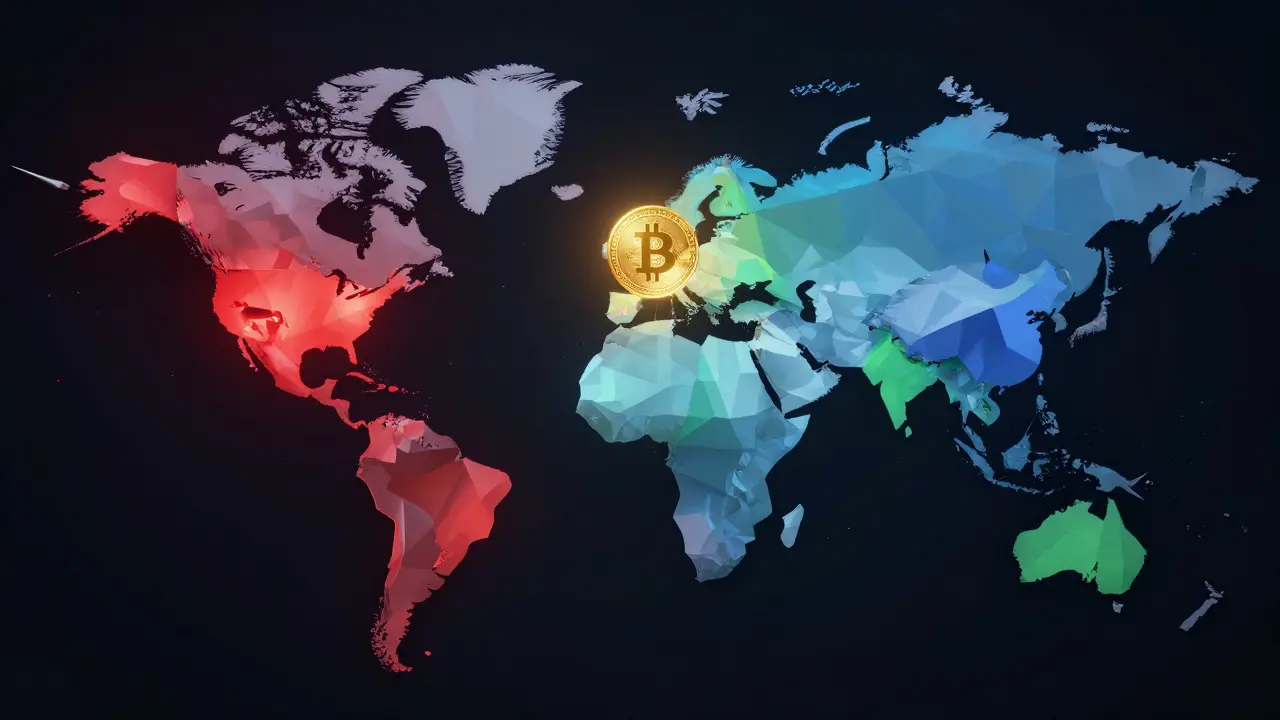
You bought some Bitcoin last year. You kept it in a wallet on your phone. Now, you’re wondering if that simple act could land you in jail. The answer depends entirely on where you are standing right now. In 2026, the world is split into two very different camps regarding cryptocurrency enforcement. On one side, you have nations that treat holding digital assets as a serious criminal offense. On the other, you have jurisdictions that focus their energy on catching big-time money launderers while leaving everyday users alone.
This isn't just about taxes or fines anymore. For many, it’s about personal freedom. If you travel frequently or manage remote assets, knowing which borders you can’t cross with crypto is critical. Let’s break down exactly who is prosecuting whom, and why.
The Hard Ban Zone: Where Holding Crypto Is a Crime
There is a small group of countries where the law is clear: cryptocurrencies are not just restricted; they are completely illegal. In these places, simply owning Bitcoin or Ethereum can lead to arrest, heavy fines, or imprisonment. These governments view crypto as a direct threat to national financial stability and state control.
China remains the strictest enforcer globally. Since banning exchanges and initial coin offerings (ICOs) in 2017, the government has systematically crushed mining operations and peer-to-peer trading. Chinese authorities actively pursue individuals involved in any crypto activity. It is not enough to say you were "just investing." The stance is hostile, comprehensive, and enforced with severe penalties. If you are caught engaging in crypto transactions within China, you face significant legal risk.
Close behind are Algeria and Bolivia. Algeria has declared all crypto-related activities illegal, citing concerns over fraud and money laundering. The Central Bank of Bolivia has similarly implemented a total prohibition. In both nations, there is no gray area for "educational" purposes or "small holdings." The law treats crypto use as a violation of financial statutes, leading to active prosecution of users.
Bangladesh also falls into this dangerous category. The central bank strictly prohibits cryptocurrency use, classifying it under anti-money laundering and counter-terrorism financing laws. Authorities have issued explicit warnings that involvement in crypto transactions can result in criminal prosecution. This means that even casual traders or those trying to send remittances via stablecoins are at high risk.
- Highest Risk: China, Algeria, Bolivia, Bangladesh.
- Primary Charge: Violation of financial laws, unauthorized currency usage.
- User Advice: Do not access wallets, do not trade, and do not discuss holdings openly in these jurisdictions.
The Tax-as-Enforcement Model: India’s Heavy Hand
Not every country wants to put you in jail, but some want to make crypto unprofitable. India represents a unique middle ground. Ownership is not technically illegal, but the government has created an environment so restrictive that it acts as a de facto enforcement mechanism.
India imposes a flat 30% tax on all crypto gains. Additionally, there is a 1% Tax Deducted at Source (TDS) on every single transaction. This means if you swap Bitcoin for Ethereum, you lose 1% immediately. While this doesn’t lead to criminal prosecution for average users, it creates a massive compliance burden. The Supreme Court overturned a banking ban in 2020, allowing banks to service crypto customers, but the tax regime remains aggressive. For Indian users, the risk isn’t prison-it’s financial suffocation through regulation.
Targeted Enforcement: The US and Europe Approach
In democratic nations like the United States and across Europe, the strategy is different. They don’t prosecute individual users for buying Bitcoin. Instead, they go after the infrastructure that enables crime.
The U.S. adopts a selective enforcement approach. In September 2024, the Office of Foreign Assets Control (OFAC) sanctioned Russia-based exchange Cryptex and its operator Sergey Sergeevich Ivanov. Why? Because Cryptex processed over $5.88 billion in transactions linked to ransomware, darknet markets, and fraud shops. The U.S. State Department offered a $10 million reward for Ivanov’s arrest. This shows that while your personal wallet is safe, if you facilitate large-scale illicit flows, you will be targeted.
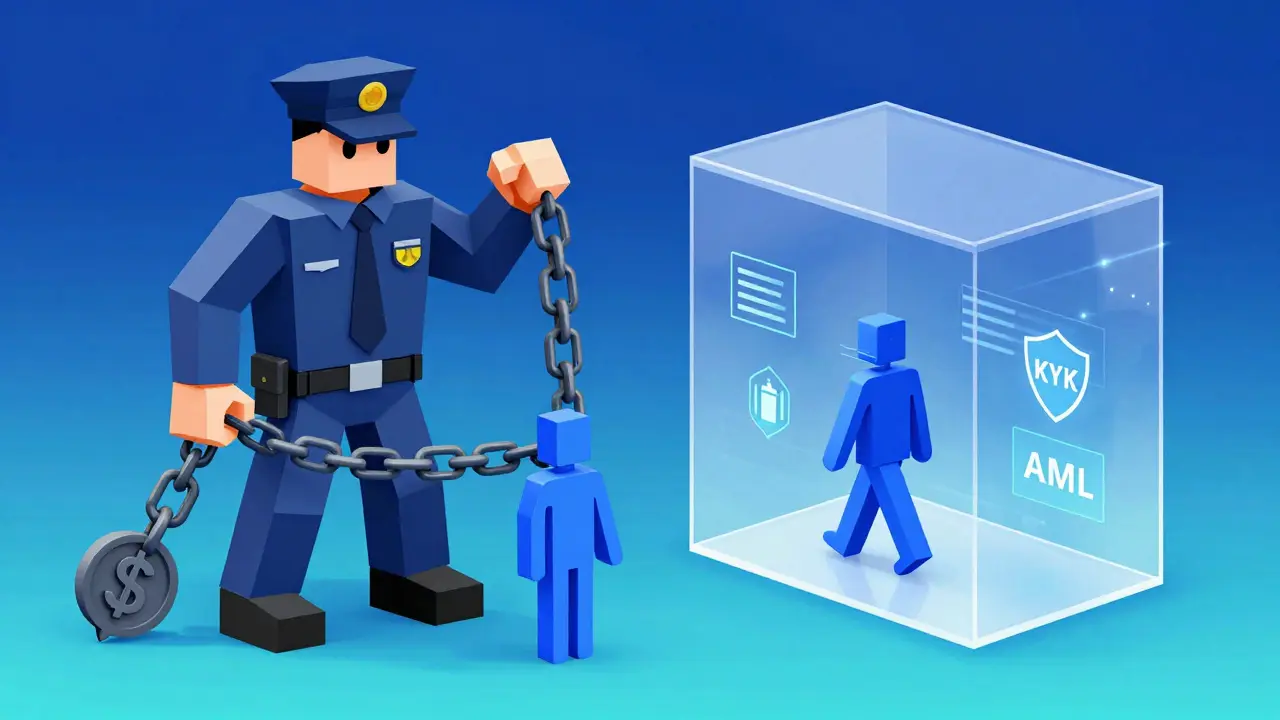
Europe is tightening its net through the new Anti-Money Laundering Authority (AMLA), which launched in July 2025. AMLA plans to scale from 30 to over 400 employees by 2028. The EU’s Fifth Anti-Money Laundering Directive (AMLD5) forces exchanges and custodian wallet providers to implement strict customer due diligence. This means European users enjoy better protection against scams, but they also face stricter KYC (Know Your Customer) requirements. If you try to hide your identity on a regulated European exchange, you will be banned, not arrested.
| Region/Country | Legal Status | Enforcement Focus | Risk for Average User |
|---|---|---|---|
| China | Illegal | Criminal Prosecution | Very High |
| Algeria / Bolivia | Illegal | Criminal Prosecution | Very High |
| Bangladesh | Illegal | Criminal Prosecution | High |
| India | Legal but Heavily Taxed | Tax Compliance | Moderate (Financial) |
| United States | Legal | Major Criminal Enterprises | Low |
| European Union | Legal (Regulated) | AML Compliance & Exchanges | Low |
| Singapore | Legal (Licensed) | Regulatory Framework | Very Low |
| Portugal | Legal | Minimal Oversight | Very Low |
The Business-Friendly Regulators: Singapore and South Korea
Some countries realize that banning crypto pushes innovation offshore. Singapore operates under the Payment Services Act (2020). The Monetary Authority of Singapore (MAS) focuses on licensing and compliance rather than criminalizing users. In August 2023, MAS introduced a stablecoin framework requiring full reserve backing. This protects users from rug pulls without threatening them with jail time.
South Korea took a similar step with the "Act on Protection of Virtual Asset Users" (VAUPA), effective July 19, 2024. This law requires exchanges to segregate client assets and maintain insurance. The goal is consumer protection. If an exchange fails, users get their money back. If a user trades illegally, they face regulatory hurdles, not necessarily criminal charges, unless involved in massive fraud.
The Wild West: Sanctioned Jurisdictions and Illicit Flows
A major part of the enforcement conversation involves where the dirty money goes. In 2024, sanctioned jurisdictions and entities received $15.8 billion in cryptocurrency, accounting for roughly 39% of all illicit crypto transactions. This statistic drives international cooperation.
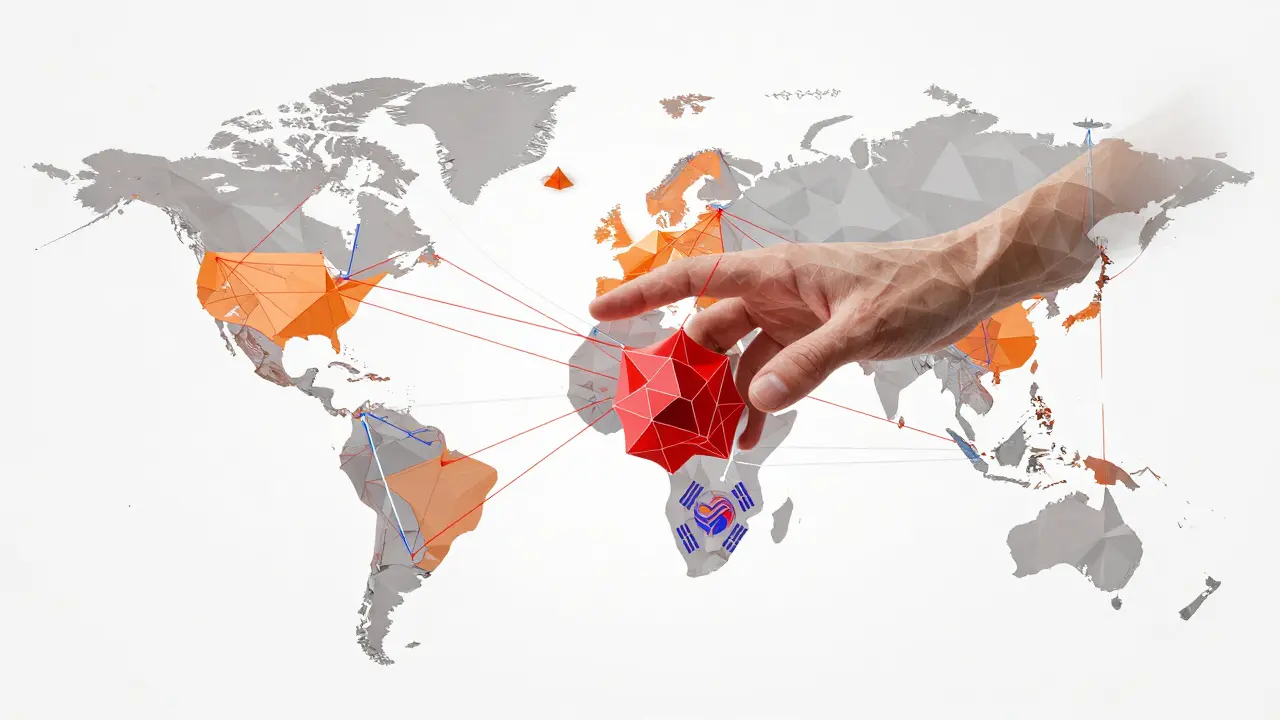
Operation Endgame, a joint effort between U.S. and European authorities, resulted in the seizure of domains and €7 million in funds linked to payment processors funneling money to criminal networks like Cryptex. This highlights a key trend: global authorities are sharing data. If you use a mixer or a privacy coin to evade sanctions, you are likely being tracked by multiple agencies simultaneously.
Navigating the Gray Areas: Ecuador and Brazil
Not every country fits neatly into "ban" or "allow." Ecuador maintains a cautious stance. The Central Bank does not recognize crypto as legal tender and discourages payments using it. However, there is no outright ban on holding. Ecuador has even launched its own state-backed digital currency, the Sistema de Dinero Electrónico. This suggests regulatory discouragement rather than active prosecution.
Brazil passed a national crypto law in 2023. The Central Bank is implementing rules in phases, with draft rules expected by late 2024. Brazil’s approach emphasizes building a regulatory framework. For users, this means clarity is coming, but current enforcement is focused on establishing the rules rather than punishing early adopters.
What This Means for You
If you are a regular user, the risk landscape is clear. You are safe in the U.S., Europe, Singapore, South Korea, and Portugal. You are financially pressured in India. You are in danger in China, Algeria, Bolivia, and Bangladesh.
The most important takeaway is that enforcement is becoming smarter, not just harsher. Blockchain analysis tools like Chainalysis are helping authorities trace funds across borders. Hiding your activity is harder than ever. The best defense is transparency: use regulated exchanges, keep records of your transactions, and understand the local laws before you click "buy."
Can I go to jail for holding Bitcoin in the United States?
No. In the United States, holding Bitcoin is legal. Prosecutions focus on individuals involved in money laundering, fraud, or operating unlicensed exchanges. Average users who buy and hold crypto for investment purposes are not at risk of criminal prosecution.
Which countries have completely banned cryptocurrency?
As of 2026, countries with complete bans include China, Algeria, Bolivia, and Bangladesh. In these nations, any form of crypto trading, mining, or holding can lead to criminal charges and prosecution.
How does India enforce its crypto regulations?
India does not typically prosecute users criminally for holding crypto. Instead, it uses taxation as an enforcement tool. A 30% tax on gains and a 1% TDS on every transaction makes trading costly and heavily monitored, creating a high-compliance environment.
Is it safer to use crypto in Europe or the US?
Both regions are relatively safe for legitimate users. Europe has stricter anti-money laundering rules through AMLA and AMLD5, meaning more KYC requirements. The US focuses on prosecuting major criminal enterprises. Both offer strong legal protections compared to banned jurisdictions.
What is Operation Endgame?
Operation Endgame is a coordinated international enforcement effort between U.S. and European authorities. It targets financial enablers of cybercrime, such as payment processors and exchanges that handle illicit funds. It demonstrates that global agencies are working together to seize crypto assets linked to crime.
Are stablecoins regulated differently than Bitcoin?
Yes. In countries like Singapore, stablecoins face specific regulations requiring full reserve backing and holding reserves in regulated institutions. This is because stablecoins are often used for payments and resemble traditional banking products, making them a priority for regulators concerned with financial stability.