

How Algerians Access Cryptocurrency Exchanges: Risks, Methods, and Law No. 25-10
 May, 27 2026
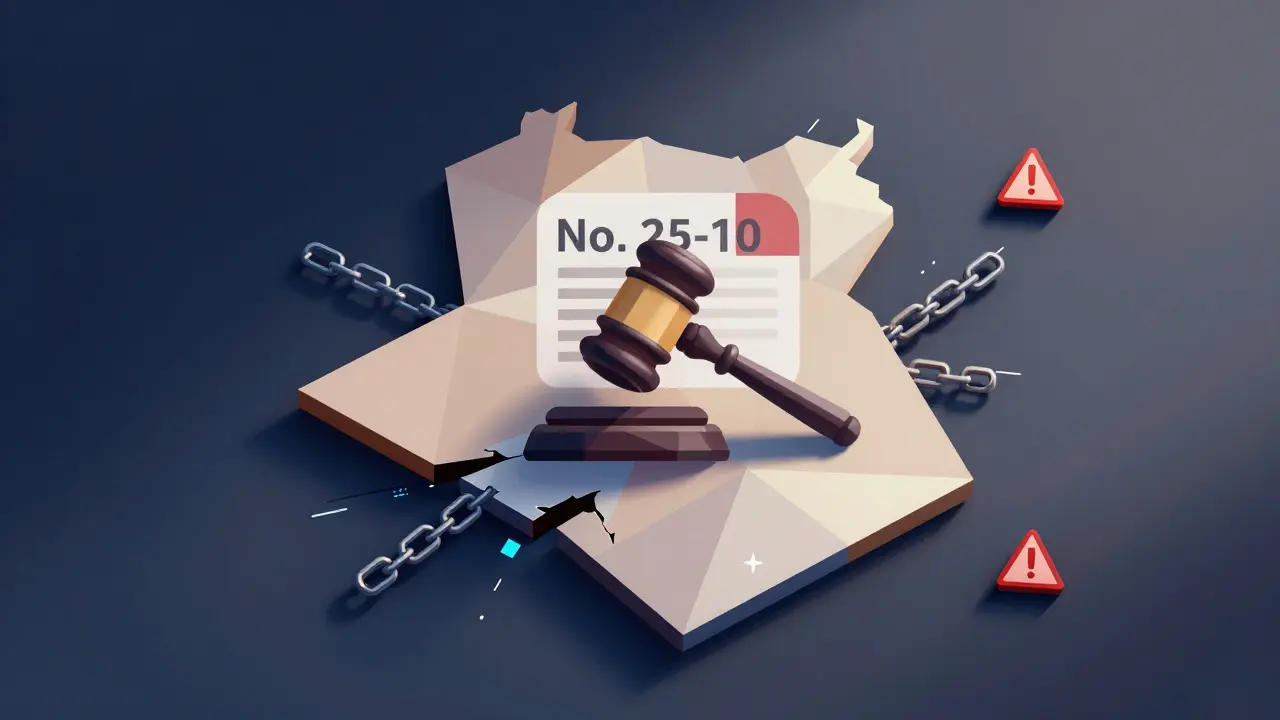
For years, Algeria was a quiet but growing hub for cryptocurrency adoption in North Africa. Then, in July 2025, the government pulled the plug entirely. With the introduction of Law No. 25-10, which comprehensively bans all cryptocurrency activities including trading, mining, and holding digital assets, the landscape shifted overnight. Today, asking "how do Algerians access crypto exchanges" isn't just a technical question-it's a legal minefield.
If you are looking for a simple guide to signing up on Binance or Coinbase from an Algerian IP address, you won't find one here. That’s because there is no legal way to do it. The current framework doesn't just restrict; it criminalizes. This article breaks down exactly what the law says, how people have historically tried to bypass these restrictions, and why doing so now carries severe risks, including imprisonment and heavy fines.
The New Legal Reality: Law No. 25-10
To understand why accessing crypto is so difficult, you first need to understand the rules of the game. Before July 2025, Algeria had restrictions under older currency regulations, but enforcement was spotty. A report by Chainalysis even ranked Algeria among the top five fastest-growing crypto markets in the MENA region just months before the ban. Retail traders were active, and peer-to-peer (P2P) volumes were surging.
That growth stopped abruptly with Law No. 25-10. This legislation defines cryptocurrencies as "virtual instruments used as means of exchange via a computer system, without support from a central bank." It then explicitly prohibits their purchase, sale, use, holding, creation, storage, mining, and promotion.
This is not a partial ban. It covers the entire ecosystem. Whether you want to buy Bitcoin, hold Ethereum in a wallet, mine coins, or simply write an educational blog post about blockchain technology, you are violating federal law. The government cites national security, financial stability, and anti-money laundering guidelines from the Financial Action Task Force (FATF) as the primary reasons for this crackdown. The message is clear: the state wants total control over the financial system, and unregulated digital assets are seen as a threat to that control.
Penalties for Violating the Crypto Ban
You might wonder if the penalties are just theoretical. They are not. The consequences for breaking Law No. 25-10 are severe and multifaceted. If authorities catch you engaging in any prohibited crypto activity, you face:
- Imprisonment: Sentences range from two months to one year.
- Fines: Monetary penalties between 200,000 and 1,000,000 Algerian dinars (approximately $1,540 to $7,700). For more serious violations, fines can reach up to 2 million dinars ($14,700).
- Doubled Penalties: Repeat offenders face double the punishment.
- Aggravated Circumstances: If your crypto operations are linked to organized crime, the penalties increase significantly.
Both jail time and fines can be applied simultaneously. This creates a high-stakes environment where the risk of losing your savings-or your freedom-far outweighs the potential gains from trading volatile assets.
How People Tried to Access Crypto (And Why It’s Risky Now)
Despite the ban, demand for digital assets persists. Many Algerians turned to crypto to hedge against inflation, send remittances cheaper than traditional banks, or simply participate in the global fintech trend. Historically, users employed several methods to access exchanges. However, under the new enforcement framework, these methods are now highly dangerous.
| Method | How It Worked | Current Risk Level |
|---|---|---|
| Peer-to-Peer (P2P) Trading | Buying directly from other individuals via social media or messaging apps, paying in cash or bank transfer. | Extremely High. Digital monitoring tracks suspicious transfers. Both buyer and seller are liable. |
| VPNs and Proxies | Using Virtual Private Networks to hide location and access international exchanges like Binance or Kraken. | High. Authorities have enhanced digital monitoring capabilities to detect VPN usage for illicit financial activities. |
| Decentralized Exchanges (DEXs) | Swapping tokens on platforms like Uniswap without a central intermediary. | High. Blockchain analysis tools can trace wallets back to real-world identities through KYC leaks or transaction patterns. |
| Crypto ATMs | Using physical kiosks to buy/sell crypto with cash. | N/A. These do not exist legally in Algeria due to the comprehensive ban on infrastructure. |
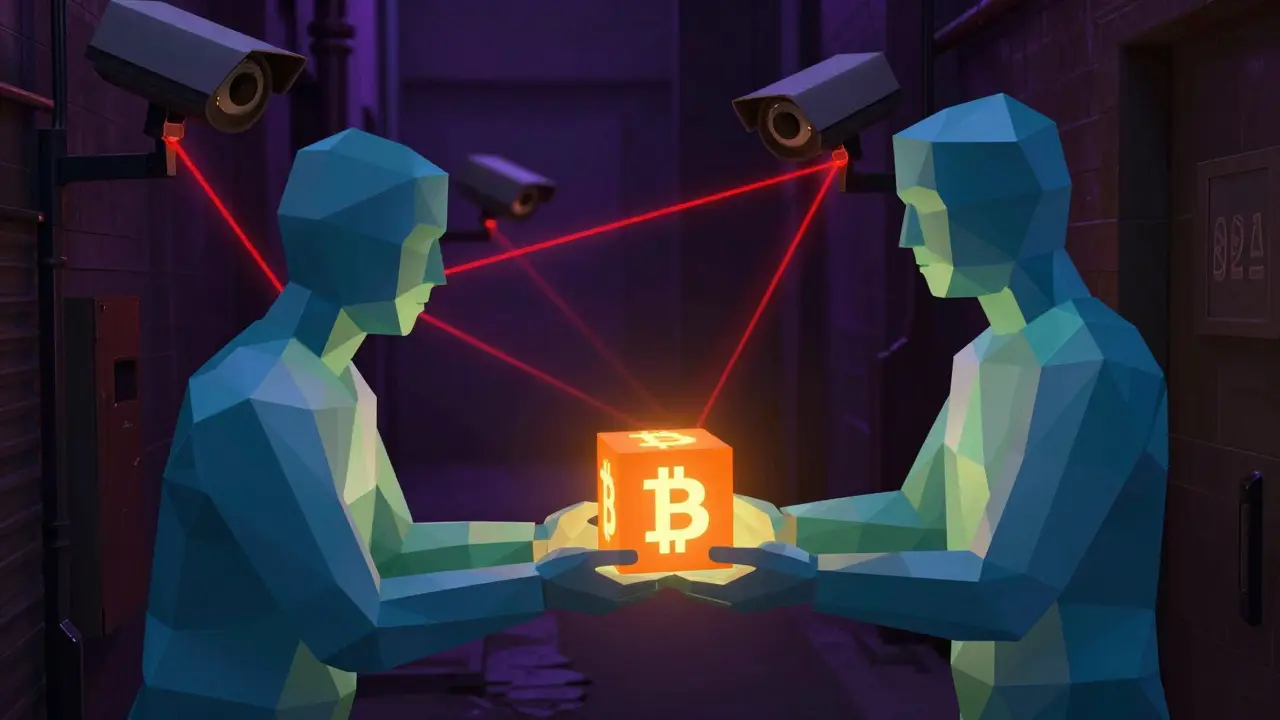
Peer-to-Peer (P2P) Trading: This was once the most common method. Users would find sellers on Facebook groups or Telegram channels, agree on a price, and transfer Algerian Dinars via mobile banking while receiving Bitcoin in return. Today, Algerian agencies monitor bank transactions for suspicious patterns. Large or frequent transfers to unknown accounts can trigger alerts. Since both parties are committing a crime, trust is low, and scams are rampant.
VPNs and International Exchanges: Some users attempted to mask their IP addresses to sign up for global platforms. While technically possible, this requires constant vigilance. If an exchange requests identity verification (KYC), providing false documents is fraud, and using real documents violates Algerian law. Furthermore, the government’s enhanced digital surveillance makes it easier to correlate online behavior with offline identity.
Decentralized Finance (DeFi): Tech-savvy users moved to decentralized exchanges that don’t require sign-ups. However, blockchain is public. Analytic firms and law enforcement agencies use chain-analysis software to cluster addresses. If you ever interact with a regulated entity (like a fiat on-ramp in another country), your entire history can be exposed.
The Impact on the Local Crypto Community
The human cost of this ban is significant. Prior to 2025, Algeria had a vibrant community of blockchain developers, DeFi specialists, and crypto analysts. There was genuine innovation happening, with local startups exploring tokenized services and supply chain solutions.
Now, we are seeing a "blockchain talent exodus." Skilled professionals are leaving the country to work in jurisdictions where their skills are valued rather than criminalized. This brain drain stifles local innovation and isolates Algeria from the global digital economy. Critics argue that by choosing prohibition over regulation, Algeria is missing out on economic opportunities and deterring foreign investment in the fintech sector.
Even indirect activities are risky. Educators who teach blockchain coding, influencers who discuss crypto trends, or marketers promoting digital asset services can all face charges under the "promotion" clause of Law No. 25-10. The chilling effect has silenced much of the public discourse around digital finance in the country.

Comparison: Algeria vs. Global Regulatory Trends
It helps to see how extreme Algeria’s position is by comparing it to its neighbors and global peers. While some African nations embrace digital assets for financial inclusion, Algeria has opted for total isolation.
| Jurisdiction | Status | Key Characteristics |
|---|---|---|
| Algeria | Banned | Criminalizes all use, trade, mining, and promotion. Severe prison/fine penalties. |
| Morocco | Restricted | Trading is restricted, but ownership isn't strictly criminalized in the same way. Enforcement varies. |
| Tunisia | Restricted | Central Bank warns against crypto; commercial banks cannot process crypto transactions. |
| European Union | Regulated | MiCA framework provides clear rules for issuance and trading. Consumer protections included. |
| United States | Regulated | Complex web of SEC/CFTC rules. Legal to trade, but strict reporting requirements. |
This divergence places Algeria alongside countries like China in opting for outright prohibition. Meanwhile, the EU and US are building structured frameworks to foster responsible growth. For Algerians, this means being cut off from the fast-evolving global financial landscape. Long-term implications include reduced financial literacy regarding digital assets and a lack of competitive advantage in the tech sector.
What Should You Do?
If you are an Algerian resident interested in cryptocurrency, the only safe advice is to stay away. The legal risks are too high, and the penalties are too severe. There is no "safe" loophole in Law No. 25-10. Every method of access-whether through P2P networks, VPNs, or decentralized protocols-carries the risk of detection, prosecution, and financial ruin.
Instead of risking your freedom, consider focusing on local investment opportunities or learning blockchain development skills that can be applied in compliant industries. If you have the means, relocating to a jurisdiction with favorable crypto regulations might be the only way to safely participate in the digital asset economy. But within Algeria, the door is firmly closed.
Is it legal to own Bitcoin in Algeria?
No. Under Law No. 25-10, holding, buying, selling, or using Bitcoin and other cryptocurrencies is strictly prohibited and criminalized.
What are the penalties for trading crypto in Algeria?
Violators face imprisonment from two months to one year and fines ranging from 200,000 to 2,000,000 Algerian dinars. Penalties can be doubled for repeat offenses.
Can I use a VPN to access Binance in Algeria?
While technically possible, using a VPN to access crypto exchanges violates Algerian law. Authorities have enhanced digital monitoring to detect such activities, and you still face criminal liability.
Why did Algeria ban cryptocurrency?
The government cites national security, financial stability, and concerns about money laundering and terrorism financing. They aim to maintain strict control over the national financial system.
Is peer-to-peer (P2P) crypto trading safe in Algeria?
No. P2P trading is illegal under Law No. 25-10. Additionally, it carries high risks of scams and detection through bank transaction monitoring.
Did the crypto ban affect blockchain developers in Algeria?
Yes. The ban has led to a "brain drain," with many skilled blockchain developers and crypto analysts leaving the country due to the criminalization of their field.