

How Wrapped Bitcoin (WBTC) Works: A Simple Guide to BTC on Ethereum
 Apr, 28 2026
This is where Wrapped Bitcoin is an ERC-20 token that represents Bitcoin on the Ethereum blockchain, maintaining a strict 1:1 value peg with the original asset. Also known as WBTC, it essentially acts as a bridge, letting you take the value of your BTC and move it into the Ethereum ecosystem without actually selling your coins. Instead of exiting your Bitcoin position, you "wrap" it, allowing you to earn interest or provide liquidity while still holding the equivalent value of Bitcoin.
The Core Mechanics: How the Wrapping Process Actually Works
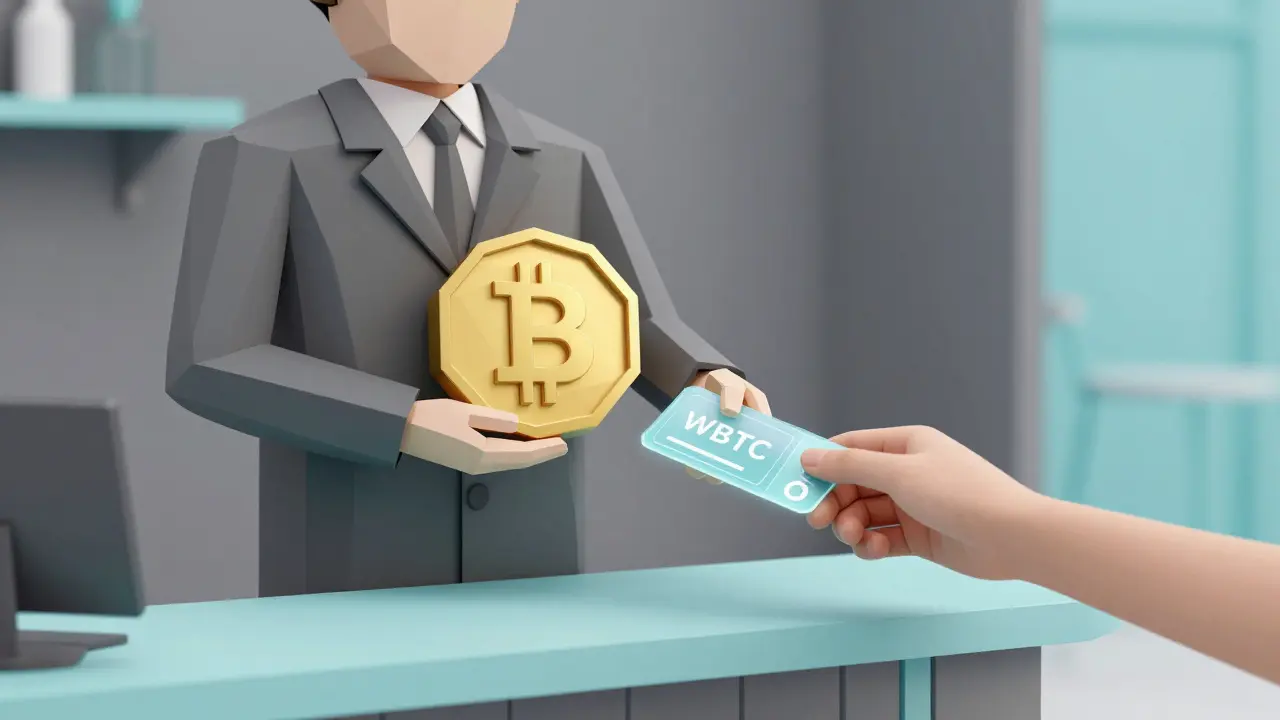
You can't just "send" Bitcoin to an Ethereum address; the two networks are fundamentally incompatible. Bitcoin uses a UTXO (Unspent Transaction Output) model, while Ethereum uses an account-based model. To get around this, WBTC uses a custodian-merchant model. Think of it like a coat check at a fancy event: you give your expensive coat (BTC) to the attendant (Custodian), and they give you a claim ticket (WBTC). As long as you have the ticket, you know your coat is safe and you can trade the ticket with others.
The process involves three main players:
- BitGo: The primary custodian. They are the ones who actually hold the real Bitcoin in high-security cold storage.
- Merchants: These are approved entities (like Dharma or AirSwap) that act as the middleman. They handle your KYC (Know Your Customer) checks and facilitate the request to mint the tokens.
- WBTC DAO: The governing body that manages the rules of the system and ensures everything is running smoothly.
When you want to wrap your coins, you send your BTC to the custodian. Once the Bitcoin is locked away, the custodian triggers a smart contract on Ethereum to mint an equal amount of ERC-20 tokens. These tokens are then sent to your Ethereum wallet, usually within 15 to 30 minutes. If you want your real Bitcoin back, you "unwrap" by sending the WBTC back to be burned (destroyed), which signals the custodian to release the original BTC from their vault.
Comparing WBTC to Other Wrapped Options
WBTC isn't the only way to get Bitcoin onto other chains. You've probably heard of others like renBTC or tBTC. The main difference comes down to trust vs. decentralization. WBTC is the "big player" because it uses professional, regulated custody, which makes it highly liquid and attractive to big institutions. However, that means you have to trust BitGo.
| Feature | WBTC | renBTC | tBTC |
|---|---|---|---|
| Custody Model | Centralized (BitGo) | Decentralized | Decentralized (Nodes) |
| Liquidity | Very High ($1.2B+ TVL) | Moderate | Low |
| Speed | Fast (Minutes) | Moderate | Slow (6-12 Hours) |
| Risk Profile | Custodial Risk | Smart Contract Risk | Network Operator Risk |
Why Bother Wrapping? The Real-World Benefits
Why go through the hassle of KYC and custodians? Because native Bitcoin is "lazy" capital. It just sits there. By converting to WBTC, you can put your assets to work in the DeFi ecosystem. For example, instead of your Bitcoin earning 0% yield, you could deposit your WBTC into Aave to earn interest or use it as collateral to borrow other assets like USDC.
A real scenario: An investor holds 2 BTC. They don't want to sell because they believe the price will go up, but they need $10,000 for a short-term business expense. Instead of selling their BTC and paying capital gains tax, they wrap it into WBTC, deposit it into a lending protocol, and take out a loan in stablecoins. Once they pay back the loan, they get their WBTC back and unwrap it to native BTC.
The Risks: What Could Go Wrong?
No system is perfect, and the main criticism of WBTC is its centralization. Because BitGo holds the keys, you are essentially trusting a company. If BitGo were to experience a massive security breach or a legal freeze, your WBTC could potentially lose its 1:1 peg. In 2022, a temporary API outage at BitGo actually froze conversions for a few hours, reminding everyone that a single point of failure exists.
There's also the risk of "merchant scams." Some users have lost funds by using unauthorized sites that claimed to wrap Bitcoin but were actually just phishing for keys. Always use the official DAO-approved merchant list. Furthermore, you have to deal with Ethereum gas fees. Depending on how busy the network is, moving your WBTC can cost anywhere from a couple of dollars to significantly more, which can eat into the profits of smaller holders.
Step-by-Step Guide: How to Get Started with WBTC
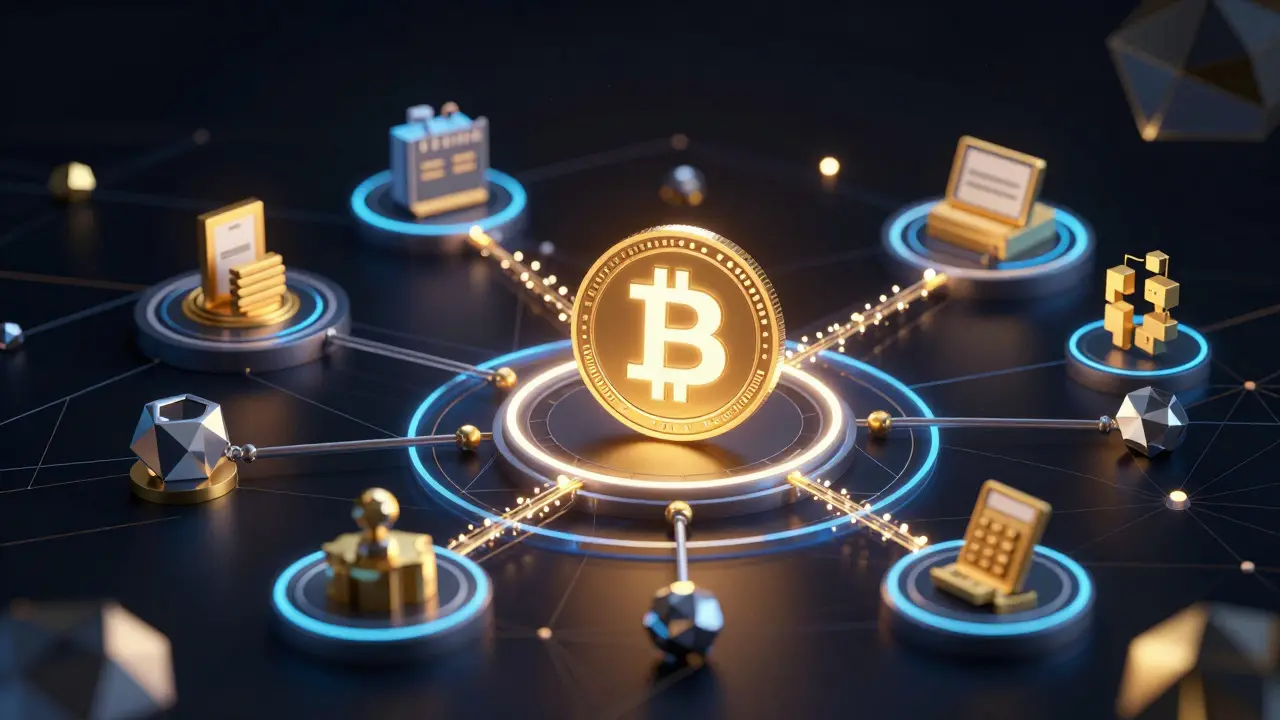
If you're ready to move your Bitcoin into the DeFi world, here is the path you'll typically take. Be aware that this usually requires a few hours of setup and verification.
- Set Up an Ethereum Wallet: Download a wallet like MetaMask. This is where your WBTC will live.
- Choose an Approved Merchant: Pick a merchant from the WBTC DAO list. This is crucial for security.
- Complete KYC Verification: You'll need to provide ID and personal info. This usually takes about 18 minutes, but can sometimes take a few days depending on the merchant.
- Deposit Your Bitcoin: Send your BTC from your native wallet to the address provided by the merchant.
- Receive Your WBTC: Once the deposit is confirmed, the merchant triggers the minting process, and the tokens land in your Ethereum wallet.
The Future of Bitcoin Interoperability
The world of bridging is changing. The WBTC DAO is already expanding into other networks like Polygon and Arbitrum to lower those pesky gas fees. There are also plans to move away from the strictly custodial model by using Multi-Party Computation (MPC) technology, which splits the "keys" among multiple parties so that no single person or company has total control.
While decentralized bridges like tBTC are gaining ground, WBTC's massive liquidity and institutional adoption (with companies like Fidelity and Coinbase involved) give it a huge head start. It has effectively become the standard for Bitcoin on Ethereum, acting as the essential plumbing that connects the world's most secure asset with the world's most flexible programmable finance system.
Is WBTC the same as Bitcoin?
No. Bitcoin is the native coin of the Bitcoin network. WBTC is a token on the Ethereum network that represents Bitcoin. It's like having a voucher for a gold bar; the voucher (WBTC) isn't the gold itself, but it's backed 1:1 by real gold (BTC) held in a vault.
How secure is the 1:1 peg of WBTC?
The peg is maintained by the custodian (BitGo), who must hold one real Bitcoin for every WBTC token minted. To prove this, they publish monthly Proof of Reserves audits on-chain, which allows anyone to verify that the reserves actually exist.
Can I convert WBTC back to real Bitcoin?
Yes. This is called "unwrapping." You send your WBTC back to an approved merchant, who burns the tokens and instructs the custodian to release the original BTC to your Bitcoin wallet. This process typically takes 30 to 60 minutes.
What are the risks of using WBTC?
The primary risk is centralization. Since you rely on BitGo to hold your coins, you are exposed to custodial risk. If the custodian fails or is hacked, the value of your WBTC could be affected. Additionally, you face Ethereum network gas fees and the potential for scams if you use non-approved merchants.
Do I need a special wallet for WBTC?
Since WBTC is an ERC-20 token, you need any wallet that supports the Ethereum network. MetaMask is the most popular choice, but hardware wallets like Ledger or software wallets like Coinbase Wallet also work perfectly.
Iestyn Lloyd
April 30, 2026 AT 02:48The comparison table is quite useful for those weighing the trade-offs between custodial and non-custodial bridges. Most people overlook the liquidity aspect, but for institutional-sized positions, WBTC really is the only viable path right now.
Carli Bates
April 30, 2026 AT 05:32imagine trusting a company with your keys in a space designed to kill trust lol. just peak crypto irony
Robert Smith
May 1, 2026 AT 17:46Easy to follow! 🚀🔥
its me
May 2, 2026 AT 05:41It's interesting how we justify this 'bridge' as a convenience. We claim to want decentralization but we're basically just recreating the banking system with a different set of labels. If you're okay with BitGo holding your assets, you've already surrendered the core philosophy of Bitcoin. It's a moral compromise for the sake of a few percentage points of yield in a lending pool, which feels like a bit of a spiritual defeat for the average hodler.
Ralph Espinosa
May 4, 2026 AT 05:03I've used WBTC for years... it's incredibly seamless!! Just make sure you're using an official merchant... the gas fees can be a killer on Mainnet though!!
Lex Harley
May 5, 2026 AT 11:01The slippage on some of these wraps can be wild if you aren't careful with the liquidity pools. I'm mostly worried about the MPC transition though. Like, is the trustless nature actually improving or just shifting to a different set of validators? Its a bit murky when you dive into the actual smart contract logic.
Tracy McBurney
May 6, 2026 AT 10:49The author fails to mention the systemic risk of a peg failure. If BitGo is compromised, the 1:1 ratio isn't a guarantee; it is a promise. In a liquidation cascade, that promise becomes worthless. This is an architectural flaw that no amount of 'institutional adoption' can fix.
Felix Eduardo Velasquez
May 6, 2026 AT 14:13The concept of wrapping is essentially a derivative of value. We are no longer interacting with the asset, but with a representation of it. This separation of the asset from its utility is what allows the DeFi ecosystem to flourish, but it also creates a layer of abstraction that obscures the reality of the risk. One must wonder if the convenience is worth the loss of sovereignty over one's private keys.
Barbara Jones
May 7, 2026 AT 05:24this is super helpfull for beginners!! just be careful with those kyc steps, some sites are realy slow to verify everything
Bevon Findley
May 8, 2026 AT 05:10Basically a fancy IOU. 😊
Kara Spadone
May 9, 2026 AT 08:15The energy of this post is so basic 🙄 We should be talking about the spiritual alignment of our assets not just how to move them for a bit of interest. True wealth is about freedom, not just moving tokens between chains 🧘♀️
Pramendra Singh
May 9, 2026 AT 13:32It's great to see more guides like this that make the complex world of DeFi a bit more approachable for everyone. Positive steps toward adoption!
Mitali Rajvanshi
May 10, 2026 AT 15:07A very clear explanation of the process. Thanks for sharing.
AP Fisher
May 11, 2026 AT 08:25I don't really get the KYC part. Why do I have to give my ID just to move my own coins to another chain? That seems weird for crypto.
Ryan Nakielny
May 12, 2026 AT 00:34Welcome to the real world, where 'decentralization' is just a marketing term for 'we have a slightly different way of controlling your money' lol.
Arti Jain
May 12, 2026 AT 05:51Pathetic to complain about KYC. Regulation is the only way to bring real money into the market. Stop whining.
Gabby Puche
May 13, 2026 AT 03:16Don't let the negativity get to you! It's just how the system works right now 🌟 Keep learning!
Tony Phan
May 14, 2026 AT 09:19Bro I just love the leverage! Who cares about the custodial risk when you can loop your WBTC into Aave and mint more stablecoins for more leverage? Its an absolute dopamine rush watching those yields hit! I'm basically printing money at this point and the volatility just makes it more exciting. Just send it and don't look back!
Veronica Bago
May 15, 2026 AT 21:59I'm just happy that I can finally use my BTC in some of the cooler dapps without having to sell everything first. Nice guide.
Lloyd I
May 16, 2026 AT 13:58Totally agree with the utility part! Getting those lazy coins to work is the way to go. Let's all keep pushing the boundaries of what we can do with our portfolios!
Ipsita Seal
May 16, 2026 AT 14:02too long, didn't read. just tell me if it's safe or not.