

Investment Potential of DePIN Projects: A Practical Guide for 2026
 May, 14 2026
Infrastructure is boring until it isn’t. For decades, we’ve accepted that telecom towers, data centers, and energy grids belong to massive corporations with monopolistic pricing. Then came Decentralized Physical Infrastructure Networks, or DePIN, a model that turns everyday people into infrastructure providers using blockchain technology. If you’ve been watching the crypto space since 2024, you know this sector exploded from a niche concept into one of the most capital-intensive areas of Web3. But here is the real question: is DePIN just another speculative bubble, or does it offer genuine long-term investment potential? The answer lies in understanding how these networks actually work, where the money comes from, and why some projects survive while others vanish.
By 2026, the novelty has worn off. Investors are no longer buying tokens because "decentralization" sounds cool. They are looking for utility, revenue streams, and sustainable tokenomics. This guide cuts through the hype to help you evaluate DePIN projects like an institutional investor would-focusing on hardware requirements, network effects, and regulatory realities rather than price charts alone.
What Exactly Is DePIN?
To invest in DePIN, you first need to understand what you are buying into. Unlike Decentralized Finance (DeFi), which moves digital money around, DePIN builds real-world assets. It uses cryptocurrency incentives to encourage individuals to deploy and maintain physical infrastructure. Think of it as Uber for bandwidth, or Airbnb for server space.
The mechanism is straightforward. A project launches a token. Users buy hardware (like a hotspot or a GPU) or contribute existing resources (like idle hard drive space). In exchange for providing service, they earn tokens. These tokens can be sold for profit, used to pay for services within the network, or staked to secure the system. The goal is to create a self-sustaining ecosystem where the cost of building infrastructure is shared by the community rather than borne by a single corporation.
This model disrupts traditional monopolies. Traditional telecom companies spend billions on tower construction. DePIN projects like Helium incentivize users to place small wireless devices in their homes, creating a distributed network at a fraction of the cost. According to industry analysis from a16z Crypto, these crowdsourced models can deploy infrastructure 30-50% cheaper than traditional providers. That efficiency gap is the core investment thesis.
Two Types of DePIN: Hardware vs. Digital
Not all DePIN projects are created equal. The sector splits into two distinct categories, each with different risk profiles and entry barriers. Understanding this distinction is crucial for your portfolio strategy.
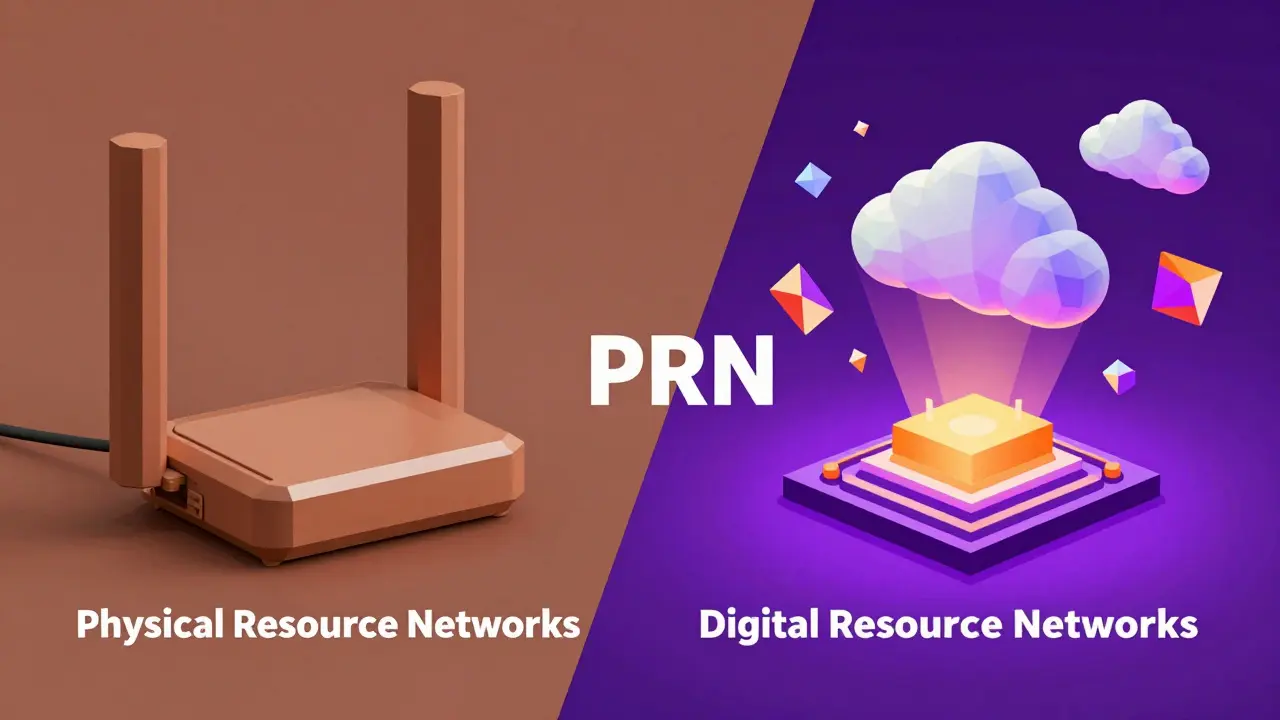
Physical Resource Networks (PRNs) require you to buy and install physical hardware. Examples include Helium Mobile for 5G coverage and Hivemapper for street-level mapping dashcams. These projects have higher entry costs-often ranging from $100 to $1,000 per node-but they create stronger network effects. Once a device is installed, it generates value continuously. However, PRNs face logistical challenges: shipping, installation errors, and local regulations. For instance, spectrum licensing rules in various countries can suddenly render a hotspot useless if not compliant.
Digital Resource Networks (DRNs) leverage existing computing power. You don’t need to buy new hardware; you just use your idle CPU, GPU, or storage space. Filecoin provides decentralized cloud storage, while Render Network distributes GPU rendering jobs for AI and video production. DRNs have lower entry barriers and scale faster because anyone with a computer can participate. But they also face fiercer competition from centralized giants like AWS and Google Cloud, which benefit from massive economies of scale.
| Feature | Physical Resource Networks (PRN) | Digital Resource Networks (DRN) |
|---|---|---|
| Entry Cost | High ($100-$1,000+ hardware) | Low (Existing hardware) |
| Barrier to Entry | Technical setup & location | Software configuration |
| Competition | Traditional Telecom/Energy | AWS, Azure, Google Cloud |
| Risk Factor | Regulatory (Spectrum/Licenses) | Hardware obsolescence |
| Growth Driver | Network density & coverage | Computing demand (AI/Storage) |
Evaluating Tokenomics: The Sustainability Trap
The biggest killer of DePIN projects is bad tokenomics. Many early projects promised huge rewards to attract users, leading to hyperinflation. When too many tokens are printed too quickly, the price crashes, and participants stop contributing. By 2026, smart investors look for specific signs of sustainability.
First, check the emission schedule. Healthy projects reduce inflation over time. Komodo Platform’s analysis suggests that successful DePIN tokens should aim for less than 5% annual inflation after initial distribution. Second, look for token utility beyond speculation. Does the token pay for actual services? In Helium, you need tokens to buy mobile data plans. In Filecoin, you need tokens to store data. This creates constant buy pressure from users, not just speculators.
Third, watch for the "cold start problem." New networks struggle to provide value because there isn’t enough infrastructure yet. Successful projects solve this by subsidizing early adopters heavily, then gradually shifting costs to consumers as the network matures. If a project relies solely on selling tokens to fund operations without clear consumer revenue, it will likely fail.
Real-World Metrics Over Hype
Don’t fall for vanity metrics like social media followers or GitHub commits. As an investor, you need tangible proof of utility. Here are the metrics that matter:
- Active Nodes: How many devices are online and contributing? For Helium, reaching 1 million hotspots was a major milestone, but active usage matters more than total count.
- Service Transactions: Are people actually using the network? Render Network processed over 1.2 million GPU jobs in Q2 2023, showing real demand from creative professionals.
- Enterprise Adoption: Who is paying for the service? Hivemapper’s mapping data is used by Ford and Uber. When Fortune 500 companies integrate DePIN data into their products, it signals long-term viability.
- Revenue per Node: What does a participant earn? Early Helium users earned $1.50 daily in 2022, but this dropped to $0.35 by late 2023 as supply increased. Understand that earnings decrease as the network scales unless demand grows proportionally.
If a project cannot show consistent, verifiable real-world usage, treat it as high-risk speculation. The best DePIN investments are those where the underlying service would exist even if the token disappeared tomorrow.
Regulatory Risks and Legal Realities
One advantage DePIN has over other crypto sectors is its focus on physical goods and services, which may help it avoid being classified as a security in some jurisdictions. However, regulatory hurdles remain significant. Telecom and energy are heavily regulated industries.
In the US, the FCC approved Helium’s spectrum usage in 2022, but imposed new requirements in 2023 that temporarily reduced hotspot earnings by 20%. Similar issues arise in Europe and Asia. Always research the regulatory environment in your target market. Projects that engage proactively with regulators, like Deutsche Telekom’s partnership with Helium, are better positioned for long-term survival than those that operate in legal gray areas.
Tax implications also vary. In many regions, earning tokens for providing infrastructure is considered taxable income. Keep detailed records of your contributions and earnings. Consult a tax professional familiar with crypto assets before deploying large amounts of capital.
How to Invest in DePIN in 2026
You have three main ways to gain exposure to DePIN projects. Each carries different levels of risk and effort.
- Token Purchase: Buy tokens on exchanges like Binance, Coinbase, or Kraken. This is the easiest method but exposes you to pure market volatility. You benefit from network growth but have no control over the infrastructure.
- Hardware Deployment: Buy and run nodes. This requires technical knowledge and upfront capital. Your returns depend on location, network demand, and electricity costs. For example, a user reported earning $120 monthly from a $400 Helium hotspot, representing a 30% annualized return after expenses. However, setup failures affect 30% of first-time users, so choose established projects with good support.
- Digital Contribution: Use idle computing resources. Install software like Filecoin Storage Client or Render Node. This has low barrier to entry but yields smaller returns due to higher competition.
Diversification is key. Don’t put all your capital into one project. Spread across both PRNs and DRNs to balance regulatory risks against technological ones. Monitor quarterly reports and community forums closely. The DePIN landscape evolves rapidly, with projects merging or failing regularly. Delphi Digital forecasts that 70% of current DePIN projects will either merge or fail by 2025, leaving only the strongest players dominant.
Future Outlook: Consolidation and Growth
The DePIN sector is maturing. We are moving from the wild west phase to consolidation. Expect fewer, larger projects to dominate. a16z Crypto projects DePIN could represent 5-10% of global infrastructure value by 2030, potentially reaching $500 billion to $1 trillion. Skeptics argue for a more conservative $50-100 billion given adoption hurdles. Both agree that the sector will grow significantly.
Catalysts driving this growth include AI demand for compute power (boosting Render and similar DRNs), rural connectivity needs (fueling Helium and other PRNs), and enterprise adoption of decentralized data solutions. Projects launching smart contract capabilities, like Filecoin’s FVM, unlock new developer activity and use cases.
As you evaluate opportunities, remember that DePIN is not a get-rich-quick scheme. It’s a long-term play on the digitization of physical infrastructure. Focus on teams with proven execution, clear paths to profitability, and strong community engagement. The winners will be those who build reliable, useful networks-not just promising tokens.
Is DePIN a safe investment?
DePIN investments carry moderate to high risk. While the underlying technology addresses real-world problems, token prices are volatile, and regulatory changes can impact profitability. Diversify your portfolio and only invest capital you can afford to lose. Established projects with enterprise partnerships are generally safer than new, unproven ventures.
What is the difference between DePIN and DeFi?
DeFi focuses on financial services like lending and trading using blockchain. DePIN focuses on building physical infrastructure like wireless networks, storage, and energy grids. DePIN ties digital tokens to real-world assets and services, offering potentially more tangible utility.
How do I make money with DePIN?
You can earn by buying tokens and hoping for appreciation, deploying hardware nodes to earn rewards for providing service, or contributing digital resources like storage or compute power. Earnings vary based on network demand, your location, and operational costs like electricity.
Which DePIN projects are leading in 2026?
Leading projects include Helium for wireless connectivity, Filecoin for decentralized storage, Render Network for GPU computing, and Hivemapper for mapping data. These projects have demonstrated significant user adoption, enterprise partnerships, and sustained development activity.
Do I need special hardware to participate in DePIN?
It depends on the project. Physical Resource Networks (PRNs) like Helium require specific hardware such as hotspots or sensors. Digital Resource Networks (DRNs) like Filecoin or Render allow you to use existing computers, servers, or GPUs. Check each project’s requirements before investing.