

M2 Crypto Exchange Review: Is This UAE-Based Platform Safe?
 Apr, 22 2026
If you are looking for a way to trade digital assets, you have probably noticed that the market is flooded with platforms. Entering the scene in October 2023, M2 is a centralized cryptocurrency exchange (CEX) founded in the United Arab Emirates that targets both retail and institutional investors. While many platforms try to be everything for everyone, M2 has carved out a specific niche by focusing heavily on the Middle Eastern market and regulatory compliance. But does a new player from Abu Dhabi actually hold up against giants like Binance or Coinbase? Let's break down what this platform actually offers and where the red flags might be.
The Core Offering: What Can You Actually Do on M2?
M2 isn't just a simple place to buy and sell coins. It positions itself as a comprehensive hub for digital asset management. For the average user, the platform provides Smart Spot is a trading feature for immediate market price executions, which allows you to swap assets instantly. If you're more of a strategist, they have Smart Futures is a derivatives trading tool that lets users speculate on the future price of assets.
One of the most striking features for anyone living in the Gulf region is the direct support for the UAE Dirham (AED). Most global exchanges force you to use a third-party payment processor or convert your local currency into a stablecoin first. M2 simplifies this by offering direct AED trading pairs for major assets like Bitcoin and Ethereum. This is a huge win for convenience and reduces the friction of moving fiat money into the crypto ecosystem.
For those who aren't interested in active trading, M2 has an "Earn" program. Depending on which source you trust, the yield varies. Some reports indicate an APR of up to 10%, while others suggest a more aggressive 12% APY on specific holdings through fixed and flexible plans. This makes it a potential tool for passive income, though it's always worth remembering that higher yields usually come with higher risk in the crypto world.
Institutional Grade vs. Retail Ease
M2 is trying to play two games at once. On one hand, they want to be the "new home" for the casual investor. Their iOS application is frequently praised for being intuitive and user-friendly, making it a great entry point for people who find traditional trading interfaces intimidating. They even offer "free of trade" promotions for spot trading to lure in new users, which is a classic move to build a user base quickly.
On the other hand, they are courting the "big fish." M2 provides OTC Trading is an Over-the-Counter desk designed for high-volume transactions for institutional clients and high-net-worth individuals. By offering dedicated relationship managers and professional custody solutions, they are mirroring the business models of established firms like Gemini or Kraken. This dual approach means they can provide the liquidity and stability required by a hedge fund while still letting a college student buy their first fraction of a coin.
| Feature | M2 Exchange | Binance / Coinbase | Retail Impact |
|---|---|---|---|
| Asset Selection | 30+ Cryptocurrencies | 250 - 600+ Assets | Limited for altcoin hunters |
| Fiat Integration | Direct UAE Dirham (AED) | Mostly via 3rd party/Stablecoins | Huge advantage for UAE users |
| Yield (APY) | Up to 12% | Typically 1% - 8% | More attractive passive income |
| Market Focus | Middle East / UAE | Global | Better regional regulatory alignment |

The Asset Catalog: Quality Over Quantity?
If you're an "altcoin degenerate" who loves hunting for the next 100x micro-cap gem, M2 will likely disappoint you. With only over 30 cryptocurrencies listed, it's a lean catalog. You'll find the heavy hitters- Bitcoin (BTC), Ethereum (ETH), Solana (SOL), and Tether (USDT). They also support assets like Ripple (XRP) and Dogecoin (DOGE).
The exchange also has its own native token, MMX. While the exact utility of MMX isn't fully detailed in public documents, native tokens are usually used to lower trading fees or participate in platform governance. The limited asset list suggests that M2 is prioritizing stability and regulatory compliance over the "wild west" approach of listing every new token that launches.
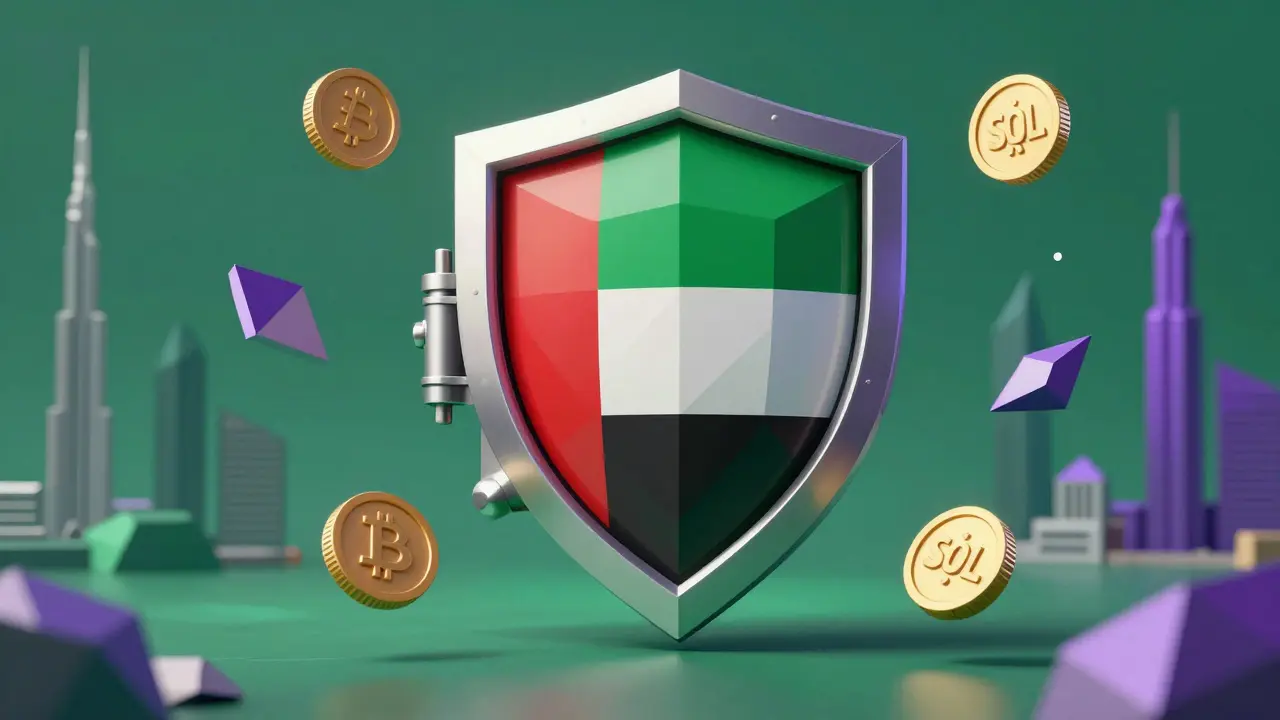
Security and Stability: The Elephant in the Room
When you use a centralized exchange, you are trusting them with your keys. M2 claims their security is "exceptional," but they are surprisingly vague about the technical specifics. We don't see detailed breakdowns of their cold storage protocols or insurance funds. For a platform that targets institutional investors, this lack of transparency is a bit concerning.
More worrying is the operational stability. There have been instances where the official website displayed messages stating the platform was undergoing "scheduled maintenance" for an unspecified duration. While maintenance is normal, frequent or unexpected downtime on a financial platform can be a red flag for risk-averse traders. In a world where we've seen the collapse of giants like FTX, operational reliability is the only thing that builds real trust.
However, M2 does have a strategic advantage: its location. By basing themselves in Abu Dhabi and Dubai, they operate under the umbrella of the Virtual Assets Regulatory Authority (VARA). The UAE has some of the most progressive and clear crypto regulations in the world. Being compliant with VARA gives M2 a level of legitimacy that many offshore exchanges simply don't have.
Is M2 the Right Choice for You?
Deciding whether to use this platform depends entirely on your location and your goals. If you live in the UAE and want a seamless way to move your Dirhams into Bitcoin without jumping through hoops, M2 is a fantastic option. The direct AED pairs are a killer feature that makes the onboarding process much smoother than using a global competitor.
If you are an institutional investor looking for a compliant gateway into the Middle Eastern market, their OTC desk and custody services provide a professional environment that retail-focused apps lack. But if you are a global trader who needs access to 500 different tokens and 24/7 uptime without "scheduled maintenance" interruptions, you might find M2 too restrictive.
The M2 crypto exchange is a promising project that understands its regional strengths. It offers a clean user experience and competitive yields, but it's still in its early stages. As with any CEX, the golden rule applies: don't keep more money on the exchange than you are willing to lose, and consider moving your long-term holdings to a hardware wallet.
Is M2 Crypto Exchange regulated?
M2 is based in the UAE and positions itself as a compliant platform. It operates within the framework of the Virtual Assets Regulatory Authority (VARA) in the UAE, which is one of the most comprehensive regulatory bodies for crypto in the world.
What is the yield on M2 Earn?
The yield varies depending on the specific plan. Some sources report an APR of up to 10%, while others mention up to 12% APY for certain crypto holdings through flexible and fixed plans.
Which cryptocurrencies can I trade on M2?
M2 offers over 30 cryptocurrencies, including major assets such as Bitcoin (BTC), Ethereum (ETH), Solana (SOL), Ripple (XRP), Tether (USDT), and Dogecoin (DOGE).
Can I deposit UAE Dirhams (AED) directly?
Yes, one of M2's primary advantages is its support for direct UAE Dirham (AED) trading pairs, allowing users in the region to buy BTC and ETH without needing third-party payment processors.
What is the MMX token?
MMX is the native token of the M2 platform. While its full utility isn't widely detailed, native tokens on exchanges are typically used for fee reductions, rewards, or platform governance.
Does M2 support institutional investors?
Yes, M2 provides institutional-grade solutions including an OTC (Over-the-Counter) desk for high-volume trades, professional custody services, and dedicated relationship managers.
Robert Mosolygo
April 24, 2026 AT 00:01The lack of transparency regarding cold storage and insurance is a glaring red flag. It is remarkably naive to trust a platform that hides its security protocols while claiming they are exceptional. This exhibits all the hallmarks of a systemic risk, likely designed to obfuscate the true state of their reserves until the inevitable liquidity crisis hits.
Kathleen Bergin
April 24, 2026 AT 20:43Everyone knows that limited asset lists usually mean the exchange is just playing it safe to avoid legal trouble.
Caiaphas Konkol
April 26, 2026 AT 10:03VARA compliance is merely a veneer of legitimacy. In the upper echelons of finance, we understand that regional regulations are often just handshake deals between the elite to ensure their toys don't break. The mere fact that they are targeting 'institutional' clients suggests they are building a playground for the wealthy while retail users provide the exit liquidity.
Sara Ellis
April 27, 2026 AT 19:59money is just a vibe anyway who cares where it sits as long as the app looks cool
Jennifer Taylor
April 28, 2026 AT 00:32The 'scheduled maintenance' is a total cover up. They are probably moving funds around in the dark. I bet they are tied to some secret government project in the Gulf to track every single transaction we make. Don't trust these people with your keys.
Gary Lingrel
April 28, 2026 AT 06:42Imagine thinking 12% APY is a good deal without realizing the moral bankruptcy of these platforms 🙄 they just lure you in with fake numbers while you lose your soul to a screen no one actually cares about the tech anymore
Gloris Young
April 28, 2026 AT 09:39The AED support is actually a huge help for folks in that region. Makes things so much easier!
Jagdish Sutar
April 29, 2026 AT 13:52It is wonderful to see the Middle East becoming such a strong hub for digital assets. This regional focus could really help beginners in the UAE feel more comfortable entering the crypto space with a platform that understands their local needs.
Alex Hunter
May 1, 2026 AT 11:46For anyone starting out, the intuitive app is a great plus. However, remember that the 'free of trade' promotions are usually short-term. It's a good way to test the waters, but always have a long-term plan for your assets beyond just chasing a promo.
jill huyo-a
May 1, 2026 AT 21:43I wonder if the limited asset selection is actually a security feature in disguise, like they're vetting everything way more strictly than the big exchanges do. It would be interesting to see a list of their actual auditing firm if they have one.
Charlie Queen
May 2, 2026 AT 15:00Love seeing more diversity in where these exchanges are coming from! 🌍✨ Keep exploring new options!
Kyle Bush
May 4, 2026 AT 06:45Who cares about some random UAE app when we have the best systems right here!! 🇺🇸 Stick to what works or get wrecked 💥🚀
Mike Krasner
May 4, 2026 AT 22:00institutional grade my foot they just want the big checks so they can buy a yacht in dubai while the retail users get the maintenance page
Ellie Drews
May 5, 2026 AT 18:56Let's all just remember to be patient with new platforms. They're learning as they go, and as long as we follow the golden rule of using hardware wallets, we can all find a tool that works for us without the stress.
Jennifer L
May 6, 2026 AT 23:25Oh my goodness the thoght of losing money to a technical glitch is simply horrifying!! I truly believe that we must be so careful with these new platforms because the risks are just too grat to ignore in this day and age!