

Moving Averages in Crypto Technical Analysis: How Traders Use Them to Spot Trends and Make Decisions
 Mar, 2 2026
When you look at a crypto chart, you don’t see raw price data-you see lines. Those lines? They’re moving averages. And they’re not just fancy decorations. For most crypto traders, whether they’ve been around since Bitcoin’s early days or just started last year, moving averages are the first thing they check before making a trade.
What Moving Averages Actually Do
Moving averages smooth out price noise. Crypto markets swing wildly. Bitcoin can jump 15% in a day, then drop 10% the next. That kind of chaos makes it hard to see the real trend. A moving average takes the average price over a set number of days-say, 50 or 200-and plots it as a line. That line shows you the direction of the trend without all the random spikes. Think of it like driving on a bumpy road. You don’t stare at every pothole. You look at the general path ahead. Moving averages do the same thing for price charts.Simple vs Exponential: The Two Main Types
There are two main types you need to know: Simple Moving Average (SMA) and Exponential Moving Average (EMA).SMA treats every price in the period the same. If you’re using a 50-day SMA, it adds up the closing prices for the last 50 days and divides by 50. It’s easy to understand. That’s why beginners start here. But because it treats old data the same as new, it’s slow to react. If the market turns, the SMA might take days to catch up.
EMA gives more weight to recent prices. The latest closing price matters more than the one from 40 days ago. That makes EMA faster. In crypto, where news can move markets in minutes, that speed matters. A lot of day traders and swing traders use EMA because it picks up shifts earlier.
Here’s the trade-off: EMA gives you earlier signals-but more false ones. SMA is quieter, but you might miss the start of a move. Most traders use both. They look at the 200-day SMA for the big picture and the 20-day EMA for timing entries.
The 50-Day and 200-Day MAs: The Gold Standard
In crypto, two moving averages dominate: the 50-day and the 200-day.The 200-day MA is like a wall. When Bitcoin or Ethereum drops toward it, buyers often step in. When it bounces off, it’s a sign the trend might still be strong. Cointree’s data shows Bitcoin has bounced off its 200-day MA over 70% of the time in the last five years. That’s not luck-it’s market psychology. Thousands of traders watch this level, so it becomes self-fulfilling.
The 50-day MA is the trend’s heartbeat. When price is above the 50-day MA, the short-term trend is up. Below? It’s down. Traders use it to filter trades. If you’re looking to buy, you don’t want to buy when price is below the 50-day. You wait for it to cross back above.
These two together form the Golden Cross and Death Cross. When the 50-day crosses above the 200-day, it’s called a Golden Cross. It’s a strong bullish signal. When it crosses below, it’s a Death Cross-bearish. These aren’t perfect, but they’ve been reliable enough that institutional investors and retail traders alike use them as key decision points.
How Traders Actually Use Them
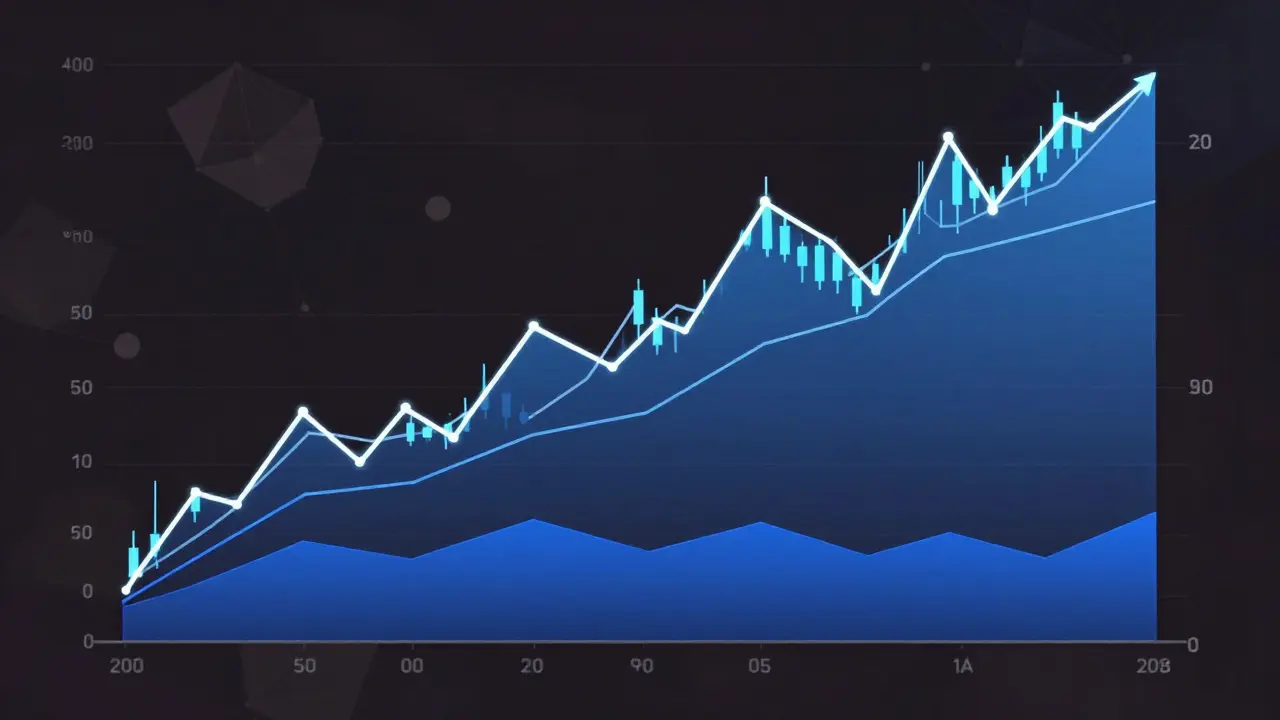
Most traders don’t just look at one moving average. They layer them.One popular setup is the triple moving average: 10-day EMA, 50-day EMA, and 200-day SMA. The 10-day shows momentum, the 50-day shows the trend, and the 200-day shows the long-term structure. When all three are stacked in order-10 on top, then 50, then 200-it’s a strong uptrend. When they’re reversed, it’s a downtrend.
Another common strategy is the crossover signal. You set up two EMAs: a fast one (like 12-day) and a slow one (like 26-day). When the fast crosses above the slow, it’s a buy. When it crosses below, it’s a sell. This is how many crypto trading bots work. They don’t guess-they follow rules based on these crossovers.
On TradingView, you’ll see thousands of charts with these lines. Reddit threads are full of people sharing screenshots of their setups. The 200-day MA is almost always there. Why? Because it works. Not every time. But often enough to be trusted.
Why Moving Averages Still Matter in 2026
You might think with AI, neural networks, and machine learning models now used in trading, old-school indicators like moving averages are outdated. But they’re not.They’re the foundation. Every algorithmic trading system starts with moving averages. Why? Because they’re simple, transparent, and historically reliable. AI doesn’t replace them-it uses them. Many AI models use moving averages as input data to predict future price movements.
Institutional investors rely on them. Hedge funds that manage billions use the 200-day MA as a risk filter. If a coin drops below its 200-day MA, they reduce exposure. If it climbs above, they increase it. That’s not guesswork. That’s strategy.
Even if you’re not a bot or a fund, you’re still trading against people who use these tools. If you ignore them, you’re trading blind.
What Not to Do
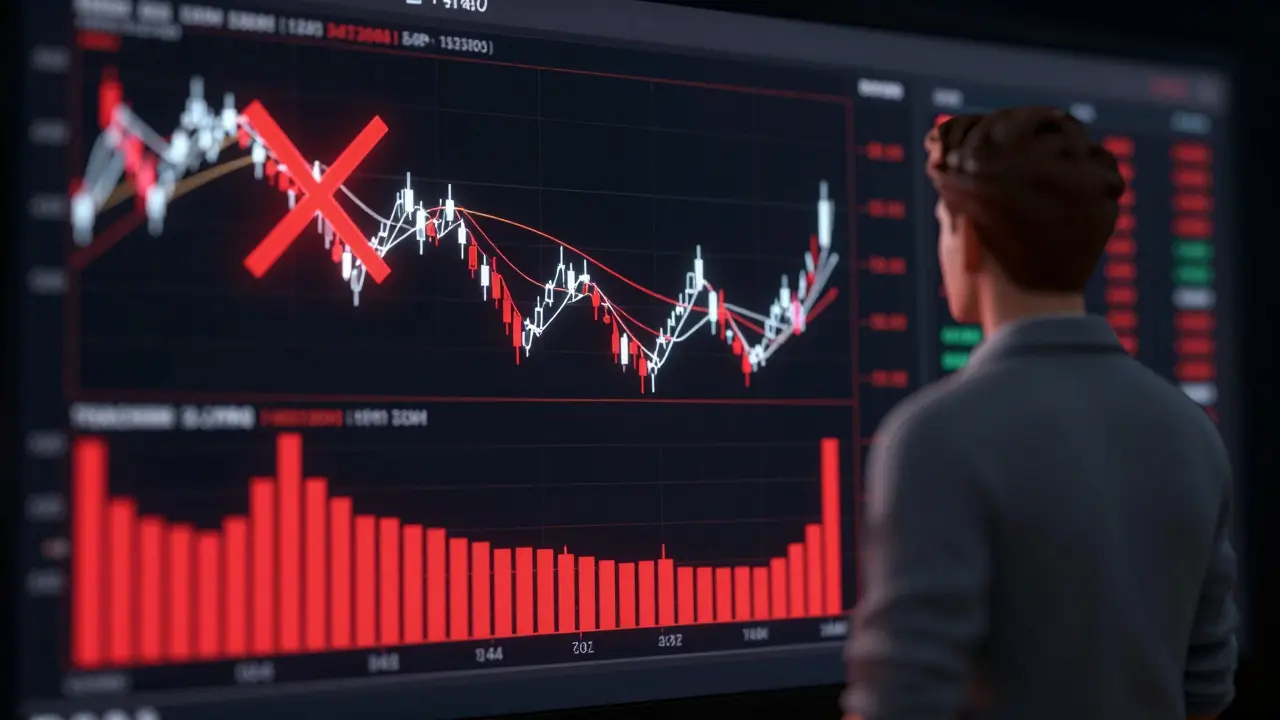
Moving averages are powerful-but they’re not magic.Don’t use them alone. Relying only on MA crossovers is like driving with your eyes closed. You’ll eventually crash. Always combine them with volume, RSI, or support/resistance levels. If the 50-day crosses above the 200-day but volume is falling, that signal is weak.
Don’t use short timeframes on long-term charts. A 5-minute EMA on a daily chart is useless noise. Timeframes must match your strategy. Day traders use 5-minute and 15-minute EMAs. Swing traders use 1-hour and 4-hour. Long-term holders watch daily and weekly.
Don’t chase every crossover. Crypto moves fast. You’ll get signals every few days. Not all are valid. Wait for confirmation. If the price holds above the 50-day MA for three days after a crossover, that’s a stronger signal than the crossover alone.
Where to Start
If you’re new:- Open a free chart on TradingView.
- Add the 50-day SMA and 200-day SMA to Bitcoin or Ethereum.
- Watch how price reacts when it touches those lines.
- Notice when the 50-day crosses the 200-day. Look at what happened after.
- Try adding a 20-day EMA. See how it reacts faster than the SMA.
You don’t need to trade right away. Just observe. Spend a week looking at charts. You’ll start seeing patterns. That’s how real traders build intuition.
Final Thought
Moving averages aren’t the most complex tool in crypto trading. But they’re the most trusted. They’ve survived bull runs, crashes, and waves of new indicators. They work because they’re simple, repeatable, and grounded in real price behavior.Forget the flashy indicators. Master the basics. Learn how the 50-day and 200-day MAs move. Understand why they matter. Then add one more tool-like volume or RSI-and you’ll already be ahead of 80% of traders.
What’s the best moving average for crypto trading?
There’s no single "best" one-it depends on your strategy. For long-term trends, the 200-day SMA is the most reliable. For shorter-term entries, the 20-day or 50-day EMA reacts faster. Most traders combine them: use the 200-day SMA to confirm the trend, and the 50-day EMA to time entries. Beginners should start with the 50-day and 200-day SMA on daily charts.
Do moving averages work in crypto markets?
Yes, but not perfectly. Crypto is more volatile than stocks, so moving averages can lag or give false signals. However, they still hold strong as trend filters. The 200-day MA, in particular, has acted as a support level for Bitcoin and Ethereum over 70% of the time in the last five years. They’re most effective when combined with other indicators like volume or RSI.
Should I use SMA or EMA for crypto?
Use EMA if you’re a day or swing trader-its responsiveness helps catch early moves. Use SMA if you’re a long-term holder or want to filter out noise. Many traders use both: EMA for timing, SMA for trend confirmation. For example, a 20-day EMA for entries and a 200-day SMA for trend direction.
What is a Golden Cross in crypto?
A Golden Cross happens when the 50-day moving average crosses above the 200-day moving average. It’s seen as a strong bullish signal, suggesting the short-term trend is turning positive and may continue upward. Historically, it’s preceded major rallies in Bitcoin and Ethereum. However, it’s not a buy signal on its own-always check volume and price action for confirmation.
Why do moving averages lag?
Moving averages are based on past prices. They calculate an average, so they can’t predict the future. That’s why they lag. A 50-day SMA, for example, includes prices from 50 days ago. When the market suddenly reverses, the line takes time to catch up. That’s why traders use EMA (which weights recent prices more) or combine MAs with other indicators to reduce lag.
Phillip Marson
March 4, 2026 AT 06:40Jessica Carvajal montiel
March 6, 2026 AT 02:10Jeff French
March 7, 2026 AT 16:49Tracy Whetsel
March 8, 2026 AT 07:56Brian Lemke
March 9, 2026 AT 04:47Arya Dev
March 11, 2026 AT 02:02Megan Lavery
March 12, 2026 AT 14:12Mae Young
March 12, 2026 AT 16:17Trenton White
March 14, 2026 AT 02:53Cheryl Fenner Brown
March 15, 2026 AT 11:18Colin Lethem
March 16, 2026 AT 01:25lori sims
March 17, 2026 AT 08:17Reggie Fifty
March 17, 2026 AT 20:43Kristi Emens
March 18, 2026 AT 02:46