

Pax.World (PAXW) NFT Airdrop: What Happened and Why You Should Be Cautious
 May, 20 2026
You see a notification about the Pax.World is a blockchain-based virtual world platform that promised users the ability to own, build, earn, stake, and govern their internet presence through its PAXW token ecosystem (PAXW) NFT airdrop. It sounds like free money or rare digital assets. But before you connect your wallet, you need to know the reality behind this project. The short answer? Pax.World has been inactive for years, and participating in any current "airdrop" linked to it carries significant risk.
The landscape of crypto airdrops is filled with both legitimate opportunities and dangerous traps. Pax.World falls squarely into the latter category as of May 2026. This guide breaks down what actually happened with the PAXW project, why the NFT claims are likely misleading, and how you can protect your digital assets from similar schemes.
The Reality Behind the Pax.World Project
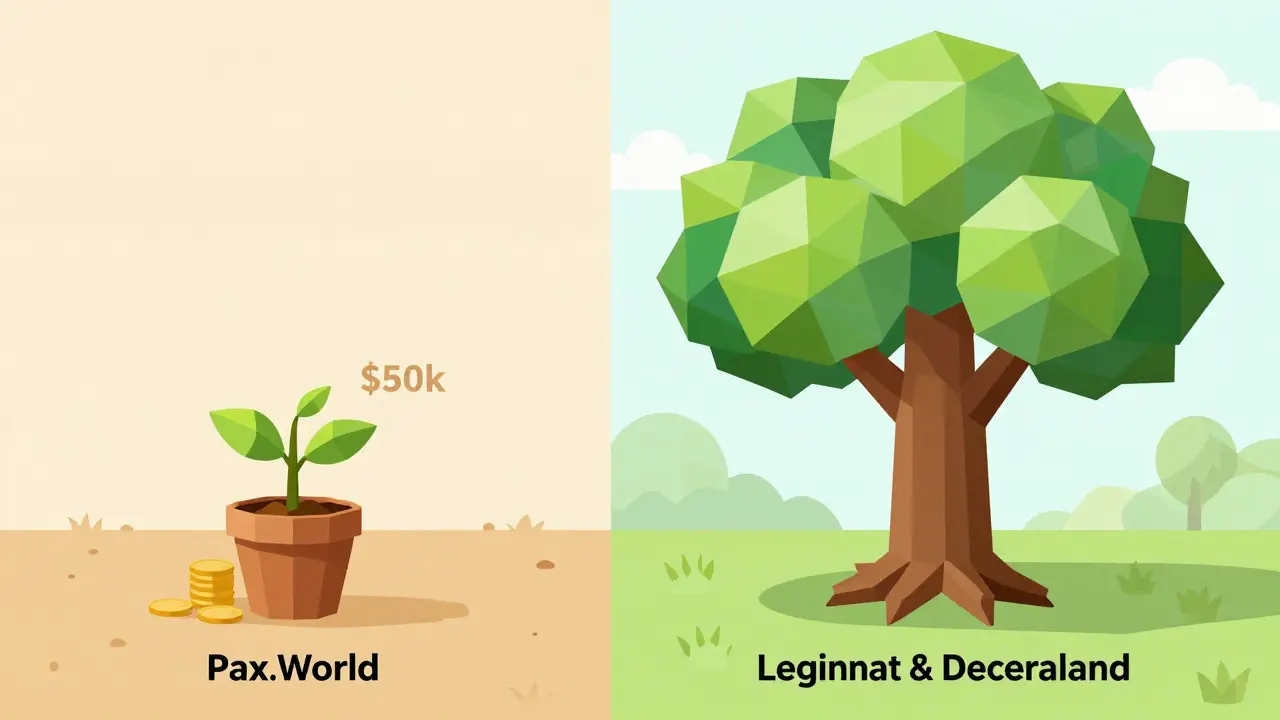
To understand why you should be cautious, we first need to look at the history of PAXW Token was launched during an Initial Coin Offering on April 1, 2022, raising only $50,000 by selling 100 million tokens at $0.049 each, representing just 10% of the total supply with a pre-valuation of $49 million. The project positioned itself as a metaverse platform where users could own virtual land and participate in governance. However, the numbers tell a troubling story.
When Pax.World held its ICO in April 2022, it raised a mere $50,000. Compare this to industry standards: legitimate metaverse projects like The Sandbox raised over $93 million in initial funding rounds and maintains an active development team with thousands of daily users or Decentraland raised approximately $29.6 million and reported 1,500 daily active users in Q2 2024 according to DappRadar metrics raised millions, not tens of thousands. Blockchain security expert Dr. Michael Le from UC Berkeley noted in 2024 that projects with less than $1 million in initial funding rarely deliver functional products, especially in capital-intensive sectors like the metaverse.
- Funding Disparity: Pax.World raised $50,000 vs. The Sandbox's $93 million.
- Team Transparency: Pax.World's team remains anonymous with no verifiable founder information.
- Market Performance: The PAXW token price dropped 98.54% from its ICO price of $0.049 to roughly $0.0007182 by mid-2024.
This lack of resources and transparency meant the project never built the infrastructure needed to support a functional virtual world. Without a working product, the promise of an NFT airdrop becomes hollow.
The Truth About the PAXW NFT Airdrop
You might have seen references to a "CoinMarketCap-exclusive NFT airdrop" of 1,050 NFTs. While this was documented in 2024, there is no evidence that these NFTs were ever distributed or that they hold any value. More concerning is the complete silence from the project team since July 1, 2023.
The original airdrop campaign required users to follow specific steps on platforms like Gleam. Participants had to follow @PAXworldteam on Twitter, join Discord and Telegram channels, and submit their Polygon Wallet is a cryptocurrency wallet compatible with the Polygon blockchain network, required for receiving PAXW tokens and interacting with related smart contracts addresses. The promise was $8 worth of PAXW for 1,000 random participants and $20 for the top 100 referrers. However, user reports from Reddit and Trustpilot indicate that most participants never received anything.
| Feature | Pax.World (PAXW) | Legitimate Projects (e.g., Decentraland) |
|---|---|---|
| Social Media Activity | Inactive since July 2023 | Daily updates and community engagement |
| Development Updates | None since 2023 | Regular roadmap releases and GitHub commits |
| User Base | No verifiable active users | Thousands of daily active users |
| Token Liquidity | Negligible trading volume | Listed on major exchanges with high liquidity |
The CoinMarketCap Academy listing appears to be either outdated information or a separate promotional campaign unrelated to the original project's functionality. There is no working platform to redeem these NFTs, and no marketplace supports them. Engaging with such offers often leads to wasted time or worse-security risks.
Security Risks and Red Flags
If you encounter a new link claiming to offer a Pax.World airdrop in 2026, treat it as a potential phishing attempt. The original project's disappearance created a vacuum that scammers often fill. Here’s how to spot the danger signs:
- Anonymous Teams: Legitimate projects disclose their founders and developers. Pax.World has no verifiable team members.
- Dead Social Channels: Check the official Twitter and Discord. If the last post is from 2023, the project is dead.
- Unverified Links: Never click links from unofficial sources. Scammers create fake landing pages that mimic legitimate airdrop sites to steal your private keys.
- Wallet Permissions: If a site asks for more permissions than necessary (like spending all your tokens), revoke access immediately using tools like Revoke.cash.
CoinSwitch’s safety checklist explicitly advises verifying information only via official channels like paxinet.io. However, even these channels have been dormant. The primary risk isn’t just losing money-it’s compromising your entire crypto portfolio through malicious smart contracts disguised as airdrop claim pages.
Why These Projects Fail
Pax.World is part of a larger trend of "zombie protocols"-projects that launch with hype but fail to deliver. Messari’s Ryan Selkis categorized such projects in his 2024 State of Crypto report, noting that projects with no development activity for 18+ months have a 99.7% failure rate for revival.
The metaverse sector saw a massive boom in 2021-2022, fueled by speculation rather than utility. When the market cooled in 2022, many poorly funded projects collapsed. Pax.World lacked the capital to hire developers, build servers, or create content. Without these fundamentals, the promise of an NFT airdrop was just marketing fluff designed to attract early attention.
Regulatory scrutiny also plays a role. Projects promising returns through token sales without registering securities often face legal challenges. Pax.World’s structure likely qualified as an unregistered security offering under the Howey Test criteria, adding another layer of risk for participants.
How to Protect Yourself
Don’t let FOMO drive your decisions. Before engaging with any airdrop, ask yourself these questions:
- Is the project actively developing? Check GitHub repositories for recent code commits.
- Is the team public and accountable? Look for LinkedIn profiles and verified social media accounts.
- Is there a working product? Can you use the platform today?
- What is the token’s market cap and liquidity? Low liquidity means you can’t sell even if you receive tokens.
For Pax.World specifically, the answer to all these questions is no. The project has been inactive for over two years. Any current mentions of airdrops are likely scams trying to exploit the remaining brand recognition.
Use hardware wallets like Ledger or Trezor for storing valuable assets. Never connect your main wallet to unknown dApps. Use a burner wallet for testing new projects, keeping your funds separate from risky interactions.
Is the Pax.World (PAXW) NFT airdrop still active in 2026?
No. The Pax.World project has been inactive since July 2023. There are no official announcements, development updates, or functional platforms supporting any current airdrop claims. Any website offering PAXW NFTs now is likely a scam.
Did people actually receive the PAXW airdrop tokens?
Most participants did not. User reports on Reddit and Trustpilot indicate widespread non-delivery of promised tokens despite completing all required tasks. The project failed to distribute rewards after going silent in 2023.
What is the current value of the PAXW token?
The PAXW token has negligible value, trading around $0.0007182 as of mid-2024 with minimal liquidity. It has lost over 98% of its initial ICO price and is not listed on major exchanges.
Is it safe to connect my wallet to Pax.World websites?
It is not recommended. With the project abandoned, unofficial sites may host malicious smart contracts designed to steal your assets. Always verify URLs and use a burner wallet for any interaction with unknown dApps.
Why did Pax.World fail?
Pax.World failed due to insufficient funding ($50,000 raise), an anonymous team, and lack of technical documentation. Without resources to build a functional metaverse platform, the project became inactive within a year of its launch.
Tobias Gjerlufsen
May 22, 2026 AT 08:32you people are literally sleepwalking into a wallet drainer. the math is elementary school level arithmetic if you actually cared about reading whitepapers instead of chasing freebies. $50k raise for a metaverse? that’s not even enough to pay a junior dev for a month in sf let alone build a blockchain infrastructure. it’s insulting to your intelligence to think this project survived past 2023 without a working product
Ruben Michel
May 24, 2026 AT 04:44One must consider the broader implications of such financial negligence within the digital asset space. The disparity between Pax.World's funding and legitimate entities like Decentraland is not merely a statistic but a glaring indicator of systemic failure in due diligence protocols. To engage with such dormant projects is to invite chaos into one's portfolio.
Gavin Wonnacott
May 25, 2026 AT 14:06I don't care what you think you know about crypto, but I've been tracking these zombie chains since 2021 and I can tell you with absolute certainty that anyone claiming PAXW has value is either lying or stupid. You think you're smart connecting your main wallet to some random dapp just because a tweet said so? pathetic. check the github commits yourself before you come here crying about lost funds
H F
May 26, 2026 AT 10:52Wow, this is actually really helpful! I was getting super confused by all the noise on Twitter about this airdrop. It’s great to see someone break down the actual numbers because honestly, the hype machine is exhausting. Thanks for keeping it real!
Michael Berggren
May 26, 2026 AT 18:21This is a crucial reminder for everyone in the space 🛑📉 Always verify the source! The fact that they raised only $50k is a massive red flag that many overlook in their excitement. Stay safe out there friends 💪✨
Kiran CS
May 28, 2026 AT 13:49Oh, how delightful. Another article explaining why 'free money' doesn't exist in the wild west of cryptocurrency. One might almost expect investors to possess a modicum of skepticism, but alas, we are constantly disappointed by the sheer gullibility of the masses. Do try to educate yourselves before engaging with such dubious ventures.
Bijan Das
May 30, 2026 AT 00:51yeah another dead project. boring. i bet nobody even remembers what pax.world was supposed to do anyway. just another rug pull waiting to happen. whatever.
beti macedo
May 30, 2026 AT 08:22i read this post and it seems very important to be careful. the team is anonymous which is bad sign. i hope everyone stays safe and does not lose their tokens. good info thank you for sharing this warning with us all
Michelle Bonahoom
May 30, 2026 AT 11:02typical foreign scam trying to steal our american money. these overseas devs always promise the moon and deliver nothing. stay away from anything that isn't backed by solid us institutions. dont be a fool
Matt Davis
June 1, 2026 AT 10:28You claim this is obvious, yet here we are discussing it. The notion that a $50,000 raise is insufficient for a metaverse platform is a gross oversimplification of bootstrap culture. Many successful projects started with pennies. Your elitist disdain for small-cap ventures is precisely why innovation stagnates in this industry.
Albert Lee
June 3, 2026 AT 02:12I completely understand the frustration here. It feels like every time you look for an opportunity, there's a trap waiting. But remember, protecting your assets is the first step to long-term success in crypto. You've got this! Let's keep each other safe and informed.
Jesse Alston
June 4, 2026 AT 04:59Great breakdown! 🔍 Here’s a pro tip: always use Revoke.cash to check your connected wallets after interacting with any new dApp. It’s a lifesaver! 🛡️💻
Jerry CUNNINGHAM SR
June 5, 2026 AT 06:03It is imperative that we approach these situations with a degree of caution and respect for the risks involved. The data presented here clearly indicates a lack of development activity, which is a significant concern for any potential investor. Let us prioritize safety over speculation.
Samara McCallum
June 5, 2026 AT 08:06is it really a scam if no one claims the prize? maybe the silence is strategic. perhaps they are building something big in secret. who are we to judge the timeline of a visionary project? let them cook.
Sheldon Friesen
June 6, 2026 AT 23:47Look, I get the skepticism; it’s healthy, really. But let’s not throw the baby out with the bathwater just because a project missed its deadlines. Innovation is messy, folks! However, I will concede that a two-year radio silence is indeed... concerning. Use a burner wallet, please.
Tricia Alach
June 7, 2026 AT 01:22i think its sad that people get so mad about lost money. maybe they should have read more carefully. but hey life goes on right? lets hope for better projects next time. typos happen to the best of us too lol
Jan Gilmore
June 8, 2026 AT 10:31Everyone knows how this works. ICOs in 2022 were a gold rush for scammers. If you didn't realize that a $50k raise couldn't build a metaverse, you're not paying attention. The market corrects itself, usually by wiping out the naive. Learn from history.
Caique Muniz
June 9, 2026 AT 01:46lol another article telling me what i already knew. these writers need jobs. paxworld is dead skelton. stop posting about it. yall are annoying with all the warnings. i know its a scam duh
Bradley Geldenhuys
June 9, 2026 AT 12:44look man, i get it, you want free stuff. but the universe doesnt work that way. energy in equals energy out. if you put zero effort into due diligence, you get zero results. wake up and smell the coffee. dont let greed blind you to the obvious truth here
robert Whitehead
June 9, 2026 AT 18:53The moral decay of this community is evident in the willingness to chase phantom gains. You are complicit in your own deception if you ignore the red flags. I have analyzed the transaction histories and the code repositories; there is nothing there but dust. Stop pretending otherwise.
Mike S
June 10, 2026 AT 09:33Oh, wow. A comprehensive guide on how not to get robbed. Groundbreaking stuff. I’m sure the millions of people who fell for similar schemes in 2021 are thrilled to read this now. Typical hindsight bias at its finest. Keep dreaming, sheeple.
Ashley Rodriguez
June 10, 2026 AT 09:33i mean when you think about it the whole idea of a virtual world owned by a token that costs less than a penny is kind of funny but also really sad because people are losing real money over it and it makes me feel like we are going backwards in terms of security awareness online
Shelby Cantu
June 10, 2026 AT 18:08Stay strong! Knowledge is power.