

Privacy Coins vs Bitcoin: Why True Anonymity Isn't on the Blockchain
 May, 21 2026
Imagine handing a cashier a $20 bill. They take it, give you change, and walk away. No one records who gave the money, who received it, or even how much was exchanged. Now imagine doing that same transaction with Bitcoin, which is the world's first decentralized cryptocurrency operating on a transparent public ledger. Every cent moves across a permanent, public record. Anyone can look up your wallet address and see exactly where every satoshi has gone since day one.
This difference isn't just technical-it’s philosophical. For years, people assumed all cryptocurrencies were anonymous. They aren’t. In fact, most are pseudonymous at best. If you’re trying to decide whether to use a privacy-focused coin like Monero or stick with Bitcoin for its liquidity and stability, you need to understand what “private” actually means in the crypto world. The gap between perception and reality here is wide-and it matters more than ever as regulators tighten their grip on digital assets.
The Myth of Bitcoin Anonymity
Let’s clear this up right away: Bitcoin is not anonymous. It’s pseudonymous. That means your identity isn’t directly attached to your transactions-but your behavior is. Every time you send or receive Bitcoin, that movement gets recorded on the blockchain forever. You might think using a new wallet each time solves the problem, but sophisticated analysis tools can link multiple addresses back to a single user through timing patterns, IP logs, or exchange KYC data.
In 2019, Chainalysis reported that over 80% of Bitcoin users could be identified through open-source intelligence and blockchain analytics. Even if you never share your name, your spending habits, location history, and social connections become visible metadata. This transparency benefits network security-yes-but it also makes Bitcoin terrible for anyone seeking genuine financial privacy.
Some users try to improve their privacy by mixing coins via tumblers or routing payments through Tor networks. These methods help slightly, but they add friction, cost, and complexity. Plus, many exchanges now flag mixed coins as suspicious, limiting your ability to cash out cleanly. So while Bitcoin offers some level of obfuscation, it doesn’t offer real anonymity.
How Privacy Coins Actually Work
If Bitcoin leaves footprints everywhere, then privacy coins erase them entirely-or at least make them nearly impossible to follow. These digital currencies were built from scratch with one goal: protect user identity and transaction details without compromising decentralization or trustlessness.
Take Monero, a leading privacy coin utilizing ring signatures, stealth addresses, and RingCT to ensure complete default anonymity. When you send XMR (Monero), three things happen simultaneously:
- Stealth Addresses: Each transaction generates a unique destination address linked only to the recipient’s private key. No one else knows which output belongs to whom.
- Ring Signatures: Your signature blends into a group (“ring”) of other signers, making it computationally infeasible to determine who actually authorized the payment.
- Ring Confidential Transactions (RingCT): Hides the amount being transferred so observers can’t tell if you sent $10 or $10,000.
Together, these features create what cryptographers call an “anonymity set”-a pool of indistinguishable participants. The larger the set, the harder it becomes to isolate any individual actor. Monero enforces all of this by default. There’s no opt-in toggle; privacy is baked into every transaction.
Zcash takes a different approach using zero-knowledge proofs called zk-SNARKs. With ZEC, you choose whether to transact transparently (like Bitcoin) or shielded (fully encrypted). Shielded transactions prove validity without revealing sender, receiver, or amount-all thanks to cryptographic math rather than pooling techniques.
Dash uses PrivateSend, a simpler form of coin joining that pools inputs before distribution. While less robust than Monero’s system, it still provides meaningful obscurity compared to standard UTXO models.
| Cryptocurrency | Default Privacy | Core Technology | Anonymity Level | Liquidity Rank* |
|---|---|---|---|---|
| Bitcoin | No | Transparent Ledger | Pseudonymous | #1 |
| Ethereum | No | Smart Contracts + Public State | Pseudonymous | #2 |
| Monero | Yes | Ring Signatures + Stealth Addresses + RingCT | High | #15 |
| Zcash | Optional | zk-SNARKs | Medium-High (when shielded) | #30 |
| Dash | Optional | PrivateSend (Coin Joining) | Low-Medium | #45 |
*Based on CoinGecko market cap rankings as of Q2 2026.*

Why Fungibility Matters More Than You Think
Fungibility sounds abstract until you realize it affects how easily you can spend your money. A dollar bill is fungible because another identical dollar bill holds equal value regardless of origin. But in Bitcoin? Not so much.
Because every BTC has a traceable history, merchants and exchanges often avoid accepting coins previously associated with darknet markets, ransomware payouts, or sanctioned entities. This creates “tainted” bitcoins-coins that lose purchasing power due to stigma alone. Some platforms even implement blacklist filters based on heuristic scoring algorithms developed by firms like Elliptic and CipherTrace.
Privacy coins solve this by ensuring all units are interchangeable. Whether your XMR came from mining rewards, salary payments, or gambling winnings, there’s no way to distinguish one unit from another. That uniformity preserves economic fairness and prevents discrimination against certain funds simply because of past associations.
This concept ties directly into broader debates about monetary sovereignty. Should governments have visibility into personal finances? Do citizens owe full disclosure of lawful earnings? Privacy advocates argue yes-they believe financial confidentiality is a fundamental human right, akin to freedom of speech or assembly.
Regulatory Pressure & Real-World Adoption
Here’s where theory meets reality. Despite offering superior privacy, privacy coins face mounting regulatory headwinds. Since early 2023, major centralized exchanges including Binance, Coinbase, Kraken, and Bitfinex have delisted several privacy tokens citing compliance risks under FATF Travel Rule guidelines.
The Financial Action Task Force (FATF) requires virtual asset service providers (VASPs) to collect and transmit customer information during cross-border transfers. Because privacy coins obscure origins and destinations, VASPs struggle to meet these obligations-leading many to drop support altogether.
As of mid-2026, fewer than 20 top-tier exchanges list Monero regularly. Most remaining listings require enhanced due diligence procedures, higher fees, or geographic restrictions. Meanwhile, Bitcoin continues gaining institutional adoption thanks to ETF approvals, corporate treasury allocations, and legal clarity in jurisdictions like Switzerland, Singapore, and El Salvador.
Yet demand persists. According to WalletMarket reports, Monero’s daily active addresses grew 47% year-over-year despite reduced accessibility. Users willing to trade convenience for control keep finding ways to acquire and utilize private assets-even if it means relying on peer-to-peer trading platforms or non-custodial wallets.
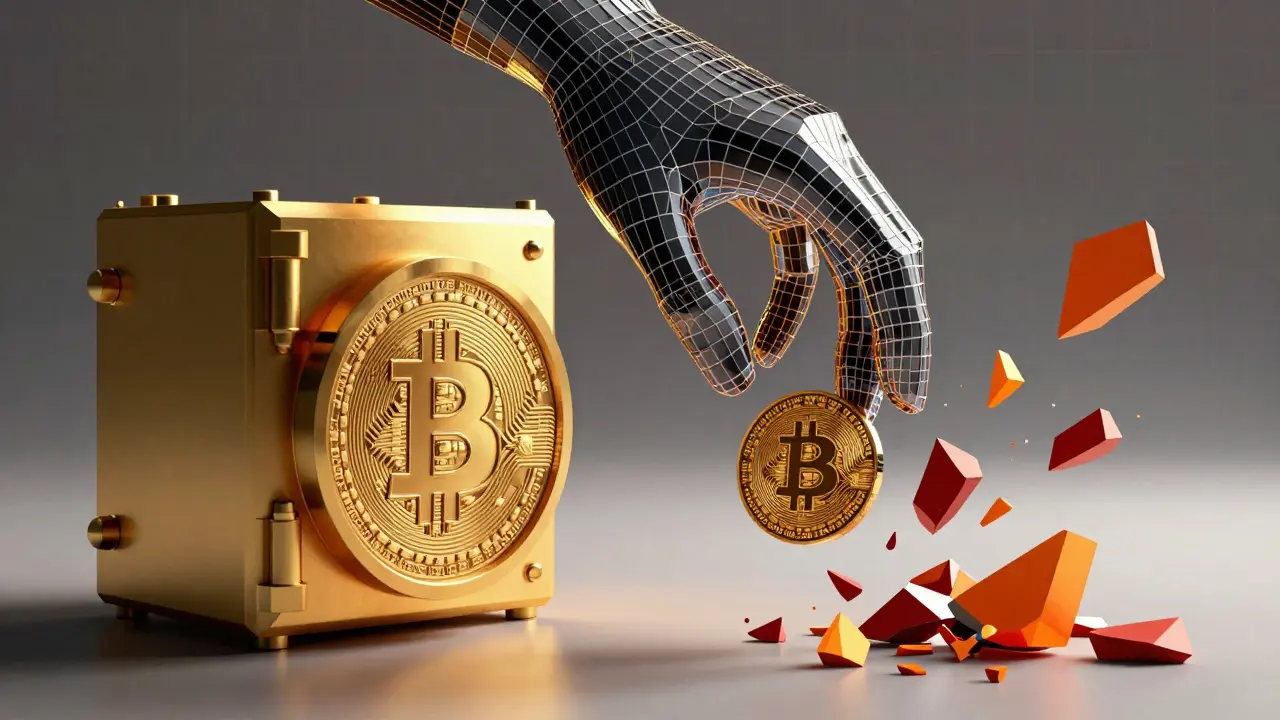
Practical Considerations: Which One Fits Your Needs?
Choosing between Bitcoin and privacy coins depends heavily on your priorities. Let’s break down common scenarios:
- You want maximum liquidity and ease of use. → Stick with Bitcoin. Its dominance ensures instant conversion to fiat anywhere globally. Wallet apps abound, hardware solutions mature, and customer support exists virtually everywhere.
- You prioritize untraceable transactions above all else. → Go with Monero. Default privacy eliminates guesswork. No need to learn advanced tactics or risk exposure through misconfigured settings.
- You occasionally need privacy but mostly prefer openness. → Try Zcash. Toggle between transparent and shielded modes depending on context. Useful for hybrid workflows involving both regulated and informal economies.
- You operate within strict compliance frameworks. → Avoid privacy coins entirely. Regulators view them skeptically, and holding such assets may trigger audits, freezes, or penalties depending on jurisdiction.
Also consider operational overhead. Setting up secure storage for Monero involves downloading specialized software, verifying daemon sync status, managing view keys carefully, and avoiding known bad actors online. Bitcoin wallets, by contrast, integrate seamlessly with mainstream ecosystems-from Lightning Network nodes to DeFi protocols.
Don’t forget gas costs either. Sending small amounts of Bitcoin via SegWit or Taproot remains cheap (~$0.50 avg.). Monero blocks adjust dynamically, keeping fees stable around $0.10-$0.30 per tx. Zcash sits somewhere in between, though shielded transactions consume more computational resources.
Future Outlook: Will Privacy Survive?
Technological progress favors neither side exclusively. On one hand, Bitcoin developers explore enhancements like Payjoin (P2SH-P2PKH outputs combined post-signature) and confidential contracts leveraging Bulletproofs+ to enhance partial privacy without breaking auditability.
On the other hand, privacy coin teams refine existing tech. Monero recently upgraded its bulletproof implementation to reduce proof sizes by 30%, improving scalability. Zcash researchers test novel zk-STARK variants resistant to quantum decryption threats. Dash explores federated sidechains enabling faster mixing cycles.
Meanwhile, surveillance capabilities grow stronger too. AI-driven clustering engines now analyze millions of transactions daily, identifying behavioral fingerprints across disparate chains. Governments collaborate internationally to share threat intel and harmonize enforcement standards.
So will privacy survive? Probably-not perfectly, but sufficiently. Just as encryption survived decades of state pressure, so too will cryptographic privacy mechanisms evolve alongside countermeasures. The balance shifts constantly, yet core principles endure: individuals deserve discretion over their own affairs.
Is Bitcoin truly anonymous?
No. Bitcoin is pseudonymous, meaning transactions aren't tied directly to identities but remain fully visible on a public ledger. Advanced analytics can often de-anonymize users by linking addresses to real-world behaviors.
Which privacy coin offers the strongest protection?
Monero currently leads in default privacy strength thanks to mandatory ring signatures, stealth addresses, and RingCT. Unlike optional systems, Monero applies these protections automatically to every transaction.
Can I convert Bitcoin to Monero safely?
Yes, but cautiously. Use reputable atomic swap services or decentralized exchanges. Avoid intermediaries requiring KYC unless necessary. Always verify contract addresses independently to prevent phishing attacks.
Are privacy coins illegal?
Not inherently. Owning or transferring privacy coins isn't prohibited in most countries. However, facilitating illicit activity using them violates anti-money laundering laws. Enforcement varies significantly by region.
Will future regulations ban privacy coins completely?
Unlikely globally. While some nations restrict exchange listings, outright bans face constitutional challenges regarding free association and property rights. Expect continued tension between oversight demands and technological resilience.
Tobias Gjerlufsen
May 21, 2026 AT 22:47you people really think a database entry is private lol. bitcoin is just a public ledger with extra steps. the whole point of crypto was decentralization not surveillance capitalism on steroids. monero exists because you guys are too stupid to realize that transparency is a feature for banks not for users. stop pretending your wallet address is a secret when every exchange knows who you are.
Bijan Das
May 22, 2026 AT 05:44oh wow another article explaining basic cryptography. thanks for the info dump genius. i bet you spent hours writing this instead of actually using any of these coins. typical tech bro nonsense.
Ashley Rodriguez
May 22, 2026 AT 15:19i totally agree with the part about how hard it is to use monero sometimes but like honestly if you want privacy you have to put in the work right? i mean its not like its impossible or anything just takes a bit more time to set up the wallet and make sure you dont leak your ip address which is pretty important i guess and also the fees are low so that is nice too
Bridget Coogle
May 24, 2026 AT 02:40its good to see people talking about this openly. privacy is a human right after all.
Ellie Riddell
May 24, 2026 AT 18:34sarcastically speaking i love how everyone acts surprised that bitcoin is transparent. its called a blockchain for a reason. blocks chain together. obviously visible. maybe read the whitepaper next time?
Destiny Kilby
May 26, 2026 AT 11:00the distinction between pseudonymous and anonymous is crucial here. many users fail to understand that their transaction history can be linked to their identity through simple metadata analysis. this is not a conspiracy theory but a mathematical reality of the current system architecture.
Jerry CUNNINGHAM SR
May 28, 2026 AT 10:53it is fascinating to observe the shift in regulatory attitudes towards privacy preserving technologies. while some argue for complete transparency others maintain that financial privacy is essential for a free society. both perspectives have merit depending on one's philosophical stance regarding individual rights versus collective security measures.
Shelby Cantu
May 28, 2026 AT 13:04just stick to btc if you want easy money. xmr is for criminals anyway.
Ruben Michel
May 29, 2026 AT 09:39one must appreciate the elegance of zero knowledge proofs in zcash however. it represents a significant leap forward in cryptographic verification methods allowing for validation without disclosure of underlying data points which is precisely what modern financial systems lack.
Gavin Wonnacott
May 30, 2026 AT 00:47why do you care about privacy? you have nothing to hide. probably doing something illegal. report yourself to the authorities immediately. stop enabling criminal behavior with these privacy coins. we need total transparency to keep society safe from scum like you.
Samara McCallum
May 31, 2026 AT 01:31but wait... what if privacy isn't about hiding crimes but about protecting yourself from corporate espionage? just a thought. no need to get defensive now. i'm just saying. maybe the real criminals are the ones selling your data.
Sheldon Friesen
June 1, 2026 AT 13:34exactly! and let me tell you, the learning curve for monero is steep but rewarding!! you have to verify everything!! check the daemon!! sync properly!! it's not for the faint of heart!! but once you get it, you feel invincible!!
Tricia Alach
June 2, 2026 AT 20:32i think its really interesting how the tech evolves. its kinda cool that they made bulletproofs smaller. makes txs faster. i wish i understood the math better but its nice to know my money is safer even if i cant explain why.
Caique Muniz
June 3, 2026 AT 02:47boring article. everyone already knows btc is public. why write 2000 words about it? waste of time. go mine some shitcoins instead.
Bradley Geldenhuys
June 4, 2026 AT 12:15look man i get the hype around monero but lets be real here. the liquidity is trash compared to btc. you try buying a house with xmr. good luck finding a seller who accepts it. btc might be transparent but at least you can spend it anywhere. thats the trade off u gotta make.
robert Whitehead
June 5, 2026 AT 21:06the moral decay of society is evident in the demand for untraceable transactions. people should be proud of their lawful earnings. hiding assets suggests guilt. we need to shame these users into compliance. freedom is not an excuse for evading oversight.
Mike S
June 5, 2026 AT 23:33another day another privacy coin shill. you guys are delusional. regulators will crush you all. mark my words. soon you wont even be able to buy xmr without filling out a form in triplicate. enjoy your brief moment of glory before the hammer drops.
H F
June 7, 2026 AT 08:23brilliant breakdown! i never realized how much metadata was leaking from my btc transactions. time to switch to shielded zec addresses. thanks for opening my eyes!
Michael Berggren
June 9, 2026 AT 05:56this is such an important topic! 🙌 privacy matters. we need to protect our digital footprint. kudos to the author for explaining ring signatures clearly. lets keep educating ourselves! 💪🔒
Kiran CS
June 9, 2026 AT 06:12how quaint. americans worrying about privacy while ignoring the fact that their government owns them anyway. truly pathetic. perhaps focus on building actual infrastructure instead of playing with digital toys.
Zara Zaman
June 9, 2026 AT 13:57privacy coins are a threat to national security. we must ban them. anyone using them is likely a terrorist or drug dealer. support law enforcement by reporting suspicious activity. do not enable criminality.
Larry Port
June 11, 2026 AT 03:11i wonder if atomic swaps will become more common. it seems like a logical step for converting btc to xmr without trusting a third party exchange. would love to see more user friendly interfaces for this process though.