

Tapbit Crypto Exchange Review: Fees, Security, and Real Risks in 2026
 Mar, 14 2026
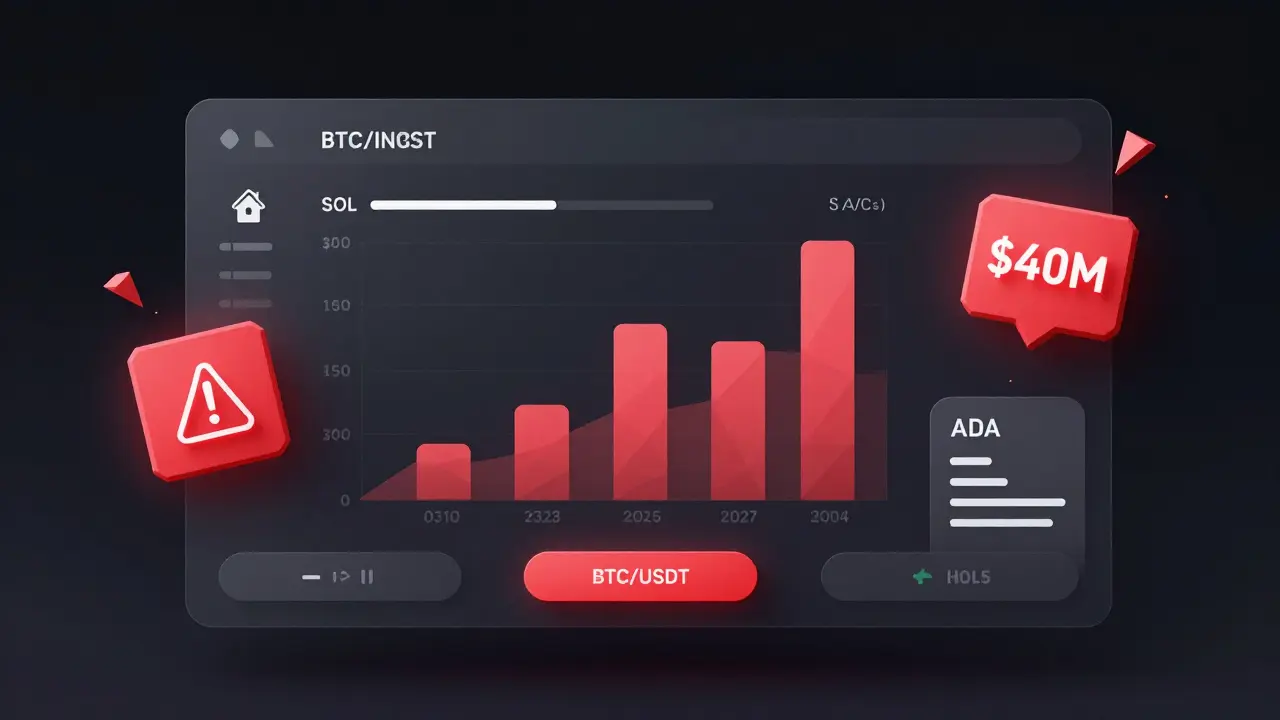
When you're looking for a crypto exchange that lists hundreds of coins and promises low fees, Tapbit sounds tempting. It claims to support over 700 cryptocurrencies, offers up to 150× leverage, and even has a $40 million insurance fund. But here’s the truth: Tapbit isn’t another Binance or Kraken. It’s a high-risk platform hiding behind flashy numbers and a familiar interface. If you’re thinking of depositing money here, you need to know what’s real - and what’s just noise.
What Tapbit Actually Offers
Tapbit positions itself as a one-stop shop for traders. You can do spot trading, futures, copy trading, and even earn interest through its Tapbit Earn feature. The platform supports 190+ countries, though it blocks users from China, Cuba, Hong Kong, and Japan. That’s not unusual - many exchanges restrict certain regions due to legal gray areas.
Its trading pairs? Around 500 live markets, mostly centered on BTC/USDT and ETH/USDT. These two pairs make up over 60% of total volume. If you’re trading anything else - say, SOL, ADA, or a new memecoin - you’re likely dealing with thin order books. That means slippage. A $500 buy order might fill at 5% worse than the price you saw. For serious traders, that’s a dealbreaker.
Tapbit’s interface looks like Binance’s. Same layout. Same buttons. Even the charting tools feel familiar. But dig deeper, and things fall apart. Open interest widgets - critical for futures traders - are missing. Some controls don’t work. It’s not a full clone; it’s a cut-down version designed to look legit without delivering the same depth.
Fees: Too Good to Be True?
Tapbit advertises low fees: 0.01% for makers, 0.06% for takers on futures. Spot trading is a flat 0.1%. That’s competitive. But here’s the catch: no tiered fee structure. On Binance or Bybit, the more you trade, the lower your fees. Tapbit doesn’t care if you’re a whale or a newbie - everyone pays the same. That’s unusual for a platform claiming high volume. It suggests they don’t rely on heavy traders for revenue, which raises questions about where their income really comes from.
Deposit and withdrawal? Crypto transfers are free. Credit/debit card deposits have fees - usually around 3-5%. Withdrawals take 10-30 minutes on average. No surprises there. But if you’re moving large sums, the lack of phone support becomes a problem. What if your withdrawal gets stuck? You’re stuck emailing support.
Security: Claims vs. Reality
Tapbit says it uses cold storage, 2FA, and encryption. All standard stuff. Every exchange claims this. What’s missing? Independent audits. No public proof that their cold wallets are actually secure. No third-party reports on fund safety. Just words.
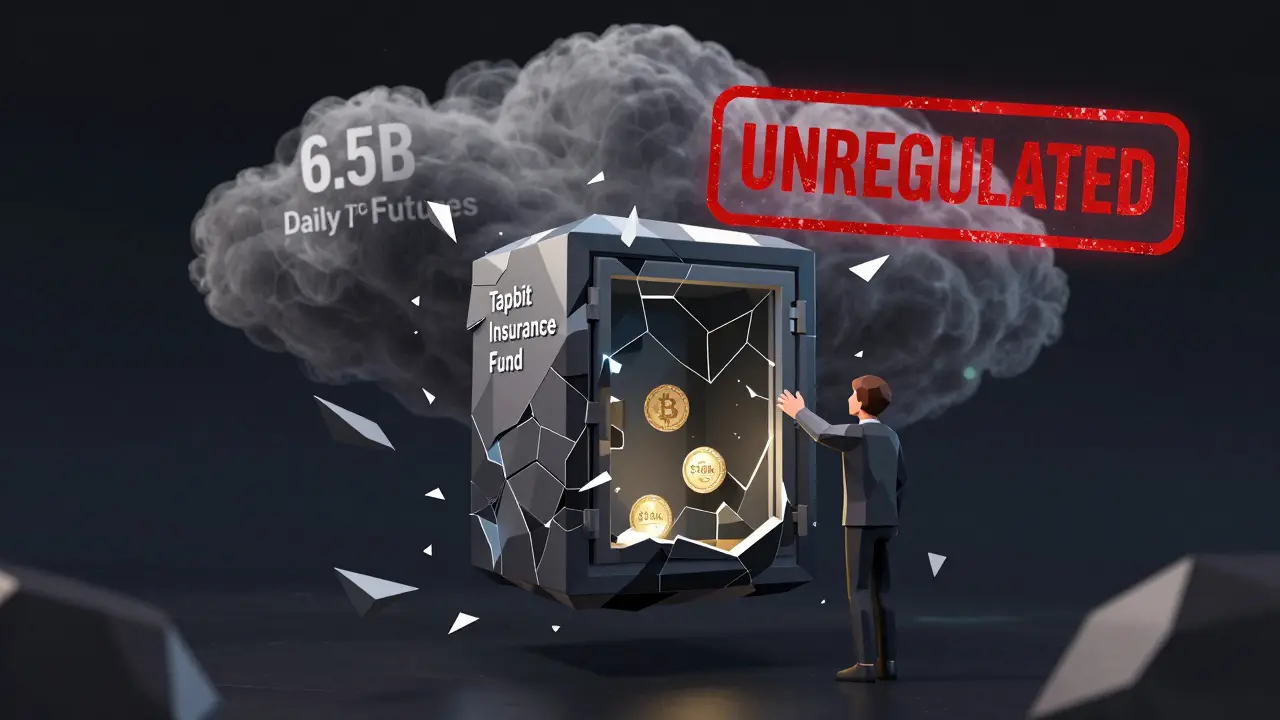
The $40 million insurance fund? Sounds reassuring. But no one has verified it. There’s no public ledger. No proof of reserves. Not even a link to a blockchain address. Compare that to Binance’s SFP fund - which is transparent, on-chain, and regularly updated. Tapbit’s insurance is a marketing line, not a guarantee.
Even worse: DeFiLlama shows Tapbit’s Bitcoin and Ethereum reserves at just $60,000 and $184,000 respectively. That’s less than $250,000 total. For an exchange claiming $6.5 billion in daily BTC futures volume? That’s impossible. If 1% of users tried to withdraw at once, Tapbit couldn’t cover it. This isn’t a liquidity issue - it’s a solvency red flag.
Regulation: The Biggest Risk
Tapbit is not regulated by any major authority - no SEC, no FCA, no ASIC. Not even a license application in progress. That’s huge. In Australia, where I’m based, unregulated exchanges are considered high-risk. If Tapbit shuts down tomorrow, you have zero legal recourse. No government agency will step in. No compensation fund. Just silence.
Forex.WikiBit gave Tapbit a 4/10 on trustworthiness - the lowest score among all categories. That’s not a fluke. It’s based on years of monitoring. No regulatory oversight. No transparency. No accountability. That’s not a trading platform - it’s a gamble.
Copy Trading and Earn: The Sugar Coating
Tapbit’s copy trading feature lets you follow top traders. Sounds smart. But who are these traders? Are they real? Or are they bots created to lure new users? There’s no way to verify their track record. Some have 100 trades in 3 days. That’s not skill - that’s luck or manipulation.
Tapbit Earn offers interest on crypto holdings. Rates look good: 5-10% APY on stablecoins. But again - where’s the money coming from? If Tapbit is using your funds to back leveraged trades with 150× margin, you’re not earning interest. You’re lending money to a casino.
And here’s the kicker: staking options are limited. You can’t stake Solana, Cardano, or Polkadot. Only a handful of coins. That’s not because they don’t support it - it’s because they don’t want to tie up capital. They’d rather use your coins for risky derivatives trading.

Who Should Use Tapbit?
Tapbit isn’t for beginners. The interface is easy, but the risks aren’t. If you’re new to crypto, stick with regulated platforms like Kraken or Coinbase. They have customer support, insurance, and real compliance.
Tapbit might be tempting for experienced traders looking for exotic altcoins or high leverage. But even then - the liquidity is too thin. A $10,000 trade on a low-volume pair could move the market. You’ll get liquidated before you even realize what happened.
There’s one scenario where Tapbit makes sense: if you’re already holding a small amount of crypto and want to try copy trading or earn a little interest with money you can afford to lose. Treat it like a side bet. Not a portfolio.
What You Should Do Instead
If you want low fees and deep liquidity, go with Binance or Bybit. Both are regulated in at least one jurisdiction. Both have transparent reserve audits. Both have 24/7 phone support.
If you want a simple, safe platform for buying and holding, use Kraken or Coinbase. They’re slower to list new coins, but they won’t vanish overnight.
Tapbit’s biggest selling point - 700+ coins - is also its biggest trap. Most of those coins are dead or scams. The real value isn’t in quantity. It’s in liquidity, safety, and reliability. Tapbit fails on all three.
Final Verdict
Tapbit is not a scam. It’s still operating. But it’s a dangerous platform built on misleading numbers and zero transparency. The fees are low, the interface looks good, and the features sound appealing. But under the surface? Thin liquidity. No regulation. Unverified reserves. And no safety net if things go wrong.
If you’re trading with Tapbit, assume every dollar you deposit could disappear tomorrow. Don’t trust the marketing. Don’t assume the insurance fund is real. And never, ever put in more than you’re willing to lose.
Lauren J. Walter
March 15, 2026 AT 07:09Carol Lueneburg
March 16, 2026 AT 14:58Brenda White
March 17, 2026 AT 12:37Tobias Wriedt
March 18, 2026 AT 05:46shreya gupta
March 20, 2026 AT 02:21Derek Lynch
March 21, 2026 AT 07:43Shreya Baid
March 22, 2026 AT 02:45Christopher Hoar
March 23, 2026 AT 23:45Robert Kunze
March 25, 2026 AT 16:46Sarah Zakareckis
March 26, 2026 AT 16:20Heather James
March 26, 2026 AT 19:45Sarah Hammon
March 27, 2026 AT 13:10iam jacob
March 29, 2026 AT 09:44Jesse Pals
March 30, 2026 AT 05:27