

The Evolution of Central Bank of Nigeria Crypto Policy: From Bans to Regulation
 Apr, 27 2026
Imagine waking up to find your bank account frozen simply because you traded some Bitcoin. For years, that was the scary reality for thousands of Nigerians. The relationship between the Central Bank of Nigeria is the apex monetary authority responsible for maintaining price stability and the financial system in Nigeria. Also known as CBN, it has shifted from treating crypto like a financial crime to welcoming it as a regulated industry.. It wasn't a smooth transition; it was a rollercoaster of warnings, hard bans, and eventual pragmatism.
The Early Warning Signs (2017-2020)
Back in January 2017, the CBN didn't ban crypto, but they definitely didn't like it. They issued a circular telling banks to steer clear of virtual currencies. The message was simple: banks shouldn't hold or transact in crypto, though they could still keep an eye on customers who ran exchanges to prevent money laundering. At this stage, the government viewed digital assets as a risk to the traditional banking system rather than a tool for growth.
While the CBN was playing defense, the Securities and Exchange Commission is the government agency responsible for regulating the securities industry to protect investors. Also known as SEC Nigeria, it began carving out its own path in September 2020. They decided that any digital asset acting like an investment would fall under their jurisdiction. This created a weird dynamic where two different government bodies were trying to figure out how to handle the same technology-one wanting to block it and the other wanting to categorize it.
The Great Crypto Freeze of 2021
Everything changed on February 5, 2021. The CBN stopped suggesting and started demanding. They issued a directive that effectively cut off the bridge between the banking system and the crypto world. Banks were told to identify and close any accounts linked to cryptocurrency exchanges. If you were a business trying to move naira into USDC or Bitcoin via a corporate bank account, you were suddenly out of luck.
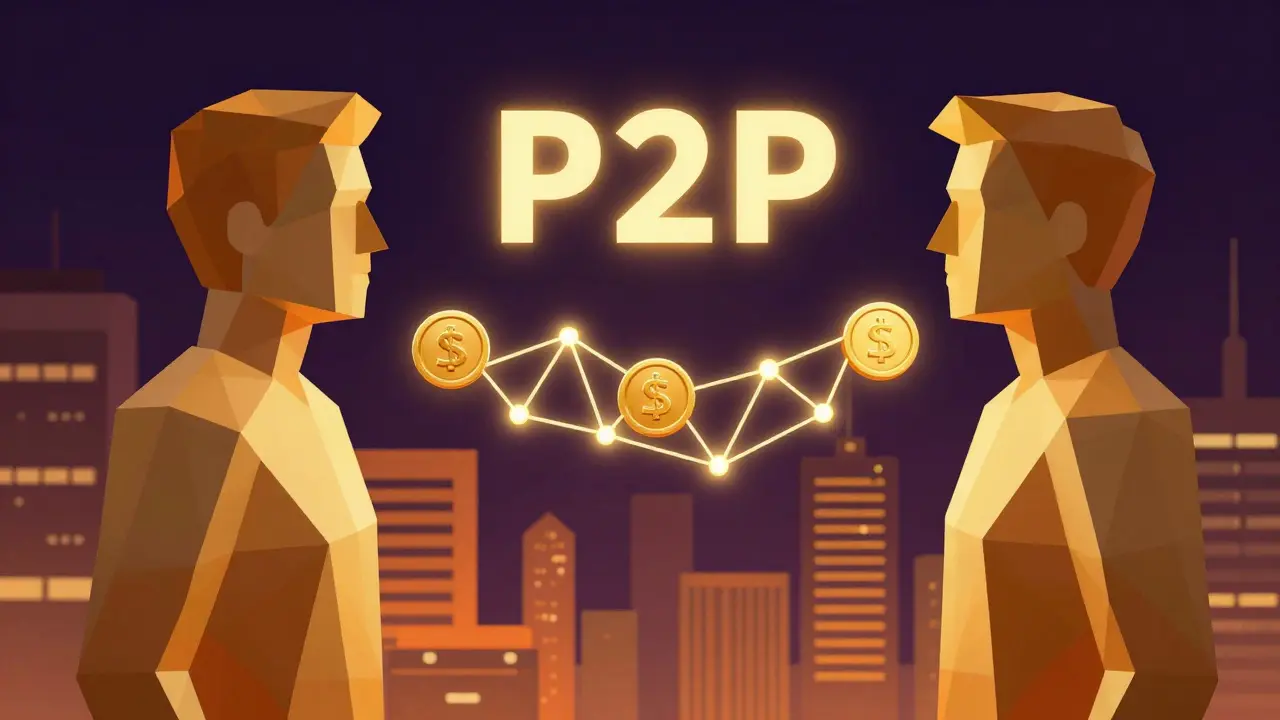
But here is the thing: the CBN didn't actually make owning crypto illegal for individuals. They just made it nearly impossible to use banks to do it. This nuance became a massive deal during the 2020 civil unrest. When the government froze bank accounts of protesters, the people turned to crypto as a lifeline. Donations poured in via digital assets, proving to the government that decentralized money is almost impossible to switch off. The more they pushed, the more Nigerians leaned into Peer-to-Peer (P2P) Trading is a method of cryptocurrency exchange where two parties trade directly with each other without a central intermediary or bank..
The Pivot to Regulation (2023-2025)
By late 2023, the CBN realized that prohibition was a failing strategy. You can't stop a global network with a local memo. In December 2023, the bank did a complete 180-degree turn by introducing the Virtual Asset Service Provider Guidelines is a regulatory framework that allows cryptocurrency exchanges to operate legally provided they are licensed by the SEC. Also known as VASP Guidelines, these rules ended the era of banking bans. Banks were finally allowed to offer accounts to crypto firms again, provided those firms had a license from the SEC.
This shift was cemented by the Investments and Securities Act 2025 is a legislative act that formally recognizes cryptocurrency as securities and brings them under the legal authority of the SEC.. For the first time, there was a clear legal definition: crypto is a security. This took the guesswork out of the equation for investors and businesses.
| Feature | Restrictive Era (2021-2023) | Regulatory Era (2024-2026) |
|---|---|---|
| Bank Access | Prohibited / Accounts Closed | Allowed for licensed VASPs |
| Trading Method | Primarily P2P | Institutional & P2P |
| Legal Status | Ambiguous / Discouraged | Recognized as Securities |
| Primary Oversight | Central Bank of Nigeria (CBN) | Securities and Exchange Commission (SEC) |

Collateral Damage and Market Shakeups
The flip-flop in policy didn't happen without a cost. Between 2021 and 2024, the uncertainty drove several global giants out of the country. OKX is a global cryptocurrency exchange based in the Seychelles. suspended its services in Nigeria in July 2024, citing changes in local laws. Binance is the world's largest cryptocurrency exchange by trading volume. also felt the heat, removing the naira from its platform and dealing with high-profile legal battles involving its executives in early 2024.
Even with the new laws, the government still has a love-hate relationship with the tech. In 2024, officials blamed crypto traders for causing volatility in the foreign exchange market. It shows that while the CBN is okay with Central Bank of Nigeria crypto policy being more open, they are still terrified of losing control over the naira's value.
Why This Matters for the Future
Nigeria is currently trying to get off the Financial Action Task Force Gray List is a list of jurisdictions under increased monitoring to strengthen their anti-money laundering and counter-terrorist financing frameworks.. By forcing crypto firms to follow strict KYC (Know Your Customer) and AML (Anti-Money Laundering) rules, the government hopes to prove to the world that they can manage digital assets without letting the country become a haven for illicit funds.
What we're seeing is a shift toward "regulated accommodation." The government accepted that they couldn't kill the beast, so they decided to put a leash on it. This puts Nigeria in a unique position in Africa-it's no longer just a place with high adoption rates; it's becoming a place with a formal legal structure for the digital economy.
Is cryptocurrency legal in Nigeria now?
Yes. While it was heavily restricted between 2021 and 2023, the December 2023 VASP Guidelines and the Investments and Securities Act 2025 have legalized the operation of cryptocurrency businesses, provided they are licensed by the SEC.
Can I still use my bank account for crypto?
Yes, but with a catch. Banks are now permitted to offer services to cryptocurrency businesses that are licensed as Virtual Asset Service Providers (VASPs) by the SEC. Individual users generally face fewer restrictions than they did during the 2021 ban.
What is a VASP in the Nigerian context?
VASP stands for Virtual Asset Service Provider. In Nigeria, this refers to any entity that conducts exchange, transfer, or custody of digital assets for others. To operate legally, they must be licensed by the Securities and Exchange Commission (SEC).
Why did the CBN change its mind about crypto?
The primary reason was the failure of the ban. Nigerians continued to trade via P2P markets, proving that decentralized tech is resistant to centralized prohibition. The government shifted to regulation to gain oversight and collect data rather than fighting a losing battle.
How does the SEC differ from the CBN in crypto regulation?
The SEC focuses on the assets themselves-treating them as securities and managing investor protection and licensing. The CBN focuses on the banking side-regulating how those assets interact with the national currency (naira) and the broader financial system.
Gabrielle Danis
April 27, 2026 AT 17:15The transition from a blanket prohibition to a structured regulatory framework is a classic example of the 'cat-and-mouse' game between central banks and decentralized technology. By shifting the oversight to the SEC, the Nigerian government is effectively acknowledging that digital assets function more like securities than traditional currency, which allows for better investor protection and a more stable legal environment for institutional entry.
Noel Mandotah
April 28, 2026 AT 17:01Oh wow, a bank finally admitted it can't stop a computer program. Truly groundbreaking stuff. 🙄
Barbara Jones
April 28, 2026 AT 21:42so crazy how they tried to stop it but pepole just found a way anyway... p2p is a life saver for real
Rain Richardsson
April 28, 2026 AT 22:32Interesting shift in policy.
Elle Kharitou
April 29, 2026 AT 07:16It's just so fascinating to see how the human spirit always finds a way to circumvent rigid systems, and honestly, I feel like this evolution in Nigeria mirrors a larger global awakening where we realize that the old ways of controlling money are simply becoming obsolete in the face of such innovative transparency 🌟. The way they moved from those scary bank freezes to a more welcoming, regulated space shows a beautiful growth in pragmatism, even if it was a bit bumpy at first, because ultimately, it's about finding a balance between the safety of the state and the freedom of the individual in this digital age! 🚀🌈
Abhishek Verma
April 30, 2026 AT 20:54Imagine thinking a 'regulated leash' actually gives you freedom. The government just wants a cleaner way to track your every move while they pretend to be 'modern'. How quaint!
Brendan Thraxton
May 2, 2026 AT 16:41great to see more countries moving toward legal clarity it helps everyone feel safer about investing in the tech
Livvy Cooper
May 3, 2026 AT 21:06Still just a way for the rich to get richer. Who cares about a license.
edie rosa
May 5, 2026 AT 12:37This whole 'evolution' is just a facade for laundering money under a legal banner. The fact that they're on a gray list should tell you everything you need to know about the actual morality of this system. It's not about growth; it's about finding a legal loophole to keep the corruption flowing while pretending to follow international standards. Absolutely pathetic.
Nitin Gupta
May 5, 2026 AT 17:40I believe the move toward SEC licensing is a prudent step for long-term stability, although it might be challenging for smaller players to comply with the new VASP guidelines initially.
debra hoskins
May 6, 2026 AT 05:10The so-called 'regulatory era' is just a fancy term for the government finally giving up because they were too slow to keep up with the blockchain beast.
Michael Repak
May 8, 2026 AT 00:27I totally agree with that!! It is such a win for the community to have a legal framework finally...!!
Jehan ZA
May 8, 2026 AT 04:39The distinction between the CBN's focus on monetary stability and the SEC's focus on investor protection is a logical separation of duties. It provides a more comprehensive approach to governance than a single-agency ban ever could.
AP Fisher
May 9, 2026 AT 17:44it is cool that people used crypto when their banks were frozen.
Pramendra Singh
May 11, 2026 AT 16:34It is heartening to see a path forward that allows for both innovation and safety. Hopefully, this leads to more jobs in the tech sector across the region.