

The Future of Blockchain Supply Chain Management: Beyond the Hype
 Apr, 26 2026
Most of us don't think about the journey a bag of coffee or a smartphone takes before it hits our hands. But behind the scenes, global trade is a messy web of spreadsheets, emails, and trust-based handshakes that often fail. The real problem? A total lack of visibility. When a foodborne illness breaks out or a shipment of medicine disappears, it usually takes weeks to find the source. That's where blockchain supply chain management is a decentralized approach to tracking and verifying products throughout their entire lifecycle using distributed ledger technology. By removing the need for a central authority to "vouch" for the data, we're moving toward a world where the product's history is written in stone-or rather, in code.
The Core Shift: From Centralized Silos to a Single Source of Truth
For decades, every company in a supply chain kept its own private ledger. The farmer had one list, the shipper had another, and the retailer had a third. If the numbers didn't match, someone spent three days on the phone trying to figure out why. Distributed Ledger Technology (DLT) flips this script. Instead of separate books, every participant shares one immutable record.
In a permissioned network, each single transaction-whether it's a change in ownership, a temperature reading from a refrigerated truck, or a customs stamp-is timestamped and cryptographically locked. This creates a 70% increase in traceability capabilities compared to old-school systems. You aren't trusting a person's word; you're trusting the math. For industries like pharmaceuticals, where a fake pill can be fatal, this level of certainty isn't just a "nice to have"-it's a requirement.
Automating Trust with Smart Contracts and IoT
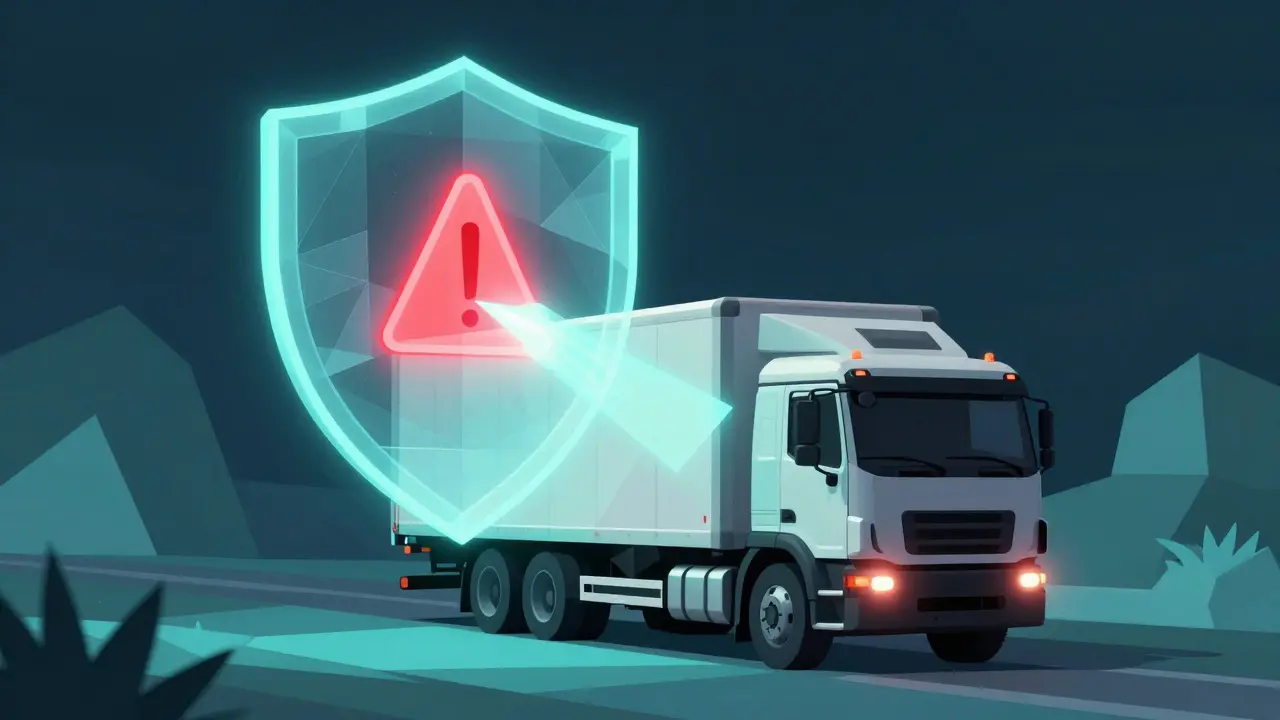
The real magic happens when you stop using blockchain as just a database and start using it as an engine. Enter Smart Contracts, which are self-executing contracts with the terms of the agreement directly written into lines of code. Imagine a shipment of vaccine doses that must stay between 2°C and 8°C. Instead of a human checking the logs at the end of the trip, an Internet of Things (IoT) sensor monitors the temperature in real-time. If the temp spikes, the smart contract automatically triggers a red flag, halts payment, and alerts the quality control team instantly.
This automation is projected to boost supply chain efficiency by 60%. No more waiting for invoices to be processed manually or arguing over who is responsible for a spoiled shipment. The data from the sensor speaks for itself, and the contract executes the result immediately.
| Feature | Traditional Systems | Blockchain-Enabled Systems |
|---|---|---|
| Data Storage | Centralized/Siloed | Decentralized/Shared |
| Verification | Manual/Audit-based | Automated/Cryptographic |
| Recall Speed | Days to Weeks | Seconds to Minutes |
| Fraud Risk | High (Easy to alter logs) | Low (Immutable records) |
Killing Certification Fraud and Empowering Producers
Have you ever wondered if that "organic" label on your produce is actually true? Right now, a lot of it relies on paper certificates that can be forged. Blockchain is essentially killing certification fraud. By automating the check for organic or fair-trade stamps, companies are seeing a 75% reduction in fraud. The certification isn't a piece of paper; it's a digital token tied to the specific batch of goods.
This also changes the game for the people at the very start of the chain. In the past, smallholder farmers were often cheated by middlemen who manipulated the data. Now, farmers are entering planting schedules and harvest dates directly into the system. This direct-input model is projected to increase farmer participation by 50% and can boost their income by up to 20% because they have proof of their product's quality and origin, allowing them to demand fair market prices.
The Integration Hurdle: Why Isn't Everyone Doing This?
If it's this great, why is your local grocery store still using a pen and paper? Because blockchain isn't a "plug-and-play" app. It requires a massive amount of coordination. To work, every single partner-from the raw material miner in Africa to the warehouse manager in Ohio-must use a compatible platform. This is the "network effect" problem: the system is only as valuable as the number of people using it.
Typically, a company needs 6 to 12 months for full system integration. They have to bridge the gap between their existing Enterprise Resource Planning (ERP) software and the new ledger. There's also a steep learning curve for staff who have spent twenty years doing things the "old way." However, the investment is paying off. Companies that pair blockchain with AI are reporting 15% cost reductions and a 25% jump in operational accuracy.
The Road to 2030: Autonomous and Sustainable Chains
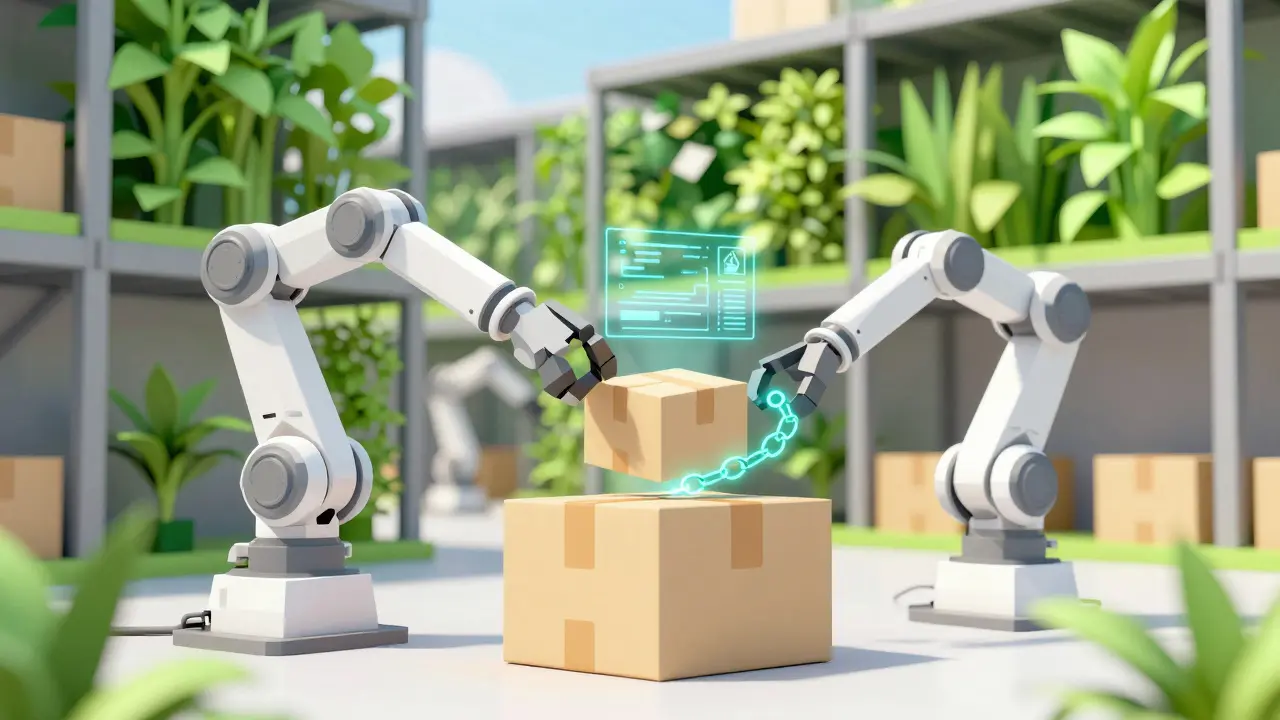
Looking ahead, we're moving toward "autonomous supply chains." This means AI and robotics won't just move the boxes; they'll manage the blockchain records without any human intervention. Imagine a warehouse robot that verifies a shipment's authenticity via a blockchain scan and automatically triggers a payment to the supplier the moment the box hits the shelf.
Sustainability is also becoming a primary driver. By 2025, eco-friendly practices will be baked into the code. Companies are using the ledger to track renewable energy usage and verify that "recycled" materials are actually recycled, not just rebranded plastic. We're also seeing a shift toward localized production hubs. Instead of shipping everything across an ocean, blockchain enables smaller, regional hubs to respond to demand quickly, slashing carbon emissions and lead times.
Does blockchain guarantee that the physical product is authentic?
Not by itself. Blockchain guarantees that the data entered is immutable, but it can't stop someone from putting a fake item in a real box. This is why it's paired with IoT sensors, RFID tags, and AI-driven visual inspection to bridge the gap between the physical world and the digital ledger.
How long does it take to implement a blockchain supply chain system?
Most organizations spend between 6 and 12 months on full integration. The timeline depends on how many partners need to join the network and how complex the existing ERP systems are.
Is a public blockchain better than a private one for supply chains?
Usually, no. Most companies use permissioned (private) blockchains. This allows them to keep sensitive pricing and supplier data hidden from competitors while still sharing a verified record with their trusted partners.
Can blockchain really reduce the cost of logistics?
Yes, primarily by removing the "administrative friction." By automating payments via smart contracts and reducing the time spent on manual audits and disputes, companies can see operational cost reductions of around 15%.
What happens if a mistake is entered into the blockchain?
Because the ledger is immutable, you cannot "erase" a mistake. Instead, a new transaction is added to correct the error, creating a clear audit trail of what went wrong and who fixed it, which actually prevents fraud.
Felix Eduardo Velasquez
April 28, 2026 AT 02:46The conceptual shift from trust-based systems to cryptographic verification is the only way we'll ever solve the 'last mile' problem in global logistics. Most people forget that the bottleneck isn't the tech, but the willingness of legacy players to admit their current systems are broken. We aren't just changing a database; we're changing the fundamental nature of commercial trust.
Robert Smith
April 29, 2026 AT 01:12Cool tech 🚀✨
debra hoskins
April 29, 2026 AT 12:54Absolute poppycock. This is just a fancy way to dress up a glorified spreadsheet and call it the future while the actual physical infrastructure is crumbling into dust around us. The obsession with 'immutable records' is a fetish for people who have never actually worked a loading dock in their lives.
VIVEK SINGH
April 30, 2026 AT 09:11Ah yes, the magic of blockchain, where we replace a human who might lie with a piece of code that is perfectly, immutably wrong because some idiot entered the wrong data at the start. Truly a revolution in efficiency. I'm sure the 'network effect' will happen just as soon as every corporation on earth decides to play nice with their competitors. Pure fantasy.
Emily A
April 30, 2026 AT 18:39It is quite naive to assume that IoT sensors solve the 'garbage in, garbage out' problem entirely. While the post correctly identifies the need for visual inspection, it fails to acknowledge that the hardware itself is subject to tampering and degradation. If you're relying on a sensor that's been compromised at the factory level, your immutable ledger is simply a permanent record of a lie.
Michael Repak
April 30, 2026 AT 23:19I totally agree with the point about farmers getting a better deal!!! This is such a win for the little guy!!!! We need more of this energy in the tech space!!!!
Tracy McBurney
May 2, 2026 AT 18:40Your analysis of the 6 to 12 month integration window is laughably optimistic. In any real-world enterprise environment, legacy ERP systems are so deeply entangled with outdated COBOL or archaic proprietary logic that a 'bridge' is usually just a series of fragile API calls held together by hope and prayer. You're ignoring the systemic inertia of corporate middle management who profit from the very opacity these systems aim to remove.
Bevon Findley
May 4, 2026 AT 18:13Quite an elegant summary 😊. The synergy between AI and DLT is where the real alpha is. 🥂
Kristi Swartz
May 5, 2026 AT 17:38the facts are clear blockchain is better for tracking organic food because paper is easy to fake and the digital token is the only real way to prove origin now
AP Fisher
May 7, 2026 AT 14:25I'm just wondering if this means the prices of stuff will actually go down for us if the companies save money on the paperwork side of things.
edie rosa
May 7, 2026 AT 21:19It's just so typical that we focus on 'efficiency' and 'cost reduction' while ignoring the human cost of these autonomous warehouses. We're basically coding ourselves out of existence to save a few pennies on vaccine shipping. This whole drive toward 'autonomous chains' is a moral vacuum that prioritizes a ledger over a livelihood.
Harvey Alford
May 9, 2026 AT 17:37Bet the author's just pumping a coin. Which one? 💸
Lloyd I
May 11, 2026 AT 00:43Let's keep the conversation positive guys! Even if there are hurdles, the potential to help small farmers in developing nations is a huge motivator for all of us to push this tech forward together. We can make the transition smoother if we share best practices!
Alex Mazonowicz
May 12, 2026 AT 09:12This is the way!!!! Imagine the world in 2030 with zero waste and total transparency!!!! So exciting!!!!
Gabby Puche
May 13, 2026 AT 13:10Love seeing the focus on sustainability 🌿✨. Total game changer for the planet! 🌍
Lynne Teperman
May 13, 2026 AT 19:41a kaleidoscopic shift in how we perceive value and origin. these digital threads weaving through the global tapestry are simply mesmerizing in their complexity