

The Future of DAO Governance Models: Moving Beyond Token Voting
 Apr, 20 2026
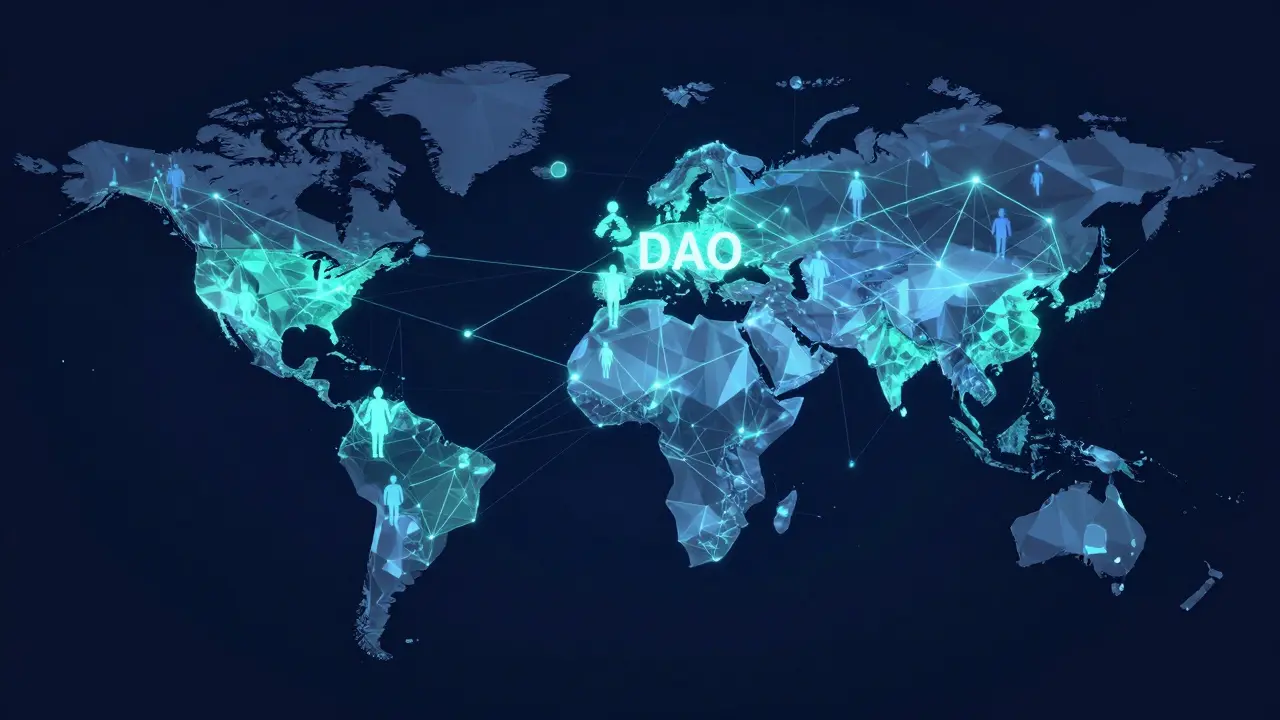
Imagine a company where there is no CEO, no board of directors, and no secret meetings behind closed doors. Instead, every single decision-from how to spend a million-dollar budget to which new feature to build-is decided by thousands of people across the globe through a transparent, digital vote. This isn't a sci-fi movie; it's the reality of a Decentralized Autonomous Organization is a community-led entity with no central leadership, governed by smart contracts and blockchain technology. Commonly known as a DAO, these organizations are redesigning how humans collaborate at scale. But as we move through 2026, it's becoming clear that the early "one token, one vote" system is broken.
The Problem with Plutocracy in Early DAOs
For years, most DAOs relied on simple token-weighted voting. If you owned 10% of the tokens, you had 10% of the power. On paper, this sounds fair. In practice, it creates a plutocracy where a few "whales"-wealthy holders-effectively make all the decisions. Research from ECGI Global showed that in 2024, about 73% of contentious votes were decided by a tiny group controlling just 30% of the tokens. This leaves smaller contributors feeling like their voice doesn't matter, leading to massive voter apathy. In fact, average participation often hovers around a dismal 17%.
When the people doing the actual work-the developers, the marketers, and the community managers-have no real say because they don't hold millions of tokens, the DAO loses its best talent. This is why the industry is pivoting toward models that prioritize DAO governance models based on merit and intent rather than just wallet size.
Evolutionary Voting Models: From Tokens to Reputation
To fix the whale problem, DAOs are experimenting with mathematical ways to flatten the power structure. One of the most successful shifts is toward Quadratic Voting, which is a voting method where the cost of each additional vote for a single proposal increases quadratically (n²), preventing any one person from dominating the outcome. If you want one vote, it costs one token; if you want two, it costs four; for three, it costs nine. This forces whales to be very strategic about where they spend their influence and gives a massive boost to the collective will of the minority.
Then there is Liquid Democracy, a system that blends direct and representative voting. In a liquid model, you can vote on a proposal yourself, or you can delegate your voting power to a trusted expert. For example, you might delegate your technical votes to a security auditor and your financial votes to a professional treasurer. If you disagree with how your delegate is voting, you can take your power back instantly. This solves the "voting fatigue" that plagues many users who simply don't have the time to read every 50-page proposal.
Perhaps the most promising shift is toward reputation-based systems. Instead of buying power, you earn it. Platforms like Colony track specific contribution metrics-like lines of code written or successful tasks completed-to determine a member's weight. In some task-based DAOs, these reputation scores now account for up to 65% of the voting power, ensuring that the people with the most expertise are the ones steering the ship.
| Model | Power Source | Main Advantage | Primary Weakness |
|---|---|---|---|
| Token-Weighted | Financial Stake | Simple to implement | Whale dominance (Plutocracy) |
| Quadratic Voting | Financial Stake + Math | Protects minority interests | Sybil attack vulnerability |
| Liquid Democracy | Delegated Trust | Expert-driven decisions | Potential for "super-delegates" |
| Reputation-Based | Proven Contribution | Meritocratic and fair | Complex to quantify merit |
The AI Integration: From Human Voting to Algorithmic Efficiency
Let's be honest: humans are bad at reading long technical documents. This is why AI is becoming the "secret sauce" in DAO governance. By 2026, we've seen a huge surge in AI-powered tools that summarize complex proposals into a few bullet points. This has helped platforms like Snapshot process proposals significantly faster because members no longer have to spend hours deciphering legal jargon.
But it goes deeper than just summarization. Many mature DAOs now use AI agents for routine treasury management. Imagine an AI that automatically rebalances stablecoins or manages payroll based on predefined rules, only alerting humans when something falls outside the norm. This removes the "analysis paralysis" that happens when a community has to vote on every single tiny expense. To keep things safe, these systems use "AI circuit breakers"-automated triggers that freeze AI actions if they hit a certain risk threshold, returning control to the human members.

Overcoming the Infrastructure Hurdle
Governance is only as good as the tools used to execute it. The move to Layer-2 solutions like Arbitrum and Optimism has been a game-changer. In the early days, voting on the Ethereum mainnet could cost a user $20 in gas fees just to cast a "yes" vote. That's a huge barrier for a small holder. L2s have slashed those costs by up to 90%, making participation economically viable for everyone.
We are also seeing the rise of cross-chain governance. Most DAOs used to be trapped on one blockchain. Now, using protocols like Polkadot's XCMP, a DAO can coordinate a decision on one chain and have it execute across three others. This allows a project to have its treasury on a secure chain while its voting happens on a faster, cheaper chain, getting the best of both worlds.
The Legal Gray Area and the Path to Mainstream Adoption
You can have the most perfect voting algorithm in the world, but if the government views your DAO as an illegal partnership, you're in trouble. Legal recognition is still the biggest bottleneck. While places like Wyoming and the Marshall Islands have created clear legal frameworks for DAOs, most of the world is still catching up. This creates a weird paradox where a DAO might manage billions in assets but cannot legally sign a contract to rent an office or hire an employee.
To survive this, many are adopting "hybrid" models. They maintain a decentralized core for strategic decisions but use a legal wrapper-a traditional company or foundation-to interact with the real world. The goal for the next few years is "legal personhood," where a DAO can be recognized as a legal entity without needing a central owner. Once that happens, we'll likely see Fortune 500 companies moving beyond mere experimentation and actually integrating DAO structures into their corporate governance.
Avoiding the Pitfalls: Lessons from DAO Failures
Not every DAO is a success story. Look at ConstitutionDAO; it raised millions to buy a copy of the US Constitution but dissolved shortly after because it lacked a clear plan for what to do after the auction. It had a great mechanism for raising money, but zero mechanism for long-term governance. This is a classic example of "vague decision-making" killing a project.
To prevent this, successful DAOs are implementing "rage-quit" mechanisms. Pioneered by MolochDAO, this allows a member who fundamentally disagrees with a majority decision to leave the DAO and take their proportional share of the treasury with them. It's the ultimate check and balance: if the majority makes a terrible decision, the minority can exit with their capital rather than being forced to fund a project they no longer believe in.
What is the biggest difference between a DAO and a traditional company?
Traditional companies use a top-down hierarchy with a board of directors and executives who make decisions. DAOs are bottom-up; they use smart contracts to automate rules and allow the community to vote on changes. While a company's decisions happen in private boardrooms, a DAO's decisions are recorded on a public blockchain for anyone to see.
Why is token-weighted voting considered unfair?
Because it gives more power to those with the most money. In a token-weighted system, a single "whale" who owns 51% of the tokens can outvote thousands of smaller members combined, effectively turning the "decentralized" organization back into a centralized one controlled by a few wealthy individuals.
How does Quadratic Voting actually work?
It uses a squared-cost formula. Instead of 1 token = 1 vote, the cost of voting increases as you add more votes to the same proposal. For example, 1 vote costs 1 token, 2 votes cost 4 tokens, and 10 votes cost 100 tokens. This makes it very expensive for whales to dominate a single issue, while allowing a large number of small holders to collectively influence the outcome.
Can AI completely replace human voters in a DAO?
Unlikely. The current trend is toward a symbiotic model. AI is great for routine tasks like stablecoin rebalancing, data analysis, and proposal summarization. However, strategic decisions-like changing the mission of the DAO or handling complex ethical dilemmas-still require human judgment and community consensus.
What is a 'rage-quit' mechanism?
It's a safety feature that lets members exit a DAO if they disagree with a governance decision. Instead of being stuck in a project that is heading in a direction they hate, the member can trigger a smart contract that returns their share of the treasury assets to them as they leave.
Next Steps for DAO Participants
If you're new to the space, don't just buy tokens. Start by joining a DAO's Discord or forum and contributing to a working group. Many DAOs now value "proof of contribution" over "proof of stake." Look for projects using Snapshot for off-chain voting or Tally for on-chain governance to see how their proposals are structured. If you're a developer, exploring the latest Solidity versions or Rust-based frameworks can help you build the next generation of modular governance tools.
Charlie Queen
April 22, 2026 AT 06:41Liquid democracy is such a vibe! 🌟 Being able to trust an expert without losing your voice entirely is a total game changer for those of us who can't read 50 pages of legalese. Let's get these systems scaled up! 🚀
Greg Reynolds
April 23, 2026 AT 08:02Reputation-based systems are essentially just another form of centralized power, only the 'merit' is defined by whoever writes the code for the tracking metrics. It is naive to assume a developer's contribution is objectively more valuable than a community manager's social orchestration.
Tara Aman
April 25, 2026 AT 07:13I really love the idea of quadratic voting to keep things fair for everyone. It feels like such a supportive way to make sure smaller voices aren't just drowned out by the whales. We can actually build something inclusive together if we use these tools!
Jennifer Taylor
April 26, 2026 AT 18:46The AI part is a trap. They want us to stop reading the docs so the bots can just slide in the changes they want without anyone noticing. It's all about control and making us lazy so we don't see where the money is actually going.
Paige Raulerson
April 26, 2026 AT 23:36Imagine thinking that "legal personhood" is the solution. It's just another way to bring the clunky, archaic systems of the 19th century into a digital space. Quite tedious, really.
Eric Raines
April 27, 2026 AT 15:52Everyone's acting like this is new. I've been explaining the flaw in token-weighted voting since the first DAO craze. It's just basic economics-capital attracts power. Glad the world is finally catching up to what I've been saying for years.
Kathleen Bergin
April 29, 2026 AT 05:45It's just basic math. Quadratic voting is the only way that actually works.
Larry Yang
April 30, 2026 AT 23:41the sybil attack risk on quadratic voting is basically a joke lol. anyone with a few burner wallets can just pretend to be a thousand people and bypass the math entirely. a completey flawed approach to 'fairness' if you actually understand how the internet works
Gloris Young
May 1, 2026 AT 13:19Rage-quitting is such a healthy boundary. It's great to see a system that lets you leave with your assets if the vibe shift is too much.
Gary Lingrel
May 2, 2026 AT 07:30imagine trusting an ai to manage a treasury... total joke :)
Doc Coyle
May 2, 2026 AT 15:18The real problem is that people just want a free ride. Reputation systems are the only moral way to do this because you actually have to work for your vote. You can't just buy your way into power.
Sara Ellis
May 4, 2026 AT 00:51power is just a story we tell ourselves anyway so who cares who has the tokens
Jagdish Sutar
May 4, 2026 AT 18:23It is wonderful to see these models evolving. For those starting out, remember that contributing to the community is where the real value lies, regardless of the voting system. We are all learners in this new digital age!
jill huyo-a
May 4, 2026 AT 19:54I'm curious about the reputation metrics. How do we make sure we don't accidentally prioritize the loudest people over the ones doing the quiet, essential work in the background?
Hannah Rubia
May 6, 2026 AT 05:47From a structural perspective, the implementation of Layer-2 solutions has significantly mitigated the economic barriers to entry, thereby facilitating a more authentic democratization of the voting process.
Yvette P
May 6, 2026 AT 10:23Oh sure, let's just hand over the keys to an "AI circuit breaker" because humans are obviously too incompetent to manage a spreadsheet. I'm sure the algorithmic efficiency will be just delightful while we all sit back and watch our treasury get optimized into oblivion by a piece of software that doesn't know what a human is. Truly a masterpiece of modern engineering if you enjoy blindly trusting a black box with your money. The jargon-heavy promises of "cross-chain governance" are just fancy ways of saying we're building a house of cards on top of a different house of cards. I'm just so incredibly thrilled to see us automate the process of making bad decisions at light speed.
Jason M
May 6, 2026 AT 14:50This is the spark we need! I want to see every developer out there diving into Rust and Solidity to make these governance tools a reality. We aren't just coding; we are redefining the social contract of the 21st century! Let's go!
Caiaphas Konkol
May 8, 2026 AT 13:24The "legal wrapper" is a blatant admission that the decentralized dream is a failure. You can't claim to be autonomous while clinging to a Wyoming LLC for survival. It's an intellectual contradiction.
praveen subbiah
May 9, 2026 AT 17:01India is becoming a huge hub for blockchain developers, and I believe our perspective on community and collective action can really help shape these DAO models for the better!
Candace Sherrard
May 9, 2026 AT 23:31The tension between the desire for total decentralization and the practical need for efficiency is a fascinating study in human nature. We crave freedom, yet we are often overwhelmed by the responsibility that comes with it, which is why these hybrid models of liquid democracy feel so natural.
Jennifer L
May 11, 2026 AT 15:53It is truly heartwarming to see such an inclusive approach to governance. May we all find a way to harmonize our differences and move forward with empathy and grace in this digital frontier... even if the tech is a bit confusing!
Matthew Morse
May 13, 2026 AT 03:48constitution dao is a textbook example of why a hype train with no tracks ends in a wreck
Alex Wan
May 13, 2026 AT 21:40I would most humbly suggest that the integration of AI requires a rigorous ethical framework to ensure that the human spirit remains the guiding force of the organization!
Kyle Bush
May 14, 2026 AT 15:14WHO CARES ABOUT VOTING WHEN THE USA IS THE ONLY PLACE MAKING REAL MONEY IN THIS SPACE!! 🇺🇸🦅 Let's just build the biggest DAO in the world and dominate the market! 🤑💰
debashish sahu
May 14, 2026 AT 18:57The shift toward meritocracy in governance reflects a universal human desire for fairness and recognition of effort over mere wealth.