

Wealth Tax Treatment of Crypto in Switzerland: What Investors Need to Know
 Mar, 22 2026
Switzerland doesn’t tax your crypto gains-if you’re a private investor. That’s not a rumor. It’s the law. While most countries chase profits from Bitcoin or Ethereum with capital gains taxes, Switzerland says: keep your gains. No matter how much you made, no matter how long you held it. But there’s a catch. You still have to declare what you own. Every year. On December 31st. And you have to value it in Swiss francs. Miss that, and you risk penalties-even if you never sold a single coin.
How Switzerland Classifies Crypto
Switzerland doesn’t treat crypto like cash. It doesn’t treat it like a currency at all. The Federal Tax Administration (FTA) calls it kryptobasierte vermögenswerte: crypto-based assets. That means it’s grouped with your stocks, bonds, and gold. It’s part of your personal wealth. Not income. Not a commodity. Just an asset. This classification matters because it determines whether you pay tax on selling, or just on owning. The FTA breaks crypto into three types:- Payment tokens (like Bitcoin, Litecoin, Bitcoin Cash): Used to buy goods or services. These are the most common. Treated as wealth, not income.
- Utility tokens: Give access to a service or platform (like Filecoin or Chainlink). Their tax treatment depends on how they’re used. If you’re just holding them, they’re wealth. If you’re earning from them, they might be income.
- Security tokens: Represent ownership in a company or asset (like tokenized stocks). These are taxed like traditional securities. If you sell them for a profit, you could owe capital gains tax-if you’re classified as a professional trader.
Declaring Your Crypto: The December 31 Rule
Every Swiss resident must declare all assets as of December 31 each year. That includes your crypto. The FTA publishes official year-end prices for major coins: Bitcoin, Ethereum, Ripple, Bitcoin Cash, and Litecoin. You must use those numbers. No guessing. No using CoinMarketCap. No averaging your purchases. Just the FTA’s rate. What if you hold something obscure-say, a new DeFi token or a niche NFT? Then you use the price from the exchange where you last traded it. If you’ve never sold it? Use what you paid. Original purchase price in Swiss francs. Keep your receipts. Even if they’re old. Even if you bought it in 2017. The tax office will ask.How Much Do You Actually Pay?
Switzerland doesn’t have a federal wealth tax. But all 26 cantons do. Rates vary wildly. In Zurich, you might pay 0.4%. In Geneva, it could be 0.8%. In some rural cantons, it’s as low as 0.2%. The average? Around 0.5% to 0.7%. That means if you have CHF 500,000 in crypto, you’ll pay roughly CHF 2,500 to CHF 3,500 a year. Not on your gains. On your total holdings. Compare that to Germany, where you pay 45% on crypto profits after one year. Or the U.S., where capital gains can hit 20% plus state taxes. Switzerland’s system is designed to be predictable, not punitive.
When You DO Pay Capital Gains Tax
Here’s where people get tripped up. The exemption only applies to private investors. If you’re trading crypto like a job, you’re not a private investor anymore. The FTA uses Circular No. 36 to decide who crosses the line. Signs you’re a professional trader:- You trade daily or weekly.
- You use leverage or derivatives.
- You rely on crypto income to pay your rent or mortgage.
- You have a business structure (LLC, sole proprietorship) tied to crypto.
What About Mining, Staking, and DeFi?
Mining? If you’re doing it at scale, it’s a business. You pay income tax on the value of the coins you mine when they’re received. Small-scale miners? Probably not an issue-unless you’re turning a profit. Staking? This is tricky. If you earn rewards just by holding crypto in a wallet, the FTA treats it as wealth appreciation. No tax until you sell. But if you’re staking as part of a structured DeFi protocol-like lending, liquidity pools, or yield farming-you might be generating income. That’s taxable. DeFi participation? The FTA hasn’t issued a blanket rule yet. But in practice, if you’re actively swapping, lending, or earning yield, they’ll look at whether it’s a hobby or a job. If it’s a job, you pay income tax. If it’s passive, you just declare the value on December 31.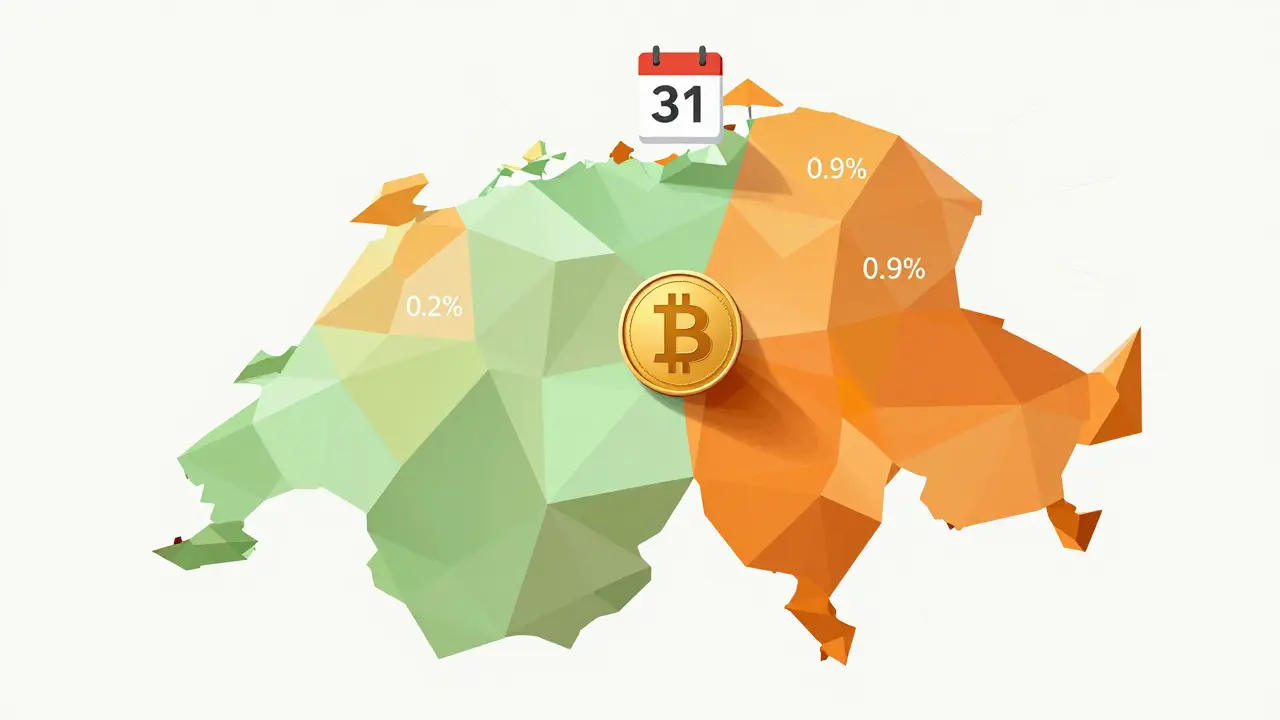
Why This System Works
Switzerland didn’t create new rules for crypto. They adapted old ones. That’s the genius. Instead of banning, confusing, or overtaxing, they said: treat crypto like stocks. Simple. Clear. Technology-neutral. No blockchain-specific tax. No NFT tax. No DeFi tax. Just wealth tax on what you own. This approach has made Switzerland the top destination for crypto investors in Europe. The Swiss Blockchain Federation says over 800 crypto companies now operate here. Why? Because they know: if you’re not trading, you keep your gains. And if you are trading, you know exactly how much you’ll pay.What Investors Should Do
If you’re holding crypto in Switzerland:- Track every purchase. Note the date, amount, and cost in CHF.
- Use only the FTA’s official year-end prices for major coins.
- For others, use the trading platform’s price on December 31.
- Don’t mix personal and business crypto. Keep them separate.
- Don’t assume staking or DeFi rewards are tax-free. Document them.
- Consider where you live. Some cantons charge half the wealth tax of others.
What’s Changing in 2025?
Nothing major. The FTA’s last update was December 3, 2024. They reaffirmed the existing rules. No new taxes. No crackdowns. No special crypto levies. The system stays stable. That’s rare in global crypto regulation. Experts agree: Switzerland’s framework is sustainable. It’s not perfect. Declaring lesser-known tokens is a pain. Valuation rules can be clunky. But compared to the chaos elsewhere, it’s a model. Clear rules. Low rates. No capital gains tax for private holders. That’s why people move here-not just for the Alps, but for the tax code.Do I have to pay tax on crypto if I never sell it in Switzerland?
No, you don’t pay capital gains tax on crypto you hold without selling-if you’re a private investor. But you must declare the total value of your crypto holdings as of December 31 each year. You pay a wealth tax on that value, which ranges from 0.2% to 1% depending on your canton. The tax is on what you own, not what you earn.
What if I mine cryptocurrency in Switzerland?
If you mine crypto as a hobby with minimal equipment, the coins you receive are treated as wealth and declared on December 31. If you mine at scale-using commercial hardware, electricity, or multiple rigs-you’re considered a business. The value of mined coins at the time of receipt is taxable as income, subject to federal, cantonal, and municipal income taxes.
How do I value my crypto for Swiss wealth tax?
Use the official year-end prices published by the Swiss Federal Tax Administration (FTA) for major coins like Bitcoin and Ethereum. For lesser-known tokens, use the price from the exchange where you last traded them on December 31. If you’ve never traded, use your original purchase cost in Swiss francs. Never use CoinGecko, CoinMarketCap, or average prices-only FTA or exchange-specific values are accepted.
Are staking rewards taxed in Switzerland?
It depends. If you earn staking rewards passively by holding crypto in a wallet, they’re considered part of your wealth and taxed only when you sell. If you’re actively participating in DeFi protocols-like lending, yield farming, or liquidity pools-you’re likely generating income. In that case, the rewards are taxable as income in the year you receive them, even if you don’t sell.
Can I avoid Swiss wealth tax by living in a different canton?
Yes. Wealth tax rates vary significantly across Switzerland’s 26 cantons. For example, Zug and Schwyz have some of the lowest rates (around 0.2%-0.4%), while Zurich and Geneva are higher (0.6%-0.9%). If you’re a crypto investor with significant holdings, relocating to a low-tax canton can reduce your annual wealth tax burden by thousands of francs. Residency rules still apply-you must establish official domicile to qualify.
Jeannie LaCroix
March 22, 2026 AT 11:19PS: I moved from California. Don’t even get me started on how insane the IRS is.
Jackie Crusenberry
March 23, 2026 AT 09:28Dominic Taylor
March 23, 2026 AT 16:46JOHN NGEH
March 24, 2026 AT 16:20Joshua T Berglan
March 26, 2026 AT 10:24Kevin Da silva
March 27, 2026 AT 18:23Kayla Thompson
March 28, 2026 AT 03:04Brijendra Kumar
March 29, 2026 AT 07:42Alicia Speas
March 29, 2026 AT 13:17Kevion Daley
March 31, 2026 AT 00:58Tammy Stevens
March 31, 2026 AT 09:10Justin Credible
April 1, 2026 AT 11:42Anna Lee
April 1, 2026 AT 19:25Alice Clancy
April 2, 2026 AT 01:08Marie Mapilar
April 2, 2026 AT 13:23Misty Williams
April 3, 2026 AT 13:43Anand Makawana
April 5, 2026 AT 08:38Mohammed Tahseen Shaikh
April 5, 2026 AT 13:10