

What is Bepro (BEPRO) Crypto? A Guide to the Code-as-a-Service Protocol
 May, 11 2026
Imagine hiring a developer without ever shaking their hand or signing a paper contract. You post a task, they write the code, and a smart contract handles the payment automatically. That is the core promise of Bepro Network, a decentralized protocol that functions as a Code-as-a-Service platform connecting organizations with developers through automated bounties. But what exactly is the BEPRO coin behind this system?
Bepro isn't just another speculative token. It started life as BetProtocol, focused on gaming and betting, before pivoting hard into blockchain infrastructure. Today, it operates as a bounty marketplace built directly on top of GitHub. If you are a developer looking for work, or an organization needing to build a decentralized application (dApp), Bepro offers a unique way to bridge traditional coding workflows with Web3 payments.
The Core Problem: Hiring Developers in Web3
Building blockchain applications is hard. Finding reliable developers is harder. Traditional hiring processes are slow, expensive, and often require long-term commitments. For many projects, especially those in Decentralized Finance (DeFi) or Non-Fungible Tokens (NFTs), they don't need a full-time employee. They need specific features built, bugs fixed, or integrations completed.
This is where the concept of "bounties" comes in. Organizations post tasks with a reward attached. Developers pick up the work, submit it, and get paid. The problem with most bounty platforms is trust. How do you know the code works? How do you handle disputes if the client refuses to pay? Bepro Network attempts to solve this by integrating directly with the tools developers already use every day: GitHub.
How Bepro Network Works
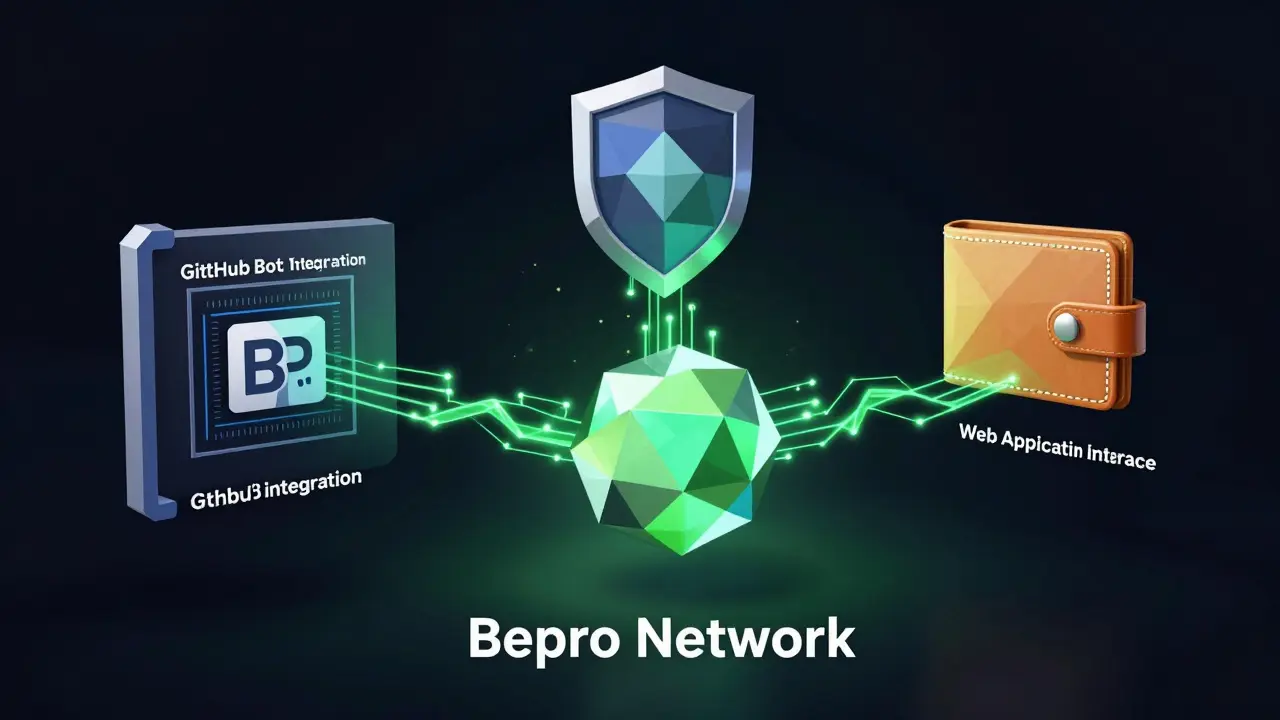
The architecture of Bepro is built around three main components that create a seamless loop between code repositories and financial transactions.
- GitHub Bot Integration: This is the technical backbone. The bot connects to GitHub repositories, managing pull requests, issues, and branches. It acts as the bridge between the code you write and the protocol that pays you.
- Web Application Interface: This is where promoters (organizations) open bounties. They lock tokens to act as curators, manage disputes, and oversee reward distributions.
- Governance Framework: This layer allows stakeholders to participate in decision-making. It ensures the network remains decentralized and responsive to its users' needs.
Unlike generic freelance platforms, Bepro operates as a payment and curation layer specifically for GitHub. Any organization, DAO, Layer-1 protocol, or Layer-2 solution can launch its own branded bounty network. By staking BEPRO tokens, these entities gain access to the codebase and can deploy as many dApps as they want. This creates a federated ecosystem where multiple brands can operate under the same secure infrastructure.
Utility of the BEPRO Token
The BEPRO token is not just a medium of exchange; it is the fuel that keeps the entire engine running. Its utility is split across several critical functions within the ecosystem.
- Medium of Exchange: BEPRO is used to pay developers for completed tasks in the Task Marketplace. When a bounty is accepted, the payment is settled in BEPRO.
- Curation Rights (veBEPRO): Holders can lock their BEPRO tokens to receive veBEPRO. This grants them the right to curate tasks, dispute unfair distributions, and earn rewards for maintaining quality control.
- Governance: Token holders vote on the future direction of the network. This includes protocol upgrades, fee structures, and partnership decisions.
- Dispute Resolution: If a developer and a promoter disagree on whether a task was completed correctly, BEPRO tokens are used to stake positions in the dispute process. Curators then vote to resolve the conflict.
- Framework Access: Users can pay for features or updates on the BEPRO-JS framework using the token.
This multi-faceted utility ensures that demand for the token is tied directly to the usage of the platform. As more developers join and more bounties are posted, the need for BEPRO increases.
Technical Tools: Bepro.js
One of the biggest barriers to entry in blockchain development is the complexity of smart contract languages like Solidity or Rust. Not every web developer knows how to write secure contracts. To address this, Bepro developed Bepro.js, an open-source JavaScript framework.
Bepro.js allows developers to boost blockchain-related capabilities without learning new, specialized programming languages. It lowers the barrier to entry, enabling traditional web developers to contribute to decentralized applications. This tool is central to Bepro's mission of democratizing blockchain development. By making it easier to build, they aim to increase the supply of high-quality dApps across sectors like gaming, prediction markets, and digital art galleries.
Market Performance and Supply Dynamics
Understanding the tokenomics is crucial for anyone considering holding BEPRO. The maximum supply is fixed at 10 billion BEPRO tokens. There is no inflationary minting beyond this cap, which provides a known limit on total issuance. However, the circulating supply can vary based on locking mechanisms for governance and curation.
Historically, BEPRO has experienced significant volatility. The all-time high price reached $0.0461 on March 16, 2021. Since then, the market has seen substantial consolidation. As of mid-2026, prices have fluctuated widely across exchanges. For instance, Coinbase reported prices around $0.000158, while Kraken showed slightly higher valuations near $0.00021. These disparities highlight liquidity differences and market fragmentation common in smaller-cap cryptocurrencies.
| Attribute | Value / Description |
|---|---|
| Token Symbol | BEPRO |
| Max Supply | 10,000,000,000 (10 Billion) |
| Primary Function | Code-as-a-Service, Bounty Payments, Governance |
| Integration | Native GitHub Integration via Bot |
| Founders | Rui Teixeira and Justin Wu |
| Parent Initiative | LayerX (includes TAIKAI and dappKit) |

Bepro vs. Traditional Freelance Platforms
How does Bepro differ from sites like Upwork or Fiverr? The key difference is automation and decentralization. On traditional platforms, the company holds your funds, takes a large cut, and controls the dispute process. On Bepro, smart contracts hold the funds. The rules are coded into the protocol. Disputes are resolved by community curators who have skin in the game via locked tokens.
This model reduces counterparty risk. You don't have to trust a centralized company to pay you; you trust the code and the consensus of the network. Additionally, the GitHub-native workflow means developers never leave their familiar environment. They push code, trigger bots, and get paid, all within the standard development lifecycle.
Risks and Considerations
Like any cryptocurrency project, Bepro carries risks. The low current price compared to historical highs indicates a highly speculative asset. Liquidity can be thin, meaning large trades could impact the price significantly. Furthermore, the success of the platform depends on adoption. If organizations don't post bounties, developers won't join, and the network effect stalls.
The pivot from BetProtocol to a general development infrastructure also means rebranding challenges. Users familiar with the original gaming focus may be confused by the current technical emphasis. However, this broader scope opens up larger markets in DeFi and enterprise blockchain solutions.
Future Outlook
Bepro is part of LayerX, a broader initiative that includes hackathons (TAIKAI) and development kits (dappKit). This interconnected ecosystem aims to create a one-stop shop for blockchain builders. As the Web3 space matures, the demand for efficient, decentralized hiring tools will likely grow. Bepro's focus on lowering technical barriers with tools like Bepro.js positions it well to capture this growing segment.
What is the BEPRO token used for?
The BEPRO token is used for paying developers in the bounty marketplace, participating in governance via voting, locking tokens to become curators (veBEPRO), resolving disputes, and accessing features in the Bepro.js framework.
Is Bepro Network safe to use?
Bepro uses smart contracts and decentralized governance to enhance security. However, as with all crypto projects, there are risks associated with code vulnerabilities and market volatility. Always conduct your own research and start with small amounts.
How does Bepro integrate with GitHub?
Bepro uses a GitHub Bot that connects to repositories. It manages pull requests, issues, and branches, allowing the protocol to track development progress and automate payments based on code submissions.
What is the maximum supply of BEPRO?
The maximum supply of BEPRO is fixed at 10 billion tokens. This immutable cap ensures transparency regarding total token issuance.
Can I use Bepro if I don't know blockchain coding?
Yes. Bepro provides Bepro.js, a JavaScript framework designed to help traditional web developers build blockchain applications without needing to learn complex smart contract languages like Solidity.