

What is inSure DeFi (SURE)? A Deep Dive into the Crypto Insurance Token
 May, 7 2026
Imagine losing your entire cryptocurrency portfolio because an exchange went bankrupt overnight. Or worse, getting drained by a sophisticated smart contract scam that looked legitimate at first glance. For years, these scenarios were just part of the "risk" you accepted when entering the crypto world. But what if there was a safety net? Enter inSure DeFi, a project attempting to solve one of the most persistent problems in digital assets: lack of reliable insurance.
The platform operates using its native token, known as SURE. It’s not just another speculative coin; it’s designed to function as the currency for a decentralized insurance ecosystem. If you’ve been hearing about SURE tokens lately and wondering whether they’re worth your attention, you’re in the right place. We’ll break down exactly how this system works, where you can buy the tokens, and whether the promise of decentralized protection holds water in 2026.
How Does inSure DeFi Actually Work?
Traditional insurance relies on massive companies with actuarial tables and deep pockets to pay out claims. In contrast, inSure DeFi uses a community-driven model where risk is distributed among participants rather than concentrated in a single entity. This approach aims to eliminate the "agency problem" often found in centralized finance, where insurers might prioritize profits over payouts.
The ecosystem rests on three main pillars:
- Dynamic Pricing Model: Instead of fixed premiums set by a corporation, prices fluctuate based on supply and demand. The system uses data from Chainlink Oracle services to ensure these calculations are accurate and tamper-proof.
- Capital Model: This mechanism ensures there is always enough capital backing the insured risks. The amount required scales dynamically with the market price of SURE tokens and the total coverage requested by users.
- inSure DAO Governance: A Decentralized Autonomous Organization handles claim approvals. Token holders vote on whether a claim is valid, ensuring transparency and preventing fraudulent payouts.
When you buy SURE tokens, you aren’t just holding an asset; you’re participating in this risk-sharing pool. You can stake them to earn fees from trades or use them to purchase coverage for your own holdings against specific threats like scams or exchange failures.
Understanding the SURE Token Economics
To understand the value proposition, we need to look at the numbers. As of May 2026, the SURE token has a circulating supply of approximately 26.79 billion tokens. The maximum supply cap is set at 88 billion tokens. This distinction matters because it affects the fully diluted valuation (FDV). If all tokens were released immediately, the market cap would be significantly higher than the current ~$30.7 million USD figure.
The price action tells a story of high volatility. The all-time high for SURE was around $0.45 back in its earlier cycles. Currently, it trades near $0.000183 USD on major platforms like Coinbase. That represents a drop of nearly 99.9% from its peak. However, looking only at the decline misses context. The token is trading 1,413% above its all-time low, suggesting some stabilization after previous crashes.
Here is a quick snapshot of the key metrics:
| Metric | Value |
|---|---|
| Circulating Supply | 26.79 Billion |
| Max Supply | 88 Billion |
| Market Cap | ~$30.7 Million USD |
| All-Time High | $0.4504 |
| Current Price Range | $0.000181 - $0.000183 |
These figures indicate that while the project is still operational, it is considered a high-risk, high-volatility asset. The low absolute price means small movements result in large percentage changes, which can be attractive for traders but risky for long-term holders.

Where Can You Buy and Trade SURE?
If you decide you want exposure to the inSure DeFi ecosystem, you have several options for acquiring SURE tokens. The liquidity is spread across both centralized exchanges (CEXs) and decentralized exchanges (DEXs).
For those who prefer fiat on-ramps, platforms like Coinbase, KuCoin, and Robinhood list the token. Keep in mind that Robinhood sometimes displays $0.00 due to rounding issues with such low-priced assets, so double-check the actual trade execution details. Services like Bit2Me also allow purchases via credit cards, debit cards, or bank transfers, making it accessible for beginners who don’t already hold other cryptocurrencies.
If you prefer self-custody and direct trading, the DEX route is more common. Quickswap is currently the most popular venue for SURE trading, specifically the SURE/WETH pair. Other active venues include Uniswap V3 on Ethereum and PancakeSwap v2. To trade here, you’ll need to import the SURE smart contract address (0xcb86c6a22cb56b6cf40cafedb06ba0df188a416e) into your MetaMask wallet.
Storage and Security Considerations
Once you acquire SURE tokens, keeping them safe is crucial. Since this is an ERC-20 token on the Ethereum network, standard security practices apply. You have three main paths:
- Custodial Wallets: Leaving tokens on exchanges like KuCoin or Coinbase is convenient but risky. If the exchange fails (ironically, one of the risks inSure protects against), you could lose access.
- Software Wallets: Apps like MetaMask or Trust Wallet give you control over your private keys. This is suitable for active traders who move funds frequently.
- Hardware Wallets: Devices like Ledger or Trezor offer the highest security level. They keep your keys offline, protecting against remote hacks. Given the volatile nature of DeFi tokens, this is often the recommended approach for significant holdings.
Paper wallets are another option for cold storage, though they require careful handling to avoid physical loss or damage.
The Role of Chainlink and AI Integration
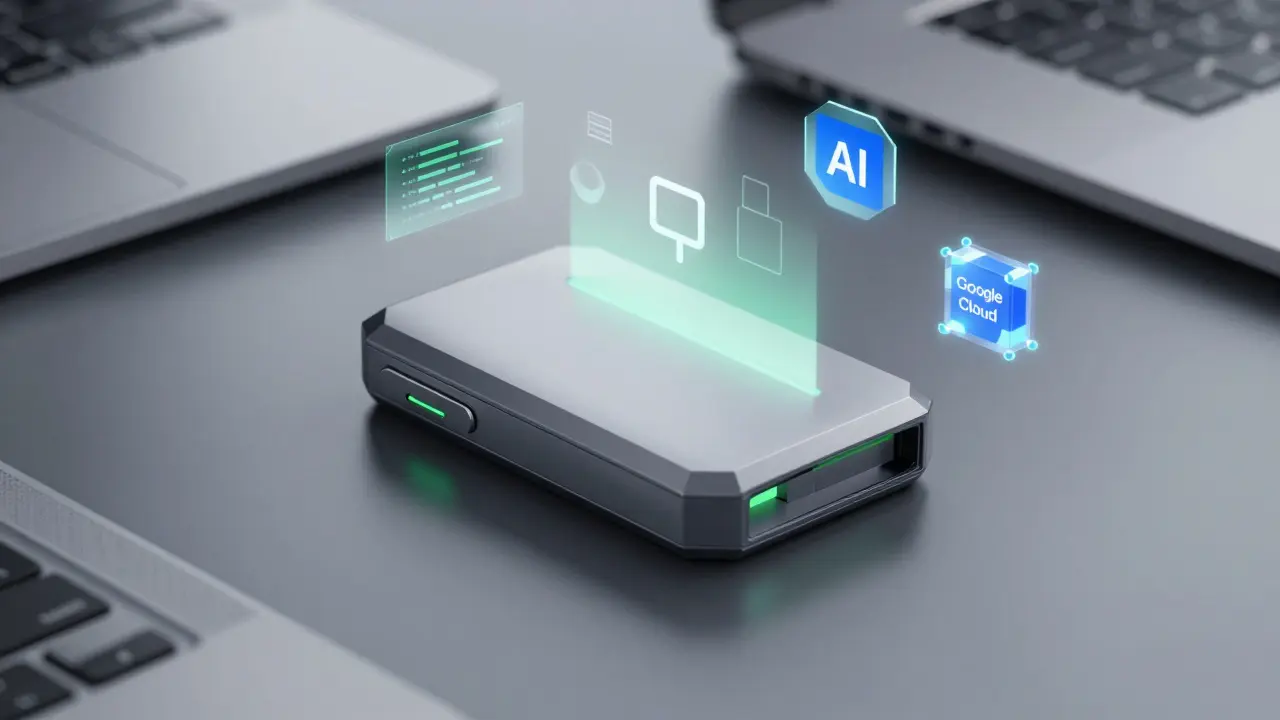
A major selling point for inSure DeFi is its technical infrastructure. It doesn’t rely on guesswork for pricing. By integrating Chainlink’s decentralized oracle network, the platform gets real-world data feeds that are secure and cannot be manipulated by bad actors. This is critical for determining fair insurance premiums.
Looking ahead, the roadmap includes combining on-chain data with off-chain analysis using Google Cloud AI. The goal is to automate claim fulfillment. Imagine a scenario where a smart contract exploit happens, and the AI instantly verifies the event, triggering an automatic payout without waiting for days of manual voting. This hybrid approach aims to make the insurance process faster and more efficient, bridging the gap between slow traditional bureaucracy and instant blockchain transactions.
Is inSure DeFi Worth Your Attention?
The question isn't just about the token price; it's about the utility. inSure DeFi addresses a genuine pain point: the fear of losing everything to scams or platform collapses. By decentralizing the underwriting process, it creates a more resilient system theoretically immune to single-point-of-failure bankruptcy.
However, the extreme price depreciation from $0.45 to $0.00018 serves as a stark reminder of the risks involved in early-stage DeFi projects. The market cap of ~$30 million places it firmly in the "micro-cap" territory, meaning it lacks the institutional stability of larger players. The reliance on community voting for claims also introduces human error and potential delays.
For investors, SURE offers a unique play on the growing narrative of crypto regulation and security. For users, it provides a novel way to hedge their portfolios. But proceed with caution. Understand that you are buying into a complex experimental financial instrument, not a guaranteed safety deposit box.
What is the primary purpose of the SURE token?
The SURE token is used to pay for insurance premiums within the inSure DeFi ecosystem. Holders can also stake SURE to earn transaction fees from liquidity pools and participate in governance voting to approve or reject insurance claims.
Can I insure my Bitcoin or Ethereum holdings with inSure?
Yes, the platform is designed to cover various crypto assets against specific risks like exchange closures, scams, and drastic devaluations. You purchase coverage using SURE tokens through the inSure Dashboard.
Why has the SURE token price dropped so much?
Like many early DeFi projects, SURE experienced high volatility. It peaked at $0.45 during earlier market cycles and has since corrected to around $0.00018. This reflects broader market conditions, liquidity challenges, and the speculative nature of micro-cap tokens.
Which exchanges support SURE trading?
You can find SURE on centralized exchanges like Coinbase, KuCoin, and Robinhood. For decentralized trading, Quickswap, Uniswap V3, and PancakeSwap v2 are the most active venues.
How does the inSure DAO handle fraud?
The DAO uses a permissionless voting system where token holders review claim tickets. If a claim is deemed fraudulent, it is rejected. The DAO also has punitive powers to burn tokens associated with bad actors, removing them from circulation permanently.