

What is Polyhedra Network (ZKJ) Crypto Coin? A Clear Breakdown of Tech, Token, and Market Reality
 Mar, 18 2026
Ever heard of Polyhedra Network and wondered if ZKJ is just another crypto gamble or something real? It’s not a household name like Bitcoin or Ethereum, but if you’re into cross-chain tech, privacy, or the future of Web3, this project deserves your attention. Polyhedra Network (ZKJ) isn’t trying to be a payment coin or a meme token. It’s building the invisible plumbing that lets blockchains talk to each other-without trusting anyone in the middle. That’s a big deal.
What Exactly Is Polyhedra Network?
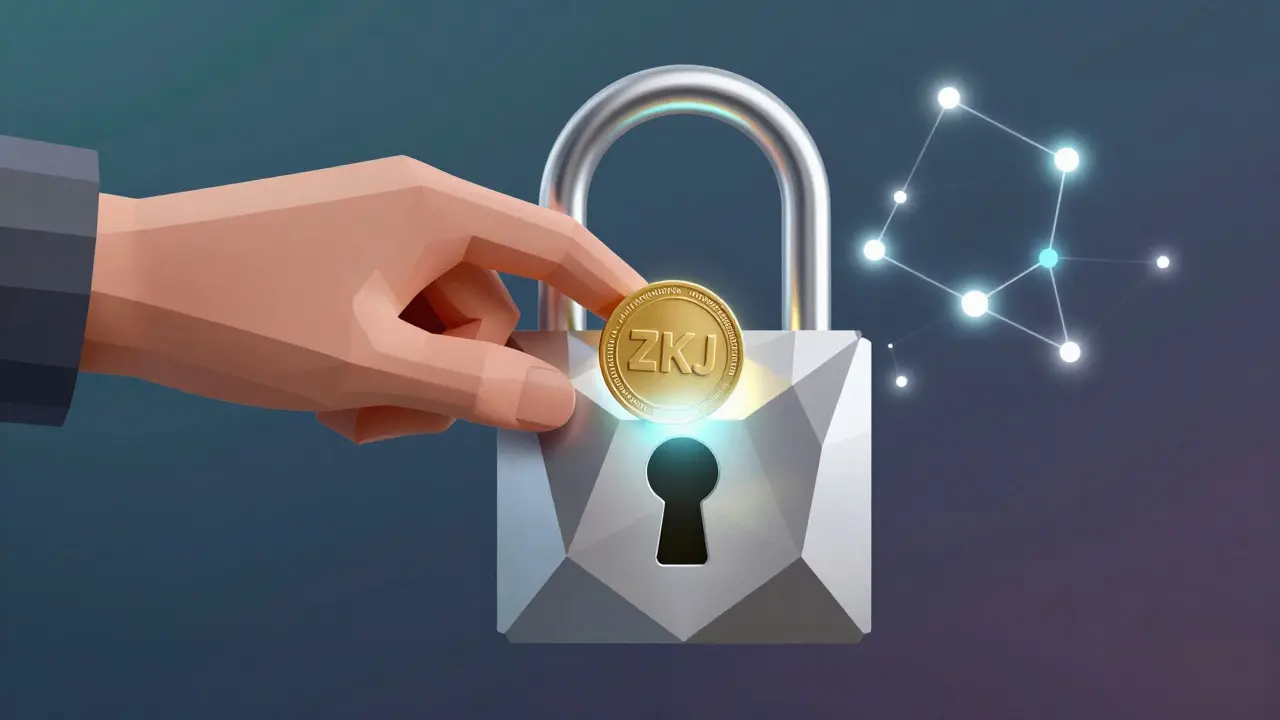
Polyhedra Network is a blockchain infrastructure project built around zero-knowledge proofs (ZKPs). Think of it like a secure translator that lets Ethereum, BNB Chain, Solana, or any other blockchain exchange data and assets without needing a middleman. The core technology behind it? zkBridge is a trustless cross-chain messaging and asset transfer protocol powered by zkSNARKs. Unlike other bridges that rely on a small group of validators (who could get hacked or go rogue), zkBridge uses math. It generates a cryptographic proof that a transaction happened on one chain, then verifies that proof on another chain-without revealing any details about the transaction itself. No central authority. No single point of failure.
This isn’t theory. It’s already being used. Users move tokens between Ethereum and Polygon, or from BNB Chain to Arbitrum, using zkBridge. The system also handles message passing and even decentralized identity (ZK-DID) verification across chains. That means you could prove you own an NFT on one chain and use it as access on another-all without exposing your wallet history.
What Is ZKJ, the Native Token?
ZKJ is the fuel and voting power of Polyhedra Network. It’s not just a trading asset-it has three real jobs:
- Transaction fees - Paying to use zkBridge for cross-chain transfers
- Staking - Locking ZKJ to help secure the network and earn rewards
- Governance - Voting on upgrades, new features, or protocol changes
There’s a hard cap of 1 billion ZKJ tokens total. As of early 2026, roughly 340-370 million are in circulation. That means over 60% of the supply is still locked up, either for future releases, team allocations, or ecosystem incentives. This matters because if all those tokens hit the market at once, it could crash the price. But if they’re released slowly with growing demand, it could push the price up.
Staking ZKJ isn’t optional-it’s how the network stays secure. You lock your tokens for a set period (like 30, 90, or 180 days), and in return, you get more ZKJ as a reward. Longer locks = higher rewards. It’s a simple incentive to keep people invested in the network’s long-term health.
How Does It Compare to Other Cross-Chain Solutions?
You’ve probably heard of Chainlink CCIP, Wormhole, or LayerZero. Those are big names in interoperability. But here’s the difference:
| Feature | Polyhedra Network (ZKJ) | Wormhole / LayerZero | Chainlink CCIP |
|---|---|---|---|
| Trust Model | Trustless (ZK proofs) | Trusted validator sets | Trusted validator sets |
| Speed | Fastest ZK proofs available | Medium to slow | Medium |
| Privacy | High (zero-knowledge) | Low (all data visible) | Low |
| Scalability | High (ProofCloud for roll-ups) | Medium | Medium |
| Use Cases Beyond Transfers | ZK-DID, ZK-NFTs, Web2/Web3 bridges | Asset transfers only | Asset transfers + data |
Polyhedra’s edge isn’t just speed-it’s that it doesn’t need to trust anyone. Other bridges rely on a group of nodes to confirm transactions. If five of them get compromised, your funds are at risk. With zkBridge, even if every node is evil, the math still holds. That’s why experts call it a "trustless" solution.
Market Performance and Price Reality
As of March 2026, ZKJ trades around $0.048-$0.12, depending on the exchange. That’s a far cry from its highs in late 2024. In June 2025, the price dropped over 90% in a single day-likely due to a combination of market panic, token unlocks, and lack of major partnerships. That’s not unusual for a mid-tier crypto project. But it’s a warning sign: this token is volatile.
Market cap hovers near $45 million. That’s tiny compared to giants like Chainlink ($3+ billion) or even Polygon ($5+ billion). Its ranking on CoinGecko sits around #747. That means it’s still a niche asset-not a mainstream one. But niche doesn’t mean worthless. It means it’s still early. If Polyhedra nails its roadmap, that market cap could grow 10x. If it fails to attract developers or gets outpaced by zkSync or StarkNet, it could fade.
The fully diluted valuation (FDV) is over $100 million, based on the full 1 billion supply. That’s what the market would be worth if all tokens were released today. It’s a useful metric to gauge how much upside remains.
What’s Next for Polyhedra Network?
The roadmap is ambitious:
- Expand zkBridge into a general ZK interoperability protocol
- Enable connections between Web2 apps (like Shopify or banking systems) and Web3
- Onboard real-world assets (RWAs)-like tokenized real estate or bonds-onto blockchains
- Integrate ZK-DID into decentralized identity systems for KYC and access control
- Launch ProofCloud to help ZK roll-ups scale to millions of transactions per second
If they deliver even half of this, Polyhedra could become a foundational layer for the next generation of Web3 apps. Right now, most apps are stuck on one chain. The future is multi-chain. Polyhedra wants to be the glue.

Should You Invest in ZKJ?
Here’s the honest take:
- Buy if: You believe in ZK technology, you’re okay with high volatility, and you’re looking for long-term infrastructure plays-not quick flips.
- Avoid if: You want stability, you don’t understand zero-knowledge proofs, or you’re chasing hype.
The risks? Plenty. Market manipulation. Regulatory pressure (ZK tech is under scrutiny for privacy). Technical failure. A competitor with better funding or faster execution. But the upside? If ZKJ becomes the go-to bridge for DeFi, NFTs, and Web3 apps, its value could explode.
Don’t look at ZKJ as a currency. Look at it as a bet on the future of blockchain interoperability. And right now, no one else is building it quite like this.
How to Buy and Store ZKJ
You can trade ZKJ on exchanges like Gate.io, Bitget, and KuCoin. It’s not on Coinbase or Binance yet. To buy it:
- Get USDT or ETH on a major exchange like Binance
- Transfer it to Gate.io or Bitget
- Trade it for ZKJ
- Withdraw to a non-custodial wallet like MetaMask or Trust Wallet (supporting Ethereum-compatible chains)
Never leave ZKJ on an exchange long-term. Use a wallet you control. And always double-check the contract address before sending.
Carol Lueneburg
March 19, 2026 AT 00:33Brenda White
March 21, 2026 AT 00:22Tobias Wriedt
March 21, 2026 AT 06:50Manali Sovani
March 21, 2026 AT 21:20Konakuze Christopher
March 23, 2026 AT 09:59S F
March 24, 2026 AT 10:34Angelica Stovall
March 24, 2026 AT 14:07Prakash Patel
March 25, 2026 AT 03:25Elizabeth Kurtz
March 25, 2026 AT 08:02Ann Liu
March 26, 2026 AT 06:51Jerry Panson
March 28, 2026 AT 04:31Katrina Smith
March 29, 2026 AT 18:59Anastasia Danavath
March 29, 2026 AT 18:59anshika garg
March 30, 2026 AT 23:57Bruce Doucette
April 1, 2026 AT 11:37Marie Vernon
April 2, 2026 AT 14:31Ross McLeod
April 4, 2026 AT 09:00rajan gupta
April 6, 2026 AT 08:43Billy Karna
April 6, 2026 AT 11:45Cheri Farnsworth
April 8, 2026 AT 08:25Gene Inoue
April 9, 2026 AT 01:09Arlene Miles
April 10, 2026 AT 22:23Carol Lueneburg
April 11, 2026 AT 23:47