

Benefits of Decentralized Infrastructure in Today's Digital World
 Dec, 14 2025
Decentralized Infrastructure Earnings Calculator
Calculate Your Earnings
How It Works
Decentralized infrastructure networks let you earn crypto by contributing resources like:
- Driving with a dashcam (Hivemapper)
- Running a wireless hotspot (Helium)
- Sharing storage space (Filecoin)
- Providing computing power (Render)
Think about how much of your life runs on systems you can’t see or control. Your internet, your power grid, your cloud storage - all managed by a handful of companies, with no way to opt out. What if you could help run them instead? That’s the promise of decentralized infrastructure. It’s not science fiction. It’s happening right now - in energy grids, mapping networks, and even AI systems - using blockchain to shift power from corporations to communities.
What Exactly Is Decentralized Infrastructure?
Decentralized infrastructure means no single company, government, or server holds all the control. Instead, tasks like storing data, processing payments, or managing energy flow are split across thousands of devices - your phone, a solar panel, a node in a neighbor’s garage. Each one contributes, and each one gets rewarded. This isn’t just about blockchain as a ledger. It’s about using blockchain to coordinate real-world things: electricity, internet bandwidth, computing power, even road maps.Take Hivemapper. It’s a mapping service built on blockchain. Instead of Google collecting data from satellites and cars, everyday drivers use dashcams to record streets. They earn crypto for contributing data. The result? Open, accurate maps that anyone can use - and no single entity owns the map. In places where Google Maps doesn’t reach, Hivemapper fills the gap. That’s the power of distribution.
Resilience Against Failure
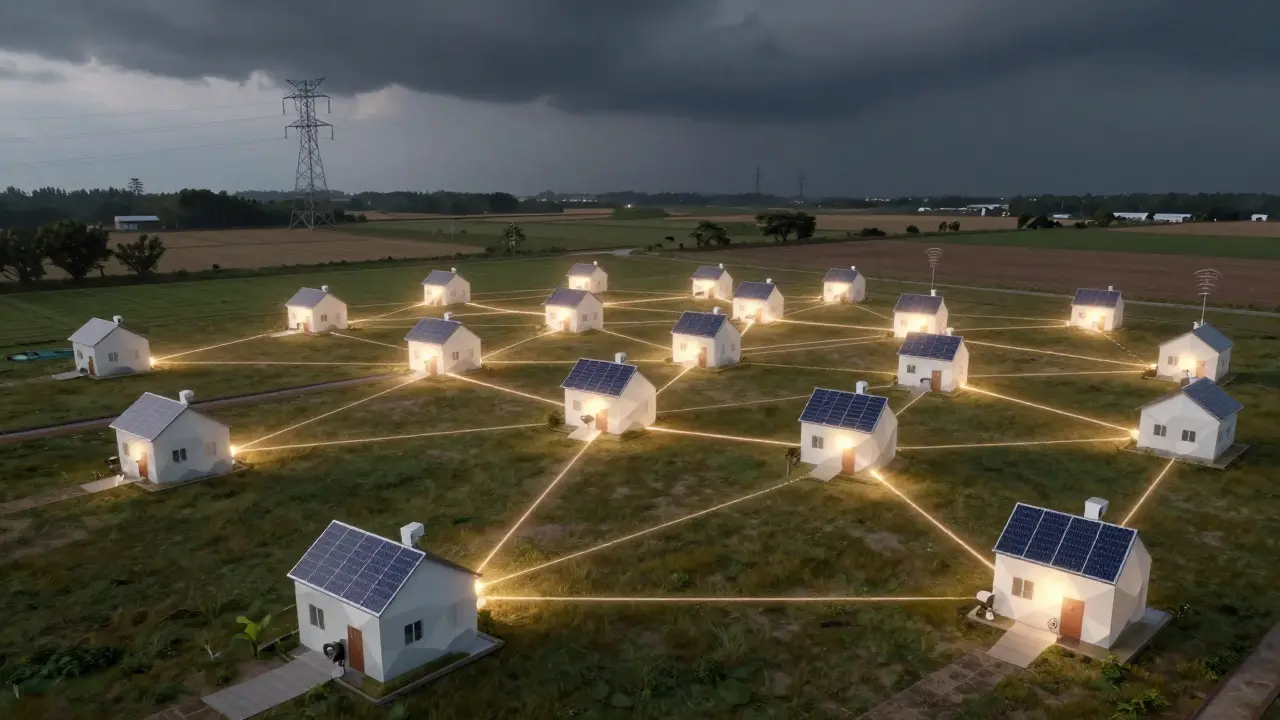
Centralized systems break when one thing fails. A data center goes down? Millions lose access. A power plant shuts off? Whole cities go dark. Decentralized systems don’t have that single point of failure. If one node dies, others keep running. That’s why energy companies like Shell are testing blockchain-based grids. Households with solar panels can sell extra power directly to neighbors. If the main grid goes down, the local network still works. In 2023, a storm knocked out power for 120,000 homes in Texas. A decentralized microgrid could have kept lights on in neighborhoods that had solar and storage - even if the big utility failed.IBM’s case studies show blockchain-based systems reduce data breach risks by 25-40%. Why? Because there’s no central database full of user info to hack. Data is split, encrypted, and only accessible to those with permission. Even if one node is compromised, the whole system stays intact.
Lower Costs, Fewer Middlemen
Every time you use a bank, cloud service, or delivery app, you’re paying someone to act as the middleman. Decentralized infrastructure cuts those fees. How? By letting participants interact directly.For example, traditional cloud computing from AWS or Azure can cost businesses $20-30 per hour for processing power. Decentralized networks like Filecoin or Render let users rent spare computing power from others - often for 20-35% less. In one pilot, a startup saved $18,000 in six months by switching to a decentralized AI cluster. They didn’t need to rent servers from a big tech company. They just used idle GPUs from people around the world.
Transaction costs drop too. IBM found blockchain systems cut transaction fees by 30-50% compared to legacy banking or payment networks. Why? No need for reconciliation, no chargebacks, no intermediaries taking a cut. Payments happen peer-to-peer, verified by code - not a bank.
Transparency and Trust Without a Central Authority
You can’t trust a company that says, “We’re secure,” but won’t let you see how. With decentralized infrastructure, everything is public and verifiable. Every transaction, every data upload, every energy transfer is recorded on a blockchain. Anyone can check it. No backdoors. No hidden logs.Take supply chains. A shipment of coffee beans from Colombia to Germany used to take days to trace. With blockchain, every step - from harvest to warehouse to store - is recorded on a shared ledger. If the beans were stored at the wrong temperature, you know exactly when and where. No guesswork. No paperwork. That’s traceability built into the system.
And it’s not just about business. In cities like Barcelona and Singapore, decentralized sensor networks are tracking air quality, traffic, and waste collection. Residents can see real-time data. Local councils can’t hide inefficiencies. The system holds itself accountable.
Empowering the Unconnected
The International Telecommunication Union says 2.6 billion people still don’t have internet access. Why? Because building fiber cables to remote villages is too expensive for telecom giants. Decentralized networks solve this differently.Projects like Helium use blockchain to incentivize people to set up low-cost wireless hotspots. In rural Kenya, a farmer installs a hotspot in his home. He earns crypto for providing coverage. Neighbors connect. A school gets internet. No telecom company needed. The network grows organically - one hotspot at a time. This isn’t theoretical. It’s already working in parts of Indonesia, Peru, and South Africa.
Even offline data exchange is being tested. In areas with no internet, blockchain nodes can sync data via Bluetooth or local radio. When a device reconnects, it uploads the batch. This could be life-changing for health workers in remote regions or disaster responders.
Real-World Use Cases That Are Already Working
You don’t need to wait for the future. These systems are live today:- Energy: Shell and J.P. Morgan tested a blockchain-based EV charging network in Europe. Drivers pay directly with crypto, no app, no credit card. Charging stations auto-verify payment and unlock. No middleman. Costs dropped 18%.
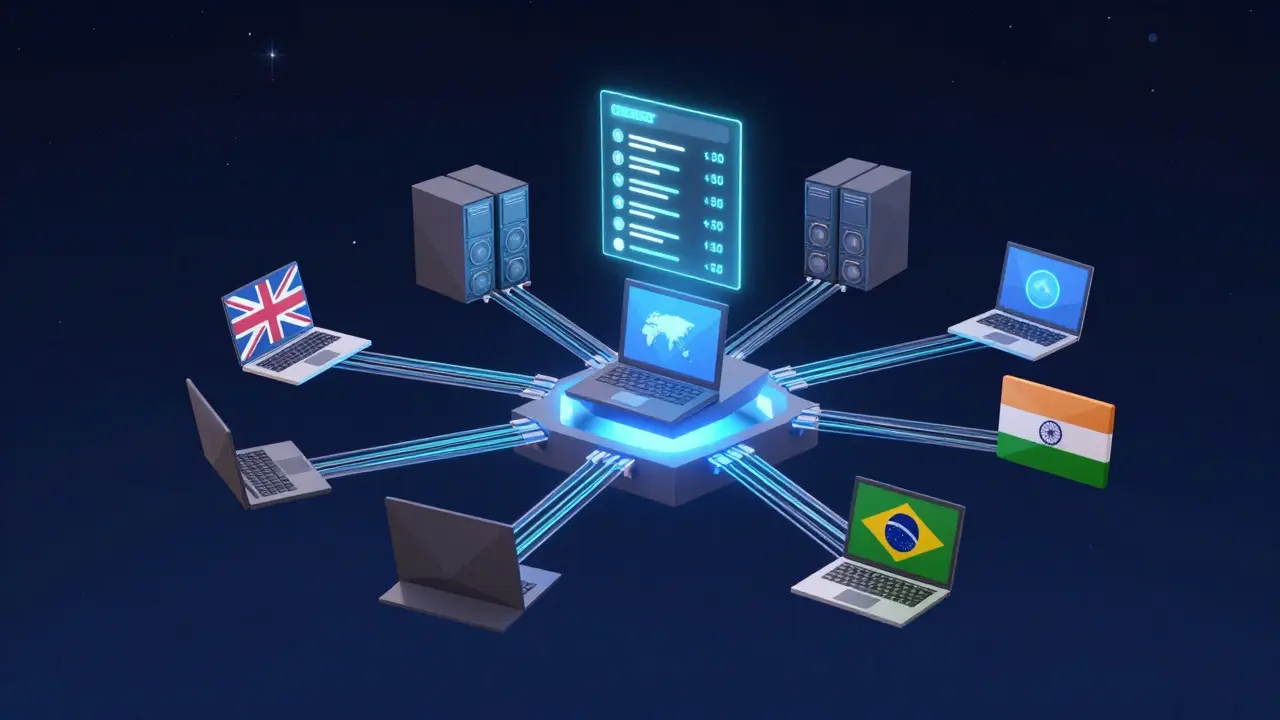
- AI: Civo launched relaxAI, a decentralized AI computing network. Users run open-source AI models on machines in the UK and India. Data never leaves those countries - perfect for GDPR compliance. No need to trust a U.S.-based cloud provider.
- Transport: DIMO lets car owners share vehicle data (mileage, location, diagnostics) via blockchain. Mechanics, insurers, and researchers pay for access. Owners earn crypto. No Tesla or Ford controlling your car data.
- Mapping: Hivemapper’s open map is now used by 12,000 developers and local governments. It’s more accurate than Google Maps in 47 countries.
Where It Falls Short
It’s not magic. Decentralized systems have trade-offs.Speed is one. Bitcoin handles 7 transactions per second. Visa handles 24,000. For high-frequency trading or real-time video streaming, centralized systems still win. But for things like energy credits, data sharing, or supply chain logs - speed isn’t the priority. Accuracy and trust are.
Complexity is another. Setting up a decentralized grid or AI network takes skilled developers. Most enterprise projects take 6-12 months to go live. A municipal pilot in Germany failed after 18 months because 15 different providers couldn’t agree on standards. The tech was ready. The coordination wasn’t.
And storage costs are higher. Every node keeps a copy of the ledger. That’s great for security. Bad for efficiency. That’s why enterprise blockchains like Hyperledger Fabric let organizations choose what data to share - not everything, just what’s necessary.
Who’s Investing - And Why
This isn’t a fringe movement. It’s enterprise-grade.- 83% of Fortune 500 companies are running blockchain pilots (Gartner, 2024).
- 37% of them are focused on DePIN - Decentralized Physical Infrastructure Networks.
- The global blockchain market is projected to hit $163.8 billion by 2029.
- Shell, J.P. Morgan, Coinbase, and IBM are all building real products - not just whitepapers.
Why? Because centralized systems are hitting their limits. Cloud monopolies are expensive. Supply chains are opaque. Data is being hoarded. Decentralized infrastructure offers a way out - one where users aren’t just customers, but stakeholders.
The Future: AI, Machines, and Autonomy
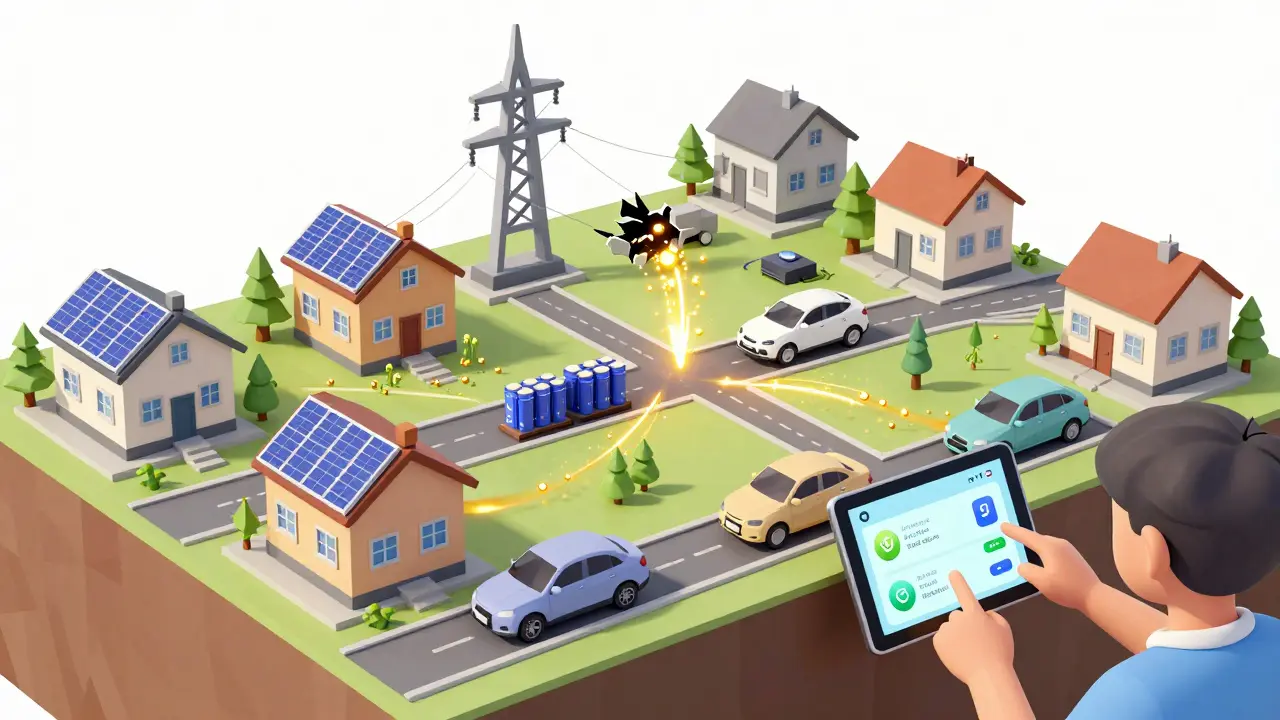
The next frontier? Machines talking to machines.Karina Fernandez at Shell says DePINs will enable “AI-to-AI interactions.” Imagine a smart grid where solar panels, batteries, and electric cars negotiate energy prices automatically - no human involved. A delivery drone finds the nearest charging station, pays for power via blockchain, and continues its route. All of this happens in seconds, verified by code, not a central server.
This isn’t far off. Open-source AI models are now as good as closed ones. Blockchain gives them a trust layer. Together, they can form autonomous systems that run without corporate oversight. That’s the real shift - from systems controlled by companies to systems governed by rules and incentives.
Getting Started - What You Need to Know
If you’re curious, here’s how to begin:- For individuals: Join Hivemapper or Helium. Use your phone or hotspot to contribute. Earn crypto. It’s free to start.
- For businesses: Look at Hyperledger Fabric or Polygon for private blockchain setups. Start small - track one supply chain or one asset.
- For developers: Learn Solidity or Rust. Explore open-source DePIN projects on GitHub. There are 15,000-50,000-star repositories waiting for contributors.
Don’t expect overnight success. But if you’re tired of paying for systems you don’t own, and want to be part of something more open and resilient - decentralized infrastructure is where the next decade is headed.
Is decentralized infrastructure the same as blockchain?
No. Blockchain is the technology that enables decentralized infrastructure, but they’re not the same. Blockchain is a type of digital ledger. Decentralized infrastructure uses that ledger - along with smart contracts, tokens, and distributed nodes - to run real-world systems like energy grids, internet networks, and AI compute pools. Think of blockchain as the rulebook, and decentralized infrastructure as the entire game being played by thousands of players.
Can decentralized infrastructure replace AWS or Google Cloud?
Not entirely - yet. For high-speed, large-scale computing like streaming video or enterprise databases, centralized clouds still win. But for decentralized tasks - like running AI models, storing files, or renting spare GPU power - decentralized networks are already cheaper and more private. Many companies now use both: centralized for heavy lifting, decentralized for trust-sensitive or cost-sensitive workloads.
Are decentralized systems secure?
Yes - more secure than most centralized systems. Because data is encrypted, split across nodes, and verified by consensus, hacking one node doesn’t compromise the whole network. IBM found blockchain reduces data breach risks by 25-40%. But security depends on implementation. A poorly coded smart contract can still be exploited. That’s why audits and open-source code matter.
Why aren’t more governments using this?
Many are - just slowly. The EU’s MiCA regulation is paving the way. Cities like Barcelona and Singapore are testing blockchain for waste management and traffic control. But governments move cautiously. They’re used to controlling systems. Decentralization means giving up some control. That’s a big cultural shift. Plus, there’s still regulatory uncertainty in places like the U.S., where no single agency oversees crypto infrastructure.
Can regular people make money from decentralized infrastructure?
Absolutely. People earn $50-200 a month on Hivemapper by driving with a dashcam. Others earn by running Helium hotspots or renting out unused computing power. It’s not get-rich-quick - but it’s real income for contributing to a shared system. Unlike traditional gig work, you’re not just selling time. You’re helping build infrastructure that benefits everyone.
Scot Sorenson
December 15, 2025 AT 14:45Oh wow, another blockchain fairy tale where everyone gets paid to drive around with a dashcam. Tell me again how this isn’t just crypto-washing old ideas with buzzwords? I’ve seen this movie before - remember Web 3.0? Yeah, me neither, because it vanished like my Wi-Fi during a Zoom call.
JoAnne Geigner
December 17, 2025 AT 06:43I really appreciate how this post highlights the quiet revolution happening under our noses... it’s not flashy, but it’s profound. When people share resources - whether it’s bandwidth, power, or data - we’re not just building tech, we’re rebuilding trust. And that? That’s the real innovation.
Anselmo Buffet
December 18, 2025 AT 16:49Been using Hivemapper for six months. Earned $87. My car maps better than Google in rural Ohio. No drama. No ads. Just a better map. Worth it.
Patricia Whitaker
December 19, 2025 AT 10:50So you’re telling me I should trust a system built by people who can’t even get their crypto wallets to work? Give me a break. This is just a fancy way to get suckers to fund someone else’s NFT collection.
Joey Cacace
December 21, 2025 AT 05:27Thank you for this thoughtful and meticulously researched overview. It is truly refreshing to encounter a perspective that not only acknowledges the potential of decentralized infrastructure but also frames it within the context of human collaboration and ethical innovation. I am deeply moved by the implications for global equity.
PRECIOUS EGWABOR
December 21, 2025 AT 17:18Oh honey, you really think some guy in Indonesia with a hotspot is going to outdo AWS? Sweetie, the cloud runs on data centers bigger than your entire neighborhood. This isn’t empowerment - it’s delusion with a crypto wallet.
Alex Warren
December 23, 2025 AT 16:54Decentralized infrastructure is not synonymous with blockchain. Blockchain enables trustless coordination. Decentralized infrastructure applies that coordination to physical systems. The distinction matters. Misusing the terms erodes credibility.
Claire Zapanta
December 23, 2025 AT 22:18Let’s be honest - this is a U.S.-backed Trojan horse to undermine national sovereignty. The EU already banned this stuff. China is building its own digital walls. Why are we letting Silicon Valley dictate how we power our homes? This isn’t freedom - it’s colonialism with smart contracts.
Sue Gallaher
December 25, 2025 AT 20:14My neighbor tried this Helium thing. Got a hotspot. Said he made $15 a month. Then his internet died. Now he’s mad at the whole system. People don’t understand tech. They just want free money. This isn’t progress. It’s a scam waiting to happen.
Jeremy Eugene
December 26, 2025 AT 18:14The technical merits of decentralized systems are undeniable. However, scalability, regulatory alignment, and user onboarding remain significant challenges. Until these are addressed at institutional levels, adoption will remain niche rather than transformative.
Nicholas Ethan
December 27, 2025 AT 20:24Let’s cut the marketing fluff. 83% of Fortune 500 are running pilots? So what? 98% of them will shut them down in 18 months. The costs are higher. The UX is worse. The energy use is obscene. This isn’t the future. It’s a costly experiment in vanity engineering.
Kathy Wood
December 29, 2025 AT 01:04YOU THINK THIS IS SAFE?!?! WHAT ABOUT THE HACKS?!?! WHAT ABOUT THE SCAMS?!?! PEOPLE ARE LOSING THEIR LIFE SAVINGS TO THIS!?!? IT’S A CULT!!!
Lynne Kuper
December 29, 2025 AT 14:17Stop dismissing this as crypto nonsense. Look at what’s happening in Kenya - kids in villages are getting internet because someone’s dad installed a hotspot. That’s not hype. That’s impact. If you’re not part of the solution, you’re part of the monopoly.
Lloyd Cooke
December 31, 2025 AT 08:00The ontological shift here is not merely technological - it is epistemological. We are transitioning from a paradigm of centralized epistemic authority - where knowledge, power, and control are monopolized by corporate entities - to a distributed epistemic field wherein agency is emergent, heterogeneous, and self-regulating through algorithmic incentive structures. The blockchain, in this light, is not a ledger but a covenant - a social contract encoded in machine language. The true revolution lies not in the nodes, but in the reclamation of agency by the anonymous multitude. We are not users. We are participants. And participation, in its purest form, is the most radical act of sovereignty.