

Best Practices for Crypto Wallet Management in 2025
 Jan, 30 2026
Every year, billions in cryptocurrency vanish-not because of hacking, but because someone forgot where they stored their keys. In 2024 alone, crypto wallet thefts hit $3.8 billion. Most of it wasn’t stolen by hackers in dark rooms. It was lost by people who trusted their recovery phrase to a screenshot, or left it on a sticky note next to their computer. The truth is, managing your crypto wallet isn’t about tech wizardry. It’s about discipline, habits, and knowing what to avoid.
Hot vs. Cold Storage: The Core Balance
Think of your crypto wallet like your bank account. You keep some cash in your wallet for daily spending. The rest? Locked in a safe at home. That’s the same idea with hot and cold storage. Hot wallets are connected to the internet. Think MetaMask, Trust Wallet, or exchange wallets. They’re fast. You can trade, swap, or pay for DeFi fees in seconds. But they’re also the #1 target for hackers. In 2024, 87% of all crypto thefts started with a compromised hot wallet, according to Token Metrics. Cold wallets are offline. Hardware devices like Ledger Nano X or Trezor Model T store your private keys without ever touching the internet. They’re slower-sending funds takes 15 to 45 minutes-but they’re nearly impossible to hack remotely. Leading exchanges keep 90-95% of assets in cold storage. For individual users, that ratio works too. Here’s the simple rule: Keep only what you need for the next week in a hot wallet. Everything else? Cold storage. If you trade daily, $500-$1,000 is enough. If you’re holding long-term, 95% should be offline.Multisig: Your Safety Net
Single-signature wallets are like a front door with one lock. If someone gets the key, they’re in. Multisig wallets? They need two or more keys to open the door. Think 2-of-3 or 3-of-5 signatures. Institutional players like Fidelity and Coinbase use multisig because it removes single points of failure. But it’s not just for big players. A 2-of-3 multisig setup lets you keep one key on your hardware wallet, one on a trusted family member’s device, and one stored in a secure vault. Even if one device gets stolen or lost, your funds stay safe. The numbers don’t lie. Ledger’s 2025 analysis found multisig reduces unauthorized access risk by over 60% compared to single-sig. And the big hacks? Mixin Network lost $200 million in 2023 because they used single-sig. Poloniex lost $126 million. Same story. If you hold more than $5,000, multisig isn’t optional-it’s the baseline. Tools like Safe (formerly Gnosis Safe) make it easy to set up without needing a tech team. Just follow the prompts. It takes 20 minutes.Seed Phrase: Don’t Touch Digital
Your seed phrase is the master key to your crypto. It’s 12, 18, or 24 words. Write it down. On paper. Not in Notes. Not in Google Drive. Not on a USB stick. Chainalysis found that 63% of wallets compromised in 2024 had their seed phrase stored digitally. Someone phished their email. A malware keylogger caught it. A family member accidentally deleted it. All it takes is one slip. Use metal backup plates like Cryptosteel or Billfodl. They survive fire, water, and years of dust. Store at least two copies. One in a home safe. One in a safety deposit box. Tell one trusted person where they are. Not via text. Not via email. In person. And never, ever type your seed phrase into a website-even if it looks legit. The most common attack in 2024? Phishing sites that mimic MetaMask or Ledger’s login page. They trick you into entering your phrase. Done. Gone.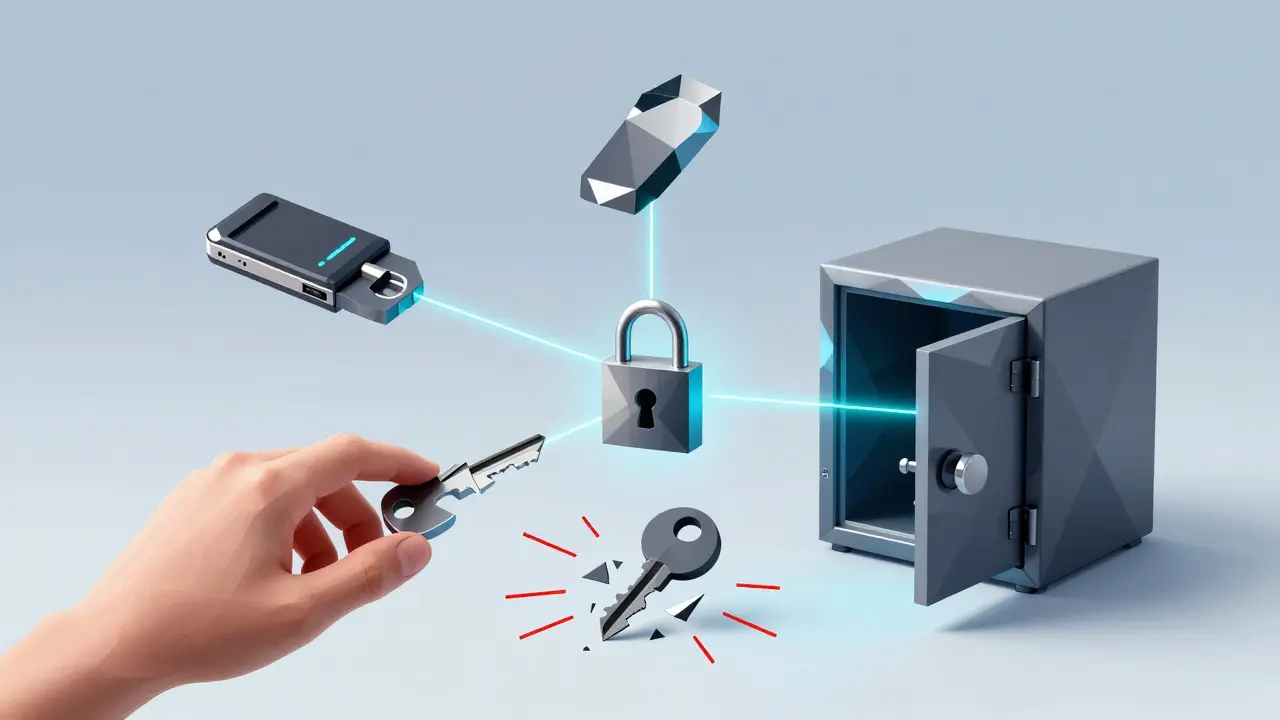
Hardware Wallets: Buy Direct, Skip the Middleman
Don’t buy a Ledger or Trezor from Amazon, eBay, or a random eBay seller. In November 2024, a scammer sold 1,200 pre-compromised Ledger devices on third-party marketplaces. Buyers thought they were secure. Their funds were drained within hours of first use. Always buy directly from the manufacturer’s official site. Check the packaging seal. Verify the device’s serial number on the manufacturer’s website after unboxing. If it’s not sealed, return it. Once you have it, set up a PIN. Enable passphrase protection. Use it only on a clean device-no other apps, no browser extensions. Use a dedicated laptop or tablet just for crypto. That cuts your risk of malware infection by 90%.Two-Factor Authentication (2FA): Non-Negotiable
If your wallet provider offers 2FA, turn it on. Not SMS. Not email. Use an authenticator app like Authy or Google Authenticator. Why? Because SMS can be intercepted. Email accounts get hacked. Authenticator apps generate codes offline. NYDFS and MiCA regulations now require 2FA for all licensed crypto services. Even if you’re not regulated, you should treat it like a seatbelt. It’s not foolproof, but it stops 70% of automated attacks. Also, secure your email. Your email is the password reset button for your wallet accounts. Use a strong, unique password. Enable 2FA there too. If someone gets your email, they can reset your wallet passwords-and then they own your keys.Reconcile. Monitor. Update.
You wouldn’t skip checking your bank statement. Don’t skip checking your wallet. Set a reminder every quarter to reconcile your on-chain balances with your internal records. If you’re holding over $10,000, do it monthly. Use tools like Etherscan or Solana Explorer to verify your addresses. Look for strange transactions-even small ones. Hackers often test with tiny amounts first. Update your wallet software. Every update patches security holes. Enterprise solutions auto-update with 97% adoption. Don’t ignore updates on your phone or desktop wallet. One delay can cost you everything.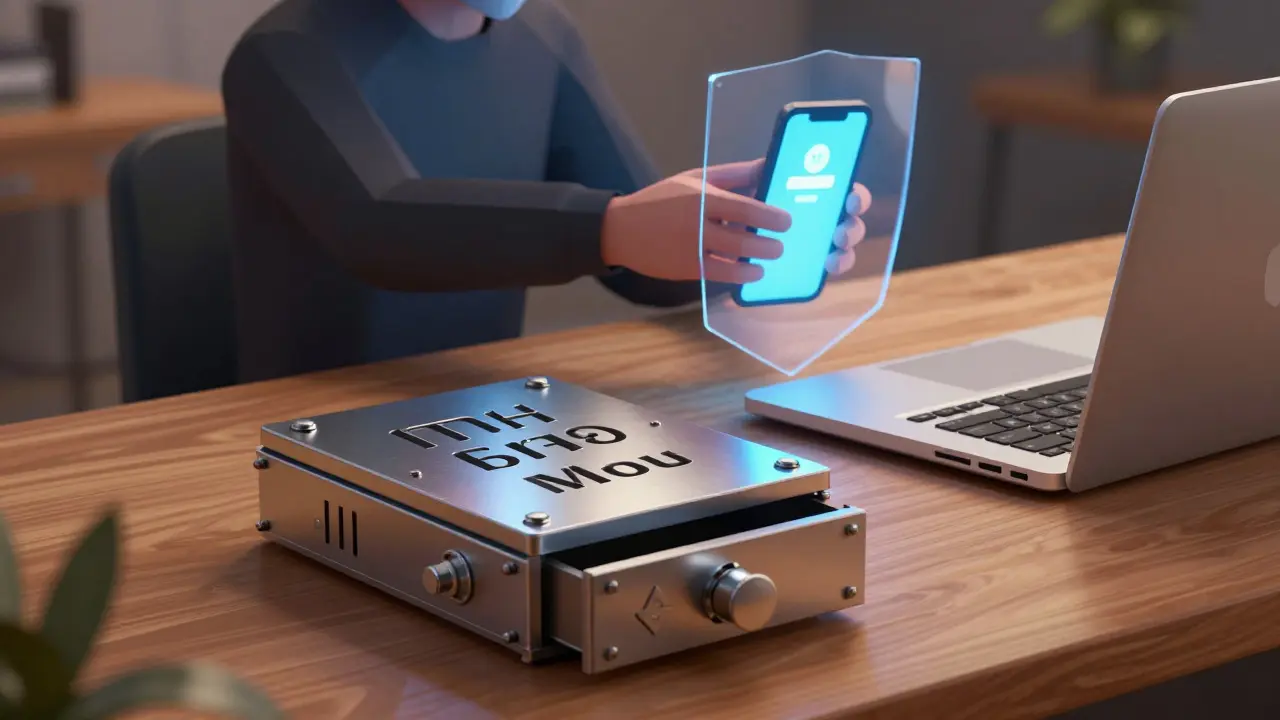
What Not to Do
Here’s a quick list of deadly mistakes:- Don’t store your seed phrase in a cloud note or screenshot.
- Don’t use the same password for your wallet and your email.
- Don’t click links in DMs-even if they say “claim your airdrop.”
- Don’t install browser extensions you don’t trust. 78% of phishing attacks in 2024 used malicious extensions.
- Don’t share your wallet address publicly unless you’re ready for it to be targeted.
Who Needs What?
Not everyone needs the same setup.- Beginners with under $5,000: Use Trust Wallet or MetaMask with 2FA. Keep 90% in cold storage. Write down your seed phrase. Done.
- Active traders ($5k-$50k): Use a hardware wallet for cold storage. Keep a small hot wallet for trading. Enable multisig if your wallet supports it. Monitor transactions weekly.
- High-net-worth holders ($50k+): Use enterprise multisig (Safe, Fireblocks, Copper). Split keys across trusted parties. Use dedicated air-gapped devices. Get a physical security audit if you’re serious.
The Future Is Here
Quantum computing is coming. IBM’s 2025 quantum processor can break ECDSA encryption in 2.3 hours. That’s the algorithm most wallets still use. But companies like Fireblocks and Copper already started rolling out quantum-resistant cryptography in late 2024. By 2026, it’ll be standard. Biometric login (fingerprint, face ID) is now in 78% of enterprise wallets. AI monitoring catches 99.2% of suspicious transactions before they happen. These aren’t sci-fi features-they’re baseline now. The bottom line? Crypto wallet management isn’t hard. It’s just boring. You have to be consistent. You have to be paranoid. You have to treat your keys like your last lifeboat. If you do, you won’t be part of the $3.8 billion statistic. You’ll be one of the ones who kept their money safe.What’s the safest crypto wallet for beginners?
For beginners, use a hardware wallet like Ledger Nano X or Trezor Model T paired with a trusted app like Trust Wallet. Keep 90% of your funds offline. Enable 2FA on all accounts. Write your seed phrase on metal and store it in two separate safe locations. Avoid software-only wallets for anything over $1,000.
Can I store my seed phrase on my phone?
No. Phones are vulnerable to malware, phishing, and physical theft. Even encrypted notes can be accessed if your device is compromised. Always use a physical backup-metal plates or engraved steel are best. Store it away from your digital devices.
Is multisig too complicated for regular users?
Not anymore. Tools like Safe (formerly Gnosis Safe) let you set up a 2-of-3 multisig wallet in under 10 minutes with no coding. You just need to know where to store your three keys-one on your device, one with a trusted person, one in a secure offline location. It’s simple if you follow the steps.
What should I do if I lose my hardware wallet?
If you have your seed phrase, you can restore your wallet on any compatible device-new hardware wallet, software wallet, even another brand. The wallet device itself is just a tool. Your keys live in the seed phrase. Without it, your crypto is gone forever.
How often should I check my wallet balances?
If you hold under $10,000, check monthly. If you hold more than $50,000, check weekly. Use blockchain explorers like Etherscan or Solana Explorer to verify your addresses match your internal records. Look for small test transactions-they’re often the first sign of a breach.
Are exchange wallets safe for long-term storage?
No. Exchanges are centralized targets. Even if they’re reputable, they control your keys. If the exchange gets hacked, goes bankrupt, or freezes withdrawals, you lose access. Only keep what you’re actively trading on an exchange. Move the rest to your own wallet.
What’s the biggest threat to crypto wallets today?
Phishing. It caused 43% of all successful attacks in 2024, according to Ledger. Fake websites, fake apps, fake Discord admins-they trick you into giving up your seed phrase or signing a malicious transaction. Always verify URLs. Never enter your seed phrase anywhere. Always check transaction details on your hardware wallet screen before approving.
Raju Bhagat
January 30, 2026 AT 12:55Sunil Srivastva
January 31, 2026 AT 08:05Andrea Demontis
February 1, 2026 AT 15:42Jeremy Dayde
February 2, 2026 AT 23:57Ramona Langthaler
February 3, 2026 AT 05:29Devyn Ranere-Carleton
February 5, 2026 AT 04:02Joseph Pietrasik
February 6, 2026 AT 13:20laurence watson
February 6, 2026 AT 18:58Nickole Fennell
February 7, 2026 AT 04:24Gurpreet Singh
February 8, 2026 AT 05:43Mark Ganim
February 9, 2026 AT 08:08Gary Gately
February 10, 2026 AT 00:52Joshua Clark
February 10, 2026 AT 04:10Brandon Vaidyanathan
February 10, 2026 AT 05:10Gareth Fitzjohn
February 11, 2026 AT 01:58Katie Teresi
February 12, 2026 AT 08:20Moray Wallace
February 13, 2026 AT 12:26Dylan Morrison
February 13, 2026 AT 15:49Lori Quarles
February 15, 2026 AT 14:36Steven Dilla
February 15, 2026 AT 15:12Akhil Mathew
February 16, 2026 AT 01:21Kevin Thomas
February 16, 2026 AT 15:55Elizabeth Jones
February 18, 2026 AT 00:36Pamela Mainama
February 19, 2026 AT 20:19