

Blockchain Payment Speed and Cost Benefits in 2025
 Dec, 4 2025
Blockchain Payment Savings Calculator
See how much you could save by switching from traditional payment processors to blockchain payments. Based on real 2025 industry data.
Your Savings Breakdown
Traditional Payments
Blockchain Payments
Savings
Save per transaction
$
Total annual savings
By 2025, blockchain payments aren’t just a tech experiment-they’re saving businesses millions and moving money faster than ever. If you’ve been waiting to see if blockchain payments are worth it, the data no longer lies. Cross-border payments that used to take days now settle in seconds. Fees that once ate up 5% of every transaction are now under 0.5%. This isn’t theoretical. Companies are already using it-and seeing real results.
How Fast Are Blockchain Payments Really?
Traditional bank transfers between countries? Three to five business days. That’s the norm. Even PayPal and Stripe, which feel fast, still take 1-3 days to settle international payments. Blockchain? It’s a different world.
On networks like RippleNet, Stellar, or Avalanche, payments can clear in under 10 seconds. Some, like Nano or IOTA, confirm in under a second with near-zero fees. Even Ethereum, which gets a bad rap for slowness, now settles transactions in about 15 seconds on average-thanks to Layer 2 upgrades and optimized gas fees. Compare that to a wire transfer that needs to hop through three or four intermediary banks, each holding the funds overnight. Blockchain skips all that. It’s peer-to-peer, direct, and final.
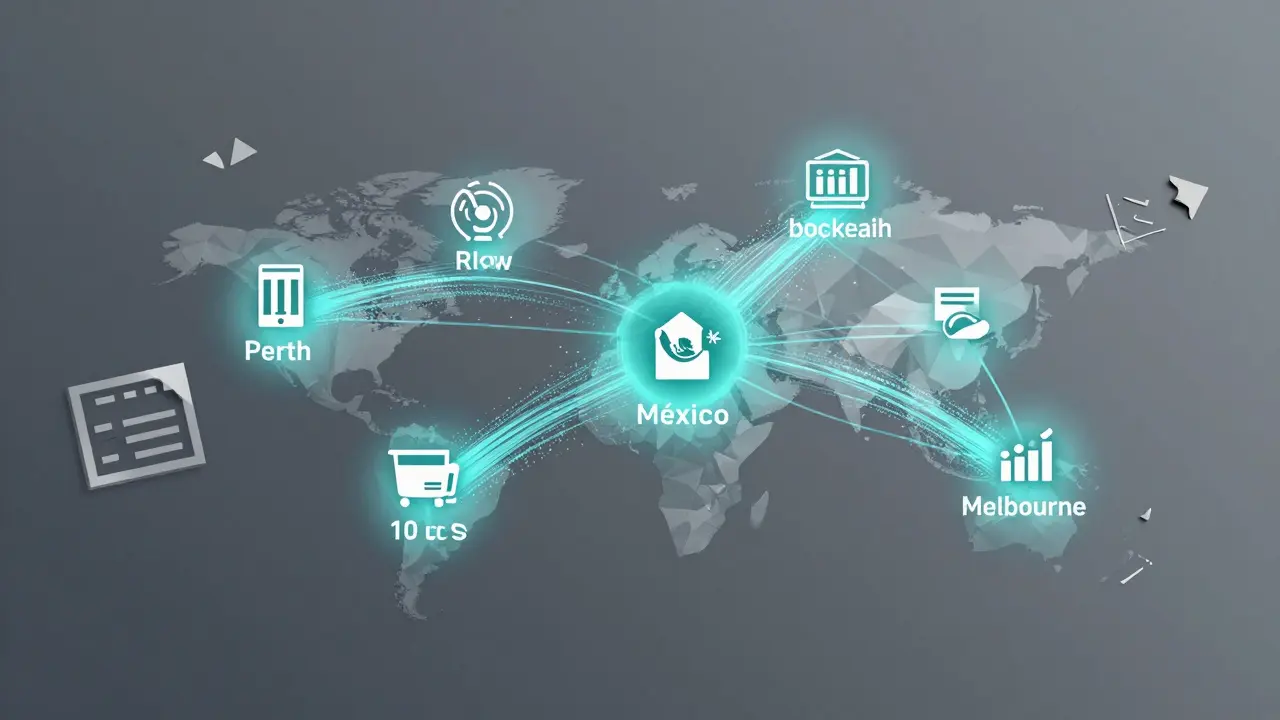
Take a logistics company in Perth shipping goods to Mexico. Before blockchain, they’d wait 4 days for suppliers to get paid. That meant delayed orders, strained relationships, and cash flow headaches. After switching to RippleNet in early 2025, payments hit suppliers’ accounts in 8 seconds. No middlemen. No weekend delays. No currency conversion delays. Just instant settlement.
How Much Do Blockchain Payments Actually Save?
Cost is where blockchain really shines. Traditional payment processors charge a mix of fees: transaction percentage, fixed fees, currency conversion, international surcharges. PayPal and Stripe? 2.9% + $0.30 per transaction, plus up to 5% for currency conversion. For a business doing $500,000 in annual sales, that’s $35,000 in fees. With crypto payments? Around $5,000. That’s $30,000 saved-just from switching payment rails.
For cross-border remittances, the savings are even starker. Sending $1,000 from the U.S. to Nigeria used to cost $50-$70 in fees. Now, using stablecoins like USDC on the Stellar network? It costs less than $0.01. That’s a 99% drop in fees. The World Bank reports that 40% of global remittance companies now use blockchain for this exact reason.
One business owner in Melbourne, who runs an online store selling to Southeast Asia, switched from Stripe to a crypto payment gateway in Q4 2024. Their annual payment fees dropped from $28,000 to $3,200. That’s $24,800 back in their pocket-money they reinvested into marketing and customer support.
Stablecoins are the secret sauce here. USDC and USDT aren’t volatile like Bitcoin. They’re pegged to the U.S. dollar, so businesses don’t risk losing value between payment and settlement. Circle’s USDC alone processed over $1.2 trillion in commercial payments in Q1 2025. That’s not speculation-it’s real-world scale.
Which Blockchain Networks Are Best for Payments?
Not all blockchains are built the same. If you’re choosing one for payments, you need speed, low cost, and reliability-not just hype.
- Ripple (XRP Ledger): Used by banks and enterprises. Processes $15 billion monthly. Fees average $0.000002 per transaction. Finality in 3-5 seconds.
- Stellar: Built for cross-border payments. Same fee structure as Ripple. Used heavily in Africa and Latin America for remittances.
- Avalanche: 2,500 transactions per second. Finality in 0.8 seconds. Popular with fintech startups.
- Polygon: Ethereum’s Layer 2. Fees around $0.01. Settlement in 2 seconds. Great for e-commerce integrations.
- Nano and IOTA: Zero fees. Ideal for micropayments-like paying for a single article or streaming a song.
- Bitcoin and Ethereum: Still used, but not ideal for daily payments. Bitcoin fees can spike to $20 during congestion. Ethereum varies from $0.50 to $50. Better for larger, less frequent transfers.
Visa’s April 2025 integration of Solana-based payments for enterprise clients shows even legacy giants are betting on speed and cost. Solana handles 65,000 TPS with $0.00025 fees. That’s not a niche tool-it’s infrastructure.

Where Blockchain Payments Work Best (and Where They Don’t)
Blockchain isn’t magic. It’s a tool. And like any tool, it has the right use cases-and the wrong ones.
Best for:
- Business-to-business (B2B) cross-border payments
- Remittances to emerging markets (Nigeria, Philippines, Mexico, Brazil)
- High-volume, low-value transactions (e.g., supply chain payments, freelance invoices)
- Companies needing 24/7 settlement (no bank holidays)
Not ideal for:
- Consumer retail where chargebacks are common (e.g., Amazon-style returns)
- Markets with strict AML/KYC rules and no crypto regulation
- Businesses without tech teams to integrate APIs
Why? Because blockchain payments are final. No chargebacks. No reversals. That’s great for merchants avoiding fraud-but a nightmare for consumers who get scammed. Traditional card networks still win here because they offer buyer protection. So if you’re selling to everyday shoppers, stick with credit cards for now. But if you’re paying suppliers in Vietnam or receiving invoices from a contractor in Kenya? Blockchain is the obvious choice.
Real-World Results: What Businesses Are Saying
Don’t take my word for it. Here’s what users are reporting:
A logistics firm in Texas cut supplier payment costs by 40% after switching to RippleNet. Annual savings: $187,000 on $1.2 million in payments. Their payments went from 4 days to 8 seconds.
On Trustpilot, BVNK-a blockchain payment provider-has a 4.7/5 rating from over 300 business users. Eighty-two percent said the biggest benefit was “dramatically lower international transfer costs.”
But it’s not perfect. One European e-commerce site had a 72-hour outage during holiday traffic in February 2025. Their custom blockchain setup couldn’t handle the load. Lost sales: $220,000. Lesson? Don’t build your own unless you know what you’re doing. Use established networks like Ripple, Stellar, or Polygon.
Deloitte’s 2025 survey found that 63% of companies struggle to reconcile blockchain transactions with their accounting software. That’s a real pain point. But solutions like CoinTracker and Koinly now auto-sync with major blockchains, making bookkeeping easier than ever.

What’s Holding Blockchain Payments Back?
Speed and cost aren’t the only factors. Two big hurdles remain:
Regulation. Different countries treat crypto differently. The IMF warns that without global standards, blockchain payments could create financial silos-not connectivity. In Europe, the MiCA regulation is starting to bring clarity. In the U.S., the SEC is still playing catch-up. If you’re operating internationally, you need legal counsel familiar with crypto regulations in each jurisdiction.
Integration. Connecting blockchain to your ERP, accounting, or inventory system isn’t plug-and-play. Deloitte says it takes 4-6 weeks for small businesses, 10-14 weeks for enterprises. You’ll need developers who understand APIs, smart contracts, and blockchain architecture. If you’re a small business owner, partner with a provider like BitPay or Coinbase Commerce-they handle the tech for you.
And yes, volatility still scares people. But if you’re using stablecoins (USDC, USDT, EURC), that risk is gone. You’re not speculating-you’re transacting.
What’s Next? The Road Ahead in 2025 and Beyond
Blockchain payments are accelerating fast. Gartner predicts that by 2027, half of all Fortune 500 companies will use blockchain for at least one major cross-border payment. That’s up from 25% in 2024.
The European Central Bank is running a cross-border CBDC pilot with 17 banks. Visa is testing Solana. The World Bank is pushing blockchain for remittances in Africa. Even central banks are jumping in-not to replace crypto, but to build their own digital currencies on blockchain tech.
Fee compression is inevitable. Bernstein Research forecasts average blockchain payment fees will drop to 0.25% by 2026. That’s lower than any traditional system can offer.
And here’s the kicker: 87% of financial executives surveyed by PwC say blockchain payments will be “critical or important” to their strategy within five years. They’re not guessing. They’re planning.
If you’re still using wire transfers or PayPal for international payments in 2025, you’re paying more and waiting longer than you need to. The tech is here. The savings are real. The question isn’t whether blockchain payments work-it’s whether you’re ready to start using them.
Are blockchain payments faster than bank transfers?
Yes, by a huge margin. Traditional bank transfers take 3-5 business days for cross-border payments. Blockchain payments settle in seconds to minutes-Ripple and Stellar can confirm in under 10 seconds. Even Ethereum on Layer 2 settles in about 15 seconds. No waiting for bank holidays or intermediary delays.
How much do blockchain payments cost compared to PayPal or Stripe?
PayPal and Stripe charge around 2.9% + $0.30 per transaction, plus up to 5% for currency conversion. Blockchain payment gateways typically charge 0-1%, with no hidden currency fees. For a business doing $500,000 in sales, that’s a $30,000 annual savings. Stablecoins like USDC add zero conversion fees because they’re pegged to fiat currencies.
Can I use Bitcoin for everyday business payments?
Technically yes, but it’s not ideal. Bitcoin fees can spike to $20+ during high traffic, and confirmations take 10+ minutes. For daily business use, stablecoins (USDC, USDT) or networks like Polygon, Stellar, or Ripple are far better. They’re faster, cheaper, and don’t swing in value.
Do blockchain payments have chargebacks?
No. Blockchain transactions are final. That’s a benefit for merchants (no fraud refunds) but a risk for buyers. If you send money to the wrong address or get scammed, there’s no way to reverse it. This is why blockchain works best for B2B or trusted parties-not consumer retail with return policies.
Is blockchain payment integration difficult?
It depends. If you use a provider like Coinbase Commerce, BitPay, or RippleNet, integration takes days to weeks via API. You don’t need to build your own blockchain. But if you’re trying to connect to your ERP or accounting software, expect 4-6 weeks for small businesses and up to 14 weeks for large ones. The biggest challenge is reconciling blockchain transactions with traditional bookkeeping-tools like Koinly and CoinTracker help with that.
Are blockchain payments legal everywhere?
No. Regulations vary by country. The EU has MiCA, which brings clarity. The U.S. is still developing rules. Some countries like Nigeria and El Salvador are embracing it; others like China ban it outright. Always check local laws before accepting or sending crypto payments internationally. Use stablecoins-they’re more likely to be compliant than volatile cryptos.
Adam Bosworth
December 5, 2025 AT 05:19Nina Meretoile
December 6, 2025 AT 06:18Elizabeth Miranda
December 7, 2025 AT 09:14Chloe Hayslett
December 8, 2025 AT 10:10Manish Yadav
December 9, 2025 AT 19:03Vincent Cameron
December 11, 2025 AT 13:58Noriko Robinson
December 12, 2025 AT 07:56Yzak victor
December 12, 2025 AT 22:19Josh Rivera
December 13, 2025 AT 19:28Neal Schechter
December 14, 2025 AT 23:49Tara Marshall
December 15, 2025 AT 08:50Nelson Issangya
December 16, 2025 AT 16:55Joe West
December 17, 2025 AT 21:27Frank Cronin
December 19, 2025 AT 08:41Sandra Lee Beagan
December 19, 2025 AT 14:26Chris Jenny
December 20, 2025 AT 22:14Sandra Lee Beagan
December 22, 2025 AT 15:49